







Key takeaways
- Mobile is the most important loyalty touchpoint: Apps, Wallet Passes, and mobile coupons bring customer loyalty directly to the smartphone and thus closer to the moment of purchase.
- App or wallet is not an either-or question: For many companies, a hybrid approach is ideal because it combines broad reach with deeper engagement.
- The business case is created through repeat purchases, redemption, and first-party data: Mobile loyalty creates measurable value when POS, e-commerce, CRM, and personalization work together seamlessly.
- Convercus is a suitable software for mobile loyalty: The platform combines a loyalty engine, couponing, engagement, white-label app, and API-first integration for demanding mid-market and enterprise programs.
Loyalty Software Mobile: What it truly means today
Loyalty Software Mobile refers to customer loyalty software that makes the mobile channel the primary touchpoint – meaning not just a digital customer card, but the operational management of loyalty, couponing, and engagement via app, wallet pass, and smartphone at the POS. For mid-market and enterprise companies, this is no longer a fringe topic, but the core of modern omnichannel customer loyalty.
Its relevance is measurably increasing: The global loyalty management market is estimated to reach USD 17.38 billion by 2026, with Europe reaching USD 18.8 billion in the same year. In parallel, according to EY Loyalty Market Study 2025 64% of consumers prefer apps over email, when interacting with a loyalty program. Mobile is therefore not just a distribution channel, but the place where identification, redemption, personalization, and first-party data converge.
The distinction is crucial: Mobile Loyalty Software is more than CRM, more than marketing automation, and more than a simple coupon app. It connects points, status, benefits, QR code identification, push notifications, wallet passes, and data logic with the existing system landscape. For those who want to understand the topic in a broader context, the overarching article on customer loyalty software provides the appropriate framework.
Why do customers prefer apps for loyalty – and what does that mean for your program?
The smartphone is the only loyalty channel that customers always carry with them.. This is precisely why the focus is shifting from physical cards and email communication to Loyalty App, Wallet, and mobile coupons. According to EMARKETER, 40% of consumers already access discounts and coupons in-store via retail apps. Mobile loyalty thus has an immediate impact at the moment of purchase – not just afterwards.
Furthermore, there's the data aspect: In the post-cookie era, first-party data and clearly documented consents become a strategic asset. By linking enrollment, activation, purchasing behavior, and redemption via mobile, companies can segment and personalize much more precisely. At the same time, the market shows a gap between aspiration and reality: According to EY 2025, only 16% of companies have actually achieved hyper-personalization. The problem is usually not a lack of data volume, but a lack of operational feasibility.
This is important for loyalty and CRM teams because app users are the most valuable customers in many industries. At John Lewis, app customers were three times more valuable than non-app customers, and at Target, app users generate almost 50% more revenue. Mobile Loyalty thus not only strengthens reach but also the Customer Lifetime Value.
App, Wallet, or Hybrid: Which mobile loyalty architecture suits your company?
In practice, the right answer is rarely just App or just Wallet. Companies with high visit frequency, many in-store interactions, and sophisticated personalization often benefit from a white-label app. Companies with high download barriers or lower interaction frequencies should also rely on Mobile Wallet Passes, as Apple Wallet and Google Wallet are already present on the device.
When is a native white-label app worthwhile for a loyalty program?
A white-label app is particularly worthwhile when loyalty is intended to become a daily or weekly habit. It provides space for point balances, status management, coupon activation, challenges, push notifications, and deeper personalization. For Retail, Hospitality, Mobility, and E-commerce , it is usually the strongest lever for recurring engagement.
What is a Mobile Wallet Pass – and when is it a better choice than an app?
Wallet Passes drastically lower the barrier to entry, because no additional app download is required. They are suitable as digital customer cards, for barcode or QR-based identification, and for simple benefit communication. This is a very effective approach, especially for low-frequency customers or as a first digital step after a plastic card.

What is the hybrid model of app and Wallet Pass – and who is it suitable for?
The best solution is often a hybrid model: Wallet for quick entry and an app for power users with higher engagement. This reduces app fatigue without sacrificing deep interaction. The article on App-First Loyaltyalso provides more information on this.
What functions a mobile loyalty solution must master
What's crucial is not the sheer number of features, but the combination of relevance, usability, and real-time capability. A mobile loyalty solution should therefore always be designed with the business goal in mind: more repeat purchases, higher redemption rates, better data quality, or increased POS frequency.
Digital Customer Card, Points, and Status
Mobile identification at the POS is the foundation of any omnichannel loyalty program. QR codes, barcodes, or Wallet Passes must work quickly at the checkout to prevent collection and redemption from failing due to media discontinuities. Building on this, a flexible Loyalty Engine is needed for points, status tiers, benefits, and rule-based incentives.
Mobile Couponing and Offer Activation
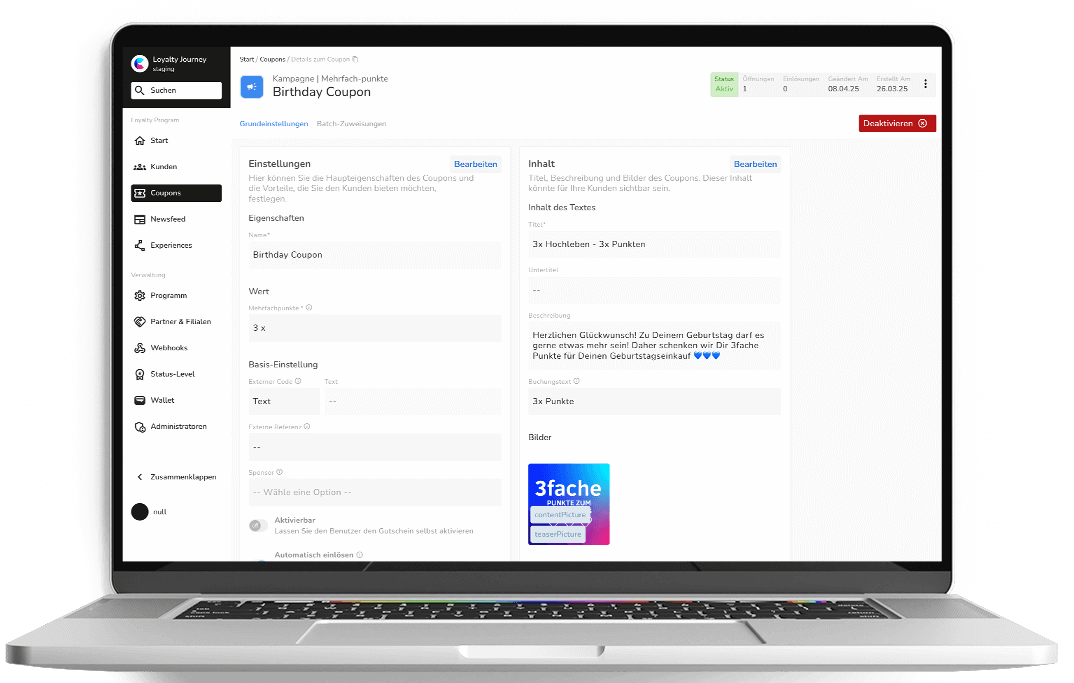
Couponing is particularly powerful on mobile because offers and redemption are closely linked in time. Customers activate coupons in the app or wallet and redeem them directly online or in-store. This is relevant for retailers because personalized offer logic is significantly more efficient than broad discount communication. You can find more information in the Couponingsection.
Push Notifications, Gamification, and Automation
More push notifications do not automatically mean more engagement. Relevant triggers include proximity to a store, inactive users, nearly reached status thresholds, or unredeemed rewards. Additionally, gamification in the form of challenges, collection missions, and playful progress elements increases usage when clearly linked to customer benefits. The Engagement section shows how automation and personalization work together.
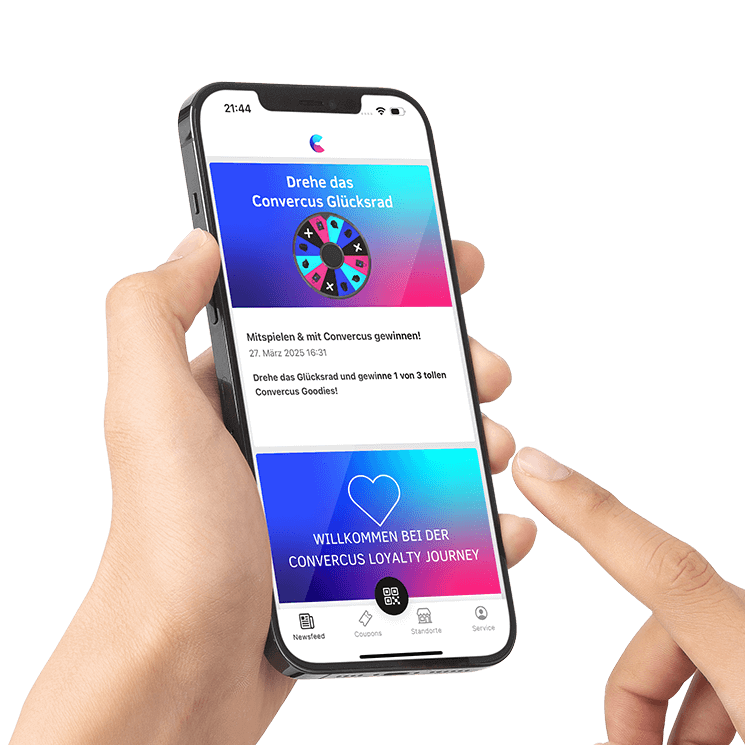
Those who don't want to orchestrate loyalty, couponing, and mobile activation across multiple individual solutions benefit from a platform that brings these components together. Convercus positions itself here as API-first Loyalty Software for mobile programs, where white-label app, Wallet Pass, couponing, and engagement operate on a common data and rule basis.
Integration, Performance, and GDPR: What IT and Product Owners need to consider
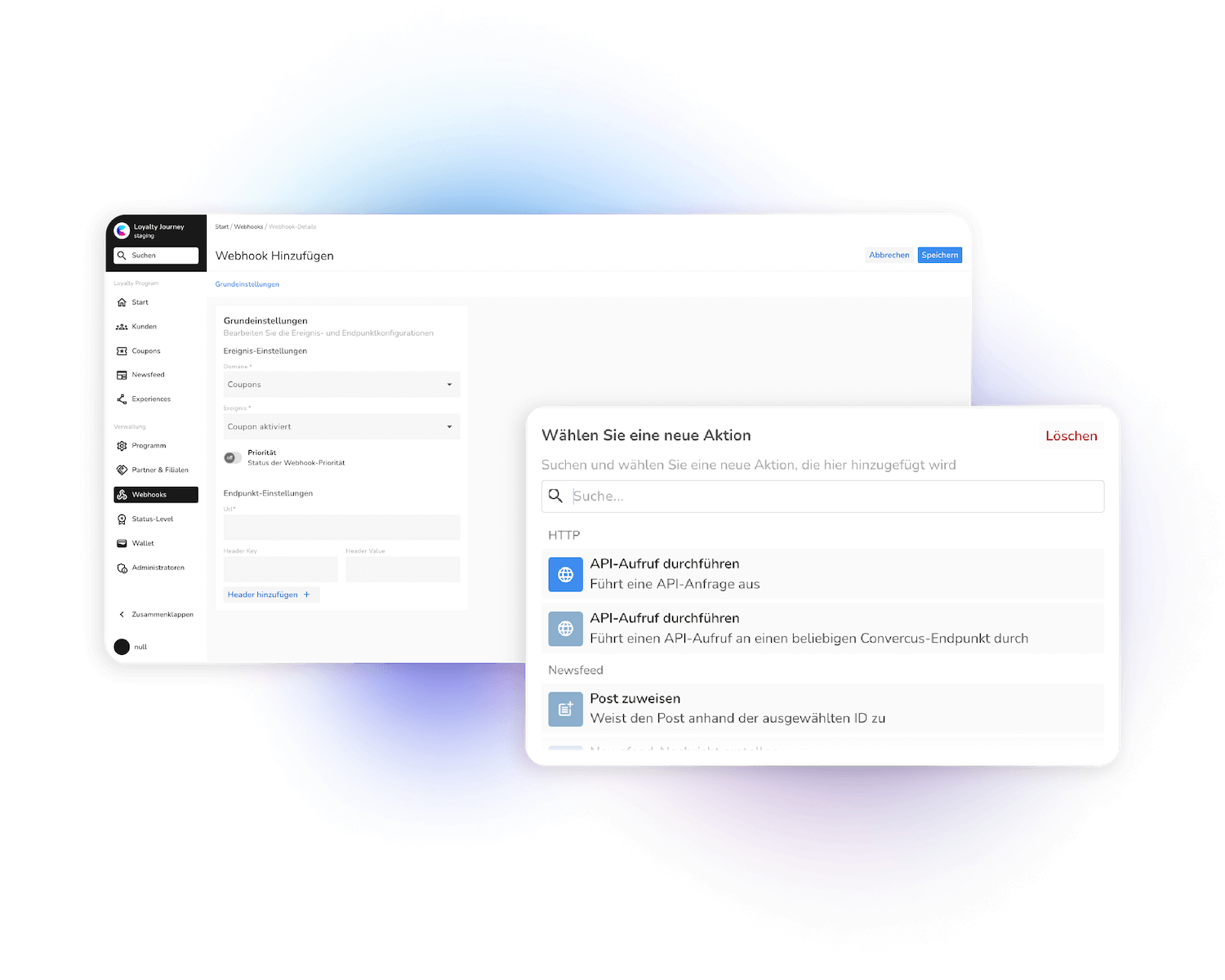
The best mobile loyalty experience fails if POS, e-commerce, and CRM are not seamlessly connected. In an enterprise environment, an API-first architecture is therefore required to synchronize customer data, transactions, coupon status, and reward logic in real-time. This is particularly important for chain stores, as online and offline purchases must converge in a single account.
A critical point is operational reliability at the POS. Offline capability and low latency are relevant so that identification does not falter even with fluctuating connections. Those planning international rollouts or millions of transactions should also pay attention to load behavior, monitoring, and clear role and rights concepts. Technical background information on this is summarized in the Tech and Integration section.
Data Protection and Compliance
For mobile loyalty, GDPR compliance is not an add-on, but a procurement criterion. Particularly relevant are Art. 5 GDPR on data minimization and purpose limitation, Art. 6 on legal basis, Art. 7 on consent, Art. 25 on Privacy by Design and Default, Art. 28 for the data processing agreement, and Art. 32 on security of processing. If non-technically essential analytics or marketing SDKs are used in the app, then § 25 TTDSG for accessing end devices must also be considered. For geofencing and location-based services, consent should be granular and documented.
The Business Case: Where Mobile Loyalty Truly Creates Revenue and Data Value
Mobile loyalty is economically viable when it simultaneously improves repeat purchases, redemption, and data quality. This is precisely where it differs from the classic digital customer card. App users interact more frequently, redeem offers closer to the time of purchase, and give companies the chance to link purchasing behavior with consented profile data.
Studies and market examples clearly demonstrate the leverage: At John Lewis, app customers were three times more valuable than non-app customers, and at Walmart, app users spend 25% more. At the same time, loyalty programs generally show that members typically generate more revenue than non-members. However, the true value lies in controllability: You can specifically target segments based on purchase history, store proximity, status, coupon usage, and inactivity.
Simplified Calculation Example
A retailer with 100 branches and 500,000 loyalty members currently operates without a strong mobile experience. If the repurchase rate is 35% and conservatively increases by 15% relatively to 40.25% through a well-executed mobile loyalty experience, with an average basket size of €65 and 4.2 transactions per customer, this results in additional annual revenue of approximately €7.2 million. This example does not replace individual calculations but demonstrates why mobile often has a faster impact in a business case than a purely transactional points logic.
In addition, there's the operational benefit. Convercus bundles Loyalty Engine, Couponing, and Engagement into one platform, allowing marketing and product teams to implement campaigns, rewards, and mobile customer journeys with fewer system breaks. This is particularly relevant for generating first-party data, as consent, activation, and transactions should not be separated across different tools.

Typical Challenges in Practice – and How to Solve Them
Most mobile loyalty projects fail not due to the concept, but due to operational implementation. Three problems almost always emerge in evaluations: app fatigue, fragmented system landscapes, and overly generic communication. Shopping apps, in particular, often have weak 30-day retention if the customer benefit isn't immediately apparent.
- You don't solve app fatigue with more features, but with faster benefits. App-exclusive benefits, a smooth onboarding process, and an immediately visible reward significantly increase activation rates more than an overloaded homepage.
- Fragmented systems require clear responsibilities and a robust data model. If POS, e-commerce, CRM, and loyalty programs use different customer keys, personalization becomes unnecessarily expensive and slow.
- Push strategies must be trigger-based, not calendar-based. Relevant impulses arise from status progression, store visits, coupon expiry, or inactivity — not through generic weekly promotions for everyone.
Why loyalty fails with a pure discount logic — and what truly retains customers?
The loyalty disconnect is real: Marketers often overestimate emotional factors, while customers tend to value simplicity, financial benefits, and user-friendliness. This doesn't mean experiences are unimportant. It means that gamification, community, and experience must be built on a functional foundation of relevance and convenience. If you want to read more about the strategic side, you can find relevant approaches in the article Increasing Customer Loyalty .
Mobile Loyalty by Industry: What Priorities Truly Matter
The best mobile loyalty strategy is always industry-specific. While the basic functions are similar, purchase frequency, redemption behavior, and POS processes differ significantly.
Retail and Fashion
In the fashionand omnichannel retail sectors, speed and personalization are key. Relevant levers include digital customer cards, status benefits, app-exclusive coupons, and cross-channel redemption. Especially in store networks, the connection between POS and app is crucial so that benefits become visible at the moment of purchase.
Food, Grocery, and Hospitality
High visit frequency makes mobile particularly valuable here. In these industries, push triggers, wallet passes, and short-term redeemable coupons work very well because often only a few minutes lie between impulse and purchase. For the hospitality sector , especially restaurants, order-related benefits and simple scanning processes are added.
DIY, Mobility, and other more complex categories
With lower visit frequency, the app must offer additional value, such as project-related services, reminders, challenges, or relevant partner offers. In the DACH market, use cases from DIY, fashion, and consumer electronics show how important omnichannel processes and high-performing POS logic are — especially in large store structures.
For companies with an existing program: Mobile loyalty is often more of an extension or migration than a complete restart. That's precisely why software selection should always consider migration capabilities, data transfer, and rollout scenarios. Those who also focus on customer win-back will find a useful follow-up in the article Customer Win-Back .
Checklist: How to Properly Evaluate Mobile Loyalty Software
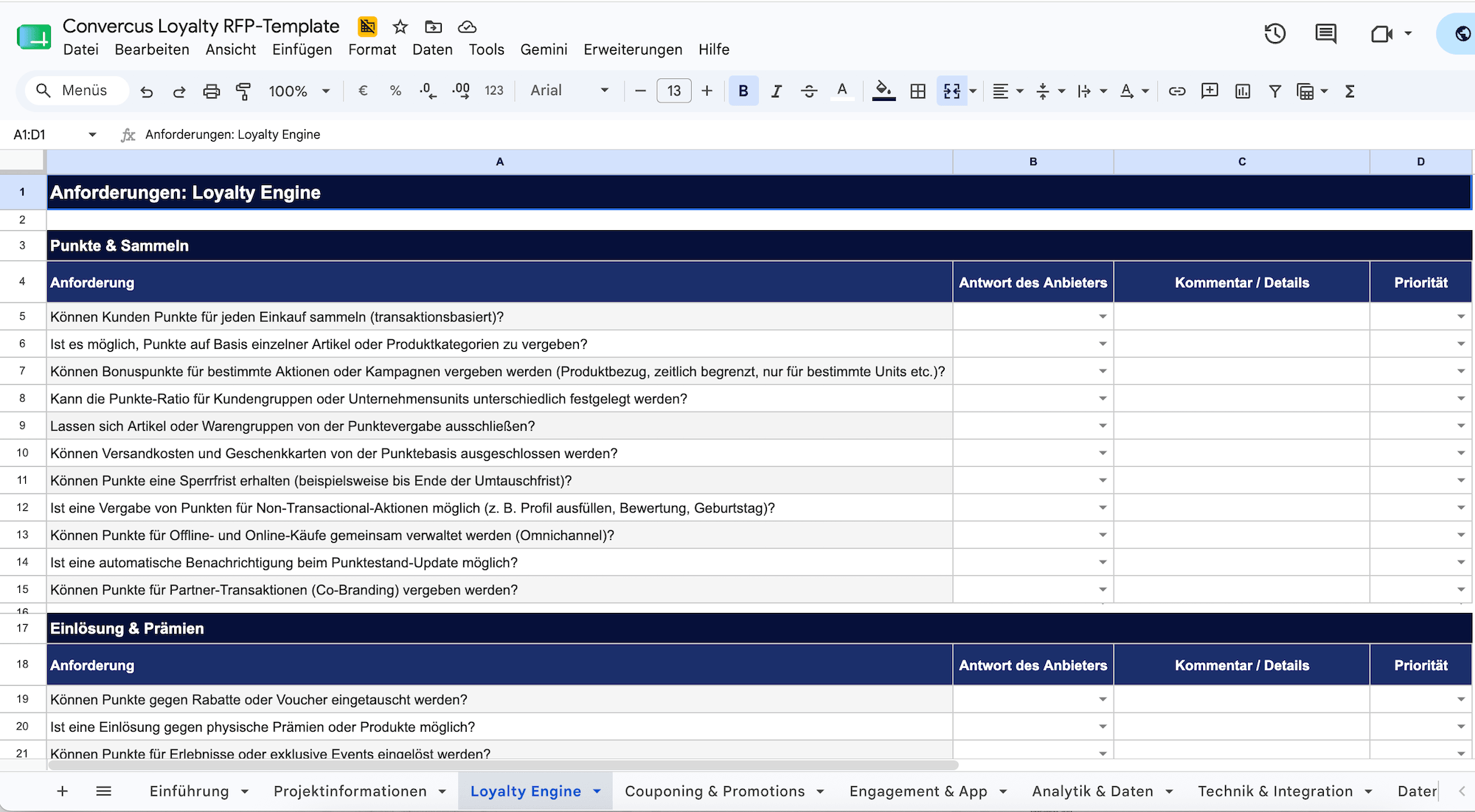
A good vendor evaluation separates strategic requirements from mere demo impressions. Especially in the mid-market and enterprise segments, a structured questionnaire is worthwhile before an RFI or RFP begins.
- First, examine the target vision: Should the solution replace an existing program, supplement a mobile channel, or build a new loyalty model from scratch?
- Evaluate the mobile architecture: Do you need an app, a wallet, or a hybrid strategy — and how quickly can it be rolled out?
- Ask about API-first and POS capabilities: Without robust integrations into POS, e-commerce, CRM, and ERP, omnichannel remains just a promise.
- Demand concrete statements on GDPR, DPA, and consent: A vendor should be able to clearly explain how consents, deletion processes, and role-based access rights are implemented.
- Request proof of performance and scalability: Relevant factors include peak loads, response times, offline scenarios, and monitoring — not just attractive interfaces.
- Evaluate operational usability: Marketing teams need an interface that allows them to manage rules, coupons, and target groups without unnecessary IT dependency.
Build vs. buy is usually answered more quickly than expected: A specialized platform is generally more economical than in-house development when time-to-value, maintenance, app development, compliance, and integrations are realistically factored in.
Conclusion: Mobile loyalty is not an additional channel, but the operational core of modern customer retention
Those who think mobile loyalty today are not just building an app, but a manageable customer relationship. The greatest leverage arises where identification, couponing, rewards, personalization, and POS integration come together in a consistent mobile experience. App, wallet, or hybrid are not matters of taste, but architectural decisions with a direct impact on adoption, retention, and ROI.
Therefore, when evaluating mobile loyalty software, you shouldn't stop at feature lists. Crucial factors are integration capability, GDPR compliance, performance, and the ability to translate first-party data into measurable engagement. This is precisely where Convercus can be a valuable partner for mid-market and enterprise companies — with an API-first approach, white-label app, wallet pass options, and a platform for loyalty, couponing, and engagement. If you would like to specifically evaluate this for your company, you can arrange a personal live demo schedule.
FAQ
How complex is the implementation of a mobile loyalty solution?
The effort primarily depends on your system landscape. If POS, e-commerce, and CRM can be cleanly integrated, an accelerated rollout is realistic. It becomes more complex with legacy systems, inconsistent customer keys, or when an existing program needs to be migrated.
Can mobile loyalty software be implemented in compliance with GDPR?
Yes, but only with a robust consent and security concept. Crucial factors are documented consents according to Art. 7 GDPR, Privacy by Design according to Art. 25, robust access control according to Art. 32, and – when using tracking SDKs – compliance with § 25 TTDSG.
Does this work with our existing POS system?
In many cases, yes, if the solution is built API-first. It's important that identification, point accrual, coupon validation, and reward redemption harmonize with your POS processes. That's precisely why you should test integrations and offline scenarios early in the selection process.
What does mobile loyalty software cost compared to in-house development?
In-house development is often more expensive than it initially appears in the business case. In addition to development costs, ongoing app maintenance, operations, security updates, compliance, monitoring, and further development are incurred. A specialized platform usually shortens time-to-value and reduces project risk.
Can we migrate an existing loyalty program?
Yes, migration is a typical use case. In practice, it involves transferring accounts, points, status, coupons, opt-ins, and histories — ideally without disruption for customers. A clear migration plan, testing phases, and a good communication strategy for launch are important.
Where should we practically begin?
Start with a target vision and three core questions: What behavior should change, what mobile touchpoints do you need for it, and what systems need to be integrated? After that, an app, wallet, or hybrid model can be evaluated much more precisely than through mere feature comparisons.


- 5x Return on Investment
- 80% Customer Identification
- 8x Customer Interaction
- +274% Repurchase Rate
.png)