








The topic in a nutshell
- Fashion has a measurable retention problem: With around 32% retention and up to 75% churn, performance marketing alone is no longer sufficient in e-commerce.
- Modern loyalty goes far beyond points: Early access, tiers, gamification, personalization, and targeted couponing are usually more effective in the fashion context than pure discount logic.
- Technology and compliance determine success: Omnichannel integration, API-first architecture, real-time processing, and GDPR and TTDSG-compliant data usage are key selection criteria.
- Convercus is specialized loyalty software: Those who want to professionally implement loyalty, couponing, engagement, and scalable integration for fashion will find a suitable platform in Convercus.
Why Fashion E-Commerce Has a Unique Loyalty Problem
Fashion e-commerce doesn't have a reach problem, but primarily a retention problem. Industry benchmarks show only around 32% retentionfor fashion, while the churn rate, depending on the cohort, can be around 75% . Simultaneously, acquisition costs are rising, new competitors are accelerating assortment and price cycles, and customers are switching more quickly between brands, platforms, and channels. In this environment, those who rely solely on performance marketing are constantly repurchasing growth.
The pressure is particularly evident in the German market. Online fashion retail is growing only weakly, while data-driven providers like Shein are gaining market share. This exacerbates the well-known discounting spiral: fashion retailers offer discounts significantly more often than many other e-commerce sectors. Loyalty Software for E-Commerce Fashion is therefore not just a nice-to-have, but a tool to systematically improve repeat purchases, margins, and first-party data. Those who want to delve deeper into the basics of system selection will find in the article on customer loyalty software a broader market overview.
The real challenge: Fashion is both emotional and highly interchangeable
Fashion thrives on identity, community, and inspiration. This is precisely why many programs fail when they only reward purchases with points. Today, customers expect early access to collections, exclusive drops, personalized recommendations, mobile usage, and a seamless experience across shop, app, email, wallet, and physical store. If loyalty is purely transactional, the program remains interchangeable. If loyalty is experience-oriented and data-driven, it becomes a growth driver.
For decision-makers, this means: It's not the number of members that matters, but active use, redemption, and repurchase. This is precisely where, in fashion e-commerce, a generic bonus program distinguishes itself from a truly effective loyalty strategy.
How Modern Loyalty Software Works in Fashion E-Commerce
Modern loyalty software doesn't just implement a points system. It orchestrates purchasing behavior, engagement, status logic, and couponing across the entire customer journey. In the fashion context, this means a customer doesn't just earn points with a purchase, but can also be rewarded for reviews, app usage, referrals, UGC, or specific interactions. This creates a program that matches the dynamics of fashion.
Program Types at a Glance: Which Mechanism Suits Which Business Model
Five mechanisms have become established in the market: Points systems, Tiered Loyalty, experiential rewards, gamification, and hybrid models. Fast fashion often benefits from clear, fast earn-and-burn mechanisms. Premium and luxury brands tend to need status, access, and exclusive services. D2C brands frequently combine points with community elements and referral mechanisms.
Beyond Points: What Truly Works in Fashion
The strongest programs don't just reward sales, but brand-relevant behavior. These include product reviews, wish lists, birth dates, style preferences, app logins, or social interactions. This is precisely where valuable zero-party and first-party data are generated, which can later be used for personalization, segmentation, and re-engagement. Those who want to strategically boost customer retention should also consider strategic retention levers along the journey.
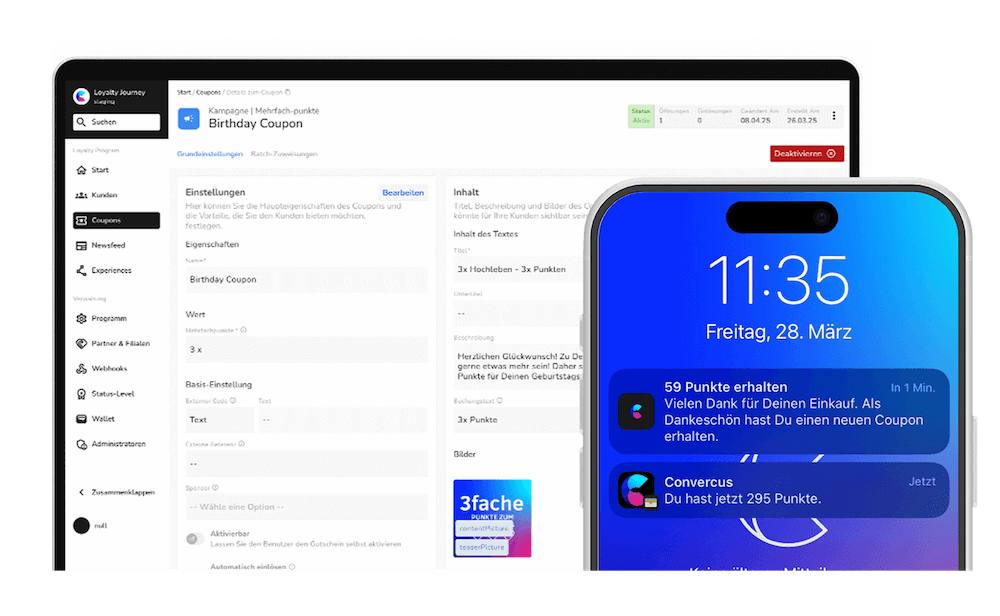
In fashion e-commerce, it is also Couponing as a Loyalty Component relevant. Not as a blanket permanent discount, but as a selective mechanism: for example, personalized benefits for inactive segments, exclusive member offers, or campaign-related incentives after cart abandonment. This is precisely where the connection between Engagement and Couponing.
Must-Have Features: What Fashion Loyalty Software Needs to Offer
The key selection criterion is not: Which software has the most features? What matters is which platform fashion-specific complexity handles effectively. This includes omnichannel capability, real-time logic, flexible rule sets, personalization, and an architecture that doesn't slow down existing systems. Especially in the mid-market and enterprise segments, simple plug-ins are often no longer sufficient.
Omnichannel Integration, Personalization, and Compliance Go Hand in Hand
An effective solution connects shop, app, POS, CRM, and marketing channels through a common customer logic. Studies show that companies with strong omnichannel implementation achieve significantly better customer loyalty. In the fashion context, this is business-critical: members want to be able to view and use points, status, benefits, and coupon redemptions across all channels. A digital customer card or wallet pass further reduces friction.
Equally central is GDPR-compliant data usage. Relevant standards include, in particular, Art. 5 GDPR (Principles relating to processing), Art. 6 GDPR (Lawfulness of processing), Art. 25 GDPR (Data protection by design and by default), Art. 28 GDPR (Processor) and Art. 32 GDPR (Security of processing). If tracking technologies are used in the shop or app, then in Germany, § 25 TTDSG must also be observed. For loyalty, this practically means: documenting consents meticulously, transparently collecting preference data, and contractually and technically securing data flows between the shop, app, POS, and CRM.
- Real-time Loyalty Engine is crucial so that points, tiers, and benefits are immediately visible and not delayed until after batch runs.
- Flexible Rule Sets are necessary to implement seasonal fashion campaigns, collection launches, birthday benefits, or VIP mechanics without a development project.
- API-first Architecture reduces integration risks because the shop, POS, CRM, and app are cleanly connected instead of rigidly replaced.
- Scalability during Peak Loads is essential so that Black Friday, sale periods, or millions of transactions do not become a stability issue.
- Analytics and Segmentation determine whether loyalty is merely managed or actually optimized.
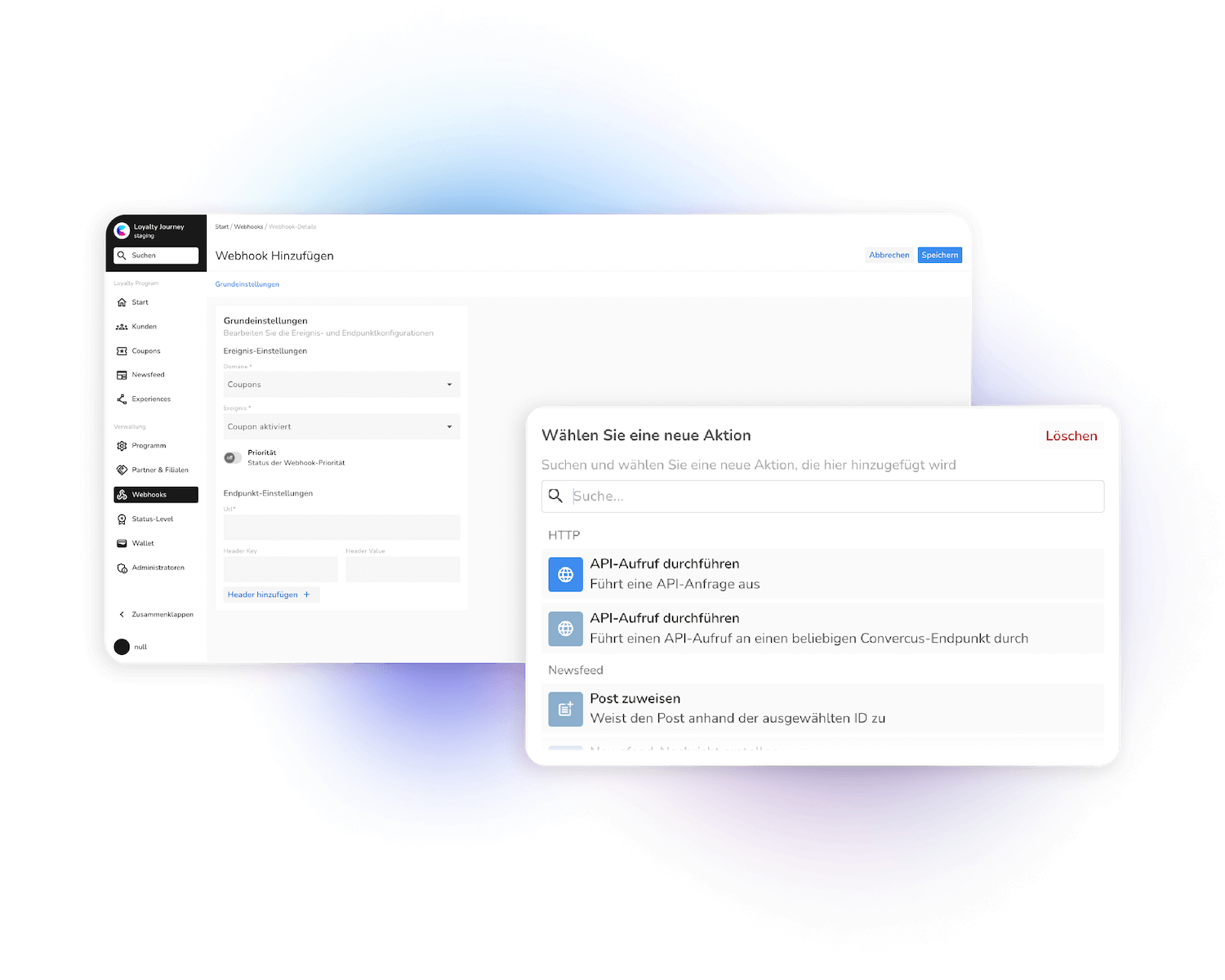
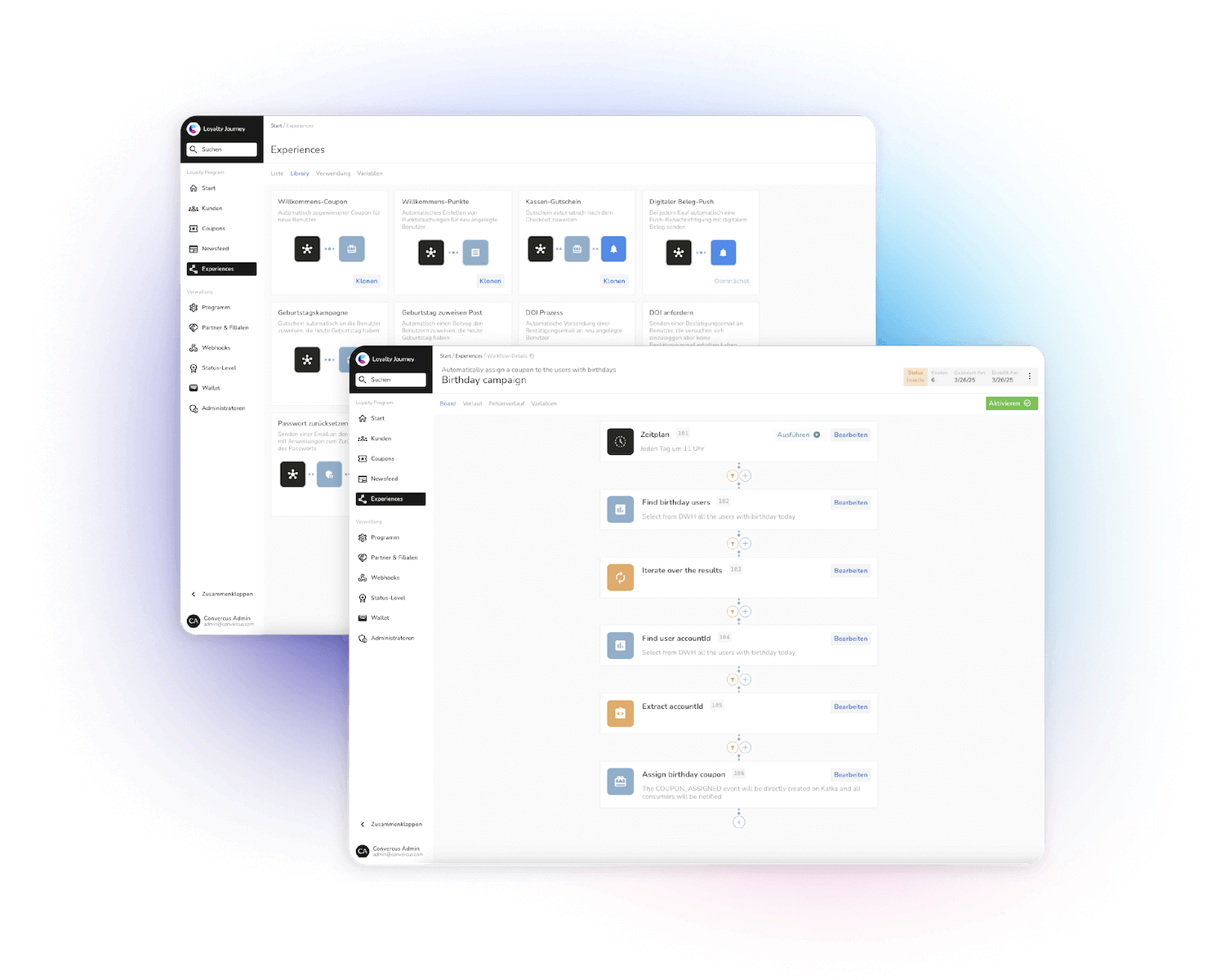
For companies looking to avoid building loyalty, couponing, and customer engagement in separate systems, Convercus is an interesting specialized loyalty software: The platform combines Loyalty Engine, couponing, engagement, and API-first Integration in a setup designed for omnichannel retail and e-commerce.
Fashion Loyalty in Practice: Programs that truly work
The best examples in the market show that modern loyalty software for e-commerce fashion goes far beyond classic points programs. Gap Inc. has with Encore Early 2026, a cross-brand model was relaunched, combining points, shipping benefits, and an experience marketplace. More relevant than the mechanics themselves is the underlying message: Loyalty is built when members gain access to something non-members don't.
Gap, adidas, and Nike demonstrate three different success strategies
Gap focuses on cross-brand utilization and experiences, adidas connects purchases with activities from its app ecosystem in the adiClub, and Nike strongly builds membership through identity, community, and exclusive access. These three approaches show that fashion loyalty must look different depending on the brand. A fast-fashion store usually needs easily understandable earn-and-burn mechanics. A premium brand benefits more from tiers, styling, events, and early access.
Smaller and medium-sized fashion brands also deliver measurable results. Examples like Lively or Pulse Boutique are frequently cited because they show that CLV and AOV uplift are realistically achievable when the program is emotionally engaging and doesn't just offer discounts. The shared lesson is clear: Members want benefits, status, and relevance, not just another points balance.
What the best programs have in common
Successful programs combine clear benefit communication with operational excellence. This includes a few, understandable tiers, visible progress, easy redemption, mobile availability, and cross-channel consistency. Programs that don't go silent after a purchase are particularly strong; instead, they continue to work with triggers for reviews, repurchases, replenishment, or win-back. Those looking for inspiration will find a valuable addition to classic retention logic in the topic of customer win-back a valuable addition to classic retention logic.

The Business Case: ROI of Loyalty Software in Fashion E-Commerce
For budget approvals, it's not about whether loyalty sounds modern, but whether it measurably improves revenue, margin, and customer value. This is precisely where fashion presents an interesting case: According to benchmarks, loyalty members often generate 12% to 18% more revenue than non-members. Furthermore, the frequently cited correlation from Bain & Company and Harvard Business Review holds true: Even 5% better retention can increase profit by 25% to 95%.
Key KPIs for Evaluation
In fashion e-commerce, you shouldn't just look at membership numbers. A robust KPI set includes repurchase rate, redemption rate, active member share, AOV, CLV, churn, referral rate, and the revenue share from loyalty members. Only this combination reveals whether the program truly changes behavior or merely collects registered accounts.
Example Calculation for a Mid-Market Fashion Retailer
Let's take a retailer with €150 million annual revenue, 300,000 active customers and a retention rate of 32%. If 150,000 customers become active loyalty members and this group, on average, only 15% more annual revenue generates, with an average annual revenue of €500 per customer, this results in additional revenue of €11.25 million. This does not yet include decreasing reactivation costs, better referral effects, and greater stability during weaker consumption periods.
In practice, this means: A business case becomes compelling if it not only software costs, but also factors in discount reduction, better redemption, higher repurchase rates, and the impact of first-party data. Especially in fashion, where price promotions often erode margins, this is frequently the real leverage.
Selection and Implementation: How to Find the Right Loyalty Solution
Most projects fail not because of the idea, but due to an overly simplistic selection process. Those who Loyalty Software E-Commerce Fashion When evaluating, it's important to clearly separate three decisions: Build vs. Buy, Best-of-Breed vs. Suite and New Program vs. Migration. In-house development seems attractive at first glance, but usually ties up product, QA, and operational capacities long-term. For mid-market and enterprise companies, buying is often faster, more predictable, and easier to scale.
What Really Matters in the Selection Process
- Program Fit over Feature Richness should be a priority, because a fashion program requires different mechanics than a pure commodity model.
- Integration Capability is more important than a beautiful interface when the shop, app, POS, CRM, and data layer need to work together seamlessly.
- Migration Reliability determines for existing programs whether points, statuses, and histories can be transferred without compromising trust.
- Operating Model and Support are relevant because loyalty is not a one-off campaign, but a multi-year growth program.
Typical pricing models in the market range from setup plus a monthly platform fee to usage- or transaction-based models. What's important is less the license cost itself than the Total Cost of Ownership over Three Years. This includes implementation, operation, campaign effort, customizations, and internal resources. For many companies, an implementation logic with quick wins makes sense: first the core program, then tiers, followed by personalized automation and omnichannel expansion.
A realistic scenario is the migration of a retailer with 100 branches and 500,000 members, who currently manages online and in-store operations separately. Here, an API-first approach is particularly valuable because existing systems are integrated rather than completely replaced. Anyone prioritizing mobile loyalty should also read the article on App-first Loyalty . With Convercus , companies can set up loyalty, couponing, and engagement in a scalable structure, while considering integrations and success management from the outset.
Trends 2026: Where Fashion Loyalty is Heading
By 2026, loyalty in fashion retail will be viewed even more as a Revenue Driver and less as a discount mechanism. Three developments are particularly relevant: AI-powered Personalization, Loyalty Ecosystems and Mobile-first Experiences. The real opportunity lies in not viewing these trends in isolation, but as a system of data, benefits, and real-time communication.
AI, Ecosystems, and Purpose are Changing Program Logic
Only a small fraction of brands currently achieve true hyper-personalization. This is precisely why the potential is so immense: By combining purchase history, preferences, category interest, status, and response behavior, rewards and communication can be delivered with significantly greater precision. At the same time, more Cross-Brand Models, where points or benefits can be used across partners. For fashion, this can be an attractive addition, for example, with a travel, beauty, or lifestyle connection.
Added to this is Purpose-driven Loyalty: Sustainable options, donation mechanisms, or benefits related to repair, resale, and circularity are becoming more important. Especially in the premium segment, this can create more differentiation than the next 10% coupon. Mobile-first remains the operational enabler behind this. An installed app, wallet passes, and push mechanisms keep the brand present in everyday life and demonstrably increase interaction. At Convercus, customer interaction with a white-label app, compared to programs without an app, is up to 8x higher.
Conclusion: Loyalty Software in Fashion E-Commerce with Convercus
Loyalty Software for E-Commerce Fashion is primarily a strategic answer today to high churn rates, rising CAC, and ruinous discounting. Successful programs are those that function omnichannel, reward behavior beyond purchases, truly leverage personalization, and are set up cleanly from a regulatory perspective. The biggest mistake is to continue viewing loyalty as merely a points system.
If you are looking to modernize an existing program or seeking a scalable solution for fashion, retail, or D2C, then Convercus a logical next step. The platform combines loyalty, couponing, engagement, and API-first integration in a way that is designed for mid-market and enterprise requirements. Schedule a personal live demo here and see how your loyalty strategy can be implemented efficiently and technically soundly.
FAQ: Frequently Asked Questions about Loyalty Software in Fashion E-Commerce
Which loyalty software is best suited for fashion e-commerce?
The best solution fits your business model, your system landscape, and your program goals. Fast Fashion, Premium, and D2C require different approaches. Therefore, focus more on omnichannel fit, personalization, and integration than on the sheer number of features.
How complex is implementing a loyalty program?
That depends on the scope. A core program with points-based logic and basic communication is usually much quicker to implement than a fully integrated omnichannel program with POS, app, and tiers. A phased rollout with quick wins is often the best approach in practice.
Is loyalty software GDPR-compliant?
The software alone is never automatically compliant, but it can structurally support the requirements. Key are sound legal bases, consent management, processor agreements, and access controls according to the relevant provisions of the GDPR and, for tracking, additionally Section 25 TTDSG.
Does that work with our existing POS and shop system?
In many cases, yes, if the platform is built API-first. What's crucial is that customer ID, transactions, coupons, and status information are properly synchronized. That's precisely why the integration architecture should be reviewed early in the selection process.
How much does loyalty software cost?
Common are setup costs plus a monthly license or usage-based models. What's relevant is not just the software's price, but the total costs over at least three years, including implementation, operation, campaign logic, and internal resources.
How do I get started in practice if we currently only use newsletters and discount codes?
Start with an assessment of your data, channels, and goalsNext, define a core program with a few clear benefits, integrate it with your store and CRM, and then add personalization, tiers, and automation. This helps you avoid unnecessary complexity at the outset.
According to benchmarks, loyalty members in fashion e-commerce generate 12–18% more revenue.


- 5x Return on Investment
- 80% Customer Identification
- 8x Customer Interaction
- +274% Repurchase Rate