







The Topic in Brief
- Loyalty is no longer a nice-to-have in shoe retail. In a market with declining brick-and-mortar sales, a growing online share, and high willingness to switch, customer loyalty becomes a strategic lever.
- Standard programs are rarely sufficient for shoe stores. Successful setups connect POS, webshop, app or wallet, consider seasonality, and use size and preference data for personalization.
- Hybrid models are usually the strongest. Points, status, cashback, couponing, and early access can be combined depending on the business model, creating both short-term purchase incentives and long-term loyalty.
- Convercus is specialized software for retail loyalty. For shoe stores looking to professionally implement omnichannel customer loyalty, Convercus combines loyalty, couponing, engagement, and API-first integration into one platform.
Why Customer Loyalty is Crucial for Survival in Footwear Retail in 2026
The German footwear market is under pressure: in 2025, the market volume fell to around €11.48 billion, brick-and-mortar footwear retailers lost almost 4% of their sales, and according to industry reports, 67% of brick-and-mortar footwear retailers achieved a negative operating result. At the same time, the online share continues to grow and is expected to account for 38.6% of total sales by 2025. For many retailers, loyalty software is therefore no longer an additional project, but a tool to strategically stabilize footfall, repeat purchases, and margins.
Shrinking Market, Increased Customer Churn, More Platform Pressure
In the footwear retail sector, several effects are converging simultaneously: declining city center demand, showrooming, rising online expectations, and strong competitors like Zalando or direct-to-consumer brands. It is particularly critical that brand loyalty doesn't automatically translate to retailer loyalty. Customers might love Nike, adidas, or Birkenstock, but they buy where availability, convenience, and benefits are greatest. This is precisely where a professional customer loyalty program comes in: it makes not only the brand but the retailer itself more attractive.
Why Loyalty Works Especially Well in Footwear Retail
Consumers today expect tangible, immediate benefits. Current market data shows: 80% want instantly redeemable rewards, 62% expect personalized offers, and 73% would switch to a digital solution. In addition, there's a hard retail fact: 58% of consumers consciously choose a store with a customer loyalty program. This is particularly relevant in footwear retail because purchases are less frequent than in FMCG categories. Retailers who don't actively engage customers between two purchases lose them to the next provider.
What Good Loyalty Software Must Deliver for Footwear Retailers
Footwear retailers don't need a generic off-the-shelf solution, but a platform that accurately manages omnichannel purchases, longer purchase cycles, and POS-centric processes . Anyone looking for loyalty software today should therefore not just focus on points and discounts, but ask: Can the software truly connect brick-and-mortar stores, webshops, apps, and wallets?
Key Requirements in the Footwear Segment
- Omnichannel recognition is a must. A customer who tries on items in-store and later buys online must not be treated as two separate individuals.
- POS identification is business-critical. Without a digital loyalty card, wallet pass, or app scan, in-store purchase history remains invisible, and personalization is impossible.
- Seasonality needs to be rule-based and manageable. Spring and autumn collections, back-to-school, boot season, or sneaker drops require different mechanics than year-round, consistent product ranges.
- Personalization requires genuine retail data. Size profiles, preferred brands, fit, and purchase cycles are more valuable in footwear retail than a purely demographic profile.
- Scalability is not a 'nice-to-have'. Peak periods like Black Friday, sale events, or limited releases must not slow down either the POS system or the API.
Footwear Retail is Not Supermarket Loyalty
Shoes are typically purchased only 2 to 4 times a year. A simple earn-and-burn model is therefore often insufficient. Successful programs create engagement between purchases: with care tips, styling content, seasonal previews, early access, or targeted re-engagement. The stored size profile is particularly powerful. Knowing size, width, and fit preferences allows for more relevant recommendations and actively reduces returns.

Technical and Regulatory Must-Haves
In an enterprise environment, a loyalty solution should be API-first, GDPR-compliant, and integration-ready . For participation in the program, Art. 6 para. 1 lit. b GDPR is often considered as the contractual basis; for personalized email communication, Art. 6 para. 1 lit. a GDPR in conjunction with § 7 para. 2 no. 3 UWG is regularly applicable. Also important are transparent information according to Art. 13 GDPR, data processing agreements according to Art. 28 GDPR, data minimization according to Art. 5 para. 1 lit. c GDPR, and clear deletion rules according to Art. 17 GDPR. Technically, retailers should focus on seamless integration into existing POS and e-commerce systems as well as App-first Loyalty or wallet passes for mobile access.

Which Loyalty Program Type Suits Your Footwear Business?
In footwear retail, there isn't one ideal model. What's crucial is how often your customers buy, how strong your brand appeal is, and whether you prioritize price advantages, exclusivity, or service. The best loyalty software for footwear retailers therefore supports multiple mechanics in parallel and combines them depending on the target audience.
Points Programs Remain Relevant When Benefits Are Quickly Visible
Points programs will still be effective in 2026, as long as they don't become too abstract. In footwear retail, collected points should be redeemable early and easily , for example, for care products, shipping benefits, small instant coupons, or exclusive services. If customers only see a benefit after many months, activity significantly decreases.
Tiered Programs are Ideal for Top Customers and Family Shoppers
Tier models with Bronze, Silver, or Gold levels are particularly effective if you want to visibly reward loyal customers with higher annual spending. In footwear retail, they are suitable for multi-purpose shoppers buying children's and adult shoes, for sneaker enthusiasts, or for customers with a high seasonal purchase rate. Exclusive benefits such as early access, free services, or preferred returns processing are often more effective than pure discounts.
Cashback Suits Price-Sensitive Audiences and Gen Z
Cashback is easy to understand and provides immediate value. Especially with younger audiences or in price-sensitive product ranges, it often works tangible value often better than a complex points system. For store chains, cashback with a digital card or wallet pass can also accelerate return visits to physical stores.
Early Access and Drops are the Most Powerful Mechanics in the Sneaker Segment
If your business model thrives on limited editions, hype, or seasonal capsule collections, exclusivity is key. Early Access often replaces traditional discounts here. Instead of sacrificing margin, you reward loyal customers with earlier access, preferred reservations, or member allocations.
Hybrid Models are the Best Solution for Most Footwear Retailers
The most effective programs are usually those that combine points, status, couponing, and engagement. This allows classic repeat purchases, re-engagement, and hype-driven promotions to be managed within a single logic. Retailers who additionally digital couponing as part of the loyalty program use it can execute seasonal sales or accessory cross-sells much more precisely.
Best Practices from Footwear Retail: What Successful Programs Have in Common
The best examples in the market show that loyalty in footwear retail and in E-Commerce goes far beyond collecting points. What's crucial are relevance, exclusivity, and cross-channel utilization. Those who only send generic discount emails remain interchangeable. However, those who connect data, community, and touchpoints make the program itself a reason to buy.
Nike Membership: Data Over Perpetual Discounts
Nike heavily emphasizes membership, content, app usage, and personalized product recommendations. The instructive principle behind this is: Value is created through access and relevance, not through constant price reductions. For footwear retailers, this is a clear signal to work more with size profiles, product preferences, and launch communications.
adidas adiClub: Status, Community, and Brand Alignment
adiClub is successful because its program mechanics and brand world are aligned. Members receive different benefits depending on their status, from product exclusivity to community experiences. The key takeaway for retailers: A loyalty program must resonate with its target audience and must not appear as a detached discount module.
SNIPES Reserve: Digital Wallet, Cashback, and Drop Access
SNIPES shows how modern loyalty can look in sneaker retail: cashback, early access, events, and a digital wallet approach as a unified experience. This is particularly exciting for streetwear and sneaker retailers because wallets and loyalty are increasingly converging and thus become part of everyday smartphone use.
Foot Locker FLX: Gamification Centered Around Hype Products
Foot Locker combines status benefits with exclusive releases and gamified mechanics like the Heat Monitor. This demonstrates how gamification can generate genuine purchase motivation when scarcity and community are already part of the brand's ecosystem.
Deichmann: Omnichannel Becomes a Strategic Imperative
Deichmann is expanding its customer app and omnichannel platform internationally. This is particularly important because it highlights: Even market leaders are investing heavily in digital customer loyalty. Those who still rely on punch cards, Excel spreadsheets, and siloed channels today continue to lose ground in the competition for data and repeat purchases.
ROI Calculation: What Loyalty Software Can Specifically Deliver for a Footwear Business
For management and controlling, the business case is what ultimately matters. In footwear retail, it is often better than many assume, because loyalty not only increases repeat purchases but also cross-selling, re-engagement, and first-party data improves. Furthermore: By retaining customers within their own ecosystem, businesses become more independent of expensive new customer acquisition and platform commissions.
Conservative Calculation Example for a Footwear Chain with 50 Stores
Assume a chain with 50 stores has 200,000 active customers, an average basket value of €85, and 2.2 purchases per customer per year. This results in an annual turnover of €37.4 million. Let's conservatively assume that 40% of customers join the loyalty program and their purchase frequency increases by 15%. Then 80,000 participants make an average of 2.53 purchases per year, generating €17.2 million in sales. The remaining 120,000 customers contribute €22.44 million. Result: €39.64 million in total sales, representing approximately €2.24 million in additional sales or just under a 6% uplift.
The often underestimated levers
The real value usually isn't just in increased sales. A stored size profile can return and wrong purchase probability reduce. Personalized recommendations increase accessory sales such as care products, insoles, or socks. And reactivation campaigns for inactive buyers are demonstrably valuable: According to benchmarks, reactivated buyers show a higher purchase frequency and spend more than new buyers. This is exactly what engagement mechanics for personalized reactivation and content for customer win-back are relevant.
When the Investment Pays Off
In practice, amortization primarily depends on four factors: identification rate at the POS, participation rate, redemption rate, and speed of campaign optimization. It is crucial that you don't just launch a program, but rather test, segment, and fine-tune based on rules. Those who integrate loyalty, couponing, and automation into a single platform significantly shorten this path.
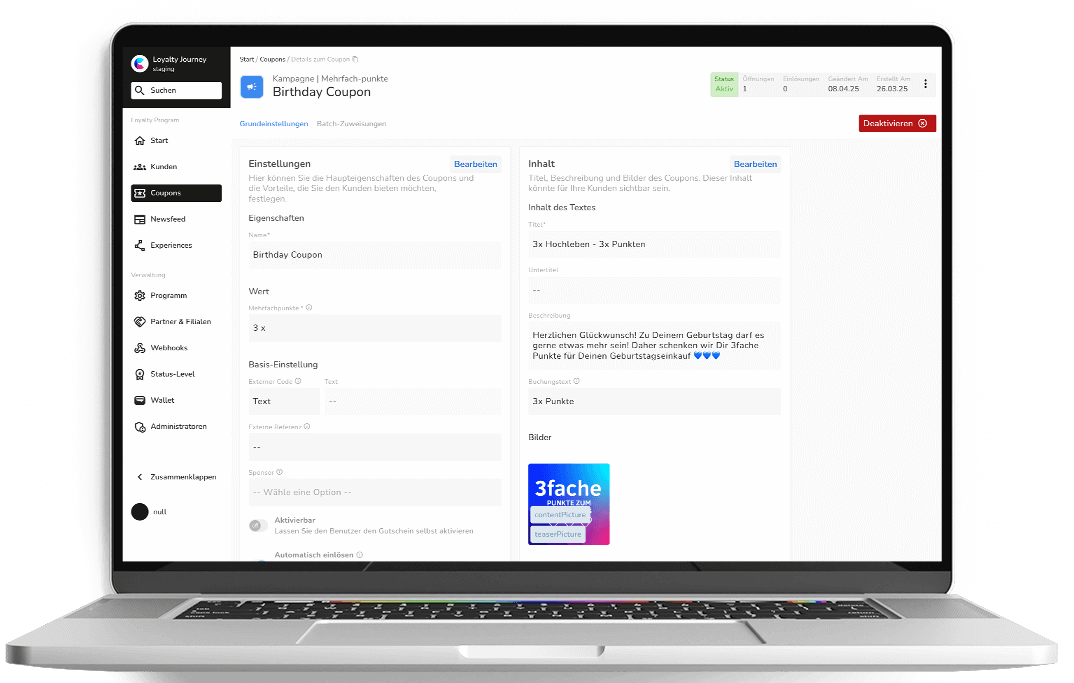
7 Steps to a Loyalty Program in a Shoe Store
Many projects fail not because of the software, but due to unclear goals, lack of POS integration, or insufficient in-store activation. Therefore, a successful loyalty project requires a clear rollout with KPIs, responsibilities, and training for store teams. Especially in shoe retail, sales staff often determine whether customers actually sign up and use the program in their daily lives.
- First, define your objectives. Do you want more repeat purchases, higher POS identification, more first-party data, fewer returns, or better reactivation?
- Thoroughly analyze your customer base. Separate occasional buyers, loyal customers, family shoppers, sneaker enthusiasts, and inactive segments.
- Choose the right mechanics. For traditional chains, a hybrid of points, status, and couponing is usually sensible, while for sneaker retailers, exclusivity and early access are often more appealing.
- Plan the technical integration early. POS, webshop, CRM, newsletter, and app or wallet must use the same customer identity.
- Involve store employees before launch. Pilot store trials often provide more valuable feedback than mere concept workshops.
- Communicate the benefits crystal clear. Customers must immediately understand why signing up and using it is worthwhile.
- Measure and optimize from day 1. Key metrics include enrollment rate, active members, repeat purchase rate, redemption rate, average order value, and POS identification.
If you want to systematically expand your customer loyalty, it also helps to look at strategic levers beyond program design, for example in our article on increasing customer loyalty. Because software only works effectively when processes, communication, and incentives align.
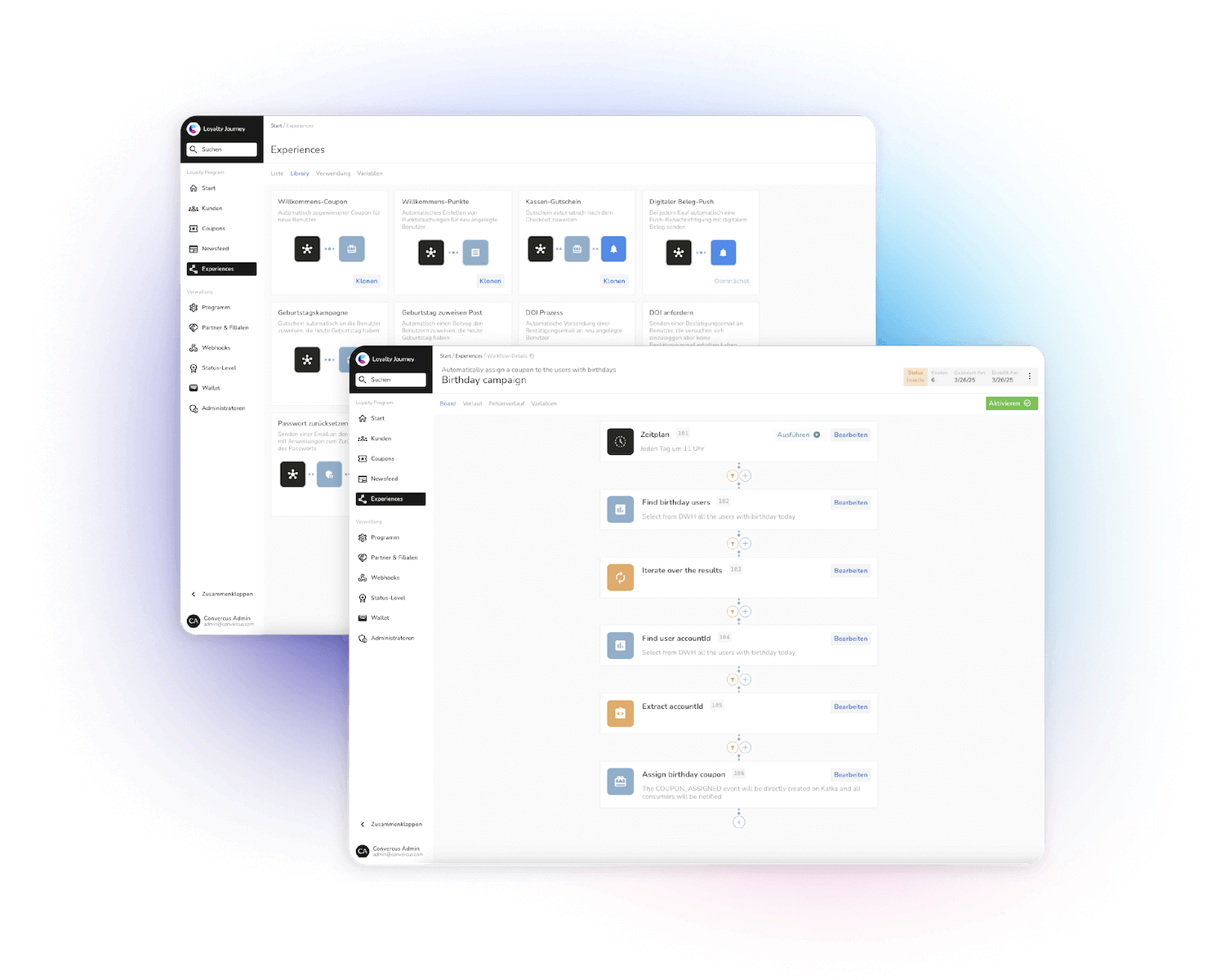
What to Look for When Choosing a Provider
When evaluating loyalty software for a shoe store, you shouldn't just compare feature lists. More important is whether the solution is robust, integrable, and team-friendly in real retail operations . Especially mid-market and enterprise retailers don't need an isolated system, but a platform that brings together POS, webshop, app, and marketing in an orchestration-ready manner.
The Key Selection Criteria
Build vs. Buy vs. Hybrid
In-house development sounds attractive, but in shoe retail, it often only makes sense if strong internal product and engineering resources are already available. In most cases, Buy or Hybrid is economically faster, because program logic, security, GDPR processes, and peak performance don't have to be built from scratch. At the same time, retailers should be careful not to get stuck in a monolithic vendor lock-in.
When a Specialized Platform Makes Sense
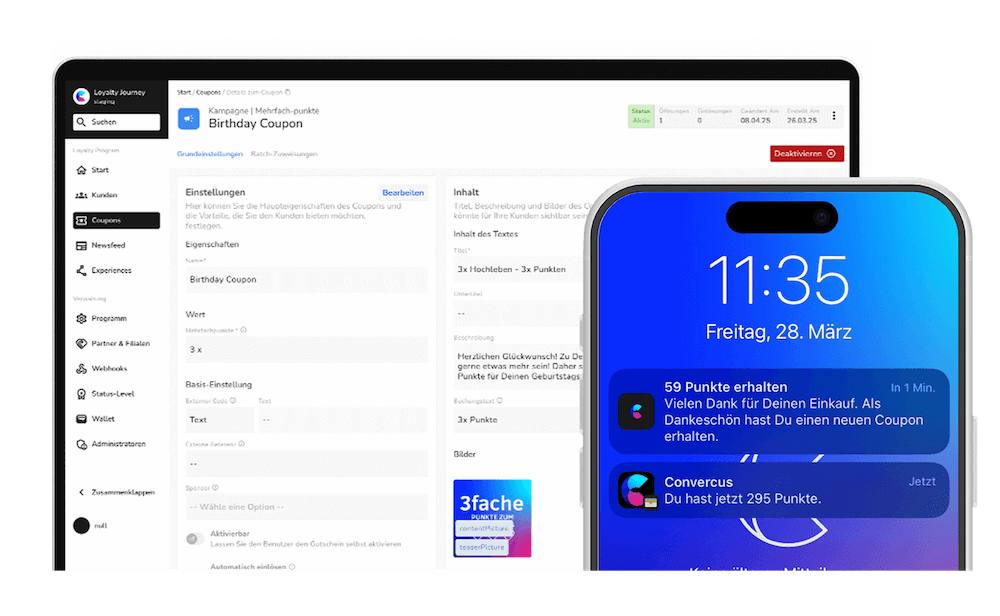
If you view loyalty not as a secondary function, but as a revenue and data lever, a specialized solution is usually the better approach. Convercus combines Loyalty, Couponing, Engagement, and API-first Integration in a platform designed for retail. This is relevant for companies with high scalability requirements: Convercus already handles 40M+ loyalty accounts, 116M+ transactions, and 22M+ redeemed coupons. For shoe retailers looking for a modern alternative to outdated or rigid systems, it is therefore worth taking a look at the Loyalty Solutions and the technical integration architecture.
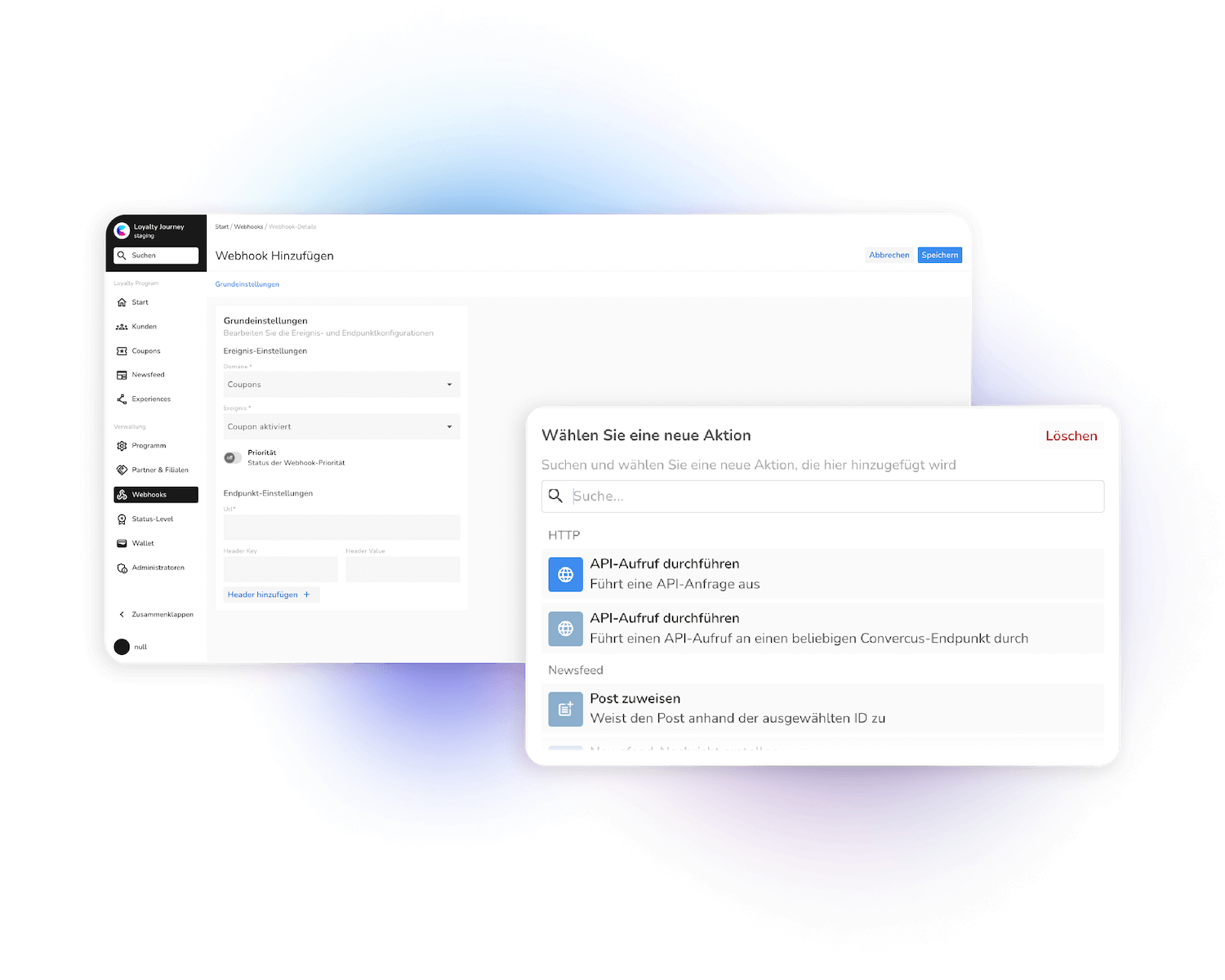
Conclusion: Loyalty Software is a Strategic Growth Driver for Shoe Stores
Shoe retailers will face massive transformation pressure in 2026. Precisely for this reason, loyalty is more than just a discount mechanism. Well-designed loyalty software links physical stores, online shops, apps, and wallets, creates first-party data, increases repeat purchases, and makes the retailer itself more relevant than merely selling products. Especially in shoe retail, quick benefits, clean POS identification, size and preference data, and a program that keeps customers engaged between purchases are crucial.
If you want to modernize an existing customer loyalty program or build a new omnichannel setup, Convercus is an obvious next option. The platform connects Loyalty Engine, Couponing, Engagement, and integration in a way that keeps both business departments and IT functional. Schedule a personal live demo with a loyalty expert and find out what your shoe store can achieve with a professional loyalty solution.
FAQ
How complex is the implementation of a loyalty program in a shoe store?
The effort primarily depends on your system landscape. If POS, webshop, and customer data can be seamlessly integrated, a project can be implemented significantly faster than with isolated legacy systems. Crucial elements are a clear program design and a pilot with selected stores.
Does loyalty software work with our existing POS system?
In many cases, yes, if the solution is built API-first. What's important is not the name of the system, but the quality of the interfaces, the availability of customer data, and the ability to process identification and transactions in real-time or reliably synchronized.
Can a loyalty solution for shoe stores be implemented in a GDPR-compliant manner?
Yes, provided that roles, consents, and information obligations are properly implemented. Articles 6, 13, and 28 of the GDPR are particularly relevant , as is Section 7 of the UWG for email advertising. In practice, you need transparent consent texts, robust data processing agreements, and clear deletion concepts.
What does loyalty software cost for a shoe store?
Costs depend on the number of users, transaction volume, channels, and implementation scope. For decision-makers, the expected ROI is therefore more important than the pure license price: Even moderate improvements in repeat purchases or POS identification can support the business case.
How long does implementation take?
Anything from a few weeks to several months is realistic, depending on complexity and internal resources. It becomes fast, especially when goals, rules, and data sources are established early and no more fundamental discussions need to be held during the ongoing project.
Can we migrate an existing bonus program?
Yes, that is often more sensible than a complete restart. Existing points, status levels, and customer histories can often be migrated, as long as data quality, mapping, and communication planning are accurate. A robust migration plan is important to ensure customers don't experience a loss of trust.


- 5x Return on Investment
- 80% Customer Identification
- 8x Customer Interaction
- +274% Repurchase Rate
.png)
.jpg)