







The Topic in Brief
- Gas stations today need more than price competition. With over 14,000 stations in Germany and low switching barriers, digital customer loyalty becomes a strategic differentiator.
- The economic logic lies in the non-fuel business. Good loyalty programs not only reward fueling but primarily increase shop, bistro, car wash, and, in the future, charging revenues.
- Data sovereignty and integration are crucial. Suitable loyalty software must seamlessly integrate POS, payment, forecourt, app or wallet, and data protection requirements in fuel retail.
- Convercus is a suitable loyalty software for this. The platform combines loyalty, couponing, engagement, and API-first integration, enabling gas station chains to build measurable and scalable customer loyalty.
Loyalty Software for Gas Stations: Why It's Now a Strategic Imperative
The German gas station market is highly competitive: At the beginning of 2025, there were 14,376 gas stations in Germany. For customers, this means short distances, low switching barriers, and high price transparency. For operators, it means: those who differentiate themselves solely on fuel price remain interchangeable. This is precisely why loyalty software is gaining importance in fuel retail.
mobility and convenience hub . While fuel still accounts for 60-70% of revenue today, sales from shops, bistros, car washes, and charging are growing in strategic importance. Therefore, modern customer loyalty must be able to do more than just award points for liters. Customer expectations are also clear: According to BearingPoint,
more than 60% of consumers would be more likely to visit a gas station if they could collect points or discounts there. At the same time, the MCS Convenience Campus 2024 shows that 78% of Germans have a favorite gas station. Loyalty is often already latently present – it just needs to be digitally activated, made measurable, and orchestrated across apps, wallets, shops, and forecourts.
Coalition Program or Proprietary Loyalty Solution? The Real Market Question
The situation in the German gas station market is unusual: major coalition programs are largely established. Aral works with PAYBACK, Esso with DeutschlandCard, and Shell relies on its own ClubSmart model. This creates a situation for many medium-sized and regional chains where they face a
strategic coalition dead end : The most well-known programs are either exclusively licensed or do not fit their own brand strategy.This is more than just a marketing issue. Those who commit to an external bonus ecosystem usually receive only limited control options, less proprietary first-party data, and less influence over earn-and-burn logic, campaign mechanics, or e-mobility scenarios. In contrast, proprietary loyalty software offers
data sovereignty, brand control, and omnichannel flexibility – but requires sound technical and operational implementation. This is particularly relevant for chains with 50 to 500 stations. They are large enough to operate a scalable program economically but often too heterogeneous to get by with simple punch cards, car wash passes, or isolated app promotions. Therefore, the real comparison is not 'points or no points,' but rather:
externally managed reach program or proprietary customer loyalty platform .How Loyalty Truly Makes Money at the Gas Station
The most common misconception in fuel retail is that loyalty must primarily function through fuel discounts. This is rarely economical because
fuel margins are thin . Successful programs therefore rely on a different logic: customers collect points when refueling or charging, and these are preferably redeemed in higher-margin areas such as coffee, shops, bistros, or car washes. This transforms loyalty from a discount tool into a
cross-selling engine for non-fuel revenues . A customer who is already refueling can be specifically guided to additional touchpoints: from the pump to a coffee deal, from a car wash purchase to a shop coupon, from a charging session to a bistro bundle. This is precisely where the economic leverage is created. Instead of sacrificing margin on liter prices, the contribution margin increases in the areas that are intended to support the gas station of the future.A simplified example illustrates this: A chain with 150 stations, 2,000 customers per station per month, and an average of €5 in shop revenue per visit generates €18 million in non-fuel revenue per year. With 40% loyalty penetration and a conservative 15% uplift on this revenue, this results in
€1.08 million in additional non-fuel revenue per year . With a 35% gross margin in the shop, this would equate to approximately €378,000 in additional gross profit – often more than the cost of a specialized SaaS solution.What Features Loyalty Software Needs for Gas Stations Today
A contemporary solution must do significantly more than just manage points. At its core, it needs a
loyalty engine with flexible earn-and-burn rules , status logic, and cross-location campaigns. Additionally, it requires couponing, personalized offers, wallet passes or an app, and integration with payment and POS processes. Especially in fuel retail, it is crucial that not only the shop but also the forecourt, car wash, and, in the future, charging stations are integrated into the same logic.For medium-sized operators, a monolithic suite is usually not practical; instead, a platform that modularly connects loyalty, couponing, and engagement is more suitable. This is precisely where a
flexible loyalty system with couponing ,engagement features and API-first integration is particularly valuable. This allows existing processes to continue being used without losing customer loyalty due to rigid system boundaries. The central architectural question is also: How does the customer access the program in everyday life? For many gas station chains, a
hybrid of wallet pass and app is ideal. The wallet pass lowers the entry barrier because no complex app usage is required. An app, however, provides more room for push communication, receipts, payment, and gamification. Those who wish to delve deeper can find a useful classification in the article on App-first Loyalty . Personalization and Marketing Automation in Fuel Retail

Gas station customers do not behave uniformly. Someone who only comes for diesel or premium fuel reacts differently than the daily coffee commuter or the EV driver taking a charging break. Therefore, the true value of loyalty software only emerges when transaction data is transformed into
segmented, automated, and relevant communication . This is precisely the difference between a digital punch card and a true customer loyalty strategy. In practice, a simple segmentation logic has proven effective:
Fuel-only customers
- should not be overwhelmed with generic discounts but rather guided towards high-margin add-on purchases with clear shop or car wash incentives. Coffee commuters
- often respond better to frequency mechanics, breakfast bundles, or time-limited coupons than to classic point-based logic. Full-service customers
- are ideal candidates for status levels, exclusive benefits, and personalized challenges across multiple touchpoints. EV drivers
- tend to expect digital convenience, transparent charging benefits, and meaningful on-site offers rather than purely fuel-related rewards. With effective orchestration, campaigns can be triggered automatically: by purchase frequency, inactivity, shopping cart contents, or location. A platform like Convercus supports such journeys through
data-driven engagement and marketing automation and helps transform customer insights into genuine relevance instead of mere mass communication. Further background information can also be found in the articles on increasing customer loyalty and customer win-back .Integration into POS, Forecourt, and Car Wash: What Matters Technically

The biggest hurdle is rarely the idea of a program, but rather the technical reality. Gas stations often operate with a
heterogeneous system landscape consisting of POS, payment, forecourt, car wash, and charging infrastructure . If these systems remain isolated, media breaks occur: points are not credited in real-time, coupons can only be redeemed in the shop, or EV charging sessions remain outside the customer profile.That's why an API-first approach is so important in the gas station environment. Modern loyalty software should connect existing systems rather than replace them. Equally relevant is offline capability at locations with unstable connectivity, as well as the ability to manage franchise and partner stations under uniform rules. For operators, this means:
central program control while accommodating local operational realities .Legally, the topic is also demanding. Especially when license plate recognition, app tracking, or personalized push communication come into play, specific GDPR requirements apply. Particularly relevant are
Art. 5 GDPR on data minimization, Art. 6 GDPR on legal basis, Art. 13 GDPR on transparency obligations, Art. 25 GDPR on Privacy by Design, and Art. 32 GDPR on security of processing. For tracking technologies in apps and mobile devices, it is also necessary to review § 25 TDDDG . Anyone considering Number Plate Recognition should carefully assess its use from a data protection perspective and clearly outline the information obligations. Practical Examples: What the Gas Station Market Already Shows
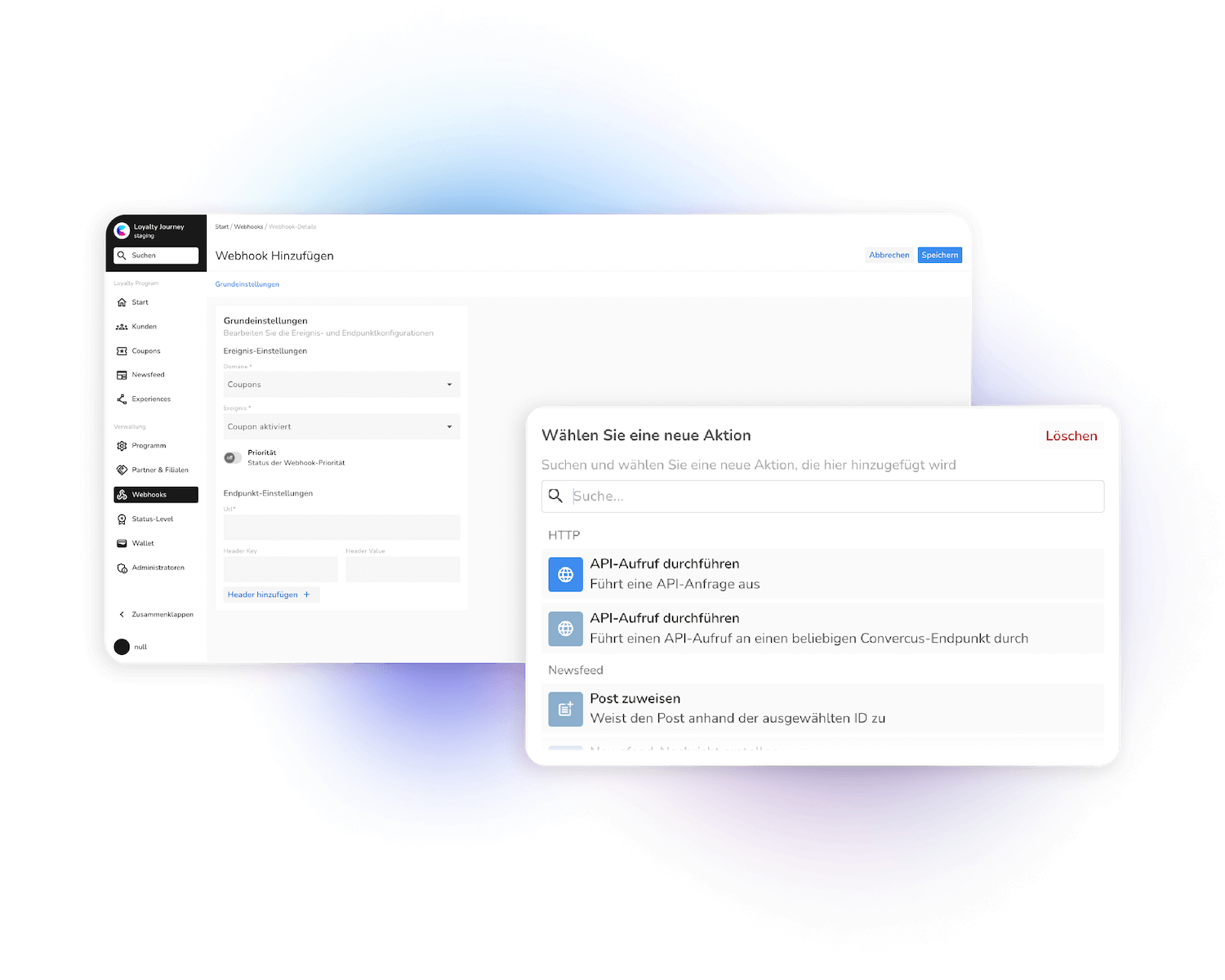
The German benchmark is currently clear: Aral, together with PAYBACK and digital touchpoints, demonstrates how loyalty, coupons, app, and mobile payment can work together. This model has a strong reach and is visible in the market. At the same time, it also shows the limitations of coalition approaches:
The program logic does not solely belong to the brand , and many competitors do not have access to this exact model.For medium-sized operators, team energie is therefore particularly interesting. This example shows that a proprietary mobility app with coupons and personalized offers also works beyond the very large corporations. Internationally, Z Energy in New Zealand serves as a good reference: an independent program was quickly built there, designed to be
simple, personal, and brand-specific . This exact logic is more relevant for many DACH chains than copying a large coalition setup. Selection decisions should therefore be guided less by glossy demos and more by three questions: First, whether the solution can demonstrably support non-fuel revenue. Second, whether the forecourt, shop, and charging infrastructure are integrated. Third, whether the architecture is
scalable, GDPR-compliant, and built for real gas station processes . Those who want to read more about the requirements for a modern platform can find an overview in the article onLoyalty Software a valuable addition.
Checklist: 7 Steps to the Right Loyalty Software for Your Gas Station Chain
Between the initial idea and go-live, there are usually several departments, different locations, and a lengthy decision-making process. With a clear sequence, the topic can be structured much faster. It's important not to start with the frontend, but with Business Case, Data Model, and Touchpoints.
- First, define the target lever, i.e., whether you primarily want to increase shop revenue, car wash sales, frequency, app usage, or EV charging loyalty.
- Then, analyze the existing systems, so it's clear early on which data from POS, payment, car wash, or charging systems are available.
- Decide on the target model, i.e., coalition, proprietary program, or a hybrid setup with a clear data strategy.
- Plan your earn-and-burn design economically, so that rewards primarily impact high-margin areas and don't unnecessarily erode fuel margins.
- Choose the right touchpoints, such as wallet, app, or hybrid, depending on the target audience, adoption barriers, and mobile payment strategy.
- Start with a clear MVP, for example, fueling plus shop couponing, before adding car wash, charging points, and status mechanics.
- Embed reporting and success management, so that penetration, redemption rate, add-on purchases, and reactivation can be continuously optimized.
Especially for mid-sized chains: A focused start is often better than a perfect requirements specification. Those who see real data early can more quickly fine-tune rules, journeys, and incentives for economic impact.
Conclusion: Loyalty Software for Gas Stations Must Do More Than Just Award Points
The most important insight is clear: Good loyalty software for gas stations is not just a bonus program for fuel, but a management tool for non-fuel growth, personalization, and omnichannel customer loyalty. It connects the pump, shop, car wash, app, wallet, and, in the future, EV charging, into a unified customer experience.
For many operators in the DACH market, a proprietary solution is strategically more attractive than an externally controlled coalition model – especially when data sovereignty, brand control, and technical flexibility are important. If you are looking for a partner for exactly this, then Convercus as loyalty software for mid-sized and enterprise structures is an obvious next step: modular, API-first, and designed for scalable customer loyalty instead of isolated discount mechanisms.
Schedule a personal live demo with a loyalty expert and discover how you can economically expand your customer loyalty in fuel retail.
FAQ
Is a proprietary loyalty program for gas stations more worthwhile than a coalition program?
That depends on your market position. For many mid-sized chains, a proprietary program is strategically more sensible because data sovereignty and program control remain with your own brand. Additionally, the major coalition models in the gas station market are often already exclusively assigned.
How complex is the implementation of loyalty software at gas stations?
The effort primarily depends on the existing system landscape. If POS, payment, shop, and other touchpoints can be connected via clear interfaces, a phased MVP launch is often more realistic than a big-bang rollout. A project with multiple departments and clear pilot phases is typical.
Does this work with our existing POS system?
In many cases, yes, provided the loyalty platform is API-based or suitable integration paths are available. The brand name of the system is less critical than the question of which transaction and customer events are technically available and how they can be processed in real time.
Can loyalty software for gas stations be implemented in compliance with GDPR?
Yes, but not automatically. It requires a thorough review of legal bases, transparency, consents, and technical safeguards. Particularly sensitive are app tracking, location data, and license plate recognition, because GDPR and, if applicable, Section 25 TDDDG become relevant here.
What does loyalty software for gas stations cost?
Costs vary greatly depending on the number of stations, functional scope, touchpoints, and integration effort. The license price alone is not the decisive factor, but rather the business case: If the solution measurably increases shop, car wash, or charging revenues, the project can quickly pay for itself.
What's the best way to get started in practice?
Ideally, start with a clearly defined use case, such as fueling plus shop couponing or a digital customer card plus car wash benefits. This quickly creates a reliable proof of value before further modules like status levels, reactivation, or e-mobility integration follow.


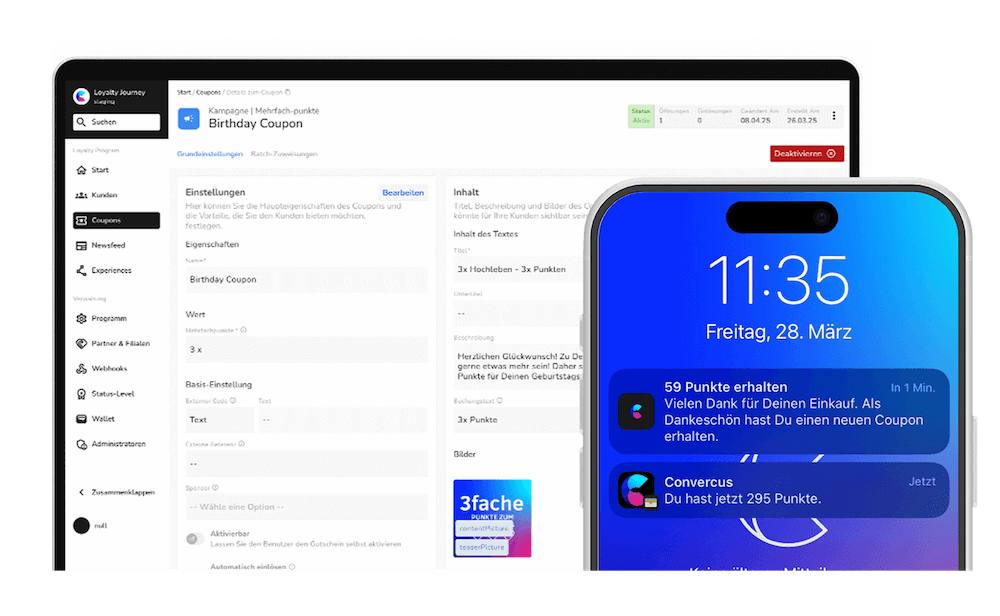
- 5x Return on Investment
- 80% Customer Identification
- 8x Customer Interaction
- +274% Repurchase Rate