











The topic, short and concise
- Loyalty becomes a growth driver for garden centers: In a market with a €19.7 billion volume, increasing competitive pressure, and a growing online share, retaining existing customers increasingly determines frequency and revenue.
- Seasonality is the key differentiator: Loyalty software for garden centers must be able to account for off-peak seasons, weather effects, spring peaks, and cross-selling between plants, hard goods, decor, pet supplies, and the café.
- A digital customer card alone is not enough: Programs only become truly relevant through omnichannel data, personalized coupons, marketing automation, GDPR-compliant consents, and measurable KPIs such as repeat purchase rate or coupon redemption.
- Convercus is a suitable software for loyalty in garden centers: If you want to bundle loyalty, couponing, engagement, and API-first integration into one platform, Convercus is a strong option for the professional digitalization of your customer retention.
Why Customer Loyalty is Now Strategic for Garden Centers
The German garden market remains large, but it's no longer comfortable. In 2025, according to IVG, the market volume was around €19.7 billion, while nominal sales decreased by 0.6%. For garden centers, this is a warning sign: If consumers postpone spending and formats from outside the industry gain market share, retaining existing customers becomes more important than simply acquiring new ones. This is precisely where loyalty software for garden centers comes in.
In addition, there's a structural shift in purchasing behavior. The e-commerce share in the garden market is growing again and now stands at 7.1% of the retail-relevant market. While this is still below the general retail average, it increases the pressure to finally integrate brick-and-mortar and digital touchpoints. Customers who shop in-store also want to find benefits online or in an app.
The 80/20 rule is particularly relevant: A small portion of highly engaged garden customers often generates a disproportionate share of sales. A modern customer loyalty software helps to identify these loyal customers, activate them specifically, and systematically increase their Customer Lifetime Value. For garden centers, loyalty is therefore no longer a side project, but a lever for retention, predictability, and better margins.
Status Quo in German Garden Centers: Much Potential, Little Systematic Approach
In many businesses, customer loyalty has evolved historically: plastic cards, stamp booklets, paper forms at the checkout, or bonus letters by mail. This often works surprisingly well for a long time in everyday operations, but it hardly scales. As soon as multiple locations, online orders, cafe sales, or personalized promotions are added, these become manual processes become a barrier to growth.
At the same time, the market is evolving. Dehner, with its "Vorteilswelt" (benefits world), demonstrates that omnichannel loyalty is possible in the garden retail sector. Retail groups like Sagaflor are visibly advancing digital customer cards. Nevertheless, the market's maturity level varies greatly: While chain stores are already thinking cross-channel, many owner-managed garden centers still operate without reliable first-party data.
- Analog programs provide hardly any usable data and allow neither precise segmentation nor automated re-engagement during the off-season.
- Fragmented system landscapes make it difficult to connect POS, online shop, app, email, and couponing.
- Uniform offers for everyone cause wasted efforts, even though plant buyers, decor buyers, and cafe guests differ significantly.
- Off-season engagement is lacking, even though October to February would be crucial for re-engagement, planning, and advice.

Digitizing customer loyalty in garden centers therefore doesn't just replace a card. It creates the foundation for better personalization, more targeted communication, and measurable repeat purchases.
What Loyalty Software for Garden Centers Must Be Able to Do
A good solution must do more than just manage points. In garden retail, what matters is seasonality, omnichannel capability, and easy integration. Therefore, the software should not be designed generically, but rather tailored to the reality of spring peaks, weather-dependent purchases, multiple product categories, and often limited IT resources.
Seasonal Campaign Logic Instead of Static Bonus Mechanics
Garden centers do not have a consistent year-round business. Therefore, suitable loyalty software must support calendar logic, time-limited multipliers, re-engagement campaigns, and flexible validities. Double points in the off-season, spring activations, or autumn campaigns for planting season and winter preparation are significantly more effective in garden retail than a rigid standard program.
In-store, Online, and Mobile Must Work Together
Today, customers expect benefits to apply across all channels. An App-first Loyalty with a digital customer card or wallet pass simplifies use at the checkout and reduces friction. Omnichannel Loyalty in a garden center means: collecting points in-store, receiving coupons on mobile, redeeming them online, and recognizing service benefits across all touchpoints.

Integration, Multi-Location Capability, and Retail Group Logic
Whether a single location, a chain, or a retail group: the solution should combine central rules with local customization. Clean interfaces to POS, ERP, shop, and marketing systems are important. An API-first approach reduces manual effort and ensures future-proofing. Central Program Logic with Local Flexibility is a real success factor, especially in the German garden center market.
Data Protection Must Be Properly Set Up from the Start
For digital customer loyalty, consent and transparency are mandatory. For personalized communication, typically Art. 6 para. 1 lit. a GDPR for consent, Art. 13 GDPR for information obligations, and Art. 28 GDPR for data processing agreements come into play. For app or web tracking, § 25 TTDSG is also relevant; for email marketing in an existing customer or opt-in context, § 7 UWG should also be carefully reviewed.
If loyalty, couponing, and marketing automation are to work together on one platform, a specialized provider makes sense. Convercus combines Loyalty, Couponing, Engagement and API-first integration into a solution designed for omnichannel retail, thus fitting well with the requirements of modern garden centers.
Which Loyalty Mechanics Truly Work in Garden Centers
In garden retail, it's not the loudest discount campaign that matters, but the right mechanics for the assortment, season, and customer type. Successful programs combine economic incentives with advice, experience, and relevance. This is precisely what differentiates a garden center from a DIY store and a discounter.
Point Systems and Status Models as a Stable Foundation
A point system is usually the pragmatic entry point because it's easy for customers to understand and for teams to explain. Supplemented with status tiers, frequent buyers, hobby gardeners, and occasional customers can be addressed differently. Status Benefits Instead of Permanent Discounts are often more margin-friendly, for example, through early access, extended return rights, or exclusive consultation appointments.
Weather-Based Coupons and Automation Create Relevance
Hardly any industry reacts as directly to weather and season. Therefore, dynamic offers are particularly valuable: planting promotions when sunny, houseplants or indoor decor when rainy, targeted communication about protection and care before frost. With automated Couponing and trigger logic, it is possible to set up weather- and behavior-based campaigns without constant manual effort.
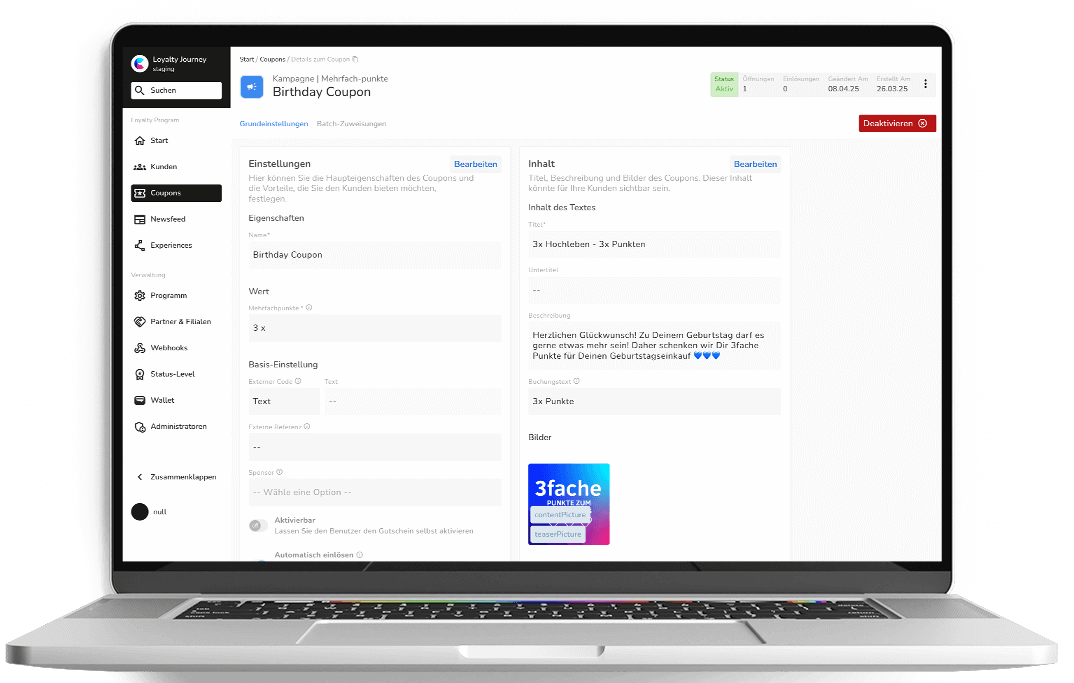
Experience Rewards, Knowledge, and Gamification Differentiate More Strongly
Garden centers have an advantage that generic retailers cannot copy: advisory expertise. Therefore, not only sales should be rewarded, but also participation in workshops, seasonal challenges, or the use of care tips. A combination of Engagement, gamification, and useful content can create significantly stronger loyalty in everyday life than pure price advantages. Knowledge Transfer Becomes a Loyalty Mechanic, when customers not only save money but also become better gardeners.
Cross-selling is also particularly strong: Those who buy perennials often need soil, fertilizer, pots, or plant protection. Loyalty software makes these connections visible and activates them specifically, instead of just distributing general discounts.
ROI, Benchmarks, and the Most Important KPIs for Garden Centers
Anyone looking for loyalty software for garden centers ultimately wants to know if the investment pays off. Public DACH figures are rare, but the direction is clear. An analysis of 148 US garden centers showed that only 30.41% used a loyalty program, but these programs already accounted for 56.64% of sales from loyalty members. For high-performers, the share was even 77.56%.
What These Figures Mean for German Garden Centers
The benchmarks are not from the DACH market, but they are very insightful for the mechanics: When loyal customers are identified, rewarded, and regularly engaged, frequency, basket size, and re-engagement increase. Not the card itself, but the use of data generates the economic effect.
Conservative Calculation Example for 3 Locations
The following example shows how even moderate improvements can have an impact. It is based on garden center benchmarks discussed in the market and is intended to provide an order of magnitude, not a blanket guarantee.
These KPIs You Should Continuously Monitor
In everyday operations, ten dashboards are not crucial, but rather a few clear key figures: active members, repeat purchase rate, coupon redemption, average receipt value, re-engagement rate, and sales share of identified customers. Especially for garden centers, it is also important how members behave between peak season and off-season. Those who create transparency here can deploy marketing budgets much more precisely.
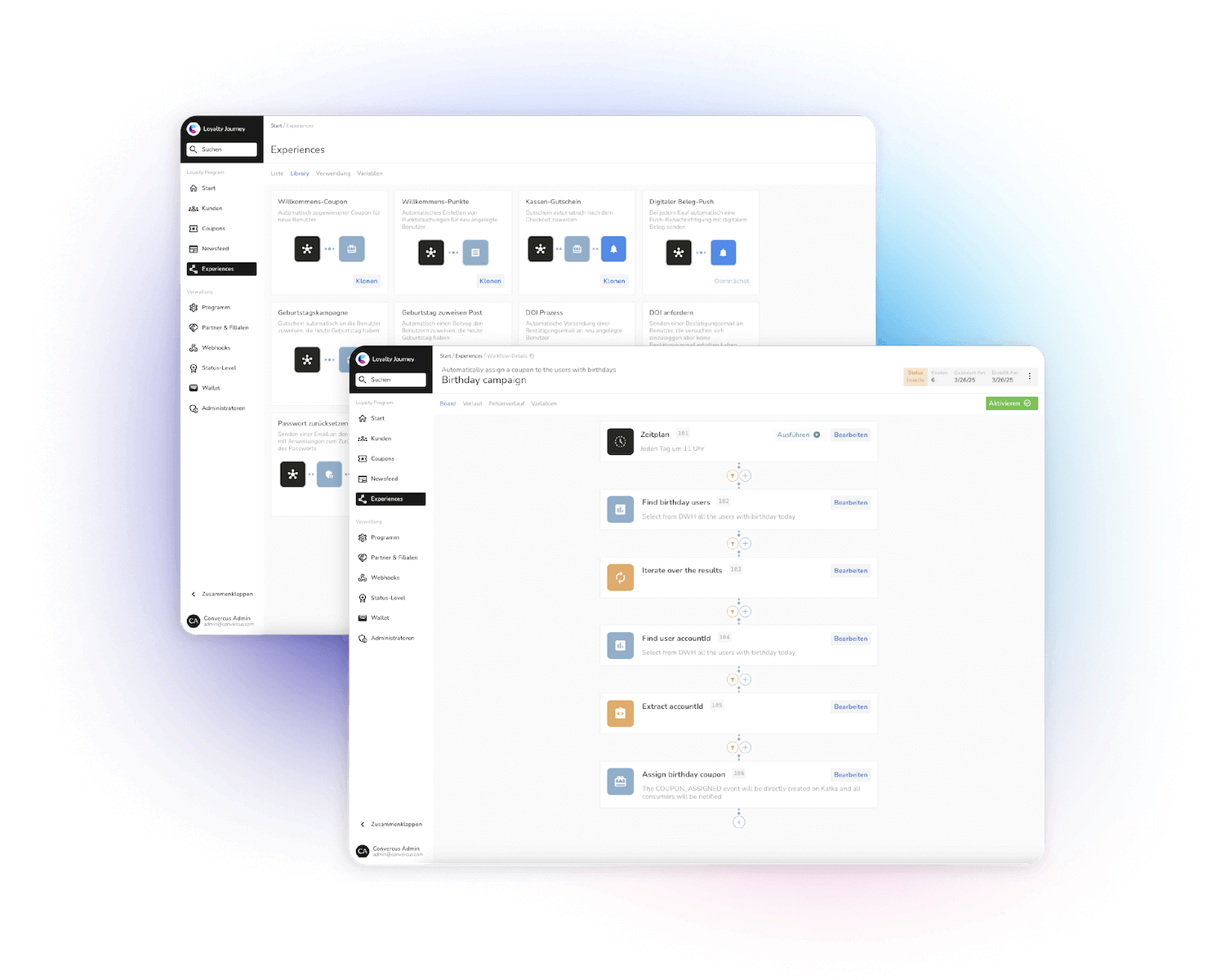
5 Steps to Introducing Loyalty Software in a Garden Center
Many operators underestimate not the strategy, but the organizational implementation. In practice, implementation works best when it is planned step-by-step and along real touchpoints . This way, it's not a theoretical program that emerges, but a system that is truly used at the checkout, in marketing, and in service.
- Assess the current situation: Document what customer data is currently available at the checkout, in the shop, via newsletter, and in any paper cards.
- Define goals: Decide whether to prioritize frequency, average transaction value, reactivation, an omnichannel data foundation, or cross-selling.
- Choose the right mechanism: For many garden centers, a mix of points, personalized coupons, and seasonal activations makes more sense than a pure discount model.
- Plan integration carefully: Check data exchange with POS, shop, CRM, and email systems, as well as roles for branches, locations, or network partners.
- Engage your team and customers: Train checkout staff, simplify registration, and clearly communicate the benefits via in-store promotions, app, email, and social media.
From a technical perspective, aim for low friction. A loyalty setup is sustainable when registration, redemption, and reporting function seamlessly without media breaks. For companies with increasing complexity, it's beneficial if a provider offers not just software, but also success management. Convercus is particularly relevant when multiple touchpoints, couponing, and scalable omnichannel processes need to work together; the platform already handles over 40 million loyalty accounts and 116 million transactions.
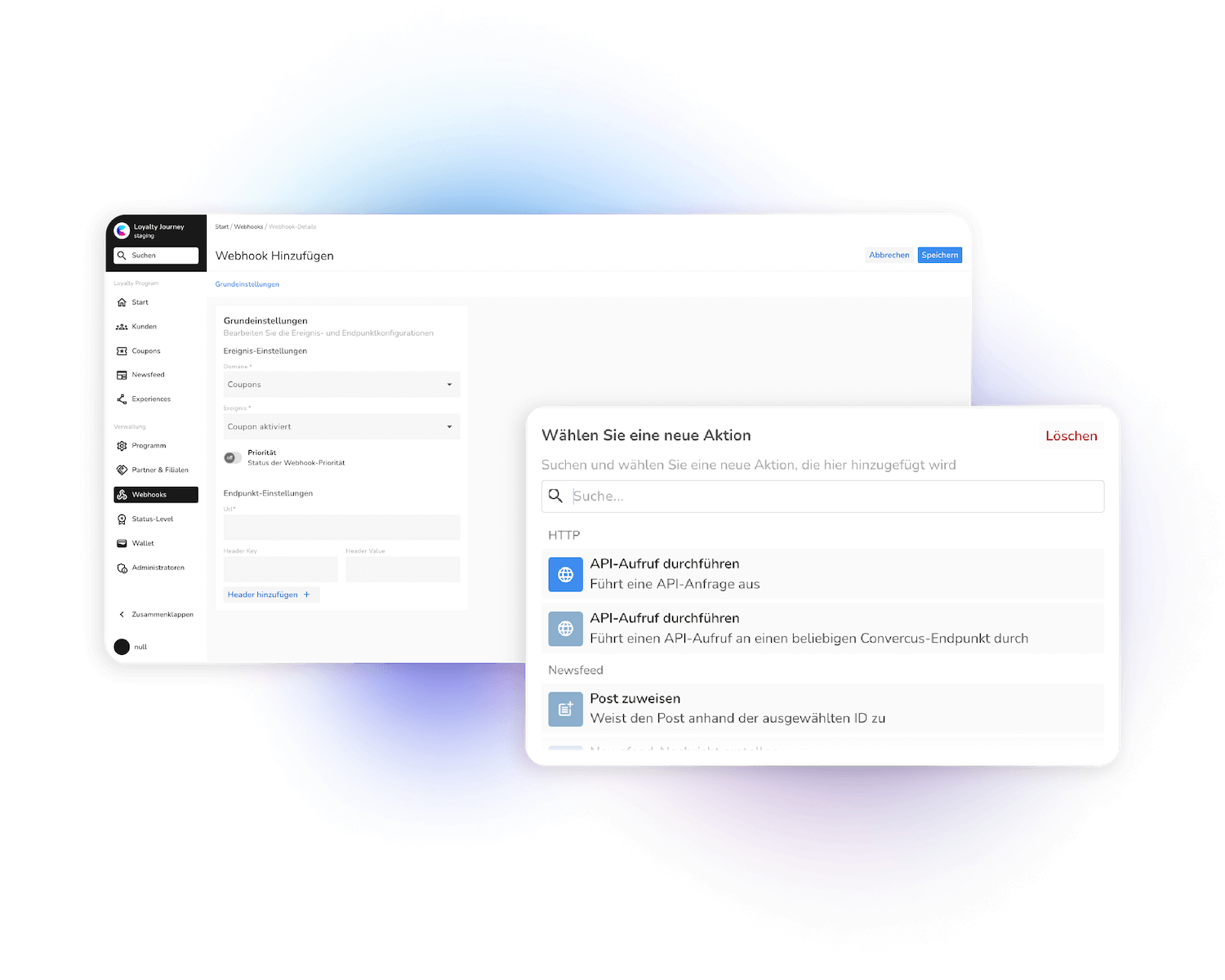
If you're also looking for more ideas for frequency and reactivation campaigns, the articles on customer loyalty and customer win-back are also worth a deeper look.
Conclusion: Loyalty software is no longer a nice-to-have for garden centers
Garden centers face competitive pressure, often operate with fragmented processes, and miss out on valuable potential during the off-season. Good loyalty software therefore combines digital customer cards, personalized coupons, omnichannel data, and seasonal automation into a practical system. This is precisely what makes customer loyalty in garden retail measurable and scalable.
If you want to replace your existing card program, engage customers across channels, or build a future-proof loyalty architecture, Convercus is worth considering. The platform is designed for loyalty, couponing, and customer engagement in retail, making it well-suited to the demands of modern garden centers. Schedule a personal live demo with a loyalty expert and discover how you can systematically enhance customer loyalty at your garden center.
Frequently Asked Questions about Loyalty Software for Garden Centers
What does loyalty software for garden centers cost?
This depends on the number of users, locations, feature scope, and integration effort. What's crucial is not just the license price, but how quickly the solution pays for itself through increased repeat purchases, better coupon redemption, and reduced wasted efforts.
How complex is it to implement a loyalty program?
With a clear setup, you can start lean, for example, with a digital customer card, basic point logic, and a few core campaigns. It becomes more complex when multiple locations, an online shop, an app, and existing data sets need to be integrated.
How can a garden center attract more customers?
Garden centers primarily achieve sustainable new customer acquisition by engaging existing customers – because satisfied loyal customers make recommendations, visit more often, and spend more. A structured loyalty program that combines purchase incentives, personalized offers, and targeted reactivation campaigns can measurably increase visit frequency and average basket value.
Does this work with our existing POS system?
In many cases, yes, provided the loyalty solution has clean interfaces. What's important is not the system's name, but whether transactions, identification data, coupon information, and status changes can be reliably transferred.
How do I encourage more traditional loyal customers to use a digital customer card?
The best way is to ensure maximum ease of use: a QR code at the checkout, a wallet pass instead of a mandatory app, and clear benefits like a birthday coupon, faster identification, or exclusive promotions. The key is for the digital solution to feel more convenient than the old plastic card.
Can we migrate an existing customer card program?
Generally, yes. Points, customer data, status, or historical consents can be transferred depending on data quality. Before migration, data cleansing, mapping, and a communication plan should be carefully prepared to avoid any customer friction during the transition.


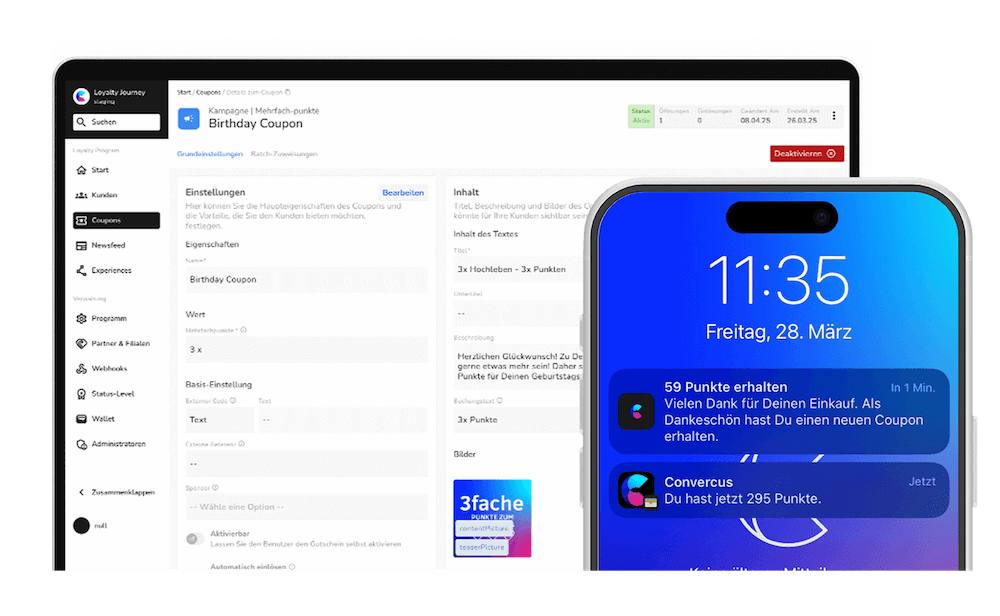
- 5x Return on Investment
- 80% Customer identification
- 8x Customer interaction
- +274% Repeat purchase rate
.png)
.jpg)