








The Topic in Brief
- Annual passes alone are no longer enough. Modern theme parks need data, personalization, and automated communication instead of mere access logic.
- The best loyalty software for theme parks connects all touchpoints. Gate, POS, F&B, merchandise, app, hotel, and wallet pass should converge into a single guest profile.
- Experience-based benefits usually have a stronger impact than discounts. Status, exclusive events, reservation windows, challenges, and personalized coupons increase repeat visits and in-park spend more effectively than blanket price reductions.
- Convercus is a software for Loyalty, Couponing, and Engagement. Those who want to transition from the annual pass model to an API-first loyalty ecosystem can use it to build customer loyalty in theme parks in a structured way.
Loyalty Software for Theme Parks: Why Traditional Annual Passes Are No Longer Enough
From Plastic Card to Loyalty Ecosystem
The German amusement and theme park market is large enough to approach customer loyalty strategically: Approximately 2,700 VAT-registered amusement and theme parks together generate approximately €2.2 billion in revenue, with around €2.37 billion projected for 2025. At the same time, there's increasing pressure not just to sell tickets, but to systematically build repeat visits, in-park revenue, and first-party data. This is precisely where the traditional annual pass reaches its limits.
While an annual pass secures upfront revenue, it often provides too little data, too little personalization, and too little control. Many parks still manage season passes separately from POS, app, hotel, or F&B. The result: regular guests receive the same communication as one-time visitors, off-season contact breaks down, and valuable behavioral data remains in silos.
Annual Pass vs. Loyalty Program
The difference is strategic: An annual pass is a pricing model, not a full-fledged loyalty program. The market itself shows that parks are rethinking their loyalty models: While Europa-Park bundles demand with its ResortPass, Phantasialand has discontinued its former club model and shifted its focus to new experience-based approaches. For operators, this is a clear signal to redesign customer loyalty.
What Loyalty Software Specifically Does for Theme Parks
Definition in the Park Context
Under Loyalty Software for Theme Parks refers to a platform that connects admission, membership, points, couponing, communication, and data analysis across the entire guest journey. Unlike traditional retail, the logic doesn't end at the checkout: Gate, attractions, F&B, merchandise, hotel, app, and wallet pass are all relevant. The goal is to transform individual visits into a lasting relationship.
For marketing and operations, this is particularly relevant because guests behave very differently in the park. Families, locals, tourists, or annual pass holders have different frequencies, different basket sizes, and different triggers. Good software must be able to reflect these differences in its rules, segments, and communication.
The Five Core Functions of Modern Platforms
- A modern platform manages digital memberships and annual passes so that renewals, status, and access are no longer tied to plastic cards or manual processes.
- It rewards behavior across all touchpoints, ensuring that not only admission but also F&B, merchandise, hotel, and add-ons are integrated into the loyalty logic.
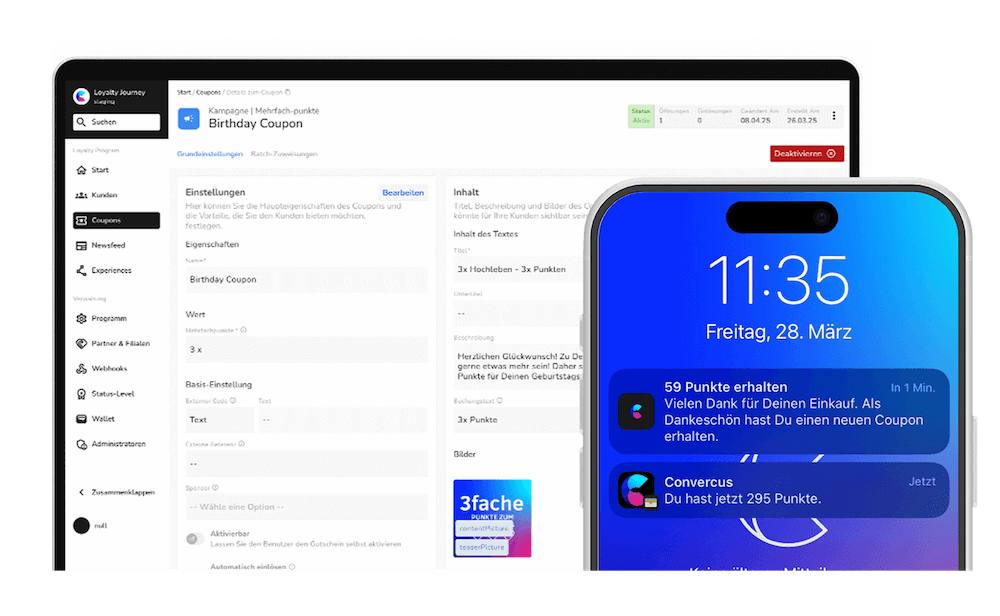
- It controls couponing and personalized offers, for example, a family lunch coupon after a second visit or an exclusive merchandise offer before Halloween events.
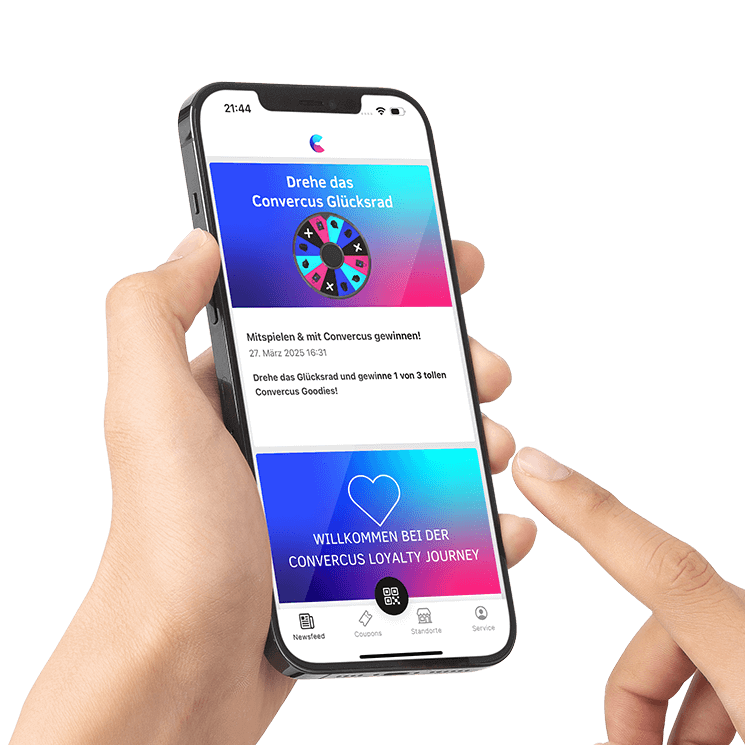
- It enables app and wallet-based interaction, allowing guests to view and redeem their status, points, or benefits on their mobile devices at any time.
- It generates an analyzable guest profile that enables segmentation, automation, and better decision-making for marketing, CRM, and park operations.
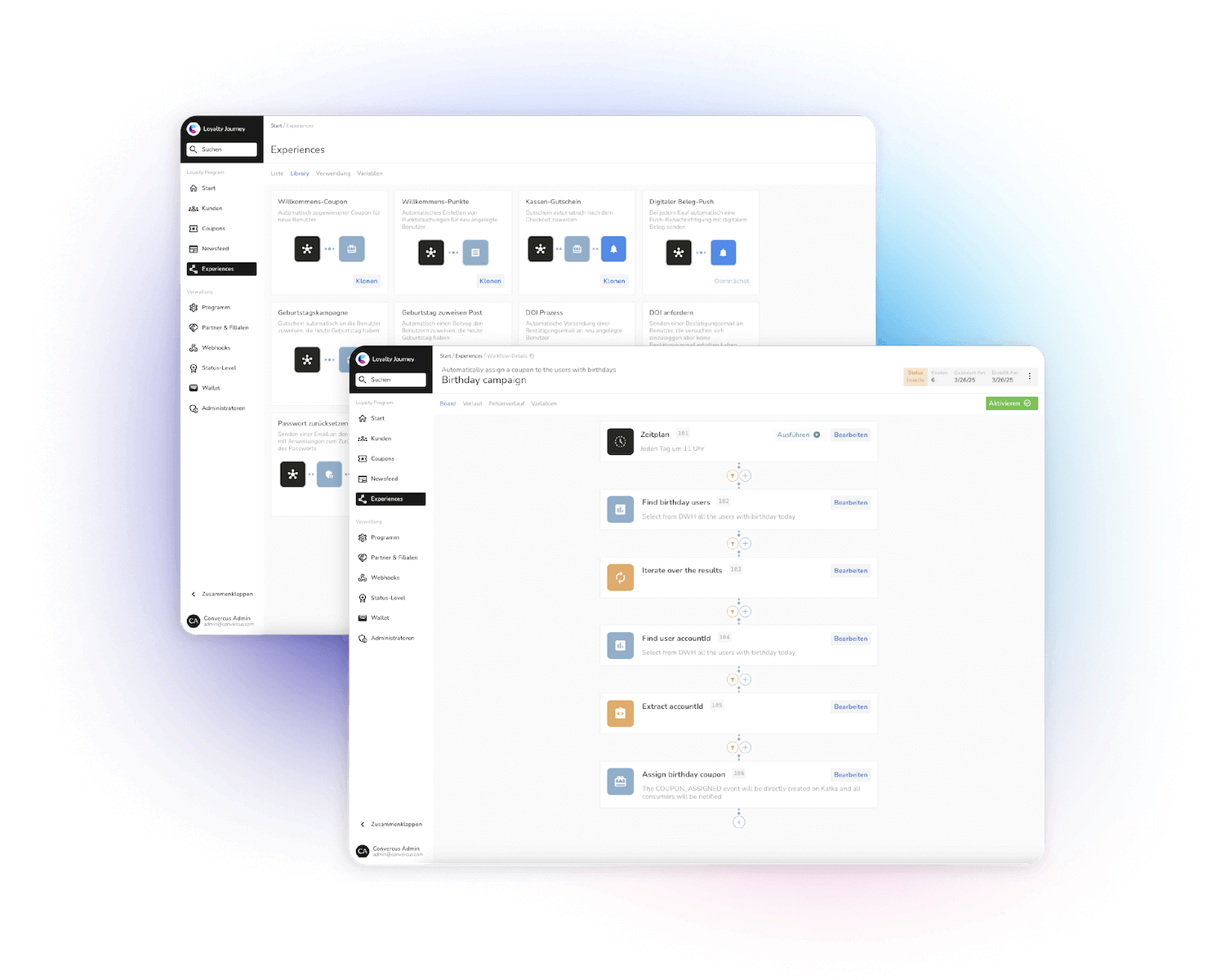
If you want to delve deeper into the fundamentals, it's also worth looking at the article on what customer loyalty software specifically does as well as on App-first Loyalty. Especially in the theme park context, the smartphone becomes the central touchpoint for reservations, wallet passes, and offer management.

The Four Loyalty Program Types for Theme Parks
Sensibly Combining Tiered Loyalty, Points, and Membership
In theme parks, programs work particularly well when they combine repeat visits, status, and emotional benefits . Tiered models with Silver, Gold, or Platinum levels motivate families and regular guests to reach certain visit or revenue thresholds. Point programs are also suitable for visibly rewarding smaller transactions like snacks, photos, or merchandise.
The model becomes even stronger when a free loyalty program is combined with a paid membership. This provides an easy entry point for first-time visitors, while frequent visitors commit to a higher level with annual fees, fast-lane benefits, reservation windows, or exclusive events. Membership creates predictable revenue, loyalty creates ongoing engagement – and combining both is the most sensible approach for many parks.
Why Experience-Based Benefits Often Work Better Than Discounts
Theme parks sell emotions. That's why exclusive benefits like early access, reservable visit days, meet & greets, bonus rides, hotel perks, or seasonal special events often have a stronger impact than blanket discounts. Especially for Gen Z and families, the feeling of unlocking something special is important. Gamification can further amplify this effect, for example, through collection challenges, digital badges, or in-app park rallies.
If you are fundamentally working on increasing customer loyalty, you should therefore not only think about price reductions but also about mechanisms that combine status, fun, and relevance. In theme parks, experiential value is often the stronger loyalty lever.
Theme Park-Specific Challenges – and How Software Solves Them
Seasonality, Data Silos, and Heterogeneous Guest Types
The biggest peculiarity of theme parks is not the admission logic, but the low visit frequency combined with high visit value. Those who visit only 1-5 times a year need to be actively re-engaged between visits. Successful parks therefore use off-season communication with early-bird offers, event previews, birthday benefits, family coupons, or exclusive pre-sale phases. Without automation, this communication often remains incomplete in practice.
In addition, there are data silos. Ticketing, POS, hotel, app, and potentially RFID or cashless systems often run separately. This results in a lack of a unified guest profile, which would be necessary for personalization. A platform like Convercus can take a modular approach here, by having the Loyalty Engine, Couponing and Engagement work together on the same data logic, instead of ending up in separate tools.
In-Park Spend Doesn't Increase Through Admission Logic Alone
For many parks, the real leverage isn't the ticket, but the additional revenue generated within the park. F&B, photos, merchandise, fast passes, or hotel add-ons determine profitability. Therefore, loyalty software should always be used to trigger targeted purchase incentives at the right touchpoint – for example, a snack coupon in the afternoon, a family meal during bad weather, or a merchandise offer after a themed ride.
This becomes particularly effective in an app- or wallet-supported journey. Programs with a mobile interface typically generate significantly more interaction; with a white-label app, up to 8x higher customer interactions possible than without an app. This is precisely why re-engagement is not just a marketing topic, but a product and experience topic. For off-season campaigns, a structured look at customer win-back can be useful.

Technical Requirements: What IT Decision-Makers Need to Consider
API-First, RFID, and Performance on Peak Days
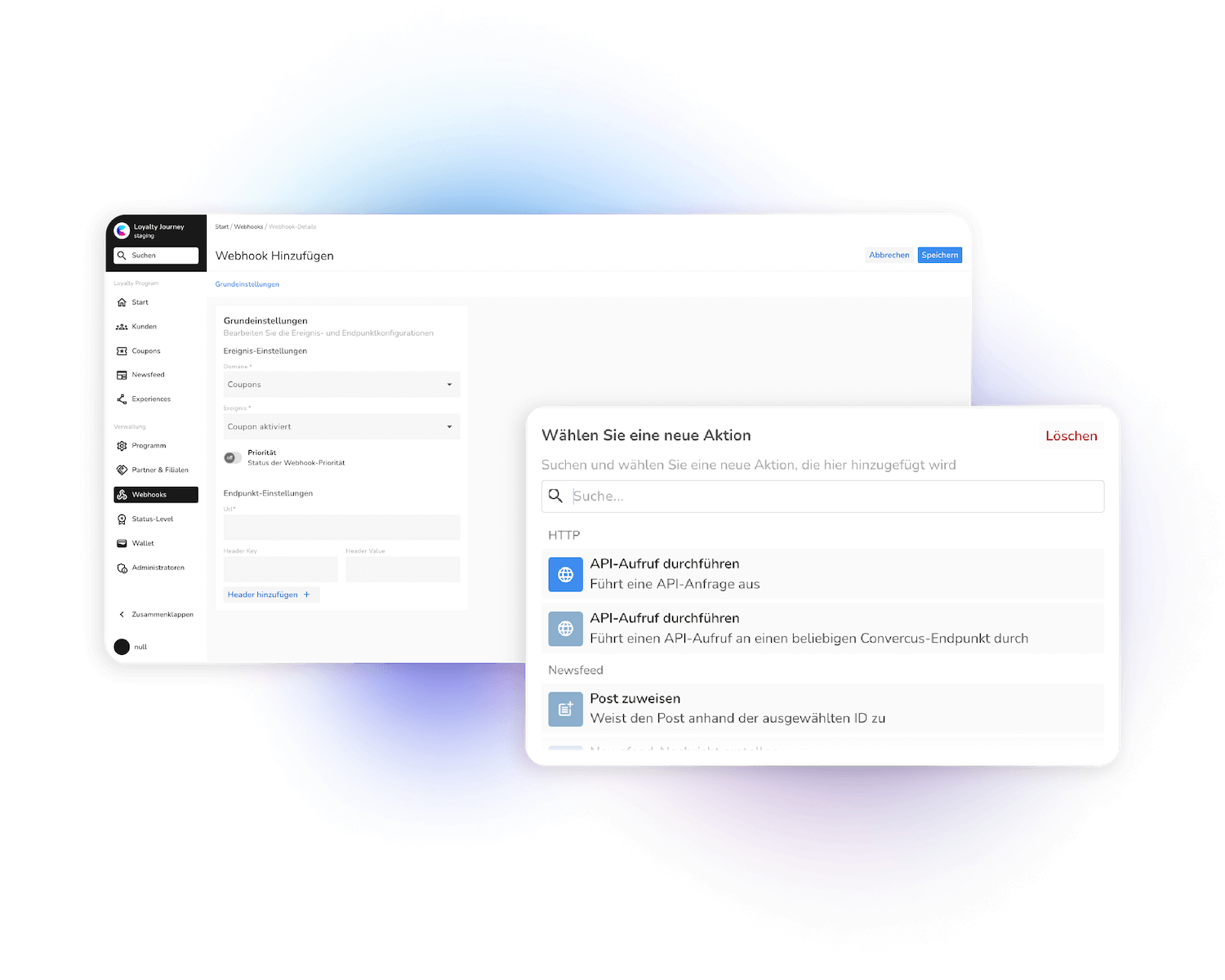
Technically, in a theme park, it's not about the most beautiful interface, but the seamless integration into the existing park IT infrastructure. Crucial is an API-first architecture that can connect ticketing, POS, app, hotel PMS, CRM, and potentially RFID or cashless components. On peak days with very high visitor numbers, the system must also be real-time capable: point credits, status checks, or coupon redemptions must not cause noticeable latencies at either the gate or checkout.
RFID or NFC media are not an end in themselves. They become valuable when transactions, access, and redemptions flow back into a central loyalty data model. This creates actionable patterns: Who visits which zones, when are purchases made, which benefits are actually used? For IT teams, this means: Loyalty software must be more than just point management; it is an integration component for guest experience and revenue management.
GDPR, UWG, and Secure Guest Data Processing
Legally, the setup should clearly distinguish between contract fulfillment and marketing. For memberships, access control, or benefit fulfillment, Art. 6 para. 1 lit. b GDPR is often considered as a legal basis. For personalized advertising communications via email or SMS, documented consent is regularly relevant; additionally, § 7 UWG regarding unreasonable nuisance must be observed. Additionally, transparency obligations under Art. 13 GDPR, storage limitation and data minimization under Art. 5 GDPR, Privacy by Design under Art. 25 GDPR, data processing agreements under Art. 28 GDPR, and security requirements under Art. 32 GDPR apply.
- The software should map role and rights concepts so that marketing, operations, and service only access the data they truly need.
- It should store consents, preferences, and opt-ins in a traceable manner, ensuring that segmentation and automation remain auditable.
- It should provide integrations in such a way that existing systems can be connected without creating shadow processes in Excel or manual lists.
- It should be highly available and scalable, because outages at the gate or POS directly impact revenue and guest experience.
You can find more on the technical side under Tech and Integration.
Best Practices from the Theme Park World
Europa-Park, Disney, and Six Flags Show Three Different Directions
Europa-Park demonstrates how an annual pass can be digitally enhanced. The ResortPass links free admission with app-based reservation of visit days. This creates a dual benefit: an engagement touchpoint and crowd management in one. For many DACH parks, this is an exciting example because reservation, status, and communication converge in the same journey.
Disney goes even further, conceiving loyalty as an ecosystem across parks, hotels, merchandise, and media worlds. This isn't 1:1 replicable for medium-sized parks, but the strategic idea is relevant: guests become more loyal when benefits are experienced across channels. Six Flags, in turn, shows that even action-based rewards can work, such as points for rides or shows. This is particularly interesting if a park wants to encourage app interaction, challenges, and specific park zones.
What Mid-Market Parks Can Learn
Not every park immediately needs a huge membership ecosystem. Often, a clean start is enough: digital annual pass, simple status logic, couponing for F&B and merchandise, trigger communication after a visit or season phase. The crucial thing is that the program fits your specific visitor structure. A tourist park requires different mechanisms than a locally-oriented family park.
In practice, a phased model usually proves effective: first build the data foundation and identity, then roll out benefits, and finally deepen personalization. Those who jump straight into complex rules before ticketing, POS, and communication are properly connected usually only create new complexity.
ROI Calculation: What Loyalty Software Can Bring Your Theme Park
Model Calculation for a Mid-Sized Park
A robust business case analysis should always be based on your actual visit, revenue, and frequency data. However, a model calculation for a park with 1.5 million visitors per year can serve as a guide. It primarily shows where value is created: not just through additional visits, but through higher in-park spend and better membership conversion.
The values are illustrative, but they highlight an important point: Even small improvements in frequency and spend have a significant impact on revenue, because the average spend per visit in a theme park is significantly higher than in many retail scenarios.
Key KPIs for Management and Optimization
For implementation, it's crucial that loyalty, couponing, and automation operate on the same data foundation. Only then can KPIs be understood not in isolation, but along the entire guest journey.
7 Steps to the Right Loyalty Software for Your Park
- The Repeat Visit Rate shows whether registered guests actually return more frequently after the program's introduction.
- The In-Park Spend per Guest reveals whether coupons, status benefits, and add-on offers generate additional revenue.
- The Membership or Annual Pass Conversion Rate shows how effectively occasional guests are converted into predictable revenue.
- The Redemption Rate answers whether benefits are relevant enough to be redeemed, or if they only exist on paper.
- The Off-Season Engagement Rate measures whether email opens, clicks, app interactions, or reservations remain stable even outside of peak season.
- The Customer Lifetime Value shows whether the program economically makes more of a guest than just the next ticket sale.
The selection of loyalty software should not be approached as a purely IT project nor as an isolated marketing initiative. Successful implementations connect business model, system landscape, and guest experience. It is particularly helpful to align the selection process with a few clear steps and to involve relevant stakeholders from CRM, IT, Operations, and management in each step.
If you are already evaluating potential solution components, Loyalty, Couponing and Engagement are the three areas that work particularly closely together in a theme park. For many operators, this combination is precisely the step from being an annual pass seller to a true loyalty ecosystem.
Conclusion: Loyalty Software Becomes a Growth System in Theme Parks
Loyalty software for theme parks is far more than just digital point management. It connects admissions, in-park revenue, personalization, re-engagement, and first-party data into a system that improves repeat visits and margins. This is particularly relevant in an industry with high seasonality, diverse guest types, and many operational touchpoints.
If you are still primarily working with annual passes, individual lists, and generic newsletters today, you are missing out on potential for spend, repeat visits, and off-season engagement. Convercus is an obvious option if you are looking for a modular, API-first platform for Loyalty Engine, Couponing, and Engagement and do not want to completely replace your existing system landscape. The next logical step is a joint evaluation of your guest journey, your data sources, and your priorities.
Learn more about our loyalty solutions or schedule a personal live demo with a loyalty expert.
FAQ on Loyalty Software for Theme Parks
How complex is the implementation of a loyalty program in a theme park?
That primarily depends on your existing system landscape. If ticketing, POS, and the app are already digitally well-established, a first use case like a digital annual pass plus coupons can go live significantly faster than a fully developed multi-touchpoint program.
Does loyalty software work with our existing POS or ticketing system?
Yes, provided the solution has clean interfaces. An API-first architecture is crucial so that transactions, access, and redemptions can be reliably connected to the loyalty rules engine.
Can a loyalty solution for theme parks be implemented in compliance with GDPR?
Yes, but not automatically. Important are clear legal bases according to Art. 6 GDPR, transparent information according to Art. 13 GDPR, documented consents for advertising communication, and a robust role, deletion, and security concept.
What does loyalty software for a theme park cost?
The costs depend on visitor numbers, functional scope, integration effort, and rollout depth. Therefore, less relevant is the pure license price than the expected business case derived from repeat visit rate, membership revenue, and in-park spend.
How long does implementation take?
In many cases, a pilot can launch significantly faster than a complete platform rollout. It's realistic to start with a clearly defined use case and then gradually integrate additional touchpoints.
Can we migrate an existing annual pass or loyalty program?
Yes, that is even the norm in many projects. It's important to review existing member data, status logic, vouchers, and communication preferences early on so that the transition is smooth not only technically but also for guests.


- 5x Return on Investment
- 80% Customer Identification
- 8x Customer Interaction
- +274% Repurchase Rate
.png)

.jpg)