







The topic, short and concise
- Loyalty in car rental is about retention, not discounts. Due to low rental frequency and a high willingness to switch, programs must specifically increase repeat bookings, direct bookings, and customer value.
- Hybrid models work best in many cases. Status benefits retain frequent renters, while points, coupons, and achievable benefits also engage private customers.
- The software must be API-first, omnichannel-capable, and GDPR-compliant. Crucial elements are real-time integration into booking and counter systems, personalization between rentals, and clean consent processes.
- Convercus is a loyalty software for car rental. The platform combines a loyalty engine, couponing, engagement, and technical integration, enabling mobility providers to implement scalable and data-driven customer loyalty.
Why Customer Loyalty Works Differently in Car Rental
Demand in the car rental business is growing, but loyalty remains fragile: The global car rental market was around USD 141.6 billion in 2024 and is projected to grow to USD 247.4 billion by 2034. At the same time, the German market, with over €18 billion in revenue, is attractive but highly competitive. This is precisely where loyalty software for car rental becomes a strategic tool: not as an add-on module for discounts, but as a lever for repeat bookings, higher direct booking rates, and more first-party data.
The Frequency Paradox: Few Rentals, Big Impact
Car rental companies face a problem unfamiliar to many retail loyalty programs: private customers often rent only once or twice a year. This creates a long engagement gap between two bookings. Every single interaction is therefore more valuable than in high-frequency industries. Those who manage to maintain a relevant presence after a return, before holiday periods, or during typical travel slots disproportionately influence the next booking.
The Broker Trap: When the Portal Owns the Customer
A significant portion of demand comes through brokers and price comparison portals. For the rental company, the user is often only partially identifiable, and the direct relationship remains weak. A loyalty program is thus also a tool for shifting from broker to direct bookings. Exclusive member benefits, faster pick-up, or personalized upgrades only work where a direct customer interface is established.
Bringing Business and Private Customers Together in One Program
Business customers expect fast-track services, reporting, status benefits, and predictable processes. Private customers respond more strongly to clear, achievable added values such as coupons, additional drivers, weekend upgrades, or free days. If status levels only become relevant after 25 or 40 rentals, occasional renters quickly feel excluded. The best loyalty strategy in car rental connects both worlds in one program, instead of treating corporate and leisure customers in isolation.
Benchmarks: How Market Leaders Build Loyalty in Car Rental
A look at the major providers shows that three patterns have become established in the industry: status-based models, classic earn-and-burn programs, and hybrid approaches. As of March 2026, it is particularly evident that a pure discount logic is no longer sufficient. Market leaders combine functional benefits with convenience and status – such as faster vehicle pick-up, upgrades, prioritized services, or cross-platform benefits across rent, share, or ride.
From a decision-maker's perspective, it's not the visible benefit that's crucial, but the underlying logic. Programs with clear qualification, easy redemption, and cross-channel usability generally perform better than rigid models that only distribute discounts. For medium-sized and large rental companies, this means: not the biggest program wins, but the best integrated one.
Which Benefits Truly Work in Practice
Transactional benefits like discounts or points remain important but are rarely sufficient on their own. Experiential benefits such as preferred vehicle pick-up, free upgrades, prioritized hotlines, digital check-in processes, or additional drivers often create stronger loyalty. A mix of price advantage, convenience, and status recognition is particularly effective, because it addresses both rational and emotional purchasing motives.
Points, Status, or Hybrid: Which Loyalty Mechanic Suits Which Rental Company?
In car rental, the right mechanic depends more on the business model than in many other industries. Regional rental company, airport focus, corporate mix, premium fleet, or car subscription: each constellation requires a different incentive logic. There isn't one best loyalty mechanic, but rather the best fit for your customer segments.
Points-Based Programs
Points programs are easy to understand and particularly suitable for private customers who book infrequently but deliberately. By using 1 point per € rental value or defined earning rules, free days, upgrades, or coupons can be transparently offered. The advantage lies in the low entry barrier: Even occasional renters see progress and are more likely to remain active in the program.
Status-Based Programs
Status programs reward frequent renters, often in the business travel segment. Depending on the model, rentals, rental days, or revenue count. This creates exclusivity but also carries a risk: private customers perceive the thresholds as unattainable. Status alone is therefore often too narrow for mixed customer bases, if no complementary benefits are available for sporadic users.
Hybrid Models as the Sweet Spot
For many rental companies, a hybrid approach makes the most sense: status for frequent renters, points and couponing for occasional customers. This creates loyalty through service and priority on one hand, and a visibly measurable value for less frequent bookings on the other. Hybrid models are usually the most robust solution in car rental, because they address frequency, revenue, and engagement simultaneously.
- Points programs are a good fit, if you have many leisure customers, seasonal demand, and strong price sensitivity in the market.
- Status programs are worthwhile, if corporate travel, frequent renters, and premium service represent the biggest revenue driver.
- Hybrid models are ideal, if you want to integrate business and private customers into a unified loyalty system.
What Loyalty Software Must Deliver for Car Rental Companies
Loyalty software is not the same as Car Rental Management Software. Booking, fleet management, and billing are core operational systems; loyalty complements these with rules, benefits, communication, and data activation. Those evaluating a modern solution should look for Loyalty Engine and API-first-Integration . Crucial is the ability to translate booking data into loyalty logic in real time.
Loyalty Engine, Real-time, and Omnichannel
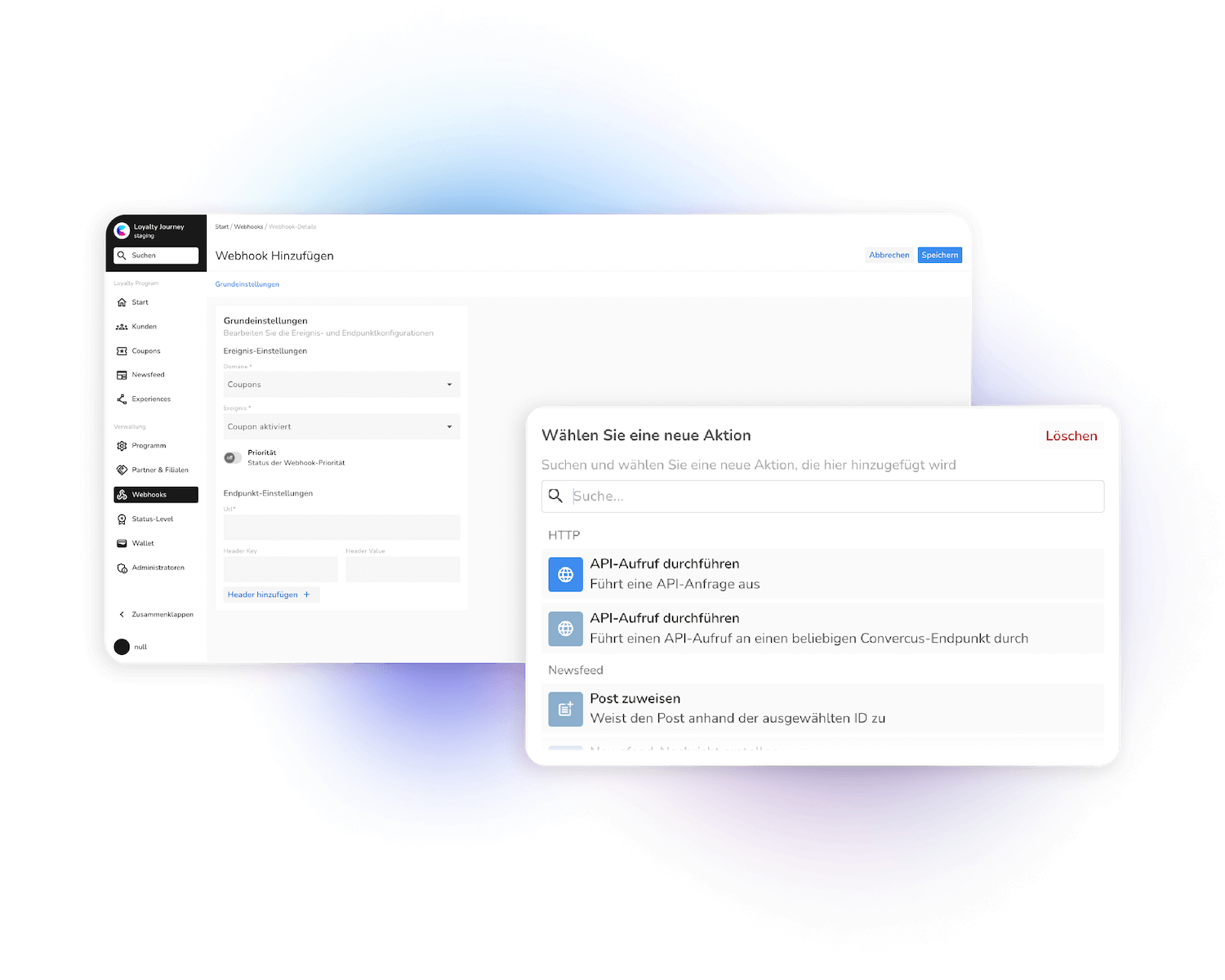
A powerful platform must process points, status, rules, benefits, and bookings across all channels: website, app, counter, call center, self-service terminal, and partner routes. Especially in car rental, real-time decisions are critical, for example, when an upgrade, coupon redemption, or status benefit needs to be verified immediately during check-in. API-first is mandatory here, not optional. Additionally, offline scenarios for stations with unstable connectivity should be considered.
Wallet Pass, App, and Enrollment at the Touchpoint
Not every rental company immediately needs a full-fledged app. Often, a Wallet Pass in Apple Wallet or Google Wallet is the more pragmatic entry point, as customers don't need to install an additional app, and the digital card remains visible. Registration at the station, counter, or terminal must work in seconds. The enrollment process often determines the program's future success. If a dedicated app is strategically sensible, it can create additional interaction points.

Personalization, Couponing, and Automation Between Two Rentals
The real impact often occurs not during booking, but in between. After an airport rental, a weekend coupon for the next city trip can automatically follow; after an EV rental, an incentive for the second EV booking. With Couponing and Engagement , such triggers can be clearly mapped. Between two rentals, it's decided whether a customer returns or disappears.
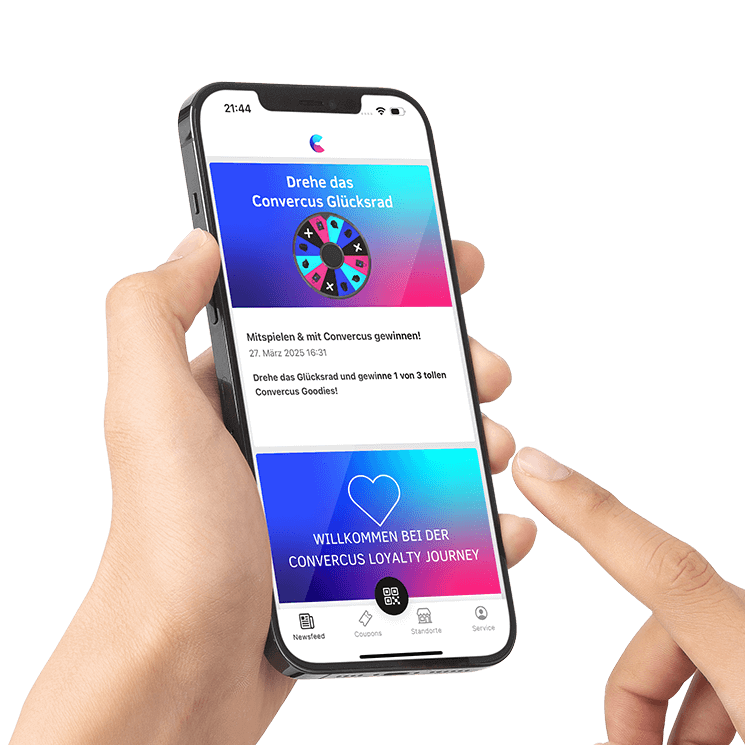
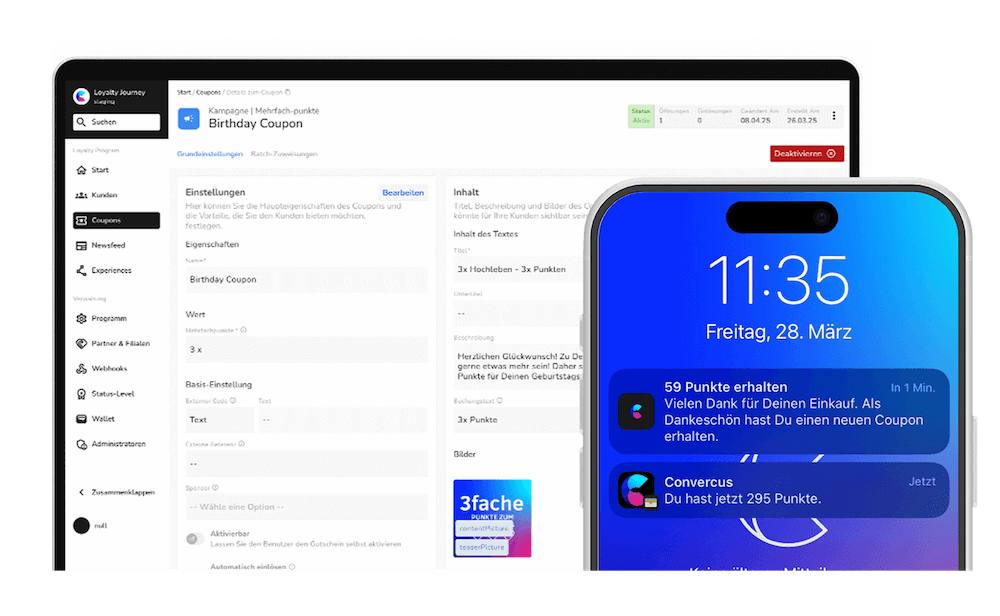
For mobility providers looking to combine loyalty, couponing, and marketing automation in a modular SaaS solution, Convercus is particularly relevant here. The platform supports API-first setups, wallet passes, and personalized mechanics; for programs with a white-label app, Convercus states that up to 8x higher customer interaction is possible than without an app.

GDPR, UWG, and International Rollouts
In the DACH market, loyalty programs must be set up in compliance with data protection laws. Particularly relevant are the principles from Art. 5 GDPR, the legal bases from Art. 6 Para. 1 GDPR, information obligations under Art. 13 GDPR, rights to erasure under Art. 17 GDPR, Privacy by Design under Art. 25 GDPR, data processing agreements under Art. 28 GDPR, and security requirements under Art. 32 GDPR. Furthermore, for promotional emails and push communication, § 7 UWG is central for consents and advertising communication. Those rolling out internationally should plan for multilingualism, role-based access rights, and documented consent processes from the outset.
The Business Case: Where Loyalty Software Earns Money in Car Rental
The ROI of a loyalty program in car rental rarely comes from a single metric. It is composed of higher repeat booking rates, more direct bookings, better upselling rates, and lower acquisition costs. Across industries, retention initiatives often show 10% to 20% higher repeat booking rates within six months, and loyal customers in many markets spend significantly more than new customers. For car rental companies, the customer value per year is therefore often the most important operational control variable.
These KPIs should be in your board reporting
- The repeat booking rate most directly shows whether the program changes behavior and doesn't just discount existing customers.
- The share of direct bookings makes it visible whether loyalty helps reduce broker dependency and thus acquisition costs.
- Redemption rate, coupon usage, and status progression show whether benefits are relevant and thresholds are realistically set.
- CLV, Churn Rate, and NPS combine hard revenue figures with the perceived experience.
Calculation Example for a Mid-Sized Car Rental Company
The following scenario shows a plausible magnitude for a provider with 500,000 active customers. It is not a guarantee, but a simplified CLV approximation based on typical retention and upsell levers.
Even moderate improvements yield significant results for large customer bases.. Those who also generate more direct bookings simultaneously reduce sales costs. Top-performing loyalty programs often increase revenue across industries by 15% to 25% annually – not just through discounts, but through more relevant communication and reduced churn.
First-party data is the second ROI lever.
Loyalty programs not only deliver more bookings but also data: travel purpose, preferred vehicle class, airport usage, seasonal patterns, ancillary product affinities, or channel preferences. This information leads to more precise segments, better win-back strategies, and more effective personalization. Anyone looking to delve deeper into strategies for increasing customer loyalty or for customer re-engagement should first establish this data foundation properly.
Practical Playbook: 5 Steps to a Loyalty Program for Your Car Rental Company
Many programs fail not because of the idea, but because of the sequence. Instead of first discussing apps, benefits, or design, rental companies should build the program along the customer journey and technical feasibility. A good loyalty program is first an operating model and only then a campaign..
- First, segment cleanlyso that business travelers, occasional renters, airport customers, city station users, and subscription users don't receive the same rules.
- Then define the mechanicsi.e., points, status, or hybrid, including clear earn and burn rules and realistically achievable thresholds.
- Check the system landscape earlyso that the booking platform, CRM, counter processes, payment, and loyalty can work together in real-time.
- Build a partner ecosystemfor example, with hotels, airlines, fuel cards, or parking garages, to increase earn and burn opportunities between rental transactions.
- Continuously optimize enrollment and communicationespecially at the counter, in self-service, and in automated flows after return or inactivity.
A proven practical tip is to enable registration in under 30 seconds and integrate it directly into booking or vehicle handover. Equally important is a clean migration plan if an existing loyalty program is already in place: point balances, status logic, consent data, and communication history should be consistently transferred before the relaunch. Implementation is significantly easier when program design and data model are considered together from the outset..
Future Trends: Where Loyalty is Heading in Car Rental
The industry is evolving from traditional rental companies to mobility platforms. Rent, Share, Ride, car subscriptions, and EV offerings are converging. It automatically follows that loyalty can no longer be considered in isolation for a single channel. The future belongs to program-independent customer accounts with a shared identity across multiple mobility offerings..
AI-powered Personalization and Churn Prevention
If demand, location, vehicle class, and time slots are dynamically priced, then loyalty logic must also become dynamic. Predictive analytics can identify when a frequent renter is at risk of churning, when a private customer is ready to travel again, or when an upgrade is highly likely to convert. Personalization replaces blanket discounts with improved relevance.This is particularly important because, according to cross-industry studies, 71% of customers expect personalized communication.
Gamification and EV Incentives to Bridge the Frequency Gap
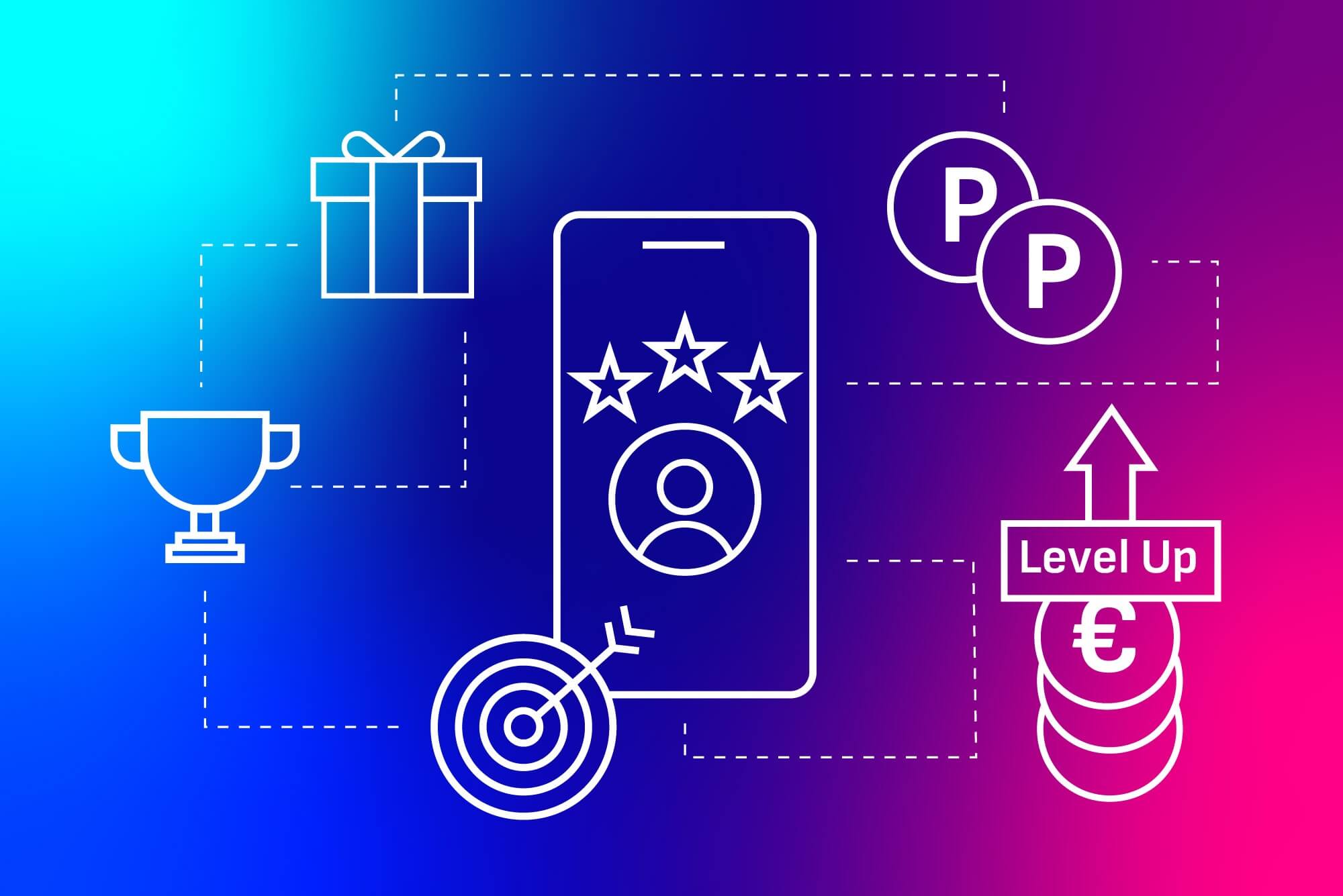
In car rental, gamification is not a gimmick but a response to low usage frequency. Progress bars, challenges, badges, or milestone rewards give customers a reason to interact even between rentals. Examples include challenges for a second EV booking, for weekend rentals outside of holidays, or for direct bookings instead of using brokers. Gamification keeps the program visible, even when transactions are infrequent.For a strategic look at app-supported activation, the article on App-first Loyaltyis also worthwhile.
Conclusion: Loyalty Software Becomes a Strategic Competitive Advantage
Car rental companies today need more than just a discount program.Successful concepts combine status, points, couponing, omnichannel processes, and a robust data foundation. Precisely because of low rental frequency, high price sensitivity, and strong broker dependence, the right loyalty software in car rental is not a nice-to-have, but an integral part of the growth strategy.
If you want to replace an existing program or build a new scalable loyalty model, Convercus is a suitable solution for loyalty, couponing, engagement, and API-first integration in the mobility sector. Learn more about the platform and schedule a personal live demo.
FAQ: Frequently Asked Questions about Loyalty Software for Car Rental
Which loyalty mechanic works best for car rental companies?
For most providers, a hybrid model of status and points is most sensible. Frequent renters receive service and priority benefits, while occasional renters are activated through points, coupons, and achievable thresholds.
How complex is the implementation of a loyalty program?
This largely depends on your system landscape. If your booking platform, CRM, and counter processes are already well-structured, a program can be set up much faster than with fragmented data. The greatest effort usually lies in integration and the data model,not in the visible frontend.
Can loyalty software be used in compliance with GDPR?
Yes, provided the solution considers data protection from the outset. Articles 5, 6, 13, 25, 28, and 32 of the GDPR are particularly relevant, as is Section 7 of the UWG for promotional communication. Crucial factors are clear legal bases, documented consents, and clean deletion processes..
Does this work with our existing booking, counter, or POS system?
Modern loyalty platforms are typically built API-first today and can be connected to existing system landscapes. It is important that real-time events such as booking, check-out, return, or coupon redemption are transmitted cleanly. The more standardized your interfaces are, the faster the implementation will be..
Can we migrate an existing bonus program?
Yes, this is often the norm in many projects. Typically, point balances, status levels, member data, consents, and communication logic are migrated. A clear transition plan is importantso that customers do not experience a loss of benefits and trust in the new program is maintained.
What's the best way to get started practically?
Start with a clearly defined use case, such as promoting direct bookings, win-back after 90 days, or a status model for frequent renters. Then define segments, benefits, and technical events. A focused pilot is almost always better than an overloaded program at launch..


- 5x Return on Investment
- 80% Customer Identification
- 8x Customer Interaction
- +274% Repurchase Rate