







The topic, short and concise
- Loyalty software is a revenue and data lever for the hospitality industry. It not only increases loyalty but also makes guests identifiable for the first time, allowing for targeted activation.
- Integration and operational simplicity are crucial. POS integration, omnichannel capability, clear processes in branches, and GDPR-compliant consents are more important than a multitude of gimmicks.
- The business case is based on frequency, average basket size, and reactivation. Those who measure the right KPIs can evaluate loyalty much better than just by registrations or accumulated points.
- Convercus is scalable software for loyalty in the hospitality industry. The platform combines loyalty, couponing, engagement, and API-first integration for brands looking to professionally build customer loyalty across multiple touchpoints.
Why do restaurant chains and foodservice operators need loyalty software in 2026?
The industry's economic situation increases pressure for measurable customer loyalty. The hospitality industry remains significantly below pre-COVID levels in real terms, while rising costs and noticeable consumer reluctance are burdening many businesses. For restaurant chains, cafés , or foodservice operators, it becomes even clearer: growth is not only generated by new locations or greater reach, but primarily through higher visit frequency, larger basket sizes, and building direct guest relationships. This is precisely where loyalty software comes into play in the gastronomy sector.
What economic reasons support customer loyalty in the gastronomy sector in 2026?
From January 1, 2026, the permanent reduction of VAT to 7% for food creates new investment opportunities. According to DEHOGA, many businesses would specifically use this relief for modernization and digitalization. In this context, loyalty is not a "nice to have" but a "controllable revenue driver": bringing back existing guests more frequently reduces dependence on expensive new customer campaigns and high-commission third-party platforms.
Why are most restaurant guests invisible to the business after their visit?
Without identification, the guest remains practically invisible to the business after payment. In e-commerce , customer attribution is a given, whereas in gastronomy, it's often the exception. The checkout process documents revenue, but not the person behind it. Loyalty software closes precisely this gap by consolidating transactions, consents, preferences, and response data. This creates the foundation for first-party data, personalized communication, and robust retention strategies.
Key benchmarks for the business case
Regular guests often account for 65% to 80% of revenue in restaurants. International studies also show that loyalty members visit restaurants more frequently on average and spend more than non-members. At the same time, 81% of consumers would join a restaurant loyalty program if offered. For the DACH market, the exact values vary by segment, but the trend is clear: loyalty programs are not just a marketing tool, but a business-relevant management model.
How loyalty programs practically work in restaurant chains
The best loyalty software for gastronomy doesn't just track points, but the entire guest behavior across all touchpoints. In practice, it's about making visits identifiable, intelligently deploying incentives, and digitally reactivating guests after their restaurant visit. This is particularly relevant for chains and larger groups, because dine-in, take-away, delivery, app, wallet, and POS should not be considered in isolation.
How do points programs and digital stamp cards work in gastronomy?
The most accessible entry point is a clear earn-and-burn model. Guests collect points or digital stamps with every purchase and later redeem them for defined rewards. This logic works particularly well for QSR, coffee, and casual dining concepts because the added value is immediately understandable. The difference from paper stamp cards: rules can be centrally controlled, branches work with the same system, misuse is reduced, and campaigns can be adapted more quickly. Those looking for flexible rules will find on the page for the Loyalty Engine for Points and Status Management a good overview of typical enterprise requirements.
When are status models, gamification, or subscription loyalty worthwhile in gastronomy?
Status management is always worthwhile when you want to specifically steer behavior towards frequency and loyalty. Bronze, silver, or gold tiers, challenges, limited benefits, or monthly subscriptions create more differentiation than mere discounts. Especially in system gastronomy, such mechanisms can help strengthen lunch and off-peak hours, promote new menu categories, or better retain particularly profitable guest clusters. Whether a white-label app, a wallet pass, or a hybrid approach is suitable strongly depends on your brand and willingness to download. You can find more on this in the context of App-First Loyalty.

How does personalized couponing increase visit frequency in restaurants?
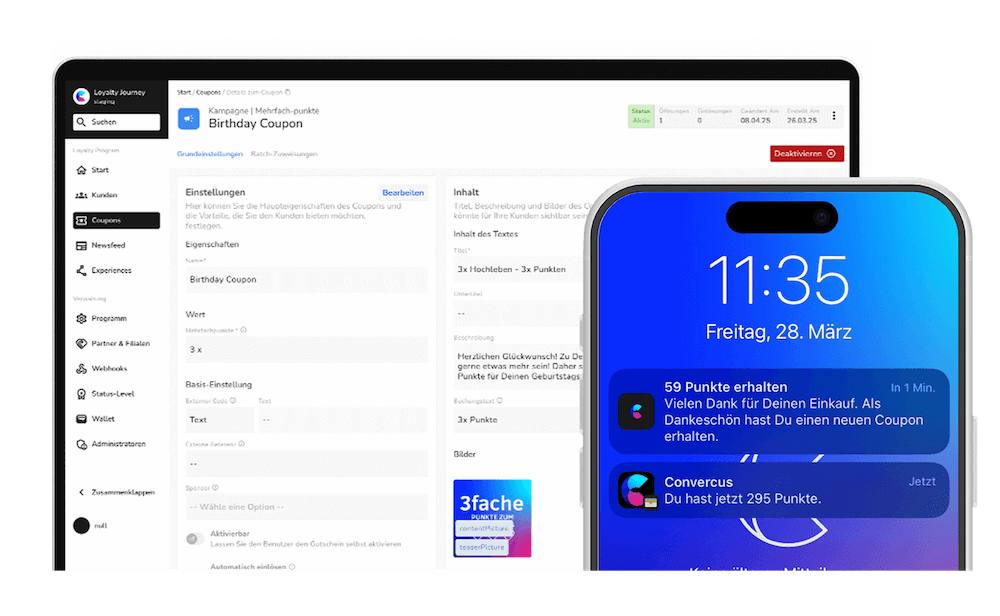
What's crucial is not the size of the discount, but the relevance of the offer. Birthday promotions, win-back coupons after inactivity, upselling for specific menu categories, or location-specific promotions on slow days work significantly better than blanket mass discounts. Modern loyalty software therefore combines loyalty mechanisms with personalized couponing and data-driven communication. This transforms a simple bonus logic into a system for customer engagement.
What software requirements foodservice operators should consider
For chains, franchise systems, and multi-brand groups, a simple bonus app is not enough. Scalability, integration capability, and operational usability in daily restaurant life are crucial. Those who only look at a pretty interface later risk workflow disruptions, manual workarounds, and low acceptance in branches.
Why is POS integration the most important technical success factor for restaurant loyalty?
POS integration is the most important technical success factor. Loyalty must function smoothly at the POS system, in self-order contexts, in ordering processes, and potentially offline. Especially during peak times, there must be no noticeable delays in either point allocation or redemption. For larger businesses, therefore, a API-first architecture with robust system integration is crucial, because only this way can existing POS, CRM, and app landscapes be flexibly connected.
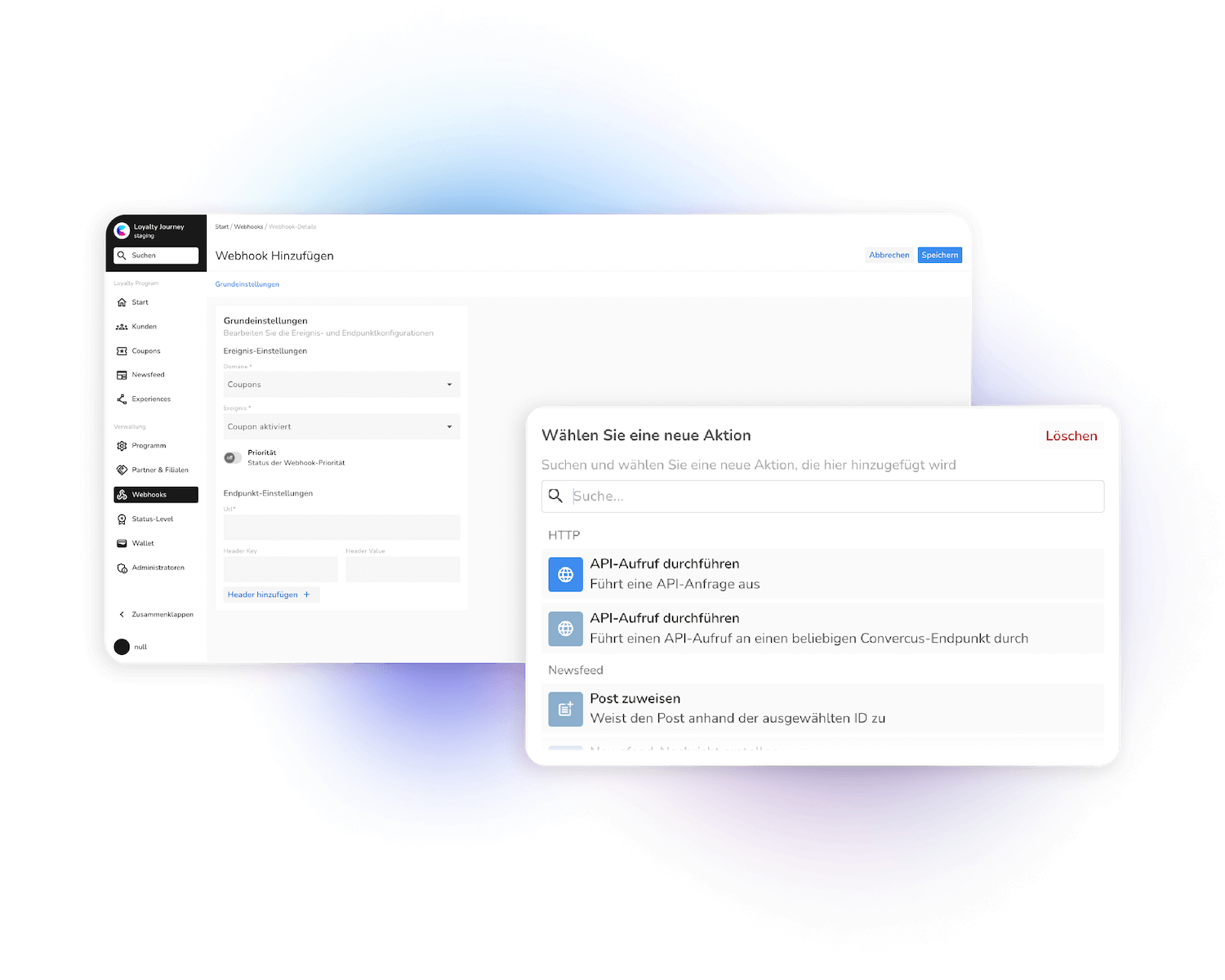
How does omnichannel loyalty work across POS, app, and delivery in gastronomy?
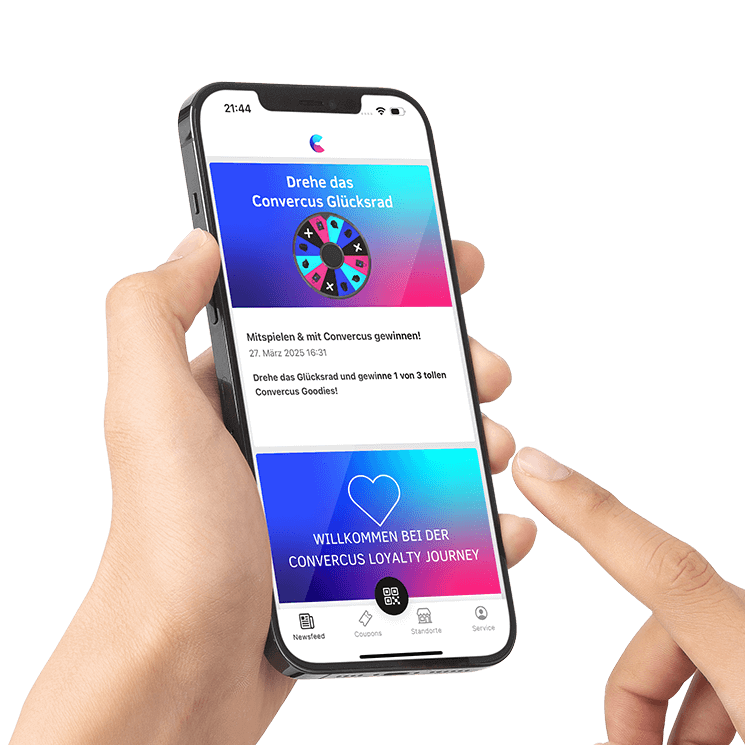
Guests don't think in channels, but in a brand. Those who collect points in the restaurant expect the same logic in the app, for take-away, or with a digital coupon. Therefore, the loyalty software should function across locations and channels. For some brands, a white-label app makes sense; for others, a wallet pass offers a low-friction entry. What's crucial is that the program doesn't end at one touchpoint, but supports the entire guest journey.
GDPR, Consents, and Governance
Data protection is not a marginal issue in the loyalty context, but a fundamental prerequisite. Those who use personal data for loyalty programs need a robust legal basis according to Art. 6 para. 1 GDPR; for advertising communication, usually documented consent according to Art. 6 para. 1 lit. a GDPR in conjunction with Art. 7 GDPR. In addition, there are the information obligations from Art. 13 GDPR, if applicable, a data processing agreement according to Art. 28 GDPR, and for email advertising, the requirements from § 7 UWG. For hospitality brands with multiple touchpoints, a platform that cleanly maps loyalty, couponing, and data flows is therefore useful. Convercus is particularly relevant here when omnichannel processes, high volumes, and central control converge.
- Ask every provider how point allocation and redemption are technically triggered at the POS and what latencies are realistic under load.
- Check whether branches, franchisees, and headquarters can work with clear roles and rights without creating their own data silos.
- Demand a clear answer on how consents are documented, exported, and processed upon revocation.
- Clarify whether app, wallet, couponing, and marketing automation are part of the same platform or just loosely connected add-on modules.
- Don't just evaluate features, but also rollout capability: pilot, migration, training, and operation across multiple locations.
ROI of loyalty software in gastronomy: which KPIs really count
The economic leverage lies in visit frequency, basket size, identification rate, and reactivation. Those who only look at the number of registered members miss the actual value creation. For restaurant chains, it's crucial whether more identified guests return more frequently, generate a larger average spend, and can be reactivated more cost-effectively than through paid reach.
Identification Rate, Visit Frequency, Basket Value: The 5 KPIs for Restaurant Loyalty
"Points collected" is not a management metric. More meaningful are metrics that directly contribute to revenue and loyalty.
- The Identification Rate shows what proportion of transactions can be attributed to a specific guest and thus becomes controllable.
- The Visit Frequency measures whether members actually return more frequently than non-members or than before the program launch.
- The Member Basket Value reveals whether loyalty members generate larger basket sizes or more profitable product mixes.
- The Redemption Rate not only evaluates redemptions but also whether rewards are attractive enough to trigger behavior.
- The Reactivation Rate shows how effective win-back campaigns are for inactive guests.
Example calculation for a chain with 50 locations
How much additional revenue does a restaurant chain with 50 locations generate through loyalty? A robust business case can also be modeled conservatively. The following example is not about a revenue forecast, but about a comprehensible decision-making logic.
Even with conservative assumptions, a significant lever quickly emerges. International benchmarks often cite 2x to 5x ROI and payback periods of 8 to 14 months when the program, rollout, and data activation work together seamlessly. The real long-term value, however, is not only created by rewards but by better segmentation, more effective reactivation, and less dependence on third-party platforms.
Why does marketing automation determine the ROI of restaurant loyalty software?
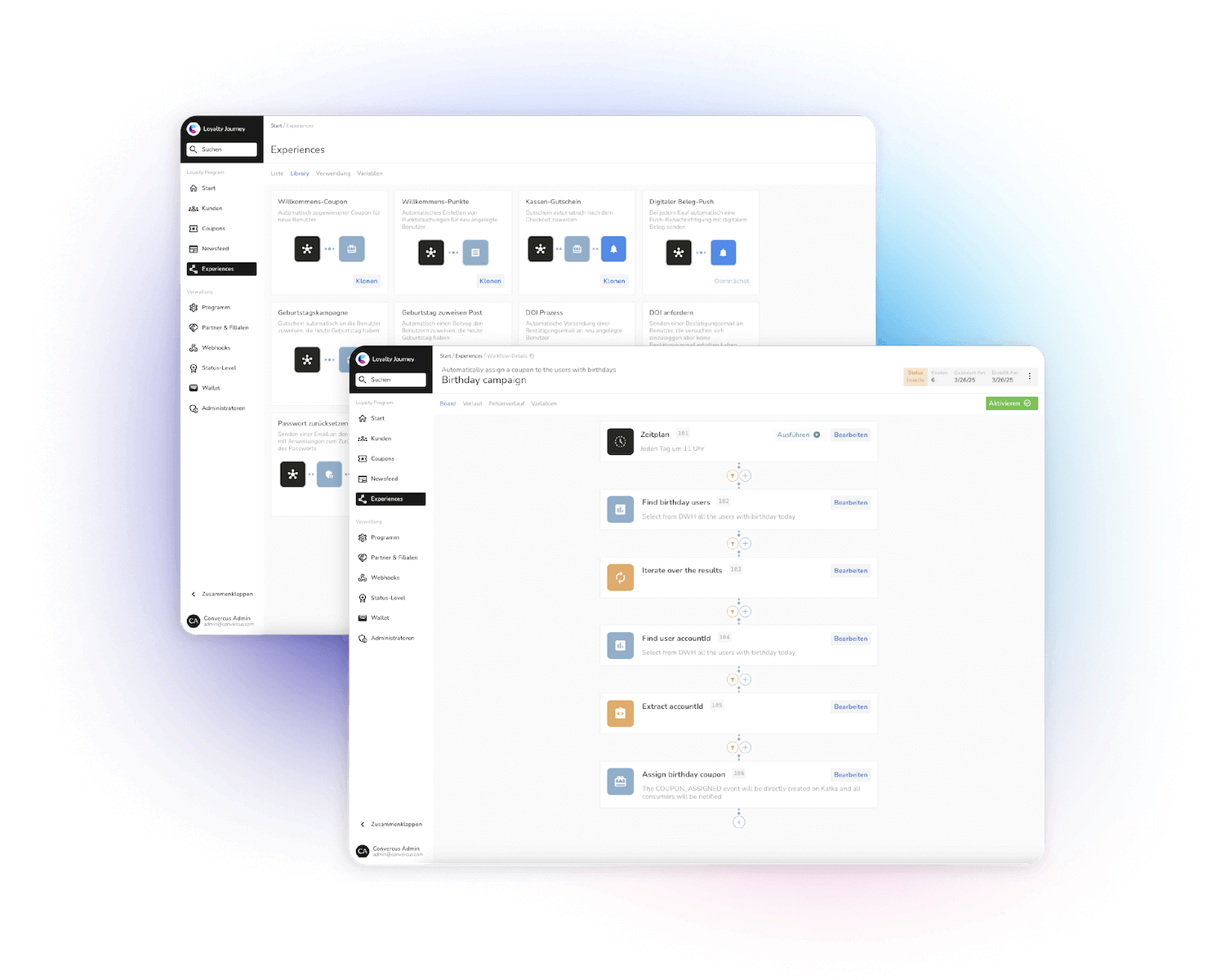
ROI only becomes sustainable when campaigns don't have to be manually maintained in multiple tools. Triggers for birthdays, inactivity, segment changes, or seasonal slow periods should run automatically. This is precisely where software-supported loyalty becomes powerful: Via engagement functions for segmentation and marketing automation , data from loyalty and couponing can be translated into concrete activation journeys. For larger brands, this is a central lever to relieve operational teams and actually generate revenue from first-party data.
What successful restaurant loyalty programs have in common
The strongest programs always follow the same logic: identify, personalize, reactivate. The difference between average and very good performance rarely lies in the reward idea alone, but almost always in the consistency of implementation across app, POS, and campaign management.
What makes MyMcDonald's Rewards the most successful restaurant loyalty program worldwide?
MyMcDonald's shows how loyalty can become a daily habit. The program is closely integrated with the app, kiosk, drive-thru, and other ordering points, thus making loyalty an integral part of the experience. The key lesson for other chains: If the program offers not just "collecting points" but also convenience and relevance, usage increases significantly more than with isolated bonus mechanisms.
L’Osteria Amici Club: First-Party Data as a Strategic Goal
L’Osteria has visibly established loyalty as a data and relationship strategy. The app combines collection mechanisms with reservation, ordering, and communication. This is important because guests only keep an additional app if it regularly provides value. At the same time, the example shows how valuable first-party data is in gastronomy: not only revenue becomes visible, but also preferences, frequency patterns, and reactivation opportunities.
What 3 success factors do all successful restaurant loyalty programs share?
Successful programs start simply but are further developed based on data. First, you need an easy-to-understand earn-and-burn logic, followed by segmentation, status benefits, personalized offers, and win-back campaigns. Crucially, operational integration is also key: staff at the POS must be able to explain the program in a few seconds, otherwise, even the best technology will fall short of its potential.
The biggest mistakes when rolling out loyalty software in the food service industry
It's not the program design, but the implementation in daily operations that determines success or failure. Many projects look convincing on paper but then fail due to complicated rules, too many special cases, or a lack of acceptance in the branches. Especially in the food service industry, operational simplicity is a strategic success factor.
Mistake #1: Prioritizing technology over strategy
Those who select features first and only then define goals usually build the wrong program. Before choosing tools, you should determine which key metrics should be improved: more identified transactions, higher frequency, larger average checks, better reactivation, or less platform dependency. Only from this does it become clear whether points, tiers, couponing, or wallet mechanics make sense.
Mistake #2: Underestimating operational integration at the POS
If the team at the checkout or in service doesn't have a simple process, the program won't be actively promoted. Successful rollouts therefore require clear messaging for customer interaction, brief training sessions, understandable rewards, and a redemption process that doesn't slow down operations during peak times. Especially in franchise and multi-location environments, a pilot with a few branches is worthwhile before a nationwide rollout.
Mistake #3: Viewing loyalty as a mere discount machine
The greatest value of loyalty often lies in the data, not in the discount. Those who only argue with discounts miss out on potential for personalization, visit management, and customer win-back. Better options are relevant benefits, exclusive access, challenges, or targeted coupons during slow periods. You can also find further strategic approaches in the article on Customer Win-back and in the overview of how customer loyalty can be systematically increased .
- Start with a few, easily explainable rules and only expand the program after the initial learning cycles.
- Before the rollout, define a clear KPI logic for identification, activation, redemption, and reactivation.
- Train branch teams so that registration and redemption in daily operations take a maximum of a few extra seconds.
- Plan campaigns for seasonal slow periods and inactive guests from the outset, instead of just focusing on new purchases at launch.
Conclusion: Loyalty Software Becomes an Infrastructure Question in the Food Service Industry
For restaurant chains and multi-unit restaurants, loyalty today is far more than a digital bonus program. It creates first-party data, makes visits measurable, improves reactivation, and strengthens independence from third-party platforms. This is particularly relevant in 2026, as economic pressure, new investment opportunities, and rising expectations for omnichannel experience converge.
Those who want to build loyalty successfully in the long term need a platform with scalable architecture, clean integration, and usable automation. If you want to explore exactly that for your brand, Convercus as loyalty software is a sensible next step. Schedule a personal demo and find out how loyalty, couponing, and engagement can be effectively combined within your system landscape.
FAQ on Loyalty Software in the Food Service Industry
How complex is implementing a loyalty program?
The effort primarily depends on your existing system landscape. If POS, app, or CRM can be cleanly integrated, a pilot in selected locations is often much faster than many expect. Usually, process design, training, and rollout management are more complex than the actual reward model.
Does loyalty software work with our existing POS system?
In many cases, yes, if the software is designed to be API-first. Crucially, it depends on how transactions, identification, and redemption are technically transferred. Before making a choice, you should always plan a specific integration workshop and consider peak scenarios.
Is loyalty software GDPR compliant?
GDPR compliance is possible, but it doesn't happen automatically. You need a clear legal basis, documented consents, transparent information according to Art. 13 GDPR, and clear processes for revocation, access, and deletion. For email advertising, § 7 UWG must also be observed.
How much does loyalty software for the food service industry cost?
The costs strongly depend on the scope, integrations, and rollout depth. A chain with multiple locations, app integration, couponing, and automation naturally has different requirements than a single operation with a digital punch card. More important than the pure license price is therefore the question of how quickly a positive ROI can be achieved.
Can we migrate an existing or analog program?
Yes, a migration is generally possible and often makes sense. Often, existing points, stamps, or membership data are transferred to a new system, and the rules are simplified at the same time. Crucially, it's important that communication, data quality, and branch processes are planned early so that the transition remains smooth for guests.


- 5x Return on Investment
- 80% Customer identification
- 8x Customer interaction
- +274% Repurchase rate

.png)