.jpg)









The Topic in Brief
- Loyalty App vs. Program: The app is the mobile touchpoint through which customers experience the program. The program itself is the strategy behind it.
- Mobile Touchpoint: Technical implementation ranges from white-label apps and SDK integration to custom-developed solutions.
- Key Features: POS integration, personalization, and omnichannel capability differentiate good loyalty apps from average ones.
- Market Comparison: The 7 providers primarily differ in how they technically implement the mobile loyalty touchpoint.
- Convercus Advantage: The only provider in the comparison that delivers white-label apps, Wallet Passes, custom app development, and direct POS integration from a single platform .
You're comparing providers for a mobile loyalty solution and quickly realize: the differences aren't just in the range of features. What's crucial is how each provider technically implements the mobile touchpoint. White-label app, SDK integration, or a custom-developed solution? Which loyalty app suits which business strategy? This comparison categorizes the 7 best solutions, including Convercus as enterprise platform with direct POS integration.
What is a loyalty app – and how does it differ from a loyalty program?
A loyalty app is the mobile application, through which customers interact with a customer loyalty software interact. The distinction is important: the loyalty program is the strategy behind it, meaning rules, points, status, and rewards. The app, however, is the crucial touchpoint, through which customers actually experience this program. Today, these applications are the most important mobile channel in modern customer loyalty programs. Anyone introducing a loyalty program, should definitely not forgo this option.
Companies can implement the mobile touchpoint in very different ways. The market ranges from white-label loyalty apps to API-based platforms that integrate loyalty features into existing company apps. The choice of technical solution significantly influences user experience, time-to-market, and data sovereignty. The following sections show which approaches exist and which features are indispensable.
What features must a loyalty app have for customers to actually use it?
What does a mobile app need to offer so it doesn't end up in the app graveyard after two weeks? Crucial is a combination of functions that create real added value during shopping and activate the customer before and after a purchase:
- Point management and status display for transparent tracking
- Personalized coupons and offers instead of generic discounts
- App-only offers
- Digital receipt
- Push notifications for time-sensitive promotions and rewards
- Wallet Pass integration for Apple Wallet and Google Pay
- Gamification elements like challenges and quizzes for increased engagement
- Analytics dashboard for data-driven insights for program managers
- Digital customer card for identification at the checkout
Native apps offer clear advantages over browser-based solutions in terms of push capability, offline use, and speed, thereby increasing purchase frequency, average order value, and can ultimately increase customer loyalty.
.jpg)
How Companies Technically Implement the Mobile Loyalty Touchpoint
Not every loyalty provider offers its own app. The technical implementation varies significantly and determines how quickly a company can go live.
- White-Label Loyalty App: A ready-made native app published in the company's branding on the App Store. Advantage: fast implementation, full brand consistency, and low development effort.
- Integration into existing apps (SDK/API): Loyalty features such as point management, coupons, and status display are integrated into an existing company app. Advantage: no additional download required, leverages existing reach.
- Custom-developed Loyalty App: Enterprise companies often develop apps individually based on a loyalty engine. The platform provides the backend, and the custom app is implemented with development partners. Advantage: maximum flexibility and differentiation.
Convercus supports all three approaches: from white-label apps and Wallet Pass to custom app development with partners.
The 7 Best Loyalty Apps Compared
The following providers differ in how they implement the mobile touchpoint and in their respective feature sets. The comparison table provides a practical overview of the solutions offered by each provider.
Talon.One: Loyalty Features via Existing Apps
Talon.One is a powerful promotions engine with a clear e-commerce focus. The mobile touchpoint is created via API integration into existing company apps or webshops; Talon.One does not provide its own mobile solution. Companies using Talon.One therefore need their own technical infrastructure to offer participants a mobile experience. The platform provides the underlying logic: point rules, promotions, and data for personalization.
Strengths: Real-time personalization, flexible promotions, and a broad ecosystem of integrations. Particularly strong in e-commerce, where existing websites and webshops serve as the primary touchpoint.
Limitations: No proprietary mobile solution; the mobile UX must be developed individually. The platform's focus is on e-commerce, which is why POS integration in brick-and-mortar retail plays a subordinate role.
Suitable for: Companies with their own app infrastructure and a clear e-commerce focus, seeking a flexible promotions engine.
Antavo: Loyalty Platform with Mobile SDK
Antavo is an AI-powered platform for complex loyalty programs with an international focus. Loyalty features are integrated into existing company apps via Mobile SDK – so Antavo does not provide a ready-made mobile touchpoint, but rather the technical foundation that developers integrate into an existing solution.
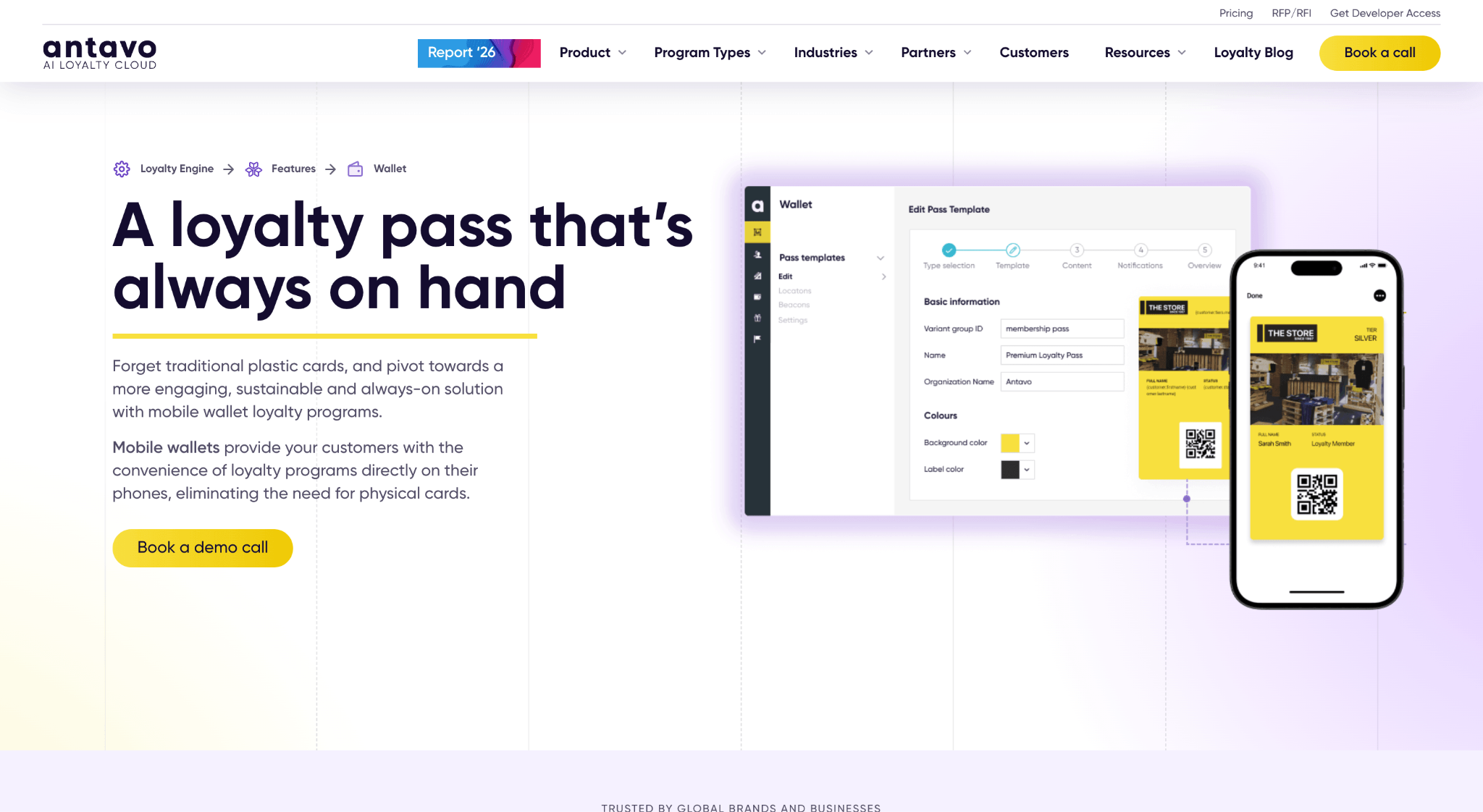
Strengths: Extensive gamification features, flexible program structures, and AI-powered data analysis. Well-suited for international rollouts with varying market requirements.
Limitations: No standardized white-label solution for the mobile channel; implementation typically requires higher technical resources. The platform's focus is on international markets, and Antavo is less established in the DACH region than specialized local providers.
Suitable for: International brands with their own mobile app that want to implement complex loyalty programs with gamification elements.
Knistr: White-Label Loyalty App
Knistr is a provider specializing in the DACH market with a focus on retail. Its white-label solution enables retailers to quickly launch a branded app in the App Store. Knistr offers gift card integration, which is particularly in demand in brick-and-mortar retail.
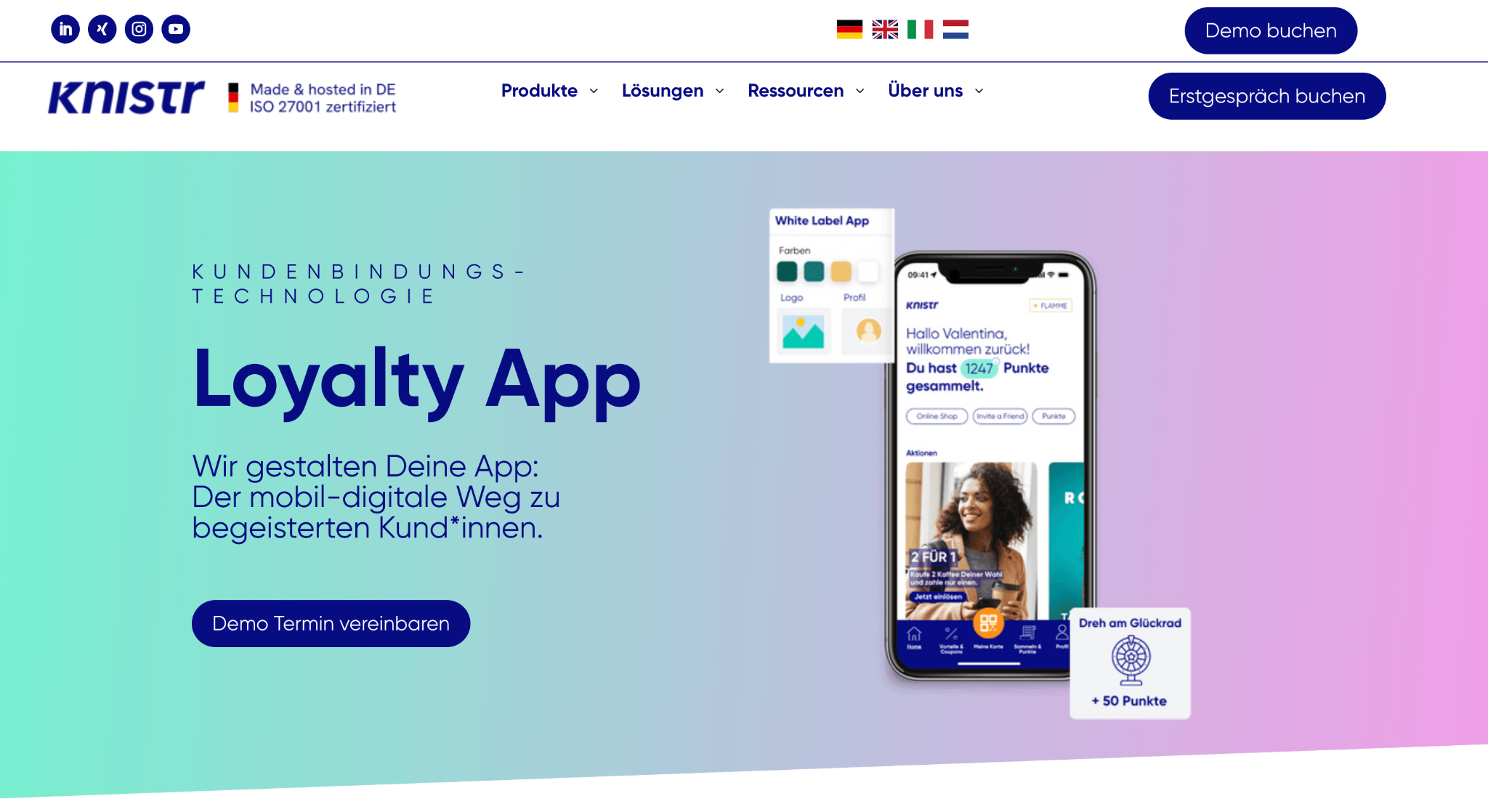
Strengths: Fast implementation, straightforward onboarding, and the combination of a loyalty program and gift card management. Good references in the German-speaking market.
Limitations: The platform is geared towards entry into digital loyalty programs and less designed for the requirements of very large enterprise programs.
Suitable for: Suitable for: Retailers in the DACH region looking for a ready-made mobile solution for their loyalty program.
HelloAgain: Mobile-First Loyalty Platform
HelloAgain consistently focuses on app-based customer loyalty, and its mobile touchpoint includes white-label apps, push notifications, and campaign management. The platform stands out with an intuitive user interface and industry-specific solutions – content and offers can be deployed without significant technical effort.
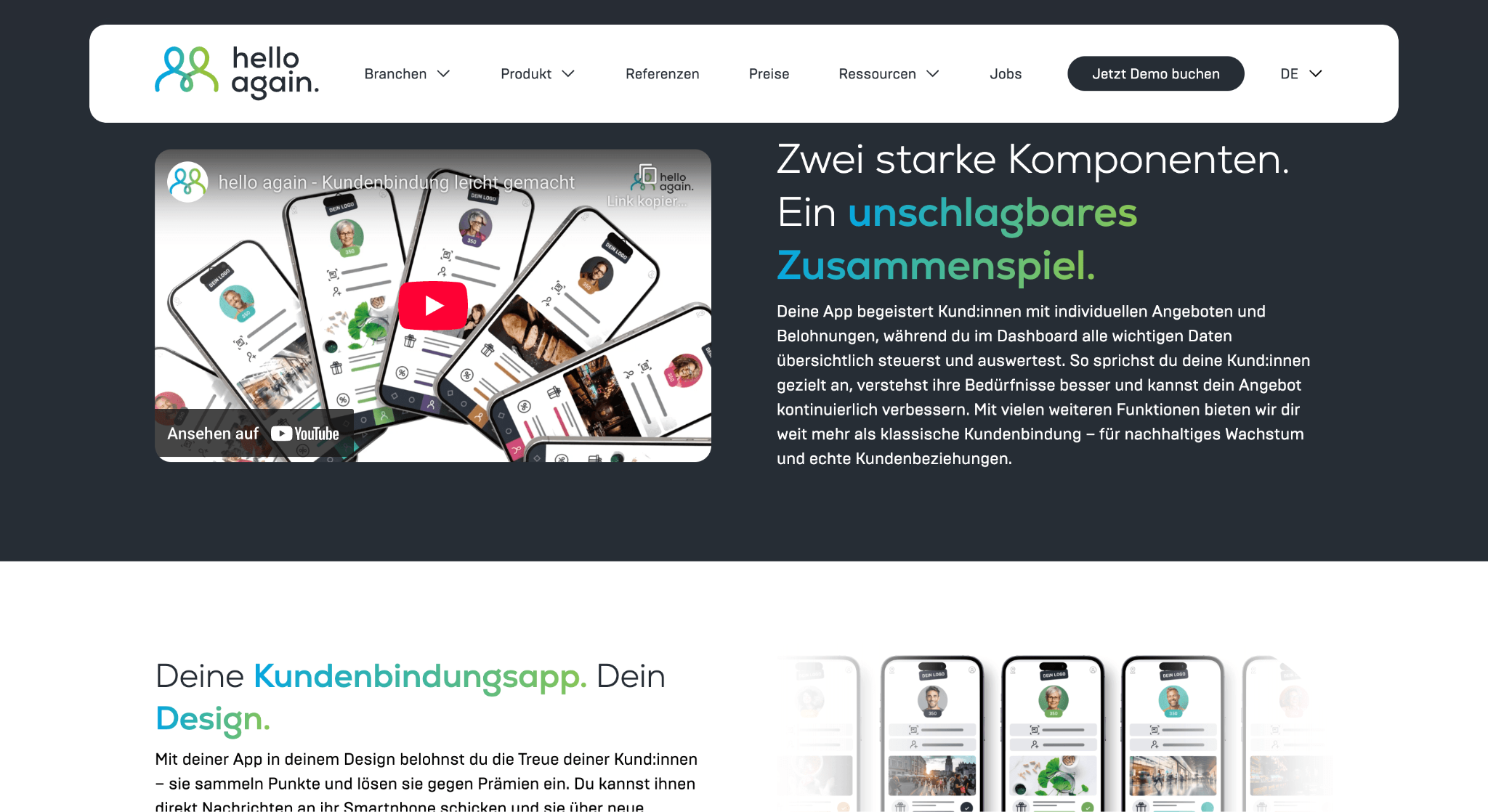
Strengths: Fast implementation, easy operation, and pre-built industry solutions for retail and hospitality. For companies looking to launch a loyalty program without a long lead time, HelloAgain is one of the fastest options on the market.
Limitations: The platform is designed for quick implementation and ease of use; complex international programs with high transaction volumes are not the primary use case.
Suitable for: SMEs and mid-market companies looking to quickly launch their own mobile solution for their loyalty program.
Comarch: Enterprise Loyalty Platform with Custom Apps
Comarch offers a global Loyalty Suite with comprehensive consulting and decades of experience in the enterprise segment. Mobile solutions are usually custom-developed and integrated into existing CRM and ERP systems. This provides maximum flexibility in implementation but also results in longer project durations. Information from various systems can be centrally consolidated via the platform.
Strengths: Strong enterprise integration, global scalability, and a wide range of configuration options for complex program structures.
Limitations: As a mature enterprise suite, implementation is typically more project-intensive, and project durations can be longer compared to pure SaaS solutions.
Suitable for: Enterprise companies with complex IT landscapes looking for a proven and fully integratable loyalty suite.
SAP Emarsys: Loyalty Integration in Marketing Apps
SAP Emarsys is an omnichannel marketing platform that offers customer loyalty as an add-on module. The mobile touchpoint is created through integration into existing apps and CRM channels, meaning SAP Emarsys is not a standalone loyalty solution. Companies already deeply rooted in the SAP ecosystem can seamlessly embed loyalty features and data into their existing marketing infrastructure.
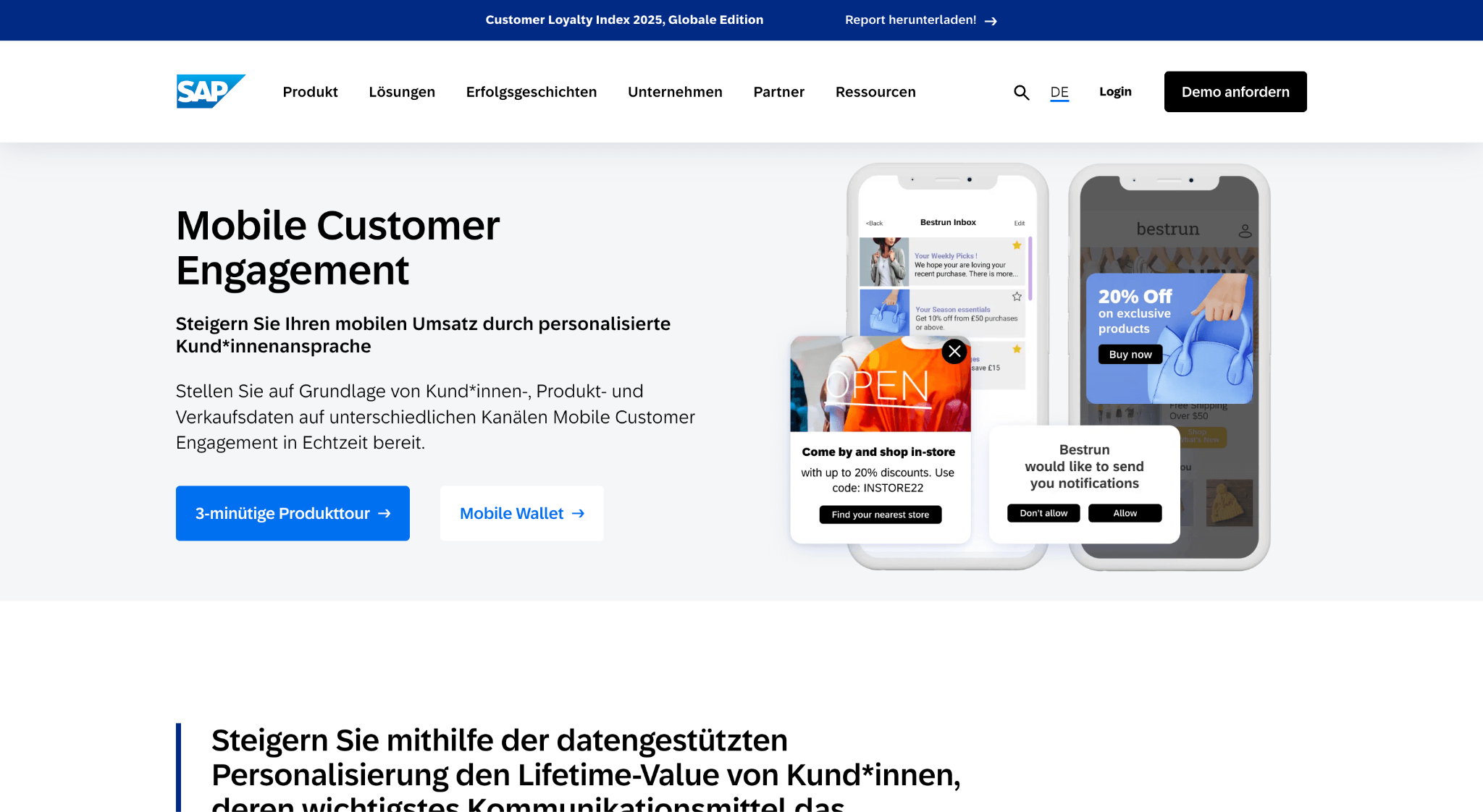
Strengths: Powerful marketing automation, strong personalization based on existing customer data, and seamless embedding into the SAP ecosystem.
Limitations: Not a standalone loyalty platform; loyalty is an add-on module within a broader marketing suite. Its use requires an existing SAP infrastructure.
Suitable for: Companies already using SAP Emarsys or SAP Commerce and wishing to integrate loyalty as an additional channel.
Convercus: Enterprise Loyalty App with POS Integration
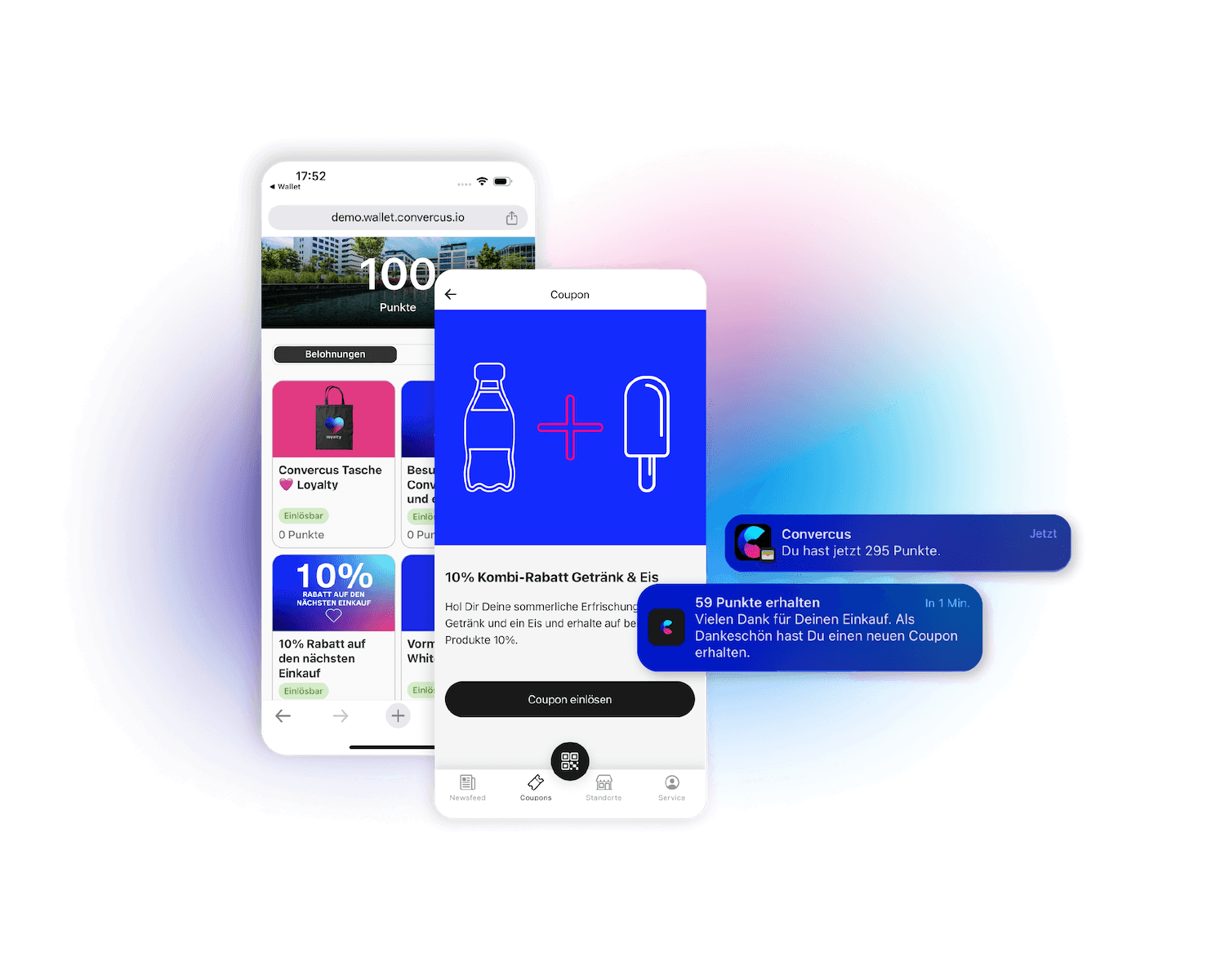
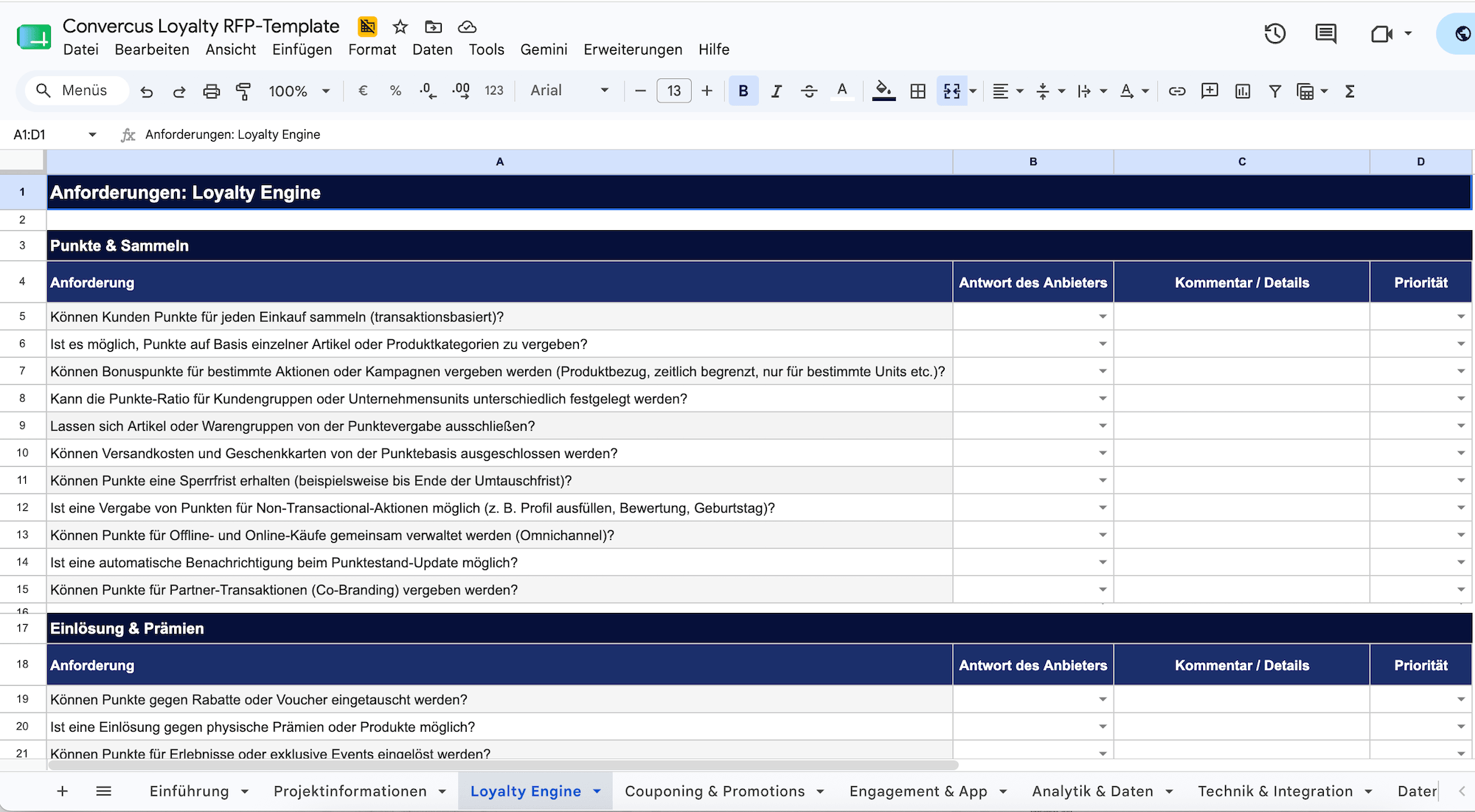
Convercus is an enterprise loyalty platform with a clear focus on mobile customer engagement. The key advantage: Convercus supports every approach for mobile Loyalty Software from a single platform, because we are not just a technical interface, but function as a Marketing Content Hub. Brand teams can use it to create no-code customer experiences – directly managing campaigns and app content without IT effort. The platform flexibly covers all mobile approaches: from ready-to-use white-label apps and wallet passes to deep integration into existing enterprise apps via SDK.
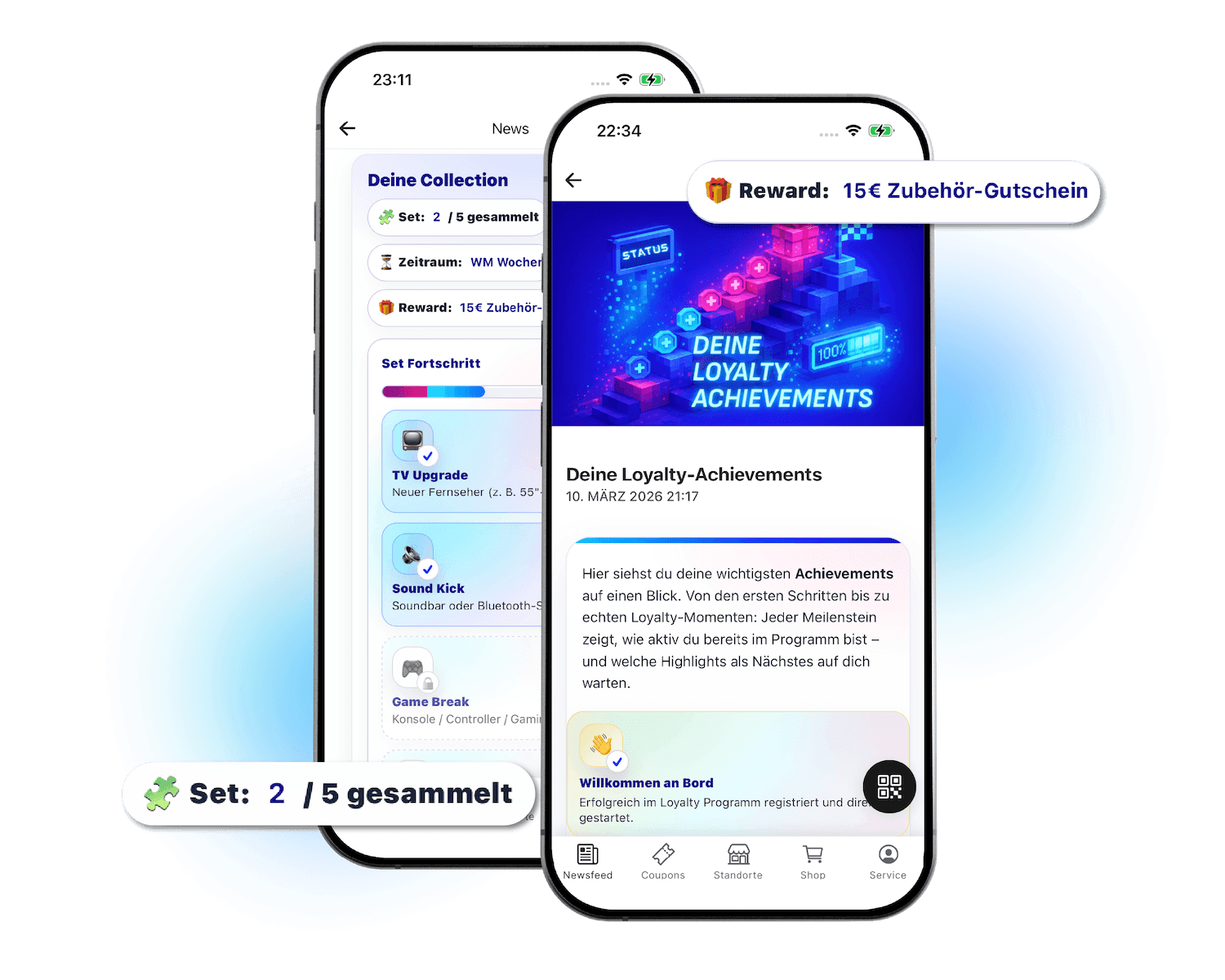
Strengths: High scalability for large user numbers and 8x higher customer interaction with the white-label app compared to programs without their own mobile solution. High expertise in integrating into proprietary apps, as well as optional parallel use of mobile and physical customer cards to expand the target audience. Additionally, structured success management actively supports companies in implementing successful loyalty programs.
Limitations: The focus is clearly on larger loyalty programs; for smaller companies with a manageable number of participants, the platform may be over-engineered.
Suitable for: Retail and commercial enterprises with large customer programs and an omnichannel strategy that want to manage all mobile touchpoints from a single platform.
Those who wish to delve deeper into the technical background can find further details on integration in the API documentation .
Factors Determining the Success of a Loyalty App
The right app solution alone is not enough. In practice, three factors determine success or failure.
1. POS Integration as the Foundation for Omnichannel Loyalty
POS connectivity is the most critical aspect of any loyalty app. Without direct POS integration data silos emerge: transactions are not recorded in real-time, points are not credited immediately, and personalization remains superficial. The digital customer card bridges the gap between the app and the POS. Customers identify themselves via QR code, and the transaction is processed with pinpoint accuracy. Convercus focuses precisely on this: direct POS integration is one of the platform's core competencies.
2. Dedicated Loyalty App or Integration into an Existing App
The decision primarily depends on the existing infrastructure and strategic direction. A white-label loyalty app is the right choice when brand consistency, data sovereignty, and long-term differentiation are priorities, and when no dedicated mobile channel exists.
Companies that already operate a mobile app with high reach, however, benefit from an integration via SDK or API: This eliminates an additional download and directly activates existing usage.
A proven approach here is also to quickly launch with a white-label app to gain initial market experience, while integration into the company's own app occurs as a later step. It is crucial that the chosen loyalty platform technically supports both scenarios and enables marketing to flexibly manage all no-code customer experiences via a central content hub.
3. Scalability and Data Architecture
Large loyalty programs that grow quickly place high demands on the underlying infrastructure. With millions of transactions, every millisecond counts: points must be credited in real-time, data stored in compliance with GDPR, and information from various systems (POS, webshop, CRM) seamlessly integrated. Platforms that reach their limits here become a technical bottleneck and slow down the entire program. Therefore, choosing the right solution determines not only the launch but also the long-term development of the loyalty program.
Conclusion: How to Choose the Best Loyalty App
The best solution for the mobile touchpoint is not the one with the most options or features. What's crucial is whether the solution fits the company, its strategy, and the existing system landscape. Four criteria should guide every decision: the type of mobile touchpoint, the depth of POS integration, scalability for growing user numbers, and data sovereignty over customer data. Convercus unifies all mobile approaches in one platform and enables true omnichannel customer loyalty.
FAQ
Does every loyalty program need its own app?
Not necessarily. Loyalty features can also be implemented via wallet passes or integration into an existing company app. However, a dedicated app offers advantages in terms of brand consistency, push communication, and data sovereignty, especially for large programs.
Can loyalty also be integrated into an existing company app?
Yes. Via APIs or SDKs, functions such as point management, coupons and status display can be built into an existing application. This saves an additional download and leverages existing reach.
How does a loyalty app integrate into an existing POS system?
Via interfaces (APIs) between the loyalty platform and the POS system. Transactions are recorded in real-time, and points are automatically credited, without any media disruption at the checkout. Convercus offers direct POS integration as a core feature of its platform.
Can I migrate my existing loyalty program into an application?
Yes. Existing program structures, point balances, and customer data can usually be migrated. A platform with flexible import interfaces and a structured onboarding process is important.
How do you motivate customers to use a loyalty app?
By offering immediate value after download: welcome points, personalized offers, or exclusive benefits. Gamification elements and regular push notifications maintain high long-term usage and visibly increase engagement.
How do I increase the usage of my loyalty app?
The usage of a loyalty app primarily increases when customers regularly receive relevant incentives – such as personalized offers, exclusive benefits for app users, or push notifications about point balances and rewards. It is also crucial that the app is seamlessly integrated into all shopping channels, allowing customers to use it equally at the checkout, in the online shop, and on the go.
Schedule a demo with a loyalty expert and see how Convercus meets your requirements.
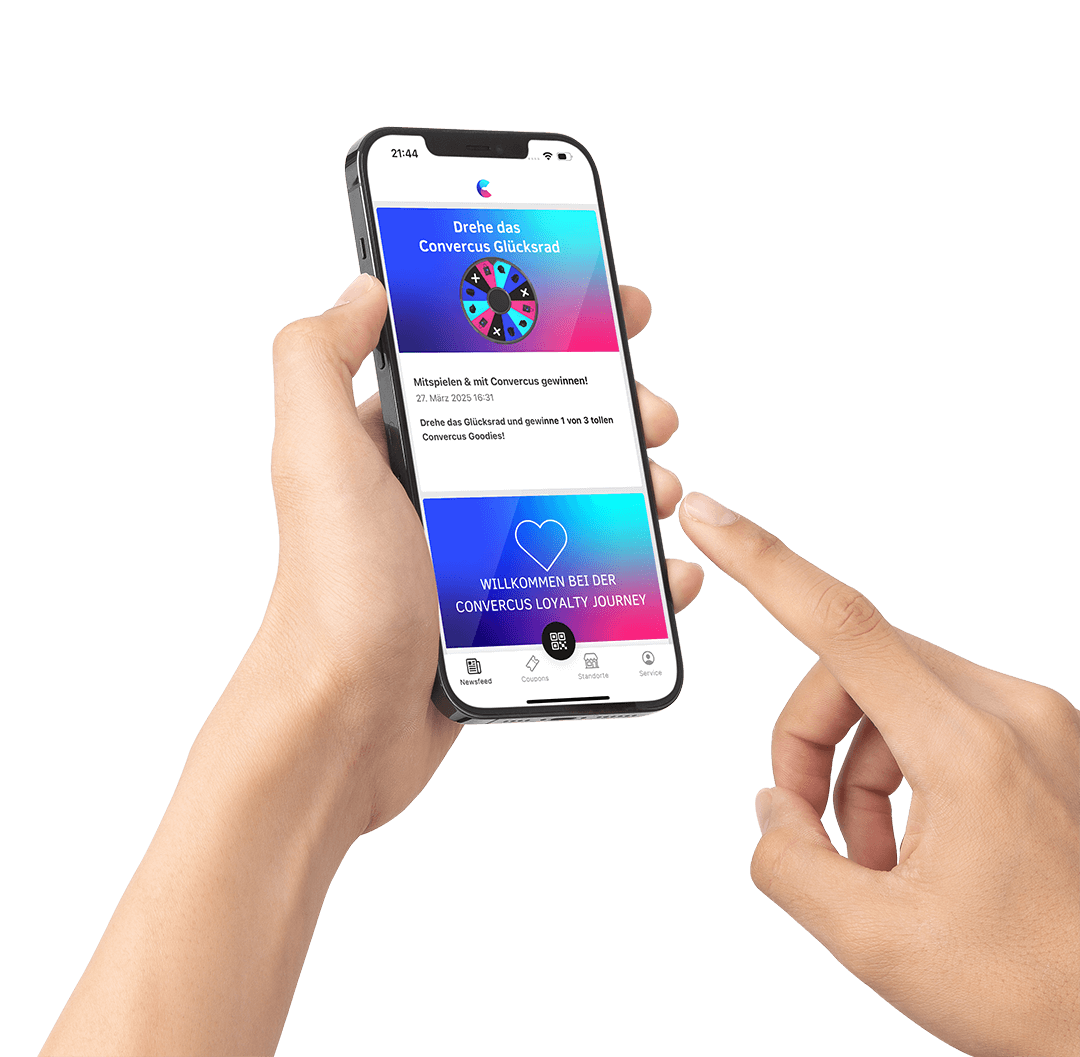

When choosing a loyalty app, don't just focus on the range of functions, but also on direct integration with your POS system and optimal linking with other systems. Only an app that communicates seamlessly with your system landscape can enable a modern customer experience and achieve the high degree of personalization for which you introduced the program.
- Marketing Content Hub: Centralized control for everything.
- No-Code: Campaigns without programming.
- Maximum Flexibility: App, Wallet & Card.