







The topic at a glance
- Loyalty software in outlets is an operator issue: Unlike in traditional retail, a program must work across many brand tenants while still creating a unified customer experience.
- The most important foundation is the single customer view: Only when purchases, visits, and interactions converge across the entire center do personalization, cross-store analyses, and reactivation become possible.
- The right capture method determines project success: POS integration, receipt scanning, QR codes, and mobile identification should be flexibly combinable in outlets.
- Convercus is a suitable option as loyalty software: If outlet operators are looking for an API-first platform for loyalty, couponing, and engagement with a strong omnichannel focus, Convercus is particularly relevant.
Why Loyalty Software is Strategically Important for Outlet Centers
The European outlet market is mature, but by no means static: Currently, there are approximately 195 outlet centers operating in Europe, covering about 3.2 million m² of retail space. Precisely because new projects are becoming rarer, the further development of existing centers is gaining importance. Loyalty software for outlet centers is therefore not an add-on module, but a strategic management tool for footfall, repeat visits, and first-party data.
16 out of 20 Top Performers Use Active Loyalty Programs
Industry analyses by ecostra and Magdus show that 16 of the 20 best-performing outlet centers in Europe operate with a professional loyalty platform. This is particularly relevant for operators because outlets must differentiate themselves not only through price, but also through recognizability, personalization, and an omnichannel customer experience. Those who rely solely on seasonal sales remain dependent on external footfall drivers.
The Business Case Becomes Particularly Evident in Outlets
A simple calculation example demonstrates the leverage effect: A center with 3 million visits per year and an average revenue of €120 per visit generates €360 million in annual revenue. If 20% of visitors become members and, conservatively, only visit one additional time per year, this generates 600,000 additional visits with a revenue potential of €72 million. In addition: According to industry overview, 70% of consumers spend more and interact more frequently with brands whose loyalty program they belong to.
For those who want to delve deeper into the fundamentals of modern customer loyalty software , however, the outlet case should not be confused with classic single-brand retail. That's precisely where the real complexity lies.

What Distinguishes Loyalty Software in Outlets from Classic Retail Loyalty
In an outlet, the software doesn't just work for one retailer, but for an ecosystem of operators, brand tenants, and end customers. This B2B2C model requires multi-tenant capability, clean data rights, and a consistent customer experience across many stores. This is precisely why generic loyalty guides often fall short for outlet operators.
- Multi-Tenant instead of Single-Brand: A program must work for 60 to 100 brand stores without each brand losing its autonomy.
- Footfall over Basket Size: In an outlet, the key KPI is usually not the weekly purchase, but the additional visit within 60 to 90 days.
- Tourism and Multilingualism: Many locations have international visitors and therefore require multilingual communication, wallet passes, and simple mobile enrollment processes.
- Price Logic plus Experience: Additional discounts alone are not enough; what's relevant are early access, VIP days, cross-store bonuses, and personalized benefits.
The Most Important Foundation is the Single Customer View
Without a unified customer profile, loyalty in an outlet remains superficial. Operators may see visitor flows, but not which stores are visited together, which segments respond to campaigns, or when customers become inactive. The Single Customer View transforms footfall data into real management data and is the basis for personalization, reactivation, and cross-tenant analyses. Those who systematically want to increase customer loyalty need precisely this view.

Transaction Capture in Heterogeneous POS Landscapes
One of the biggest pain points in outlets is the fragmented POS landscape. Each brand often brings its own POS system, meaning direct integrations are not realistic everywhere simultaneously. Good loyalty software for outlet centers must therefore support multiple capture methods in parallel and not rely on a single technical method.
Which Capture Method Suits Which Outlet?
In practice, it's usually not an either-or approach that leads to success, but a hybrid model. Direct POS integration provides the highest data quality, receipt scanning is often the fastest entry point, QR mechanisms lower the technical barrier, and IoT or location-based approaches can additionally make visits measurable. The best method is one that is multi-tenant compatible, scalable, and operationally realistic.
GDPR and Data Rights Must Be Cleanly Modeled from the Outset
Especially in a multi-tenant setup, data protection and role clarification are critical for success. For profile creation, personalized communication, and app tracking, typically Art. 6 para. 1 lit. a GDPR, Art. 28 GDPR, and Art. 32 GDPR are key reference points: i.e., effective consent, data processing agreements, and appropriate technical and organizational measures. For email advertising, § 7 UWG is additionally relevant. Operators should define early on who is the controller, which data is visible to specific tenants, and how consents are documented per channel.
How Leading Outlet Centers Implement Loyalty Today
Best practices in the market show that successful programs achieve significantly more than a digital club card with an extra discount. Leading outlet centers combine loyalty, personalization, and omnichannelto increase footfall, value of stay, and relevance between two visits.
The Bicester Collection: Loyalty as Part of the Destination Strategy
The Bicester Village Shopping Collection is considered a benchmark in the European market. There, loyalty was not introduced as an isolated promotion, but as an infrastructure for guest data, segmentation, and personalized communication. Publicly communicated are more than 4 million members and a proprietary segmentation logic that delivers relevant content to guests based on their behavior.
VIA Outlets: Fashion Club Instead of a Discount Machine
At VIA Outlets' Fashion Club, the focus is not just on redeeming benefits, but on data-driven activation. This is important because pure price mechanisms in outlets quickly become interchangeable. Crucial is the relevance of the next occasion for the next visit — such as private sales, exclusive events, or cross-store-oriented benefits.
Outletcity Metzingen and Helsinki Outlet: Omnichannel as a Lever
Outletcity Metzingen demonstrates how strong the integration of physical outlet, online shop, and app can be. Helsinki Outlet, in turn, is a good example of how receipt scanning and digital touchpoints come together. Those who want to build a mobile strategy will find particularly high potential in an approach of App-First-Loyalty in an outlet: Wallet Pass, push communication, and simple receipt capture significantly reduce friction for the customer.
Selection Criteria for Loyalty Software in Outlets
When evaluating providers for an outlet, one should not stop at standard questions like "Can the solution handle points?". The decisive criteria lie in the interplay of architecture, data model, and operational rollout capability. Particularly important are functions designed for operator reality rather than retailer logic.
Five Questions for the Selection Process
- Can the platform support multiple capture methods simultaneously? This is often crucial for a staged rollout in heterogeneous center structures.
- How well does the software scale under peak loads? Especially on sale weekends, neither the API nor redemption should falter.
- Can personalization truly be operationalized? Less than 25% of many programs currently deliver personalized experiences based on previous interactions.
- Is the reporting equally usable for center management and tenants? Operators need a different perspective than individual brands.
- What is the integration effort for IT and Operations? A convincing concept often fails not due to strategy, but due to implementation bottlenecks.
When a Flexible Platform is Particularly Useful
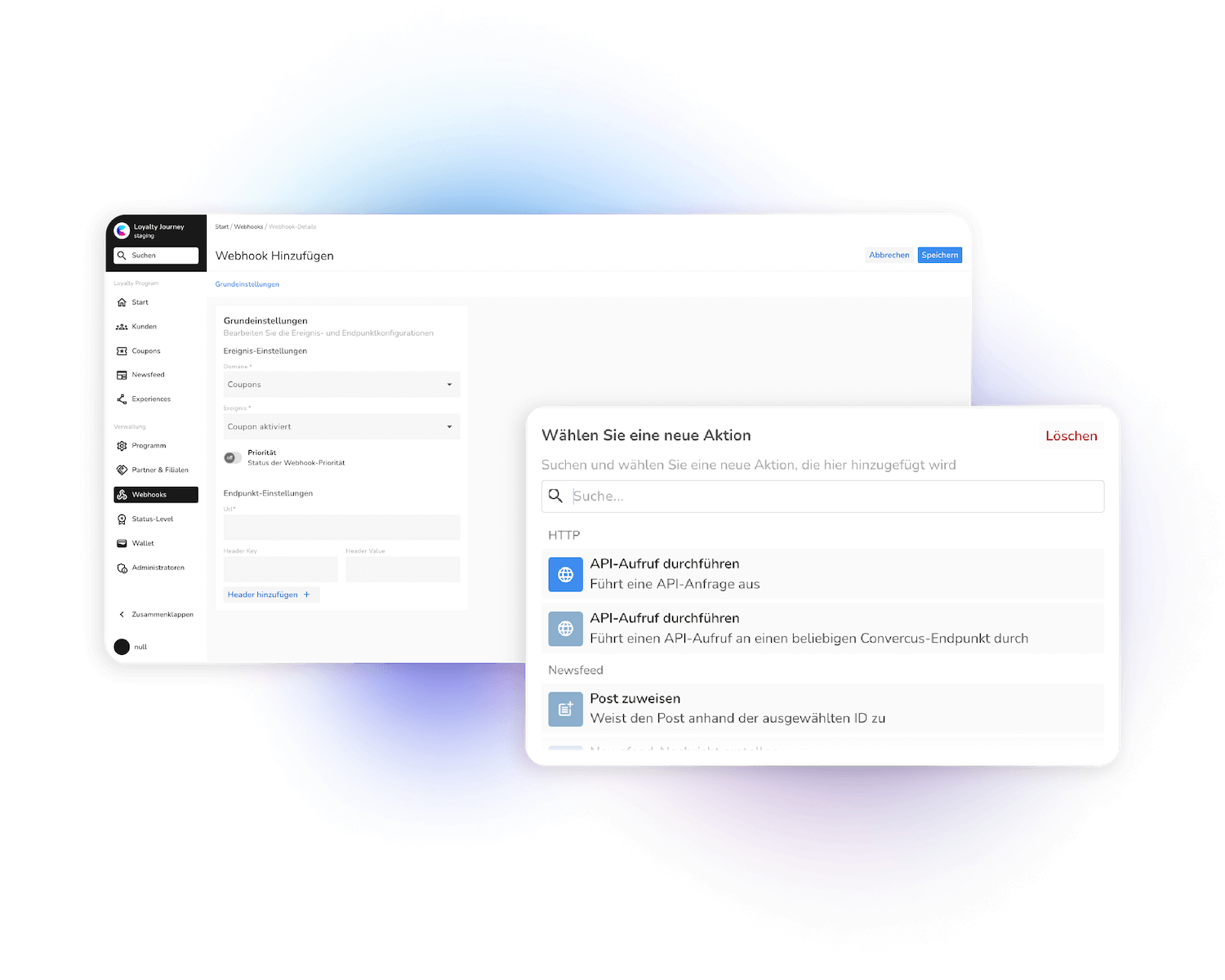
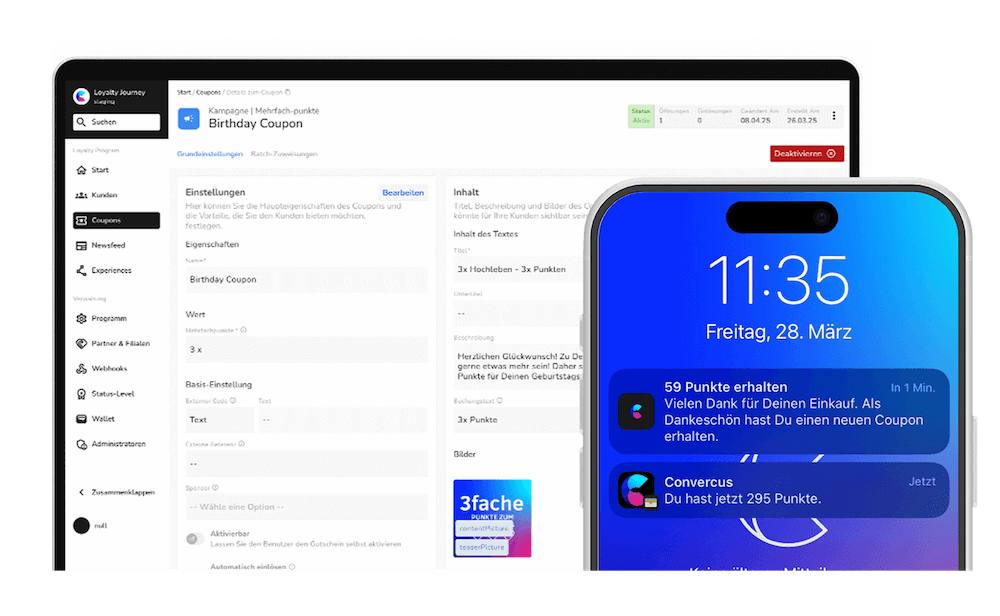
For DACH-oriented operators who do not want to be dependent on a pure outlet-specific solution, a flexible platform is often the better choice. Convercus combines API-first architecture, omnichannel capability, and strong POS proximity with Loyalty Engine, Couponing and Engagement in one platform. Especially when operators need influence over the roadmap, integrations, and tenant setup, this approach is often more attractive than a rigid standard model. Technical details can also be found under Tech and Integration.
Implementation: From Club Card to Data-Driven Loyalty Platform
Implementation rarely fails due to the idea, but due to orchestration. Stakeholders from center management, marketing, IT, data protection, and tenant relations must contribute to a common vision. A structured rollout in clear phases reduces risk and accelerates ROI.
- Phase 1: Define target vision and tenant alignment. Define whether footfall increase, data acquisition, VIP program, or omnichannel activation are prioritized, and which tenants participate first.
- Phase 2: Pilot the capture method. Start with a realistic combination of POS connection and receipt scanning, instead of waiting for perfect full integration.
- Phase 3: Roll out enrollment, wallet pass, and welcome journeys. The first 30 days after registration are crucial for triggering a first or second visit.
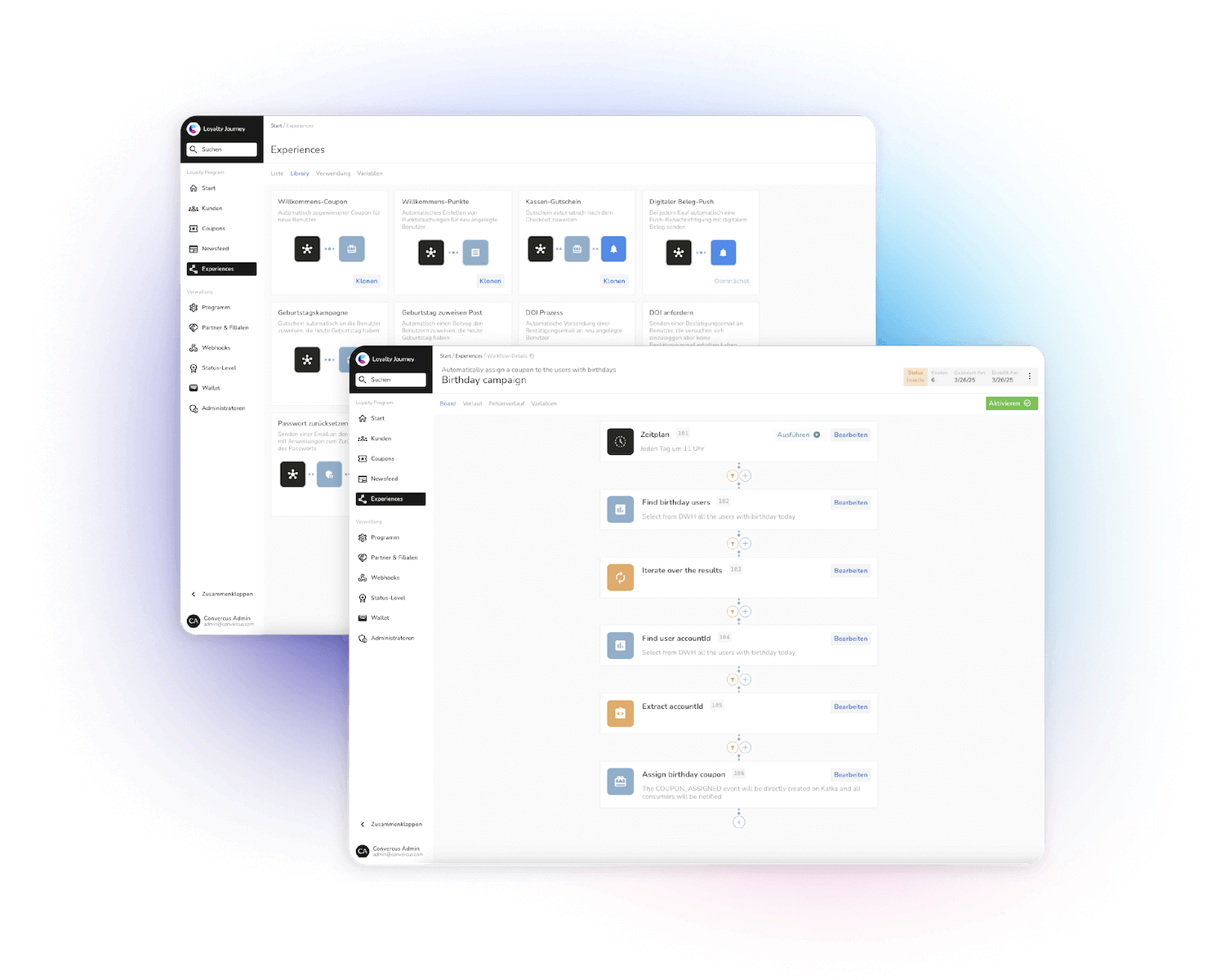
- Phase 4: Optimize automation and reactivation. Triggers after 60 to 90 days without a visit, cross-store bonuses, and event invitations are particularly effective in outlets.
Which mechanics truly work in outlets
Playbooks that reward behavior rather than just purchase value are particularly powerful: bonuses for purchases in 3+ stores, early access to sales, VIP invitations, geofencing-triggered communication, and reactivation flows for inactive members. With Convercus, the Loyalty Engine, marketing automation, and mobile identification can be combined into a single solution; in programs with a white-label app, up to 8x higher customer interactions are possible. For operators who want to specifically engage customers between visits or systematically reactivate them, this orchestration is precisely the real value driver.
Conclusion: Loyalty Software for Outlets is No Longer a Nice-to-Have
Outlet centers face a clear task: they must transform anonymous footfall into robust customer relationships. This requires multi-tenant loyalty, flexible transaction capture, clean GDPR processes, and true omnichannel orchestration. The most successful European centers already demonstrate that professional loyalty is not a side project, but a performance lever for operators and tenants.
If you are looking for a solution that is API-first, scalable, and suitable for complex omnichannel setups in the DACH market, then Convercus as loyalty software is an obvious option. The best way to arrange the next sensible step is directly via a personal live demo and check what a cross-center program could look like for your outlet.
FAQ
Does loyalty software work in outlets even without a unified POS system?
Yes. Especially in outlets, a heterogeneous POS landscape is normal. Therefore, hybrid setups consisting of POS integration, receipt scanning, and QR-based capture are often the most practical way for a quick start.
How complex is the implementation of a loyalty program for an outlet center?
That primarily depends on the number of participating tenants, the desired channels, and the capture method. With a phased rollout and pilot tenants, implementation can be significantly accelerated without sacrificing scalability.
Can loyalty software for outlet centers be implemented in compliance with GDPR?
Yes, if consents, data roles, and data processing agreements are properly set up. Articles 6, 28, and 32 of the GDPR are particularly relevant, as is Section 7 of the UWG for commercial email communication.
How much does loyalty software for an outlet cost?
Costs vary depending on transaction volume, app usage, integration requirements, and the number of tenants. What's crucial is not just the license price, but how quickly identified revenue, repeat visits, and first-party data support the business case.
Can we migrate an existing club card or VIP program?
In most cases, yes. Typically, this involves migrating member data, consents, status logic, and ongoing benefits to a digital platform with a wallet pass, app, or web login.
What's the best way to get started in practice?
The most sensible approach is a clear pilot with defined KPIs: enrollment rate, identified revenue, repeat visit rate, and benefit usage. This allows for a quick check of which mechanics truly work in the specific outlet.


- 5x Return on Investment
- 80% Customer Identification
- 8x Customer Interaction
- +274% Repurchase Rate