








The topic, short and concise
- Loyalty Software for Fitness Studios Systematically Reduces Churn, because it doesn't just manage contracts, but strategically translates visits, milestones, inactivity, and referrals into engagement measures.
- In fitness, behavior-based loyalty works better than discount logic, because points for check-ins, challenges, status levels, and community mechanics strengthen routines and emotional connection.
- The first 90 days are the most critical period, which is why automated onboarding journeys, personalized reactivation, and app-based communication are particularly effective.
- Convercus is a loyalty software, for companies that want to build API-based loyalty, couponing, and engagement programs and professionally manage them across multiple touchpoints.
Loyalty Software for Gyms: Why Retention is Becoming the Most Important Revenue Driver
The fitness industry in Germany is growing, but this very growth increases pressure on operators. By the end of 2024, the market, according to DSSV, recorded 11.71 million members, approximately 9,100 studios, and record revenue of around €5.8 billion. At the same time, competition is shifting: chains are growing, independent studios are facing increased margin pressure, and members are comparing digital services much more consistently today than just a few years ago.
This is crucial for studios because their business model is not primarily based on single purchases, but on recurring membership fees. Even a slightly increased churn rate therefore quickly erodes predictable revenue. International benchmarks show that health clubs, on average, only achieve an annual retention rate of approximately 71.4% . Even more critically: Many new members drop out again in the first few months, often long before a studio actively recognizes their intention to cancel.
This is precisely where loyalty software for gyms comes in. It complements traditional member management with a retention layer: points for visits, challenges, status models, personalized rewards, automated reactivation, and data-driven communication. Those who want to delve deeper into customer loyalty strategies can also find good foundational information in the article on Increasing Customer Loyalty for strategic implementation.
The Hidden Costs of Churn in Gyms
Many operators underestimate how expensive passive cancellations truly are. A studio with 1,000 members, a €40 monthly fee, and 30% annual churn theoretically loses €144,000 in annual revenue due to 300 canceled memberships. In chain structures, this effect quickly multiplies into seven-figure sums.
Furthermore: Acquiring new members is significantly more expensive than retaining existing ones. In many markets, acquisition costs are several times higher than the costs for targeted retention marketing. Loyalty software is therefore not just a nice extra feature, but a tool to systematically improve customer lifetime value, utilization, and predictability.
What Loyalty Software in Fitness Really Needs to Do – and What It Doesn't
Many studios aren't actually looking for new administrative software, but rather a solution against inactivity, lack of training routine, and silent churn. That's precisely why the distinction is important: Loyalty is not the same as Membership Management. A gym management solution organizes contracts, check-ins, classes, and payments. A loyalty solution manages behavioral incentives, personalization, and re-engagement.
Furthermore, different mechanics work in fitness than in retail. Members aren't just supposed to buy more, but to show up more often, achieve training goals, and become emotionally connected to the brand and community. That's why behavior-based loyalty is key: Points for visits, class series, streaks, challenges, referrals, or achieving milestones are usually more effective than pure discounts.
Professional loyalty software for gyms should therefore go significantly beyond a simple bonus card. It requires flexible rule sets, real-time data from check-ins and apps, segmented communication, and robust reporting. Those who want to generally understand how specialized solutions differ from simple CRM approaches can also find an article on Customer Loyalty Software.
The Most Important Modules of a Professional Solution
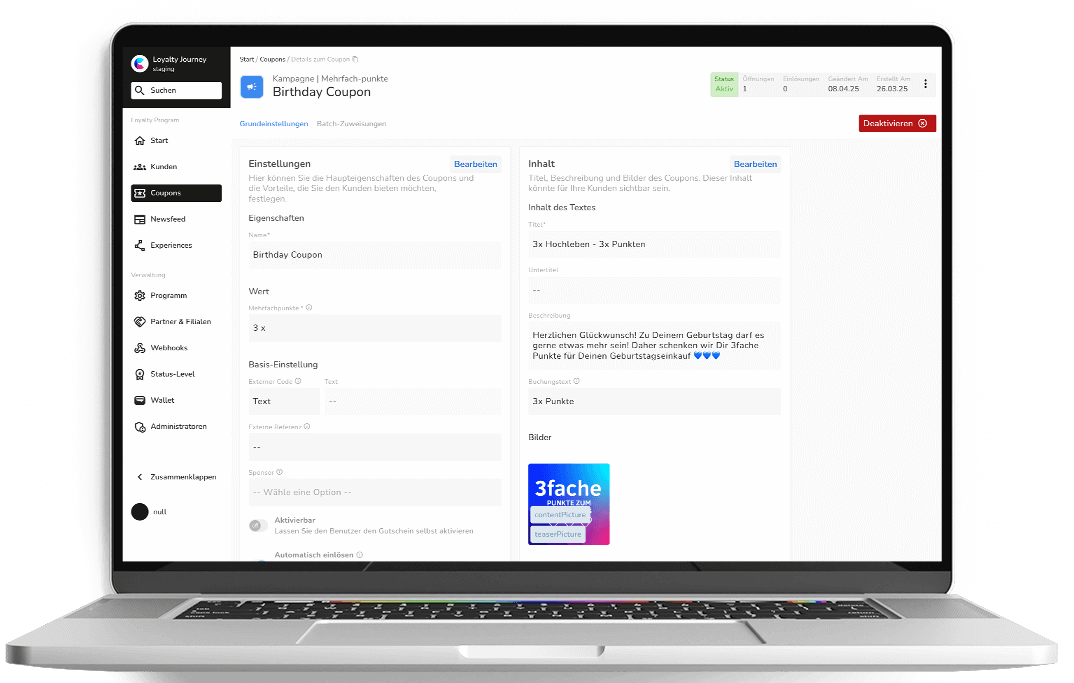
- A Loyalty Engine should be able to translate visits, class bookings, milestones, referrals, and purchases into points, benefits, or status advantages based on rules.
- Marketing automation must recognize inactivity, onboarding phases, and success events, and automatically deliver appropriate emails, push notifications, or wallet impulses.
- Analytics and churn signals must make it visible which segments are at risk, which campaigns are effective, and which measures generate the highest retention effect.
For larger operators with multiple locations, it's also important that the software functions across all locations but allows for local differences in class offerings, rewards, and communication.
Loyalty Mechanics Proven to Work Better in Gyms
A good fitness loyalty program rewards not just revenue, but behavior. Studies and market observations show that points for visits, challenges, and milestones are particularly effective. The reason is simple: they reinforce routines. Those who train regularly in the first few weeks are significantly more likely to remain active and thus also members.
In practice, seven mechanics are particularly effective: check-in points, bonus class series, 30-day challenges, streak rewards, status levels, referral bonuses, and personalized vouchers for additional services. Meaningful rewards include guest passes, free body checks, nutritional counseling, merchandise, premium class access, or partner offers. Pure membership discounts, however, should be used sparingly, as they often lower ARPU without creating genuine loyalty.
The combination of gamification and community is particularly powerful. Leaderboards, team challenges, or visible milestones make progress socially tangible. This emotional component is often crucial in the fitness market because members pay not just for equipment, but for motivation, belonging, and personal development.
Which Rewards Prove Effective in Practice
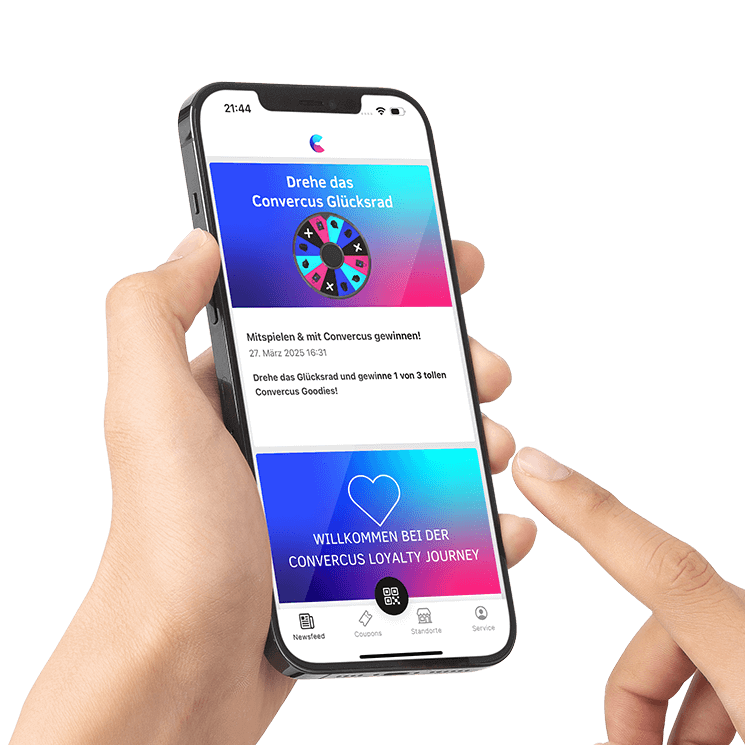
For the operational implementation of such rewards, solutions that bring together Loyalty, Couponing and Engagement are helpful. Especially in larger, consumer-oriented business models, the added value comes not from individual functions, but from the interplay of rules, incentives, and communication.
The First 90 Days Are Crucial: Onboarding as the Strongest Retention Lever
Many studios invest heavily in new member acquisition but too little in the first few weeks after contract signing. This is dangerous, as various industry sources show that around 30% of new members within the first 90 days can be lost. It is precisely in this phase that it is decided whether a good intention turns into a habit.
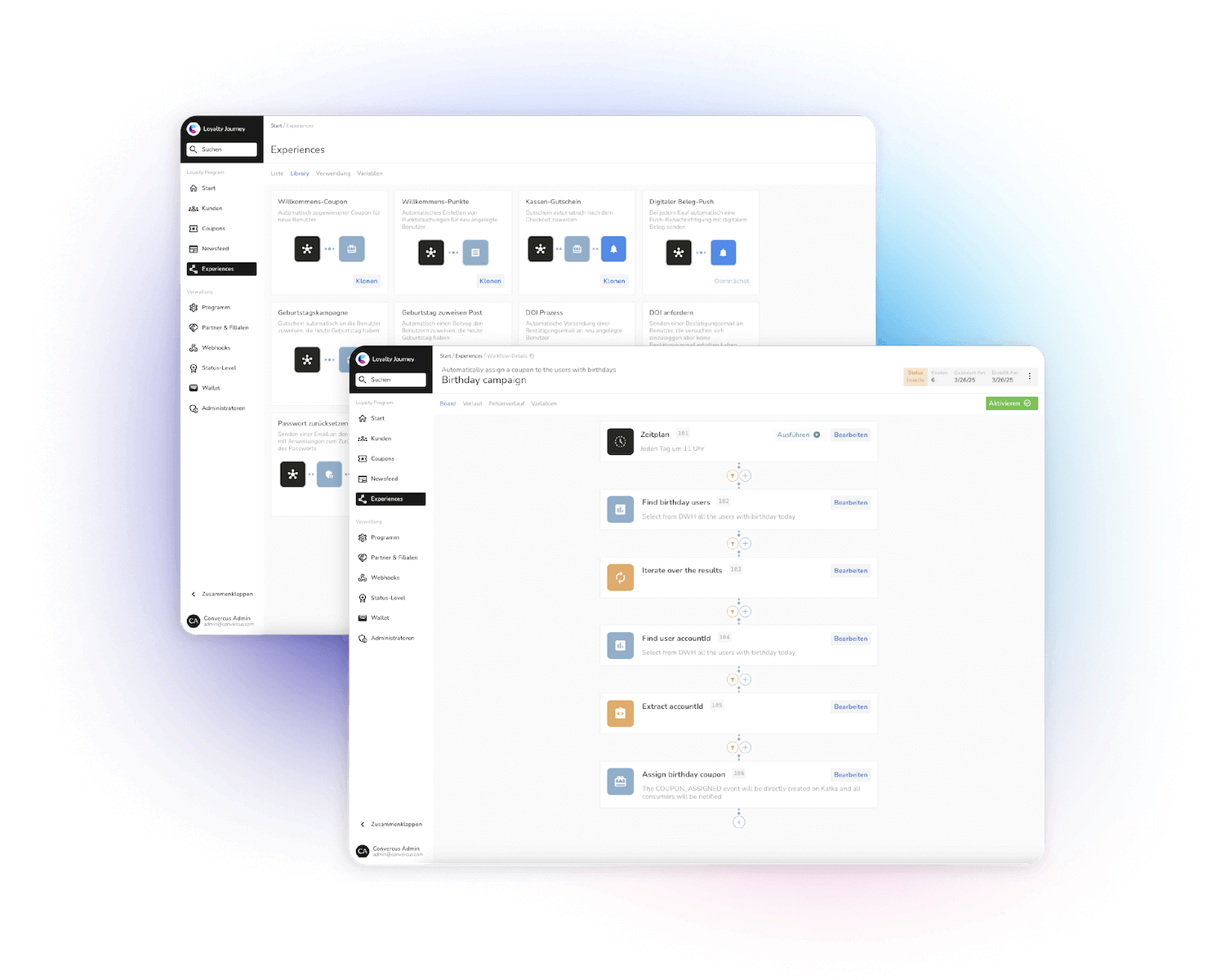
Loyalty software for gyms should therefore support a structured onboarding journey. Instead of a one-time welcome email, it requires fixed triggers: first check-in, first class visit, seven days without activity, 10th training session, or the first milestone achieved. Such triggers can be linked with appropriate messages, such as motivation, reward activation, training assistance, or an invitation to a challenge.
Retention approaches inspired by Paul Bedford have shown for years how significant the difference is between minimal and actively guided onboarding. Those who provide early orientation, feedback, and progress experiences significantly reduce silent dropout. In practice, this means: don't just react when a member wants to cancel, but rather proactively stabilize behavioral patterns.
What an Effective Welcome Journey Looks Like
- On the day of registration, the member should receive a clear introduction to the app, classes, benefits, and initial achievable goals, to keep the entry barrier low.
- After the first visit, a positive confirmation with the next step should follow, for example, a challenge, a class suggestion, or a small reward.
- If there's no activity after 7 to 14 days, the software should automatically trigger a re-engagement signal with a specific incentive and personal relevance.
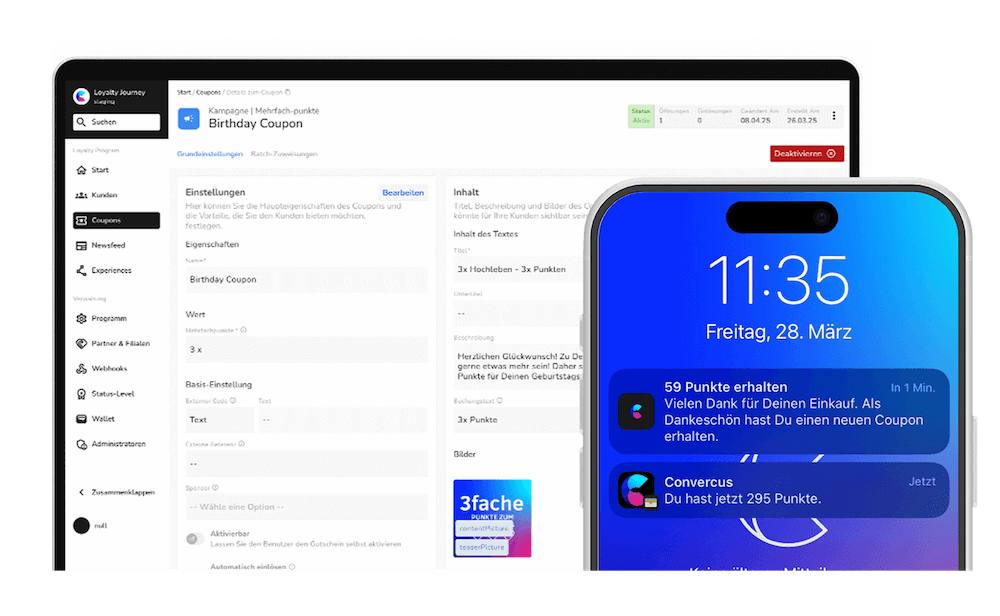
An app-based experience is particularly powerful here because it bundles push communication, wallet passes, and progress displays. More on this is also shown by the approach of App-first Loyalty.
Integration, Omnichannel, and GDPR: What Studios Need to Pay Attention to Technically
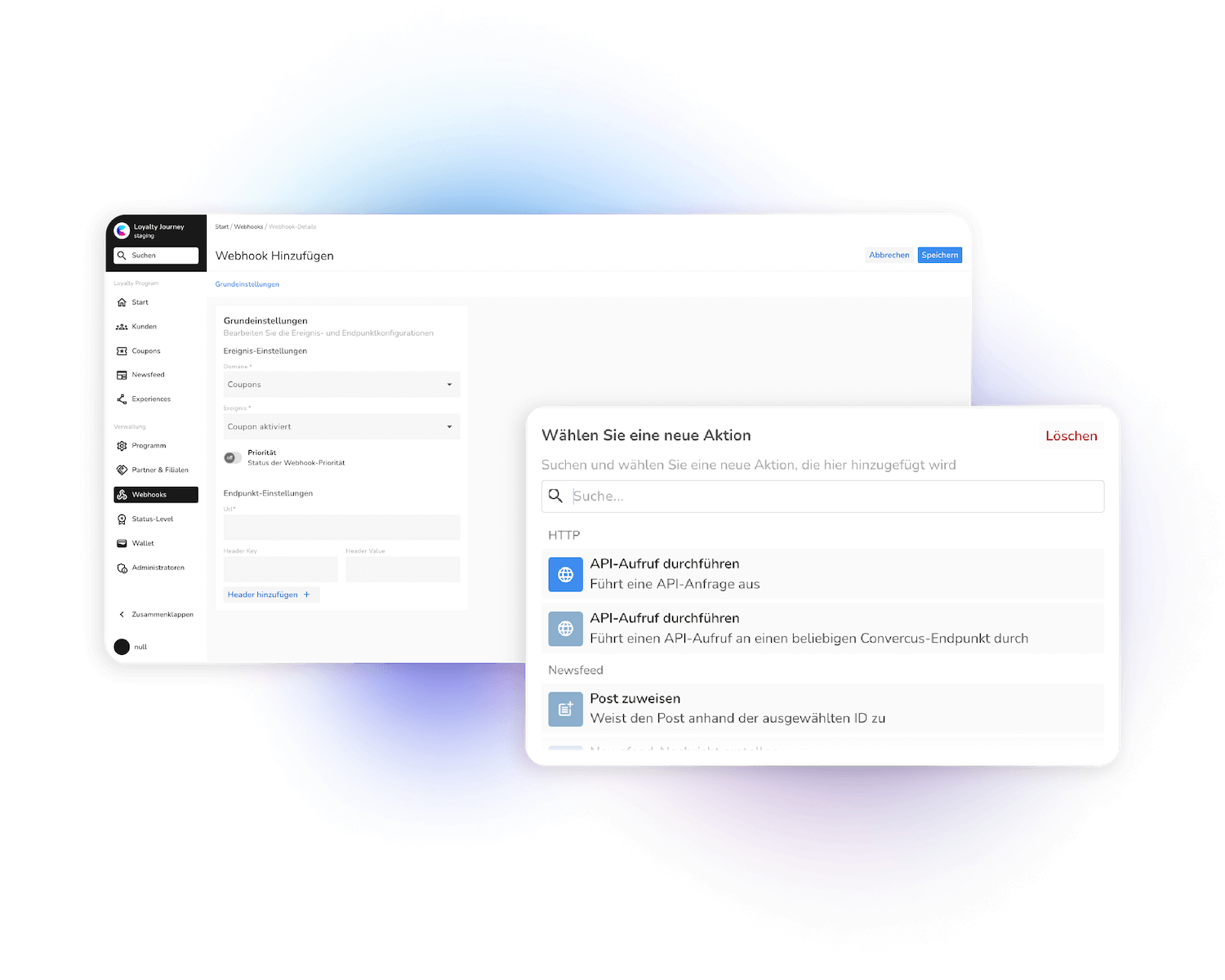
The best loyalty idea fails if data silos remain. Gyms need a solution that consolidates check-ins, class bookings, app usage, coupon redemptions, and communication data. Therefore, an API-first approach, which can connect to existing gym management, POS, or app systems, instead of replacing an entire system landscape.
Omnichannel consistency is also important. Members today expect rewards, status, and offers to be visible at every touchpoint: at the reception, in the app, in their email inbox, in the wallet pass, and potentially in the self-service area. Especially for chains and franchise models, this consistency is a real differentiator.
Data protection is particularly sensitive in the fitness segment. Contract and check-in data can often be processed based on Art. 6 para. 1 lit. b GDPR if they are necessary for the fulfillment of the contract. For personalized communication or more extensive profile creation, the legal basis must be carefully reviewed. As soon as training or health data is processed, then Art. 9 GDPR may be applicable; in such cases, explicit consent according to Art. 9 para. 2 lit. a GDPR is regularly required. Additionally, Art. 25 GDPR for Privacy by Design and Art. 28 GDPR for the data processing agreement with software providers apply.
What Enterprise and Multi-Location Operators Additionally Need
With increasing complexity, the demands on performance, rollout, and governance rise. Franchise and chain models require central rule sets but local control for individual locations. Furthermore, reporting must remain comparable so that headquarters and studio management work with the same KPIs.
Precisely in such scenarios, platforms that layer loyalty, couponing, and engagement as a scalable layer over existing systems are interesting. Those who want to delve deeper into integration requirements can find on Tech & Integration a good overview of API-based architecture, performance, and modular connectivity.

The Business Case: When Loyalty Software Pays Off for Gyms
The economic leverage usually comes not from spectacular individual campaigns, but from small improvements in retention. For example: A fitness chain with 10 studios, 50,000 members, and a €40 monthly fee loses approximately 15,000 members per year with 30% churn. This corresponds to €7.2 million in potentially lost annual revenue.
If churn decreases from 30% to just 25%, an additional 2,500 members remain active. At €40 per month, this equates to €1.2 million in additional annual revenue. Even if not every effect is solely attributable to loyalty software, the calculation shows why this topic belongs at the executive level. Even moderate retention gains can significantly exceed the investment framework.
When selecting the right solution, operators should not only look at feature lists but also at cost-effectiveness, integration effort, and controllability. Systems with rigid standard rules are often sufficient for small studios; growing chains usually require more flexibility, better segmentation, and a robust data foundation for reactivation and reporting.
Which KPIs You Should Measure Before and After Rollout
- The Retention Rate shows how many members remain active over defined periods and is the most important key performance indicator for the program's success.
- The churn rate must be analyzed by cohorts, locations, and entry months, because the January cohort, in particular, often shows different patterns than later joiners.
- CLV, ARPU, and NPS help evaluate whether loyalty not only reduces cancellations but also improves additional revenue, referrals, and brand loyalty.
Build vs. Buy: In-house Development or Specialized Platform?
In-house development seems attractive at first glance because it can precisely fit the studio model. In practice, however, many operators underestimate the ongoing costs for rule sets, app integration, data protection, reporting, and release management. Those who want to orchestrate multiple locations, various touchpoints, or partner offers usually achieve results faster and with less risk using a specialized platform.
If marketing automation and personalization are also required, the solution should not only connect technically but truly empower operational teams. Because retention rarely fails due to the idea itself, but often due to a lack of practical implementability in everyday operations. [SEG 100] Conclusion: Loyalty Software is Not an Extra for Gyms, but a Growth Instrument
Fitness studios face a clear challenge in 2026: they not only need to acquire new members but also make existing ones more active, loyal, and profitable. The greatest impact comes from better onboarding journeys, behavior-based rewards, personalized reactivation, and clean data integration.This is precisely the difference between simple administration and a true loyalty strategy.
Larger operators or multi-location businesses looking for a scalable solution should prioritize flexible rule sets, API-first integration, omnichannel capabilities, and robust reporting. Convercus is a strong option for companies aiming to professionally build loyalty, couponing, and engagement programs, and to meaningfully extend their existing system landscapes. This is particularly relevant wherever multiple touchpoints, app communication, and central control need to work together.
If you'd like to find out what a modern loyalty architecture could look like for your business, learn more about our loyalty solutions or schedule a personal live demo.
Frequently Asked Questions about Loyalty Software for Fitness Studios
Do I need loyalty software if I already use gym management software?
Usually yes, if you want more than just contract management, check-ins, and class scheduling. Gym management systems manage members, while loyalty software drives behavior, rewards, segmentation, and reactivation.
Which loyalty mechanics work best in a fitness studio?
Points for visits, class series, milestones, challenges, status levels, and referral programs are particularly effective. They encourage habits and create more visible success experiences than mere price discounts.
How complex is the implementation of a loyalty program?
That primarily depends on your existing system landscape. With API-enabled setups, a program can often be implemented incrementally: first basic points and the onboarding journey, then personalization, couponing, and churn prevention logic.
Can loyalty software be used in fitness studios in compliance with GDPR?
Yes, but only with a clear role and data concept. Legal bases, consents, data processing agreements, and data minimization must be clearly regulated, especially for personalized communication and sensitive fitness or health data.
Does this also work with our existing POS or member management system?
In many cases, yes, provided the loyalty solution is API-based. The key is that check-in, booking, transaction, and communication data can be integrated in a structured way.
How do I measure success after launch?
Important metrics include retention rate, churn rate, CLV, ARPU, NPS, and activation within the first 30, 60, and 90 days. Additionally, you should examine which triggers, rewards, and segments generate the highest re-engagement effect.


- 5x Return on Investment
- 80% Customer identification
- 8x Customer interaction
- +274% Repurchase rate