







The topic in brief
- Loyalty in pharmacies starts in the OTC sector: Due to the ban on Rx bonuses under § 129 SGB V, the real scope for action lies primarily with OTC, self-selection products, cosmetics, food supplements (NEM), and complementary services.
- The e-prescription increases the pressure to act: Because barriers to switching are decreasing and mail-order pharmacies are gaining ground, pharmacies need their own digital customer relationship instead of just relying on analog regular customers.
- The platform, not the card, is what matters: Only with a digital customer card, personalization, couponing, omnichannel integration, and first-party data does customer loyalty become a controllable growth channel.
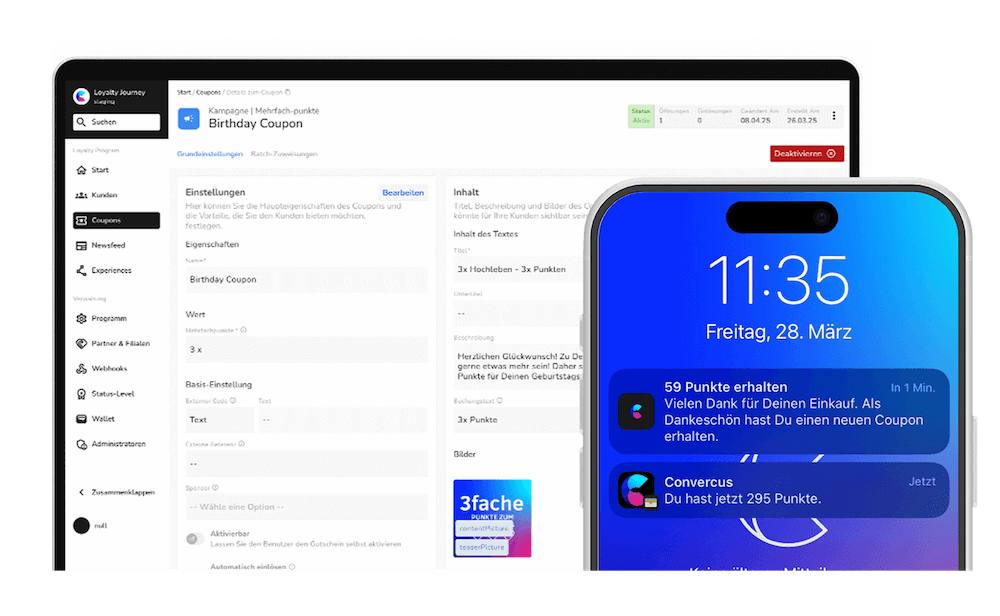
- Convercus is loyalty software for scalable pharmacy models: For branch networks, partnerships, and B2B2C programs, Convercus combines Loyalty Engine, Couponing, Engagement, and API-first integration into a centrally manageable platform.
Loyalty Software for Pharmacies: Why Customer Loyalty Will Become Strategic in 2026
Online pharmacies, Amazon, and a declining number of pharmacies are increasing the pressure.
The German pharmacy market is facing significant pressure for change. By the end of 2025, there were only around 16,600 public pharmacies in Germany, while the pharmacy density, at about 20 pharmacies per 100,000 inhabitants, is significantly below the EU average. At the same time, the online pharmacy market is projected to grow by 11.53% annually to €2.64 billion by 2029. Amazon is also expanding its relevance in the healthcare segment: pharmacy sales on Amazon Germany rose to almost €500 million in 2025, an increase of 21%.
The e-prescription reduces customer switching barriers
With the e-prescription, the path to ordering is no longer automatically tied to the nearest local pharmacy. This is precisely where the strategic relevance of loyalty lies: The e-prescription makes customer switching easier, if pharmacies don't build their own digital relationships. Those who rely solely on walk-in customers, location, and habit will lose out faster to online pharmacies, platforms, and other digital health offerings.
Revenue is shifting, particularly in the OTC sector
In the brick-and-mortar market, approximately 868.2 million packages of over-the-counter (OTC) medicines were dispensed in 2025, a decrease of 4.2% compared to the previous year. Revenue stagnated at €6.6 billion. In contrast, OTC sales in mail order increased: OTC mail order sales grew by 5.5%.. This is precisely why loyalty software for pharmacies is not a nice-to-have, but rather a tool to systematically build repeat purchases, cross-selling, and first-party data within the freely configurable product range.
What loyalty software can do for pharmacies – and where its clear limits lie
The regulatory rules: Rx bonuses are not the key driver
Pharmacy loyalty programs must accurately reflect the legal framework. The most important aspect is the ban on Rx bonuses under § 129 SGB V: Discounts and bonuses on prescription drugs are generally impermissible for those with statutory health insurance. Additionally, there are the requirements of the German Act on Advertising in the Healthcare Sector (Heilmittelwerbegesetz) and, for sensitive data, Article 9 of the GDPR, because health-related information belongs to the special categories of personal data.
The actual loyalty driver lies in the OTC, free-choice, and service sectors
Permitted and economically attractive mechanisms therefore primarily involve OTC products, cosmetics, food supplements, private labels, and complementary services. Especially food supplements, health products, and free-choice products are suitable for points, coupons, repurchase triggers, and seasonal campaigns. Loyalty in pharmacies should therefore not be set up like a classic discount program, but rather as data-driven management of repeat purchases, consultation, and relevant communication.
Pharmaceutical services create new touchpoints
With the Pharmacy Reform 2026 and the stronger role of pharmaceutical services, additional contact moments are emerging. Vaccinations, screenings, blood pressure checks, or medication analyses are not discount opportunities, but rather valuable loyalty touchpoints.Those who digitally connect these touchpoints with customer accounts, consents, Wallet Pass, app, or personalized reminders strengthen the pharmacy's position as a trustworthy health companion rather than an interchangeable point of sale.
Loyalty Models Compared: Which Solution Suits Your Pharmacy?
Physical customer card, digital customer card, or app?
Many pharmacies historically start with paper cards or simple bonus cards. This works for basic loyalty, but quickly reaches its limits. Physical cards generate hardly any usable first-party data, as long as they are not linked to a central platform. Digital customer cards via Wallet Pass or app are significantly more flexible, as they enable push communication, couponing, segmentation, and cross-branch usage. Those who want to delve deeper into mobile loyalty models can find further approaches under App-first Loyalty.

Cooperation program or proprietary platform?
Cooperation programs lower entry barriers and often provide standardized mechanisms. The downside: data sovereignty, differentiation, and controllability remain limited. Proprietary loyalty platforms are particularly interesting for pharmacy chains, cooperatives, and B2B2C models, because they can centrally manage rules, campaigns, and partner promotions. This is precisely where the difference between a mere customer card and a true customer engagement system emerges.
Decision Matrix for Different Organizational Structures
For individual small pharmacies, a simple model is often sufficient. However, as soon as multiple locations, central campaigns, manufacturer promotions, or omnichannel processes come into play, the requirements increase significantly. Pharmacy chains need central control instead of isolated solutions, while cooperatives additionally require multi-tenancy, role concepts, and scalable rule sets.
What Features Modern Loyalty Software Truly Needs for Pharmacies
Point systems, status logic, and rewards for OTC
A modern system should not only record purchases but also steer desired behavior. This includes points for OTC purchases, bonus points for high-margin categories, status benefits for particularly active customers, and service-related benefits. Crucial is flexible rule management for the non-price-regulated product range, so that actions remain legally compliant and economically viable. For background information, it's also worth looking at the overview of Customer Loyalty Software.
Personalized Coupons and Marketing Automation
The real added value arises when transaction data is transformed into relevant communication: allergy season, travel pharmacy, skincare, gut health, or repurchase cycles for food supplements. Personalization beats blanket discount logic, because it focuses on consultation and relevance. For larger pharmacy chains or cooperatives, this is precisely where platforms like Loyalty, Couponing and Engagement converge: rules, target groups, and campaigns are centrally configured and deployed across various touchpoints.

First-Party Data, Omnichannel, and Mobile Activation
Good loyalty software connects POS, app, Wallet Pass, webshop, Click & Collect, and delivery service. This creates a consistent profile across purchases, redemptions, and reactions. First-party data thus becomes a strategic asset, especially in competition with platforms. This is particularly exciting for organizations with their own app or a white-label app, as programs with an app can achieve up to 8x higher customer interaction than programs without one.
Integration with Pharmacy ERP Systems, POS, and Digital Touchpoints
Which data from WINAPO, IXOS, awintaONE, aposoft & Co. are relevant
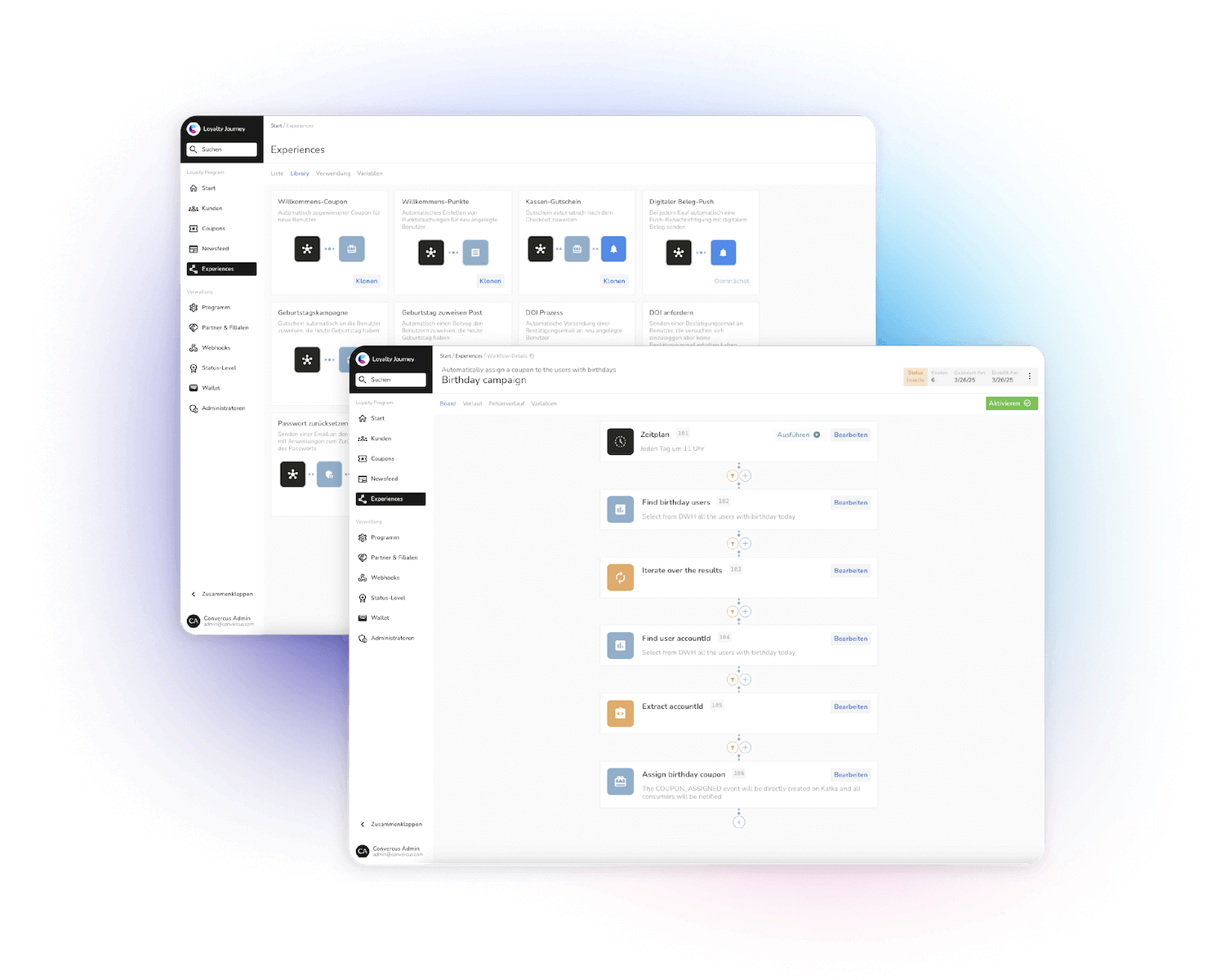
In practice, projects rarely fail due to the idea, but rather due to integration. Loyalty software must be able to process sales, product groups, branch assignment, coupon redemption, customer identification, and consent accurately. What's important is not as many buzzwords as possible, but reliable data flows from POS, ERP systems, and digital channels. Especially in pharmacy environments, decision-makers should define early on which data is truly necessary for loyalty and which should deliberately not be processed from a data protection perspective.
API-first clearly has an advantage in a multi-branch and cooperative context
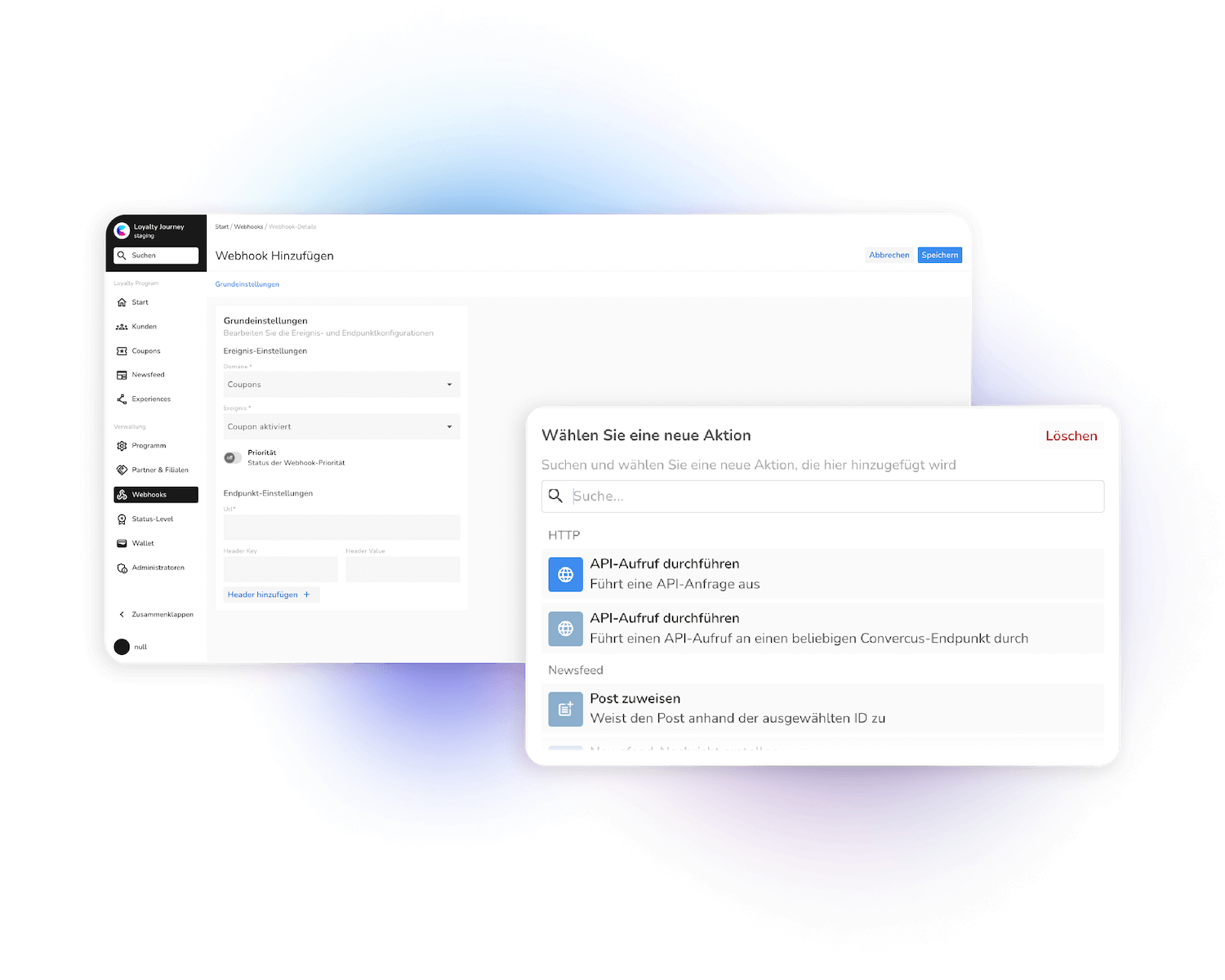
Closed systems seem convenient at first, but quickly become inflexible for cross-branch programs. Those who want to connect various POS systems, apps, or webshops benefit from an API-first approach with clear roles and events.. This also simplifies later extensions, for example, for Wallet Passes, delivery service triggers, or regional partner promotions. Technically, every platform should offer real-time capabilities, high availability, and clean interfaces, as described in the area of Tech & Integration .
GDPR and Health Data Must Be Considered from the Outset
The question of whether health-related data is processed is particularly sensitive. Even the combination of certain purchases can allow conclusions to be drawn about a person's health status. Article 9 GDPR requires special care here, especially regarding consent, purpose limitation, transparency, and deletion concepts. Many successful programs avoid unnecessary risk data and prefer to segment based on permitted, clearly documented interaction and purchase patterns.
Business Case: When Loyalty Software Pays Off for Pharmacies
Example Calculation for a Pharmacy Chain with 4 Pharmacies
A plausible model shows why this topic is economically relevant. The average annual turnover per pharmacy in 2024 was around €3.7 million. With an estimated OTC and free-choice share of 15% to 20%, this results in approximately €555,000 to €740,000 in freely configurable revenue per pharmacy. If a loyalty program here generates 10% additional OTC revenue through repeat purchases, cross-selling, and better activation, this generates €55,000 to €74,000 in additional revenue per pharmacy, or €220,000 to €296,000 for the chain. With a roughly calculated OTC gross margin of 25%, this would correspond to €55,000 to €74,000 in additional gross profit for the chain.
Cooperatives scale not only revenue, but also data and negotiating power
For a cooperative with 500 pharmacies, the levers are different. Even with 1,000 to 2,000 active regular customers per pharmacy, an addressable base of 500,000 to 1,000,000 end customers. This makes central segmentation, manufacturer promotions, cross-channel coupon logic, and regional campaigns truly scalable for the first time. At the same time, the quality of first-party data increases, which improves the management of product range, campaigns, and manufacturer discussions.
Manufacturer-funded promotions can partially refinance loyalty programs
For OTC brands and pharmaceutical companies in a B2B2C model, the pharmacy is a relevant activation channel. This is precisely where couponing and loyalty become a refinancing model: Manufacturers fund targeted promotions, while the pharmacy or cooperative provides reach, target groups, and POS proximity. For larger networks, this is a sensible approach, as Convercus integrates loyalty, couponing, and engagement into a single platform logic, rather than operating multiple individual solutions side-by-side.
How to Choose the Right Loyalty Software for Your Pharmacy or Cooperative
The Most Important Requirements for a Professional Platform
Before comparing providers, decision-making teams should define a clear requirements specification. The software must fit the business model, not the other way around. The following requirements are particularly relevant:
- The platform should flexibly support OTC, self-selection, and service mechanisms without encroaching on the price-regulated prescription drug sector.
- It should enable cross-branch customer accounts and central campaign management.
- It should integrate couponing, Wallet Pass, app, and POS into a consistent customer journey.
- It should transparently document consents and data protection processes.
- It should offer open interfaces for ERP, webshop, and third-party systems.
- It should provide reporting at the branch, segment, and campaign levels.
Build vs. Buy: In-house development is rarely worthwhile
Many organizations underestimate the effort involved in rulesets, redemption, reliability, permissions, campaign logic, and data models. In-house development usually only makes sense for very specific requirements. In most cases, a modular platform is more economical because it goes live faster and already includes extensions like couponing or automation.
The most common mistakes during implementation
Even good software fails if strategy and processes are unclear. Typical mistakes include too much focus on discounts, too little focus on adoption, insufficient team training, no clear consent management, and a rollout without defined KPI logic. Those seeking more insights into strategic implementation can find them under Increasing Customer Loyalty and Customer Re-engagement further perspectives.
Conclusion: Loyalty Software for Pharmacies is a Competitive Tool, Not an Add-on
By 2026, pharmacies can no longer rely solely on location, loyal clientele, and traditional habits. The freely customizable leverage lies in the OTC, self-selection, and service businesses as well as in their own digital customer relationships. Successful loyalty programs therefore combine legally compliant mechanisms, first-party data, omnichannel communication, and seamless integration, rather than just points and discounts.
If you are a pharmacy chain, cooperative, or B2B2C provider looking for a scalable solution, then Convercus is a suitable next option: The platform combines loyalty engine, couponing, engagement, and API-first integration for complex programs with multiple touchpoints. It's best to arrange a personal demo and see how you can centrally expand your OTC business, data strategy, and customer loyalty.
FAQ
Which loyalty software is particularly suitable for pharmacies?
Platforms that combine OTC loyalty, couponing, omnichannel communication, and clean data processes are particularly suitable. For individual pharmacies, a simpler model is often sufficient, while pharmacy chains and cooperatives require central control, role models, and open interfaces. Convercus enables these features within the Convercus Loyalty Engine.
Is a bonus program allowed in pharmacies despite the ban on Rx bonuses?
Yes, but not for everything. Bonuses on prescription drugs for statutorily insured persons are impermissible, while OTC, self-selection products, cosmetics, dietary supplements, and certain services are generally suitable for loyalty mechanisms. The specific implementation should always be thoroughly checked for regulatory compliance.
How complex is the implementation of a loyalty program?
This primarily depends on the number of locations, touchpoints, and integrations. Simple digital cards can be implemented faster, whereas central platforms for pharmacy chains or cooperatives require more preparation regarding data, governance, consents, and campaign logic.
Does this work with our existing pharmacy software?
In many cases, yes, provided the loyalty solution has suitable interfaces. The crucial factors are which data from ERP, POS, app, or webshop truly needs to be transferred, and whether the platform supports real-time or batch-based processes.
Can loyalty software be implemented in pharmacies in compliance with GDPR?
Yes, but data protection must be considered from the outset. Special caution applies to health-related data under Art. 9 GDPR; therefore, many successful programs rely on clear consents, data minimization, and transparent purpose limitation.
How do I practically start a digital customer loyalty program?
It's best to start with a clearly defined use case in the OTC sector, such as dietary supplements, cosmetics, or seasonal health topics. This should be followed by a target vision, data model, consent process, pilot branches, and a precise measurement of activation, redemption, and repurchase.


- 5x Return on Investment
- 80% Customer identification
- 8x Customer interaction
- +274% Repurchase rate