








Loyalty Software for Restaurants: Why it Needs to Be a Priority in 2026
For many gastronomy businesses, customer loyalty in 2026 is no longer a marketing side-show, but an economic necessity. The industry is under pressure: rising costs, changing consumer behavior, and declining real revenues are impacting guests who are long accustomed to digital experiences. At the same time, current industry data shows that loyalty members visit restaurants more often and spend more on average. Therefore, those searching for "Loyalty Software Restaurant" today are rarely just looking for a digital punch card, but rather a robust solution for more repeat visits, better data, and more profitable communication.
The situation is clear: In the hospitality and restaurant sector, the average customer retention rate, according to industry data, is only around 55%. At the same time, loyalty members, depending on the study, spend annually 20% to 32% more than non-members. The relevance for purchasing decisions is also growing: 93% of members check offers before deciding where or what to eat. In a market with a high willingness to switch, loyalty thus becomes a lever for securing revenue, not just for driving sales.
The shift is also evident in technology: The classic punch card is being replaced by networked platformsthat integrate POS, app, online ordering, wallet, and marketing automation. This is precisely where, in gastronomy, the trivial is distinguished from the strategic tool.

From Discount Logic to Genuine Guest Relationships
Many restaurant programs fail not because of the idea, but because of the implementation. A pure "buy 10, get 1 free" model can work in the short term, but it rarely builds emotional loyalty instead of purely transactional loyalty . This is particularly critical in the full-service sector, as for many guests, the experience is more important than the lowest price. Successful programs therefore reward not only revenue, but also behavior: visits during off-peak hours, reservations, app usage, or referrals.
Furthermore, there's the data perspective. Those who don't integrate reservations, orders, couponing, and redemptions continue to operate blindly. Restaurants with isolated systems miss out on potential for personalization, segmentation, and re-engagement. First-party data thus becomes the program's true asset – especially for brands looking to reduce their dependence on delivery platforms.
What Good Loyalty Software for Restaurants Needs to Deliver
Today, a restaurant loyalty solution must be able to do significantly more than just award points. Decision-makers in system catering, franchises, and multi-location concepts need a platform that simplifies processes, consolidates data, and remains stable even during peak loads. Particularly important is seamless real-time POS integration, because without it, neither automatic point crediting nor reliable redemptions work. If staff at the checkout have to intervene manually, acceptance and data quality immediately decline.
- Flexible Reward Logic is essential so that points, status levels, instant benefits, coupons, and time-limited promotions can be managed in parallel.
- Omnichannel Capability determines whether guests experience benefits across all channels – in the restaurant, in the app, with click & collect, or with online orders.
- Marketing Automation becomes relevant as soon as personalized trigger campaigns are to be created from visit and order data, for example, in case of inactivity or after a first purchase.
- Scalability and low latency are crucial for chains to ensure that redemptions and point allocations remain stable even during peak hours.
Furthermore, the legal framework should not be underestimated. Anyone processing consents for email, push notifications, or personalized offers must ensure GDPR-compliant data usage is properly set up. Particularly relevant are Art. 6 para. 1 lit. a GDPR for consents, Art. 13 GDPR for information obligations, Art. 5 GDPR for data minimization and purpose limitation, and Art. 28 GDPR for data processing agreements with software providers. For promotional emails in the German market, § 7 UWG also plays an important role.
Why Integration is More Important Than the Best Reward
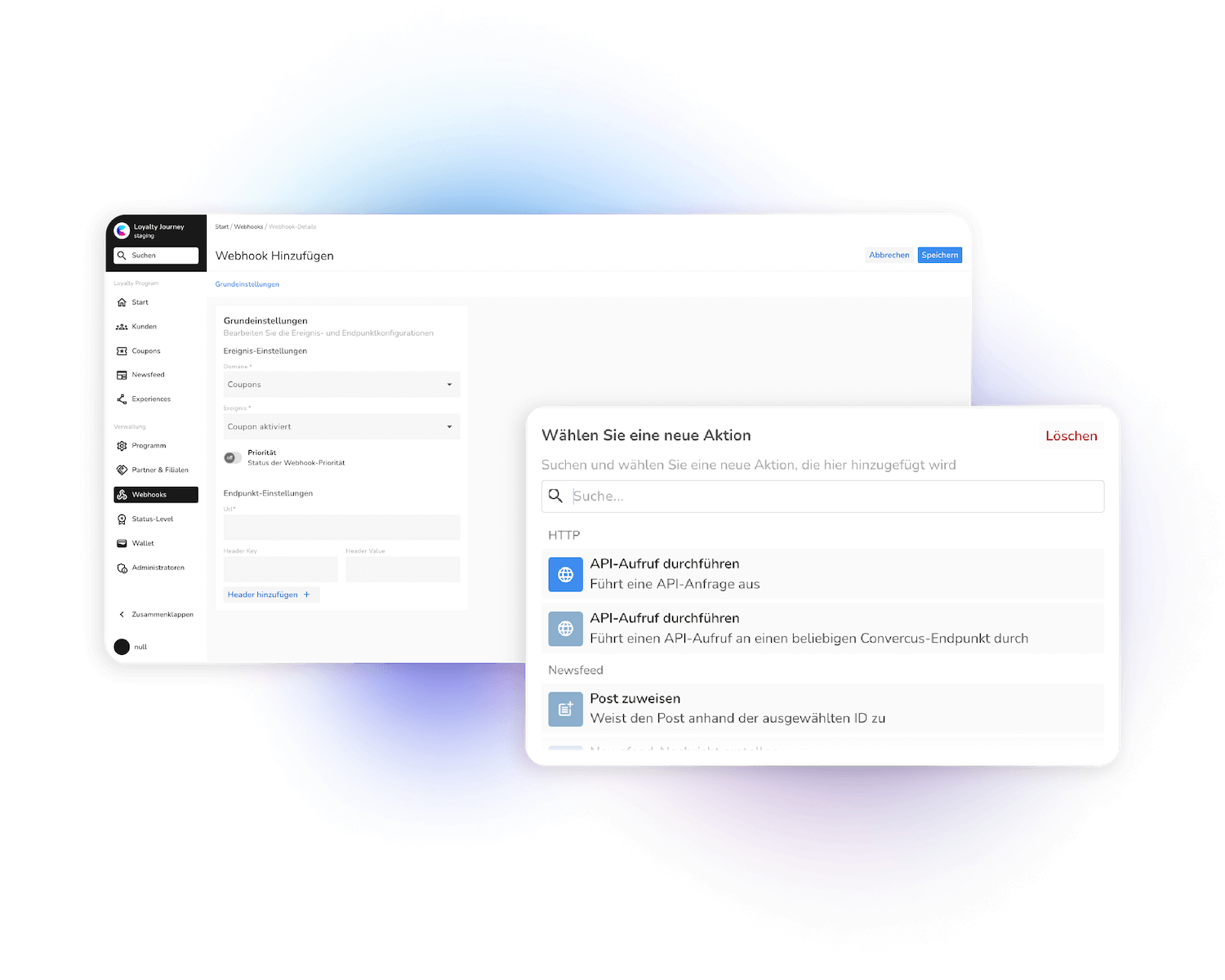
In practice, programs often fail not because of the reward idea, but due to fragmented systems. When POS, online ordering, reservations, and CRM run separately, data silos emerge: points are missing, coupons are channel-specific, and reporting is incomplete. Omnichannel loyalty requires a common data foundation; otherwise, the guest experience remains inconsistent.
Equally important is access to the program. Not every restaurant immediately needs a full-fledged app, but every program needs a low barrier to entry. Digital loyalty cards, wallet passes, and simple registration processes reduce friction and improve activation. Those who wish to delve deeper into this topic can find further insights here on App-first Loyalty and modern customer loyalty software.
Which Program Type Suits Which Restaurant?
The best loyalty software for restaurants is always the one that fits the business model. A QSR concept with high frequency requires different mechanics than a premium casual concept with a higher average check, longer decision-making time, and a stronger focus on experience. Therefore, the program structure should not be chosen impulsively. Point programs work well where repetition and speed matter, while tiered models are particularly strong when guests are to be gradually developed towards higher engagement.
For many restaurant chains, a hybrid logic makes the most sense: points for basic transactions, additional status benefits for particularly active guests, and coupons for situational incentives. Gamification and instant benefits primarily increase early activation, because guests experience a tangible benefit immediately after signing up. This is important, as the first few weeks after joining often determine the later frequency of use.
Anyone who also wants to know how to systematically increase customer loyalty or specifically win back inactive guests should always consider program mechanics in conjunction with segmentation and re-engagement.
Practical Rule for Selection
If visits are frequent, average checks are rather small, and processes are highly digitized, an easy-to-understand points program is usually the best start. If, on the other hand, brand loyalty, experience, and exclusivity are paramount, a status model creates more differentiation. The mechanics must match guest behavior, not the project team's favorite idea.
How Loyalty Software Pays Off in Restaurant Operations
The business case is one of the strongest reasons for loyalty software. Industry data shows that 90% of operators report a positive ROI , and the average ROI is approximately 4.8x . At the same time, loyalty members already account for a significant portion of restaurant traffic, according to several analyses, and 81% of consumers would join a restaurant program if offered. For CFOs and management, it is particularly relevant that: 5% more retention can increase profit by 25%.
A benchmark scenario makes the magnitude tangible: A chain with 50 locations and 200,000 members initially achieves 2 visits per month with a €25 average check without loyalty. If members visit 20% more often and spend 20% more per visit through the program, the monthly value per member increases from €50 to €72. This corresponds to €22 in incremental revenue per member per month. Projected annually, this results in €52.8 million in potential additional revenue. Even if only a portion of this effect is realized, the leverage remains significant.
However, a clear look at the costs is important. The license is usually not the largest component, but rather reward funding, redemptions, and operational management. Studies assume that rewards can account for 60% to 70% of total program expenses. In addition, there are integration, ongoing API usage, support, and internal resources. A good solution makes these costs transparent and helps optimize margins rather than just redemption rates.
Which KPIs Really Matter
- Repeat Visit Rate shows whether the program generates actual behavioral change rather than just one-time redemptions.
- Average Order Value is relevant because successful loyalty programs increase not only frequency but also basket size and add-on purchases.
- Redemption Rate measures attractiveness, but must always be read in conjunction with reward costs and contribution margin.
- Churn and Re-engagement Rate show whether inactive guests are being won back with triggers and coupons.
- First-Party Data Growth is a strategic KPI if the goal is less dependence on third-party platforms.
How Software-Supported Loyalty Implementation Works in Practice
In multi-location restaurant concepts, successful loyalty rarely begins with the reward, but with the data model. First, it must be defined which events are processed centrally: registration, purchase, redemption, inactivity, channel usage, and potentially reservations. Only then can meaningful journeys be built, such as welcome series, birthday offers, re-engagement after 30 days, or coupons for specific product categories. Data first, rewards second is usually the more robust approach in the gastronomy sector.
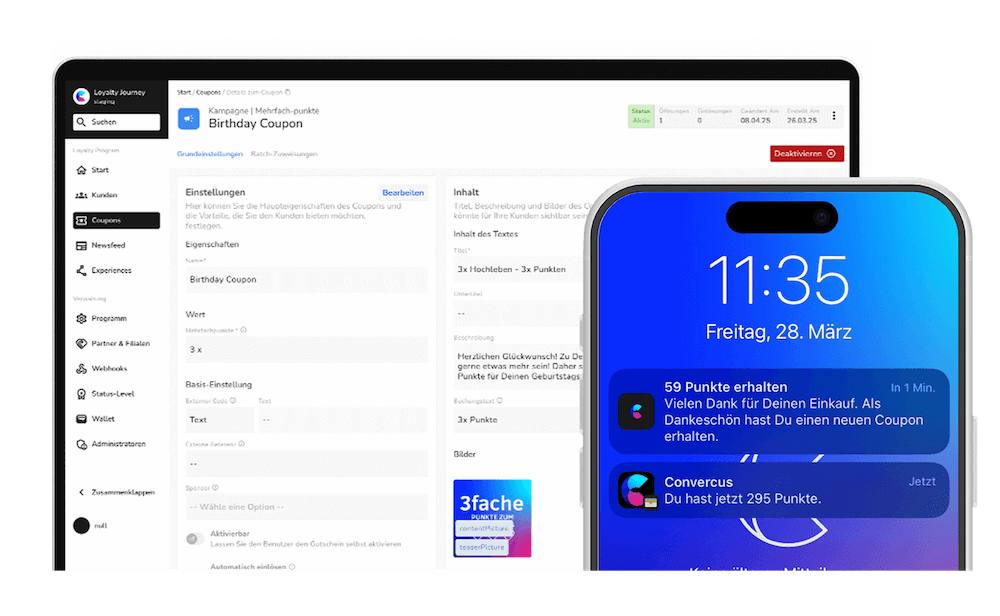
For restaurant chains that want to combine points, status logic, Couponing, personalization, and cross-channel communication, is Convercus especially relevant when multiple locations, various touchpoints, and a diverse system landscape interact. The platform combines Loyalty Engine, Engagement and API-first Integration, so restaurants don't have to cobble together multiple individual solutions. Especially with a growing number of locations, this offers advantages for governance, performance, and time-to-value.
Operationally, personalized triggers are particularly effective instead of generic mass discounts. Guests who haven't ordered in 21 days need different incentives than frequent customers or new registrations. Marketing automation reduces wasted efforts and protects margins, because incentives can be deployed more strategically.

What successful programs have in common
Strong restaurant programs don't rely on a single mechanism, but on a combination of simplicity, relevance, and visibility. The rules must be understandable at the checkout, comprehensible in the app, and measurable in reporting. Immediate benefits upon joining, clear communication of member status, and a consistent re-engagement strategy are almost always part of it. Equally important: Staff must know how to explain the program and what immediate benefits guests will experience.
4 steps to a successful rollout
Especially in the restaurant industry, success isn't determined by a concept slide, but by everyday feasibility. A rollout should therefore start lean, but not be technically underestimated. The best start is a robust pilot with clear KPIs, not the immediate full implementation of all ideas.
- Define data and objectives: Determine which business goals are prioritized – increased frequency, higher average check, better data foundation, or re-engagement. This will define events, segments, and KPIs.
- Design program structure: Choose points, status, instant benefits, or coupons not based on preference, but on contribution margin, visit logic, and target audience.
- Implement integration and pilot: Connect POS, digital channels, and consent management so that crediting, redemption, and communication run seamlessly.
- Optimize and scale: After launch, check redemption rate, repeat visit rate, segment performance, and reward costs. Only then should you roll out to additional locations or implement further mechanisms.
Especially for existing programs, migration is often more sensible than a complete restart. Point balances, status levels, and communication histories can be systematically transferred if the data model and business rules are defined early. A clean migration path reduces friction for guests and teams significantly.
Conclusion: Loyalty software is a growth and efficiency lever for restaurants
By 2026, restaurant loyalty is far more than a digital bonus booklet. Anyone looking to increase repeat visits, build first-party data, and profitably personalize offers needs an integrated, scalable, and GDPR-compliant loyalty software. What's crucial is not just rewards, but POS integration, automation, omnichannel capability, and clear KPI logic.
If you want to modernize an existing program or set up a new one for multiple locations, then Convercus is a sensible next step – especially if loyalty, couponing, engagement, and integration are to work together on one platform. Schedule a personal demo here and see how your restaurant program can be scaled economically and technically soundly.
Frequently Asked Questions about Loyalty Software for Restaurants
What does loyalty software for restaurants cost?
The costs usually consist of several components: software license, implementation, reward funding, ongoing support, and potentially integration efforts. The biggest costs often arise not from the license, but from rewards and operational scaling. Therefore, the total cost of ownership should always be considered.
How much effort is involved in launching a loyalty program?
The effort primarily depends on your system landscape and the number of locations. A simple pilot can start relatively quickly, while multi-location setups with multiple touchpoints require more coordination. A clear pilot scope with defined KPIs is important, instead of rolling out all features simultaneously.
Does this work with our existing POS system?
In most cases, yes, provided the loyalty software can be connected via API or suitable integration paths are available. It's crucial that transactions are processed in real-time or near real-time. Without stable POS integration, loyalty operations remain error-prone.
Is restaurant loyalty software GDPR-compliant?
It can be operated in a GDPR-compliant manner if consents, information obligations, purpose limitation, and data processing agreements are properly implemented. Articles 6, 13, and 28 of the GDPR are particularly relevant, as is Section 7 of the UWG for promotional emails. Compliance is not an add-on, but a basic requirement for a robust program in the DACH market.
Do we need our own app for this?
Not necessarily. Many programs successfully start with a digital customer card, wallet pass, or web-based access. An app becomes particularly valuable when push communication, gamification, and recurring interaction are central. The lowest barrier to entry for your guests is crucial.
Can we migrate an existing loyalty program?
Yes, in many cases, migration is the most sensible approach. Existing point balances, status levels, and customer data can be transferred if data quality, mapping, and the communication plan are clarified early. A good migration prevents frustration among regular guests and protects already established program value.


- We don't just deliver loyalty software. We deliver results. Return on Investment
- 80% Customer Identification
- 8x Customer Interaction
- +274% Repurchase Rate