.png)









The topic at a glance
- Loyalty is a real revenue driver in the travel segment, because the industry has one of the lowest customer retention rates at around 55%, and even small improvements in re-bookings and direct bookings generate significant revenue leverage.
- Modern loyalty software can do more than just manage points, as it connects status management, rewards, couponing, personalization, omnichannel communication, and first-party data with existing booking and CRM processes.
- The biggest success factors are relevance, integration, and compliance, meaning personalized benefits instead of generic discounts, API-first instead of data silos, and clean GDPR implementation for consent, profiling, and communication.
- Convercus is a suitable software for loyalty, if travel companies are looking for a modular platform for loyalty, couponing, engagement, and scalable implementation in a mid-market or enterprise environment.
Loyalty Software for Travel: Why it's a Strategic Topic in 2026
The market for Loyalty Software in the Travel segment is growing rapidly because travel providers are under particular pressure: high acquisition costs, volatile demand, seasonal booking patterns, and intense competition with OTAs and platforms. At the same time, according to current market overviews, the retention rate in hospitality and travel is only 55% and thus lower than in practically all other industries. Those who do not systematically engage loyal customers lose margin to comparison portals, price promotions, and changing booking habits.
Added to this is a structural paradox: Travel loyalty programs today have enormous reach, but not automatically high engagement. Large hotel brands now boast hundreds of millions of memberships, while usage per member does not grow at the same rate. More members, therefore, do not automatically mean more repeat bookings. That's precisely why the focus in 2026 is shifting from mere enrollment to active usage, relevant rewards, and data-driven management.
Growth, but also rising expectations
The global market for Travel Loyalty Programs was estimated at approximately 28.41 billion US$ and is projected to grow to approximately US$ 59.52 billion by 2029. Simultaneously, travelers expect personalized, mobile, and cross-channel experiences. For major hotel brands, a significant portion of room nights already originate from loyalty memberships. For mid-market and enterprise providers, this means: Loyalty is no longer just a nice add-on module, but an operational tool for direct bookings, CLV, and first-party data.
Why traditional programs often fall short
Many travel companies still operate with historically grown structures consisting of booking systems, CRM, newsletter tools, and manual reward processes. This is sufficient for simple point credits, but not for modern loyalty strategies. Those who want to sustainably increase customer loyalty need software that integrates status logic, couponing, personalization, and omnichannel communication. Loyalty thus becomes a Retention Operating System instead of just a pure points system.
What Loyalty Software must achieve in the Travel Context
Loyalty software for travel is more than a bonus points backend. It must define the rules by which guests, travelers, or members receive benefits, while also being embedded in existing systems. This includes earn-and-burn logic, status management, reward catalogs, couponing, segmentation, campaign control, reporting, and the ability to orchestrate interactions across websites, apps, wallets, email, and service touchpoints. At its core, the platform connects transactional data with engagement logic.
Distinction from CRM, Marketing Automation, and CDP
A CRM manages contacts, histories, and sales processes. Marketing Automation controls campaigns. A CDP consolidates data profiles. Loyalty Software complements these systems with the crucial layer: rule sets for behavior, rewards, and status. In the travel sector, this distinction is important because while a travel company may have customer data in its CRM, without a Loyalty Engine, it cannot implement flexible control of upgrades, voucher logic, mileage or point credits, tier thresholds, or experiential rewards. For those who want to delve deeper into the system landscape, a comprehensive overview of customer loyalty software.
Travel-specific requirements for the platform
In the travel environment, additional requirements arise that are often underestimated in standard loyalty setups: integration with booking systems, PMS or reservation data, seasonal campaigns, partner networks, multi-level status models, and a high relevance of mobile touchpoints. API-First and Omnichannel are not optional here, but mandatory. Crucially, the platform must not operate in isolation, but rather quickly make data from existing systems usable and execute actions in real-time.
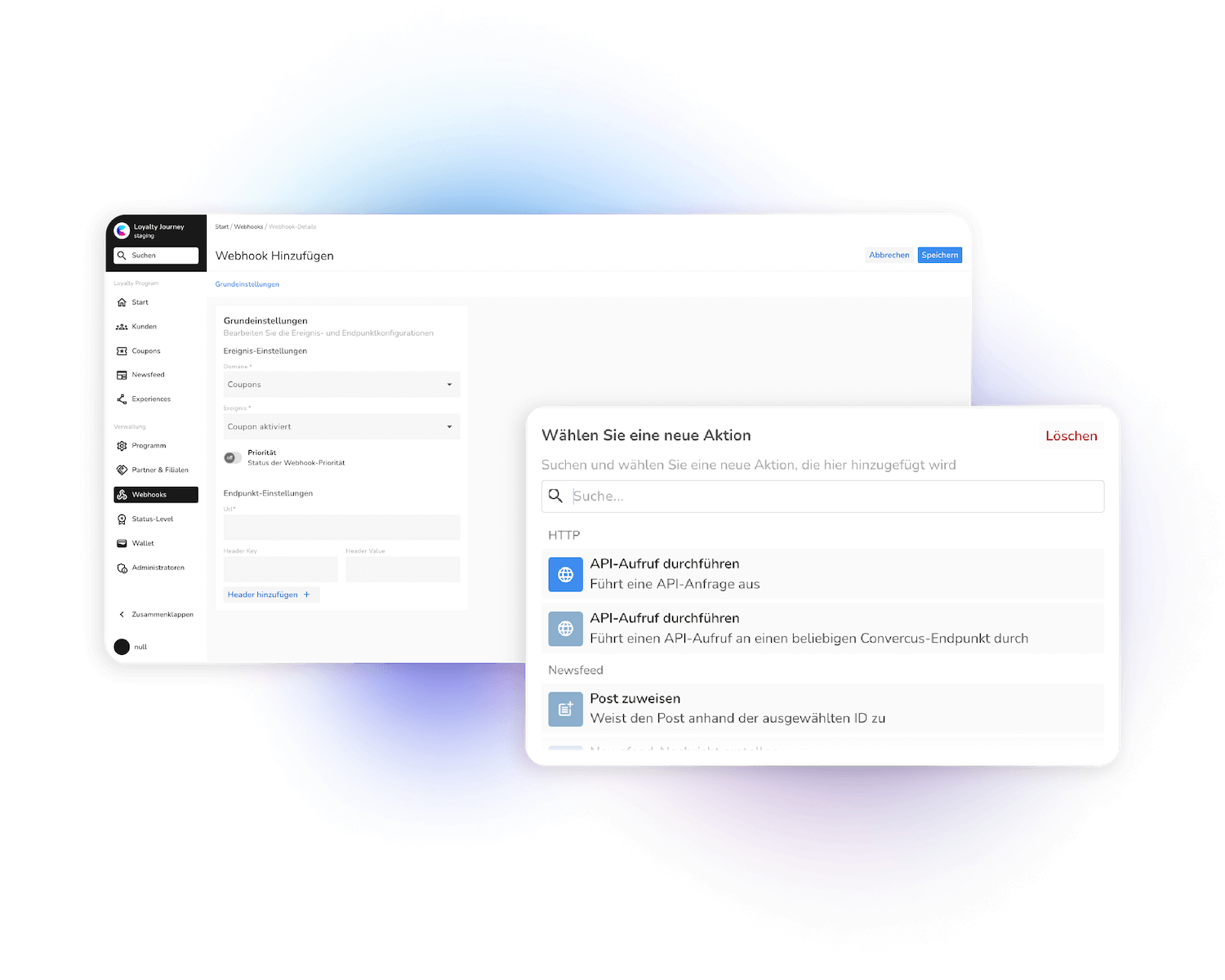
Especially in the mid-market, it's also important that not every new reward model triggers an IT project lasting several months. Therefore, a modern platform should offer flexible rule sets, clean APIs, role and rights models, reporting, and a stable technical foundation for high transaction volumes. More about the technical infrastructure of such platforms can be found on the page Tech & Integration.
The Biggest Challenges for Travel Loyalty – and How Software Solves Them
The travel industry struggles not only with low natural repurchase frequency but also with complex customer journeys. Guests research on mobile, book through various channels, interact with the brand before, during, and long after their trip. Without suitable software, loyalty remains fragmented in such environments. The operational reality is usually much more complicated than the program on paper.
Fragmented Systems and Lack of Control
A typical problem is the separation of booking systems, CRM, service tools, email platforms, and loyalty logic. This leads to data silos, inconsistent benefits, and slow campaign processes. With central loyalty software, events such as booking, check-in, stay, additional purchases, or reactivation can be processed based on rules. Only the software truly transforms data into manageable engagement.
Membership Inflation, Loyalty Fatigue, and OTA Pressure
Many programs grow in sign-ups but not in active usage. Customers are members of many programs but regularly use only a few. In the travel segment, this is exacerbated by OTA offers, price comparisons, and situational brand preferences. Successful platforms respond with stronger personalization, value-based status logic, experiential rewards, and triggers along the journey. They also assist with customer re-engagement, when members are inactive for extended periods.
- Siloed landscapes hinder growth, because campaigns, rewards, and data do not converge in real-time.
- Generic points programs lose effectiveness, if members don't perceive a clear added value in their daily lives or during their travels.
- Direct bookings suffer, when OTAs offer better visibility, convenience, or immediately understandable benefits.
- Personalization often fails operationally, even though the strategic ambition has long been present.
In addition to these business problems, the compliance perspective is also relevant in the German and European markets. As soon as profiles are used for personalized offers, especially Art. 6, Art. 7, Art. 13, Art. 21 and Art. 22 GDPR are relevant. For email communication in Germany, additionally, § 7 UWG plays a central role. The software should therefore process consent and preference data cleanly, support information and deletion processes, enable data processing agreements according to Art. 28 GDPR and ensure security measures according to Art. 32 GDPR .
Which Loyalty Model Suits Which Travel Business?
Not every travel company needs the same program. Airlines, hotels, tour operators, mobility providers, and destinations differ significantly in purchase frequency, margin structure, partner landscape, and customer expectations. Therefore, the software should support multiple program types or allow them to be combined. The best model is not the most complex, but the most economically suitable.
Points-based, Tiered, Paid, or Coalition?
Points-based Loyalty remains the most common standard because the model is easy to understand and flexible. However, in the travel sector, this is often not enough. Status models create additional incentives for frequent bookers, Paid Loyalty can generate predictable revenues and exclusive benefits, and partner programs increase the attractiveness of the earn-and-burn ecosystem. Hybrid models are particularly effective, which combine points with status benefits, coupons, and experiences.
Experiential Rewards Outperform Pure Discounts
Travel is ideally suited for Experiential Rewards: lounge access, late check-out, seat upgrades, extra baggage, transfers, dining benefits, or exclusive local experiences often have a stronger impact than a general price reduction. This is precisely where Couponing can be useful as a complement to loyalty logic, for instance, for time-limited benefits, trigger offers, or partner-based rewards. Those who reward travel experiences instead of mere discounts differentiate themselves significantly more.
Key Trends for Loyalty Software Travel in 2025/2026
In 2026, Travel Loyalty is shifting significantly away from static point collection. Modern programs react to context, behavioral data, and real-time signals. The goal is no longer just to reward transactions, but to create relevance along the entire journey: inspiration, booking, stay, additional purchases, return. The future belongs to programs that deliver the right value at the right moment.
AI Personalization and Invisible Loyalty
The strongest trend is the shift from broad segmentation to a “Segment of One”. Instead of showing all members the same bonus, the platform evaluates travel history, stay patterns, price elasticity, channel preferences, and inactivity signals. Simultaneously, loyalty is becoming increasingly invisible: the customer doesn't experience "a program" but simply the impression that offers, services, and benefits fit the situation. Precisely for this orchestration, powerful Engagement-features that bring together personalization, automation, and relevant triggers.

Mobile-First, Wallet and Zero-Party Data
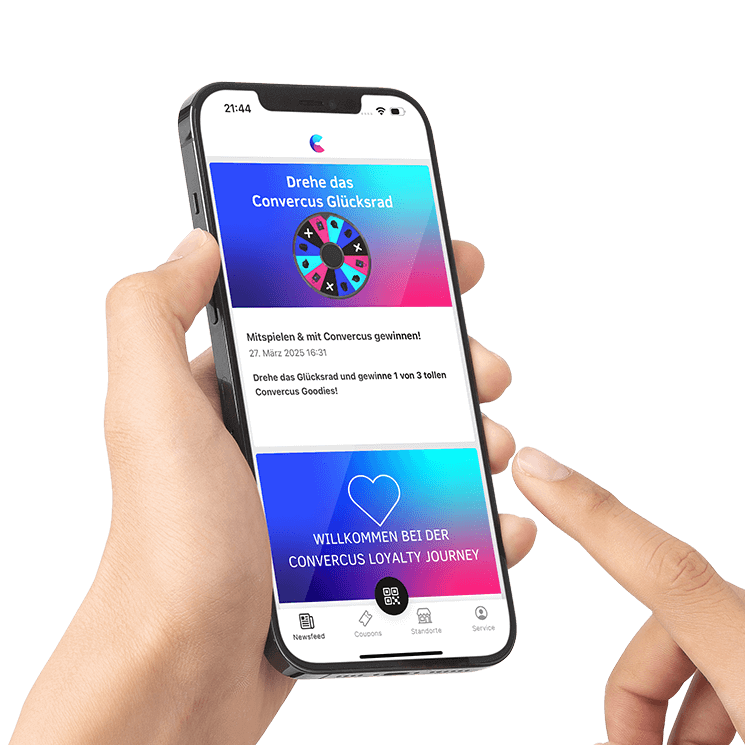
Since a large portion of digital travel bookings are initiated or completed on mobile, loyalty must function on smartphones today. Digital customer cards, wallet passes, push communication, and in-app offers ensure greater visibility and usage. Those who wish to delve deeper into this topic can find additional insights into App-First Loyalty. Mobile is the most active loyalty channel in the travel context, because booking, service, navigation, and benefit redemption converge there.

At the same time, the importance of zero-party data is increasing: preferences, travel occasions, interests, or preferred benefit types that the customer voluntarily shares. This data is particularly valuable because it is more privacy-friendly, up-to-date, and usually more relevant than derived assumptions. However, it's important to note: If profiling or automated decisions become more intensive, it should be checked whether a Data Protection Impact Assessment (DPIA) according to Art. 35 GDPR is necessary. Good loyalty software therefore not only reduces friction but also supports robust governance.
ROI of Loyalty Software in the Travel Industry: How to Build the Business Case
For decision-makers, the core question is rarely whether loyalty is fundamentally sensible, but rather whether the investment is economically viable. The good news: From a management perspective, market studies in the loyalty sector report an average of 4.8x ROI, and 90% of surveyed executives see a positive return. This is particularly relevant in travel, as even small improvements in repeat bookings, ancillary purchases, and direct booking share have a significant leverage effect on the contribution margin. Retention is usually cheaper than additional acquisition.
Which KPIs Really Matter
The ROI of a travel loyalty platform should not only be measured by enrollments. More important are active member rates, repeat booking rates, direct booking share, CLV, redemption rates, additional revenue per booking, status upgrade rates, coupon usage, and reactivation rates. Those who only report the number of members underestimate the problem of membership inflation. Quality of engagement trumps reach.
Simplified Calculation Example
A hotel company with 500,000 members and an average spend of €200 per stay generates approximately €25 million in revenue from repeat customers with a 25% repeat booking rate. If the repeat booking rate increases to 30%, this value grows to €30 million. That's an additional €5 million in revenue per year, without having to acquire a single new customer. Furthermore, the well-known cross-industry rule of thumb states that just a 5% increase in customer retention can boost profitability by 25% to 95%. This is precisely why loyalty software in the travel segment is increasingly viewed as a revenue driver rather than a marketing cost center.
- Active member rate shows whether the program is being used or merely growing on paper.
- Direct booking share measures whether loyalty truly counteracts OTA dependence.
- Redemption rate and benefit usage reveal whether the value proposition is relevant enough.
- CLV and ancillary revenue demonstrate whether loyalty generates profitable behavior, not just activity.
What to Look for When Choosing Travel Loyalty Software
Choosing the right platform determines whether the program remains scalable, compliant, and internally manageable later on. Many projects fail not due to strategy, but due to a lack of integration capabilities, rigid rule sets, or unclear data responsibility. For mid-market and enterprise companies, the decision should therefore always combine functional, technical, and organizational criteria. A good demo is no substitute for a thorough evaluation.
Technical and Functional Selection Criteria
First, check how well the platform integrates into your existing architecture: APIs, real-time capabilities, role models, scalability, offline scenarios, international rollouts, and the connection of relevant touchpoints. On a functional level, flexible earn-and-burn rules, status management, reward management, couponing, personalization, white-label app or wallet support, and reporting are crucial. Travel providers with many touchpoints should also prioritize omnichannel capabilities. A good starting point is to ask whether the platform maps your business model or if you would have to adapt your model to the platform. If the latter is true, the project will be expensive.
Compliance, Build vs. Buy, and Organizational Fit
In the DACH market, compliance is not a side issue. Pay attention to data processing agreements according to Art. 28 GDPR, security measures according to Art. 32 GDPR, deletion and access processes, and comprehensible consent logics. If personalized prices, profiles, or automated benefits are used, it should also be clear how objections according to Art. 21 GDPR and potential cases of Art. 22 GDPR are handled. Strategically, the build-vs.-buy question then arises: in-house development sounds tempting but often incurs high maintenance and further development costs. In most cases, buying or a modular best-of-breed approach is more economical, provided integration and adaptability are right.
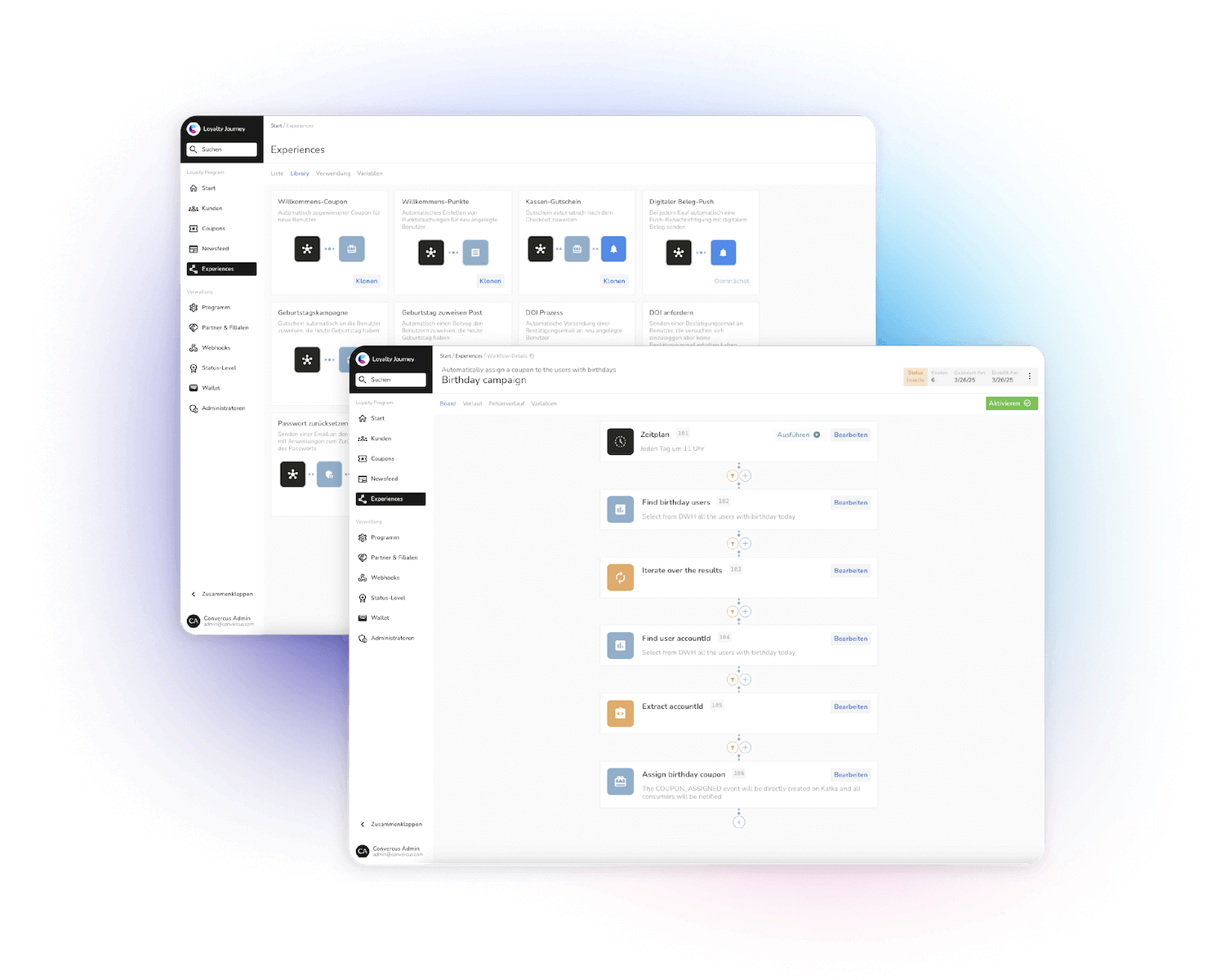
If you are looking for a platform that Loyalty, couponing, and engagement in a modular way, and is also designed API-first, Convercus is particularly interesting for hospitality and mobility companies. The software is designed for scalability and omnichannel scenarios, supports modern user interfaces, and brings experience with large loyalty setups. For teams that don't want to build another suite dependency, this is a practical middle ground between flexibility and enterprise performance.
How to Successfully Implement in Practice
A successful loyalty project doesn't start with mechanics, but with a clear vision. Do you want to increase direct bookings, reactivate loyal customers, sell ancillary services, or build first-party data? From this, the program type, KPIs, integration scope, and rollout sequence are derived. Even the best software fails without clear prioritization.
The Pragmatic Implementation Process
A phased approach has proven effective: business case and goal definition, data and system analysis, program architecture, legal review, MVP rollout, test operation, activation, and subsequent optimization. Especially in the travel sector, it makes sense to start with a few clear, understandable use cases, such as status benefits for direct bookers, reactivation of inactive members, or coupons for ancillary services. An MVP with measurable KPIs is usually more effective than a big-bang launch.
- Start with 2 to 3 core use cases, so that business units, IT, and operations can quickly achieve initial learning effects.
- Define earn and burn rules early, so that later campaigns are not hampered by unclear logic.
- Include service and frontline in your planning, because loyalty in hotels, mobility, or travel sales is often experienced at service points.
- Measure activation instead of just sign-ups, so that the program doesn't slide into membership inflation.
What Modern Platforms Should Deliver
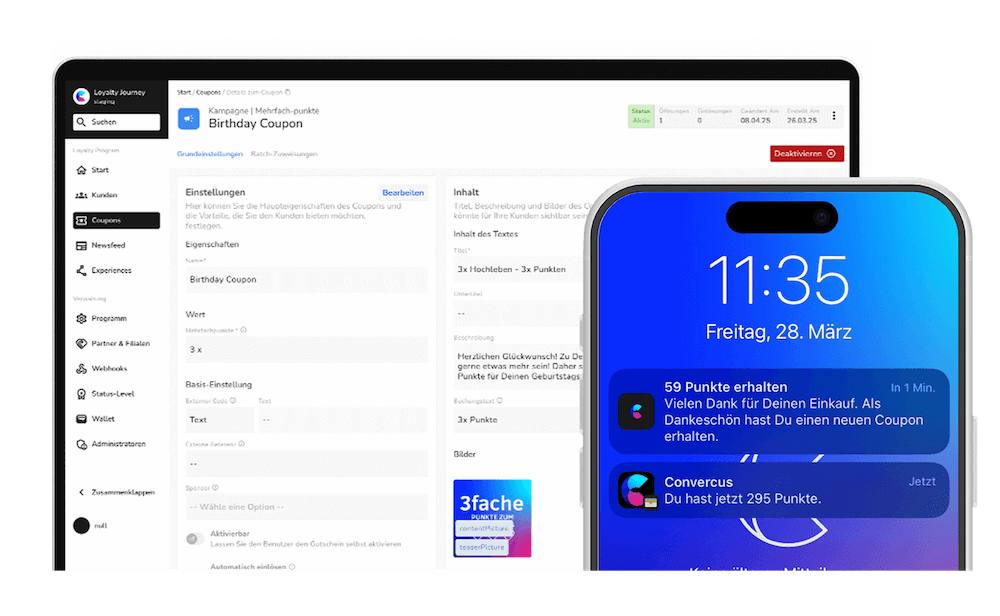
During the implementation phase, operational relief is paramount: maintaining rule sets without developer bottlenecks, automating campaigns, tracking redemptions, accurately mapping status logic, and providing insights for marketing and CRM. This is precisely where the value of a specialized platform becomes apparent. Convercus combines loyalty engine, couponing, and engagement in a way that enables teams to implement faster. In programs with app integration, according to verified platform values, 8x higher customer interaction is possible; in addition, there's proven enterprise performance and a setup geared towards rapid rollout and continuous optimization.
Conclusion: Travel Loyalty Software is a Growth Driver When Technology and Strategy Align
Today, the travel industry needs loyalty not as a decorative points program, but as a tool for retention, direct bookings, personalization, and first-party data. Successful programs rely on relevant benefits instead of mere discounts, on clean integration instead of data silos, and on active usage instead of mere member growth. Those who consistently bring these points together turn loyalty into a robust business case.
If you are looking for a modular, scalable, and GDPR-compliant platform, Convercus is a compelling option for mid-market and enterprise companies in hospitality and mobility. Learn more about the solution or directly schedule a personal live demoto discuss your specific travel use case.
FAQ
What exactly is Loyalty Software in the travel context?
Loyalty Software Travel is a platform that manages points, status, rewards, couponing, personalization, and campaigns for travel providers. It complements CRM and booking systems with the logic to reward desired customer behavior and activate it along the traveler journey.
How complex is the implementation of a loyalty program?
That depends on the data landscape, integrations, and program complexity. An MVP can often be implemented in significantly less time than a fully developed international program, provided goals, use cases, and system boundaries are clearly defined early on.
Can loyalty software be used in compliance with GDPR?
Yes, if processes and the platform are properly set up. Particularly important are legal bases according to Art. 6 GDPR, clear consents according to Art. 7, information requirements according to Art. 13, rights to object according to Art. 21, and technical and organizational measures according to Art. 32.
Does this work with existing booking, PMS, or POS systems?
In many cases, yes, provided the platform is API-first and can be integrated into your architecture. Prior to selection, it's important to verify which data is needed in real-time and whether existing systems can reliably provide it.
What does loyalty software for the travel industry cost?
Costs vary depending on member count, transaction volume, feature set, rollout countries, and integration effort. What's crucial is not just the license, but the entire business case, including implementation, operation, and expected retention effects.
Can we migrate an existing loyalty program?
Yes, this is a common reason for seeking new software. A clear migration logic for Scores, status levels, consents, and communication histories as well as a smoothly planned transition, so that members experience no disruption in their user experience.


- 5x Return on Investment
- 80% Customer Identification
- 8x Customer Interaction
- +274% Repeat Purchase Rate

.png)