








Key takeaways
- Loyalty software is a revenue driver for D2C. It not only increases customer loyalty, but also directly impacts repeat purchase rate, AOV, CLV, and referral efficiency.
- D2C brands have a real data advantage. Those who consolidate first-party and zero-party data from their shop, app, and communications within a loyalty setup can personalize more effectively and independently of expensive acquisition.
- Points alone are rarely enough. Truly strong D2C programs combine points, tiers, community, referral, couponing, and post-purchase automation across the entire customer journey.
- Convercus is a scalable loyalty software for D2C. If you want to combine Loyalty Engine, Couponing, Engagement, and API-first integration in one solution, Convercus is a compelling option.
Loyalty Software for D2C Brands: Why 2026 is a Turning Point
D2C brands will face double pressure in 2026: rising Customer Acquisition Costs are coupled with declining efficiency of traditional performance channels. At the same time, customers expect personalized experiences, quick relevance, and clear value in exchange for their data. This is precisely where loyalty software becomes a strategic lever. It not only manages points and rewards but also drives retention, referrals, zero-party data, and post-purchase communication within a single system.
Market dynamics speak for themselves. Depending on the research firm, the global loyalty management market is projected to reach approximately USD 16.44 billion; for Europe, USD 18.8 billion is expected. For D2C brands, this is not an abstract trend but a direct consequence of changing unit economics. When repeat purchases become more profitable than new customer acquisition, loyalty transforms into growth infrastructure.
The CAC Crisis Shifts Budgets from Acquisition to Retention
According to market observers, acquisition costs in the D2C sector have risen by 60–80% since 2021. This is changing priorities in the boardroom. Retention is no longer a secondary CRM topic, but a lever for margin, cash flow, and predictability. EY estimates the conversion rate of loyal customers at 60–70%, while new customers often convert at only 5–20%. Brands that systematically activate their existing customers therefore don't have to 'buy' growth anew every time.
The D2C Data Advantage is Real – But Often Goes Unused
D2C brands have a structural advantage over traditional retail models: the direct customer relationship. They see purchase history, frequency, product preferences, return patterns, response data from email and app, and often feedback and product reviews. However, without loyalty software, this data often remains scattered across the shop, email tools, analytics, and social platforms. Data ownership alone doesn't translate into a competitive advantage.
To understand how modern customer loyalty software differs from simple discount setups, it's crucial to focus on this point: It's not the issuance of points that creates value, but the ability to translate real-time behavior into personalized incentives and relevant communication.

Which Loyalty Mechanics Truly Work for D2C
D2C brands don't need a standard mechanic, but a program that fits their brand, purchase cycle, and margin model. Points alone are rarely enough. Deloitte shows that 73% of consumers desire personalized rewards instead of blanket discounts. At the same time, according to Deloitte, 56% increase their spending due to loyalty benefits. Successful D2C programs therefore combine transactional and emotional elements.
Points Programs are a Good Starting Point – But Rarely the Ultimate Goal
Points-based programs work particularly well in D2C where simple activation, quick understanding, and frequent purchases are key. They are well-suited to convert first-time buyers into repeat purchasers, for example, through earning rules for purchases, reviews, referrals, or profile completion. The weakness of classic points programs , however, lies in their interchangeability: If competitors offer more discounts, loyalty quickly vanishes.
Tier Models, Exclusivity, and Community Build Genuine Loyalty
D2C loyalty becomes exciting when status, access, and identity come into play. VIP tiers with early access, limited drops, pre-release testing, events, or founder content create emotional loyalty instead of pure discount logic. This is particularly relevant for fashion, beauty, wellness, and brands with a clear stance. Complementary elements include community features, ambassador mechanics, and challenges. Studies from the D2C sector show that active communities can lead to 40–60% higher repeat purchase rates.
Subscription, Referral, and Gamification Strengthen Retention Economics
For recurring needs, such as in food, supplements, or consumer goods, the combination of subscription and loyalty is particularly powerful. Double lock-in effects arise when subscriptions are linked with status benefits, bonus points, or exclusive perks. Referral mechanics further reduce CAC. Gamification meaningfully complements the model when it rewards relevant behavior, such as product registrations, bundle purchases, or usage streaks, rather than arbitrary clicks.
Choosing Loyalty Software: What D2C Brands Should Consider During Evaluation
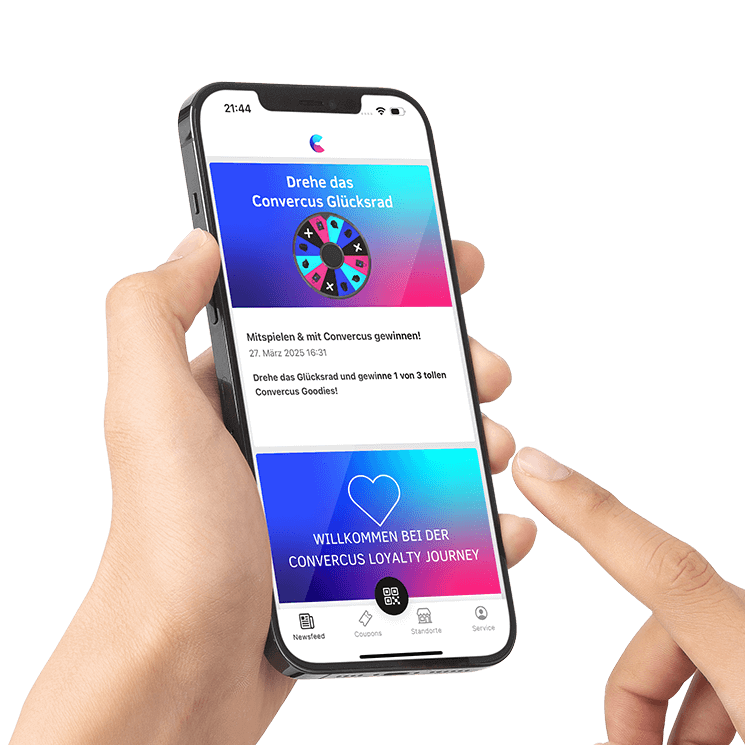
There are significant differences between a simple shop app and a scalable enterprise platform. Many brands start with a plugin but eventually hit limitations when they need to support multiple markets, complex reward logic, API integrations, or cross-channel communication manage. The real question, therefore, isn't just: Which software has the most features? But: Which solution fits your maturity level and your future operating model?
Plugin, API-First Platform, or Suite?
A plugin makes sense if a D2C shop wants to quickly test initial mechanics and its operational scope remains limited. As the program grows, flexibility, real-time processing, and integration capabilities often become bottlenecks. API-first architectures then have an advantage because they link loyalty data with the shop, CRM, marketing automation, app, and potentially POS or wallet. While suite solutions cover many aspects, they often introduce more complexity and less product focus.
Build vs. Buy is Primarily a Question of Cost and Speed
Developing in-house sounds attractive for strong tech teams. In practice, however, rule sets, liability logic, fraud prevention, consent processes, transaction history, monitoring, and reporting are often underestimated. The opportunity costs of building in-house are high because product and engineering resources are then diverted from working on the core D2C experience. Buying is particularly worthwhile when time-to-value, scalability, and a robust business case are more important than maximum in-house development.
GDPR, TTDSG, and Data Management are Not Minor Issues in the DACH Market
For loyalty programs in the German market, legal bases and data flows must be clearly defined. Relevant guidelines include, in particular, Art. 5 GDPR on purpose limitation and data minimization, Art. 6 para. 1 GDPR for the legal basis, Art. 13 GDPR for transparent information, Art. 15 and 17 GDPR for access and erasure, as well as Art. 28 GDPR for processor agreements. Additionally, § 25 TTDSG plays a role when information is stored or accessed on end-user devices, for example, with tracking or consent-relevant mechanisms. GDPR therefore does not automatically prevent personalization; it requires comprehensible purposes, clear consents, and a robust authorization concept.
How to Structure a D2C Loyalty Program That Goes Beyond Discounts
The most common mistake is not in software selection, but in program design. D2C loyalty is most effective when built along the customer journey: from the first purchase through the critical usage phase to repeat purchases, referrals, and status upgrades. The most profitable phase begins after checkout, not before. That's precisely why rewards, automation, and data strategy should be considered together from the outset.
Start with a clear value exchange
Customers don't share data out of habit, but in exchange for relevant value. This could be a welcome benefit, a quick perk on the second purchase, personalized product recommendations, or access to exclusive content. Zero-party data needs a visible benefit. A quiz without added value or a registration without immediate reward will hardly generate sustainable data quality.
The 30–60 Day Phase After the First Purchase Must Be Automated
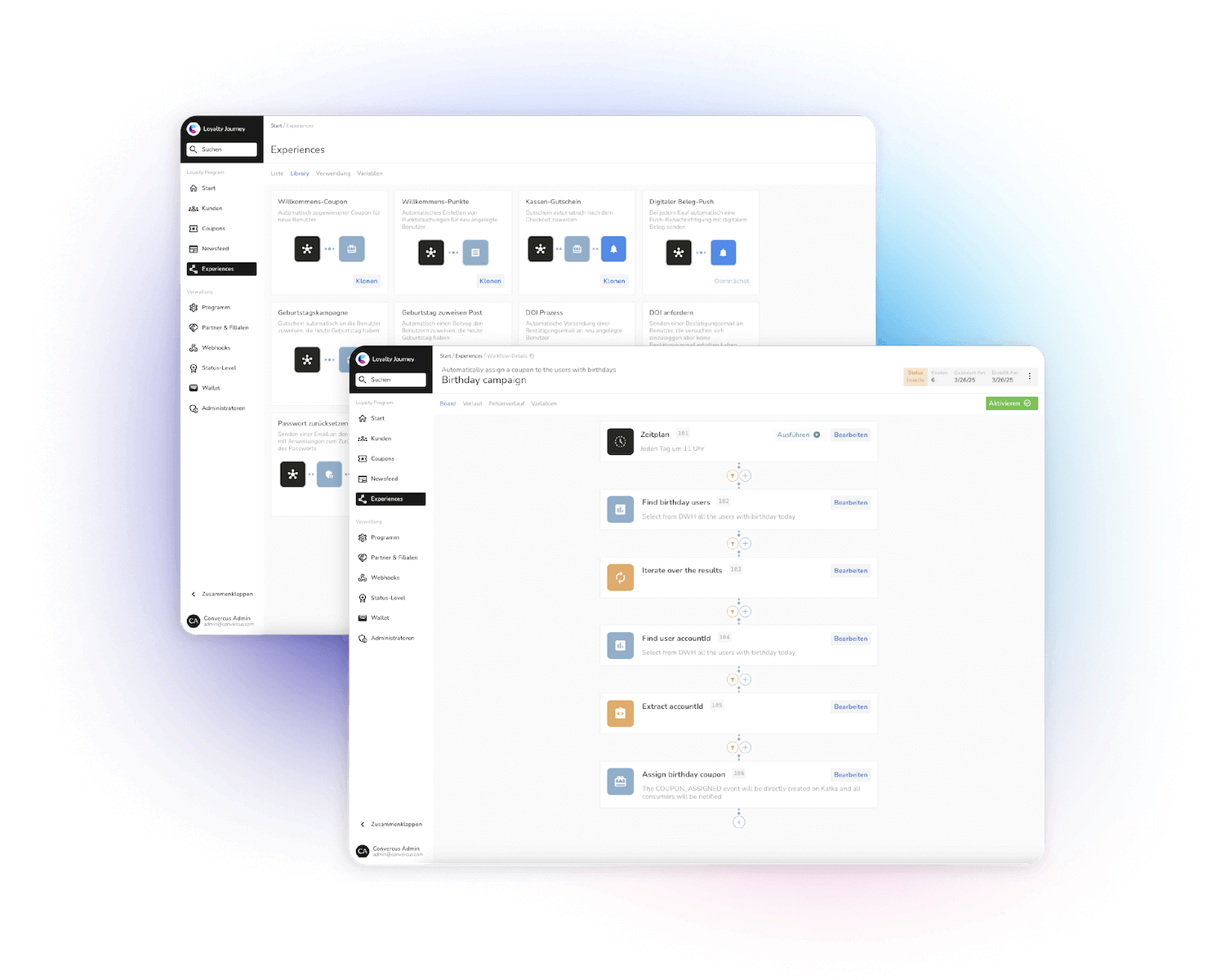
Between day 30 and day 60, many D2C brands determine whether a customer becomes a repeat buyer or disappears into a 'one-and-done' pattern. Good loyalty software therefore links purchase events with triggers for tutorials, replenishment reminders, review requests, bundle offers, or suitable coupons. Post-purchase automation is a loyalty lever, not just a CRM flow.
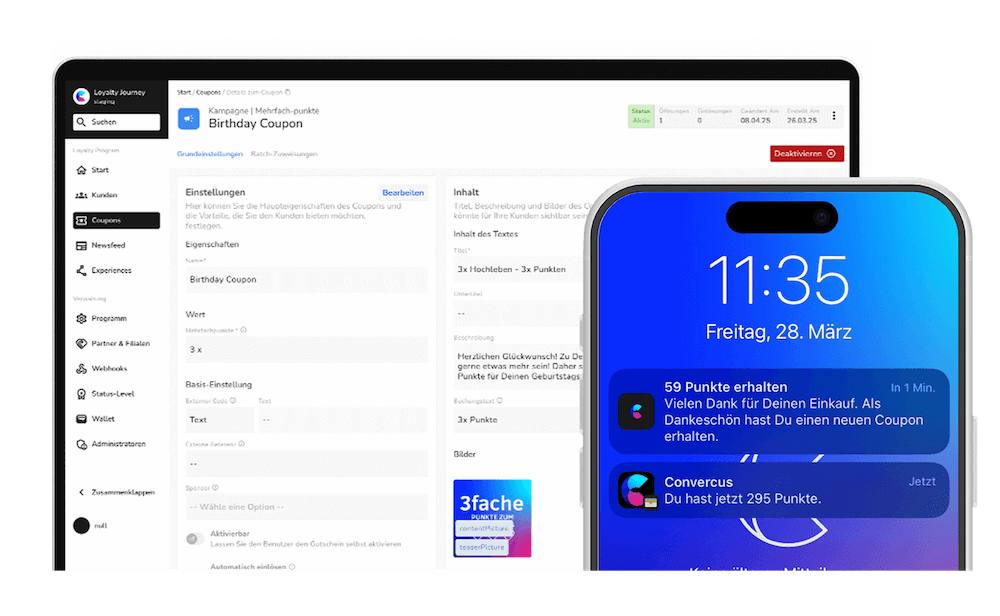
For growing D2C brands, a platform that combines Loyalty Engine, Couponing, Engagement and API-First Integration in one setup makes sense. This is precisely where Convercus fits in: as a solution for companies that have outgrown isolated plugin logic and want to build loyalty as a scalable, high-performance retention channel.
- First, define the program's core KPIs, such as repeat purchase rate or active revenue share from members, before designing rewards.
- Reward not only purchases but also reviews, referrals, profile information, product registrations, or community interactions.
- Design tiers and benefits based on your brand's core identity, so the program doesn't feel like an interchangeable discount model.
- Automate triggers throughout the post-purchase phase, instead of manually managing campaigns across separate channels.
- Always measure members and non-members separately to reveal the true program effect.
ROI and KPIs: How D2C Brands Realistically Evaluate the Business Case
Loyalty software must pay off not only strategically but also financially. This requires a KPI set that is closer to unit economics than to vanity metrics. Repeat Purchase Rate, AOV, CLV, and Redemption Rate are the key metrics. Additionally, enrollment rate, active participation, referral share, and points liability help evaluate program health and profitability simultaneously.
A Simple Calculation Example Demonstrates the Leverage
Let's take a D2C fashion brand with 200,000 customers, an average basket value of €85, and 1.8 purchases per year. This results in an initial revenue of €30.6 million. If the repeat purchase rate increases to 2.25 purchases per year, revenue grows to €38.25 million. This corresponds to +€7.65 million in additional revenue. If, in parallel, the AOV increases by 10% to €93.50, revenue reaches €42.08 million. This is precisely why boards today view loyalty as a revenue driver and not just a CRM measure.
Which Benchmarks Provide Guidance in the DACH Market
The KPMG/IFH Cologne Consumer Barometer shows that loyalty programs with 53% higher purchase frequency and 39% larger shopping carts can be achieved. Further market studies report 20–40% more repeat purchases within the first six months. For program management, it's also important to know how many points or rewards are actually redeemed. High redemption rates usually indicate the program's relevance and clarity. Low redemption often points to overly complex hurdles or unattractive benefits.
Industry-Specific Loyalty Strategies for D2C Brands
D2C is not a uniform market. A beauty brand with community dynamics requires different mechanics than an electronics brand with long purchase cycles. The best loyalty software is always one that can reflect industry-specific realities and not just a standard process. That's why segmentation by purchase frequency, need for consultation, replenishment logic, and brand identity is worthwhile.
Fashion and Lifestyle: Exclusivity Trumps Standard Discounts
In fashion, VIP tiers, early access, drops, birthday, and status benefits usually have a stronger impact than linear discounts. Brands like Nike or Adidas demonstrate that access can be a reward. For D2C fashion, an app- or wallet-centric model is also beneficial, as status, challenges, and benefit communication become particularly visible on mobile. Those thinking in this direction will find important insights in the topic of App-first Loyalty .
Beauty, Wellness, and Community-Oriented Brands: Consultation as a Benefit
Beauty and wellness greatly benefit from tutorials, review rewards, skincare or routine quizzes, referral programs, and community formats. Here, loyalty often arises from relevance and identification. Emotional Loyalty Lasts Longer Than Transactional Loyalty. This is especially true for mission-driven brands whose values are experienced within the program, rather than just appearing in campaign messages.
Food, Subscription, and FMCG-adjacent Models: Systematically Building Habits
For consumer products, refill logic, bundle incentives, and subscription benefits are central. Loyalty can accelerate the transition from single purchases to routine. For FMCG brands with their own D2C channel, the program also serves as a bridge to the end customer, because first-party data becomes the actual strategic currency . Couponing is useful, but should always be embedded within a larger retention model. Those who want to delve deeper into measures for activating existing customers will also find suitable approaches in the article Increasing Customer Loyalty.

5 Common Mistakes in D2C Loyalty Programs – and How to Avoid Them
Many programs fail not due to a lack of budget, but due to incorrect assumptions. A particularly common misconception is that loyalty is automatically successful as soon as points can be collected. The quality of the program design is what matters – not merely the existence of a points balance. Avoiding the following mistakes significantly increases the chances of success.
- Pure Discount Focus: If the program only offers price reductions, emotional connection is missing. Tiered benefits, experiences, access, and personalized rewards are better.
- Data Silos Between Shop, CRM, and Campaigns: Without integrated data flow, personalization remains superficial. Loyalty events must be fed back into communication and analysis.
- Overly High Entry Barriers: If rewards are accessible too late, motivation decreases. The first sense of achievement should be communicated early and clearly.
- GDPR Fear Instead of Clean Setup: The right approach is not abstinence, but transparent consent, clear purposes, and robust processes.
- Wrong Tool Choice for Maturity Level: A plugin for initial tests isn't automatically wrong. It only becomes problematic when it's expected to solve enterprise-level requirements.
This is precisely where tactical loyalty diverges from strategic loyalty. If a brand is already planning multiple channels, complex rules, or international scaling, performance, integration capabilities, and support are crucial. Convercus, as loyalty software, is particularly relevant when D2C brands are looking for an API-first approach, robust success management, and the combination of loyalty, couponing, and engagement within a single platform.
Conclusion: Loyalty Software is Not an Add-on for D2C, but Growth Infrastructure
By 2026, D2C brands will no longer win solely through reach, but through repeat purchases, first-party data, and relevant customer experiences. This is precisely what loyalty software is for: it connects program mechanics, data strategy, automation, and cross-channel activation. Those who only distribute coupons miss out on potential. Those who implement loyalty as part of their business logic improve retention, AOV, and long-term CLV.
For the DACH market, additional requirements apply: GDPR-compliant data processing, transparent consent processes, flexible integrations, and a setup that scales beyond standard plugins. If you want to explore how loyalty, couponing, and engagement can be meaningfully combined in your D2C model, a personal live demo with Convercus is the logical next step.
FAQ on Loyalty Software for D2C
When does professional loyalty software become worthwhile for a D2C brand?
At the latest, when repeat purchases become business-critical and simple shop plugins offer insufficient flexibility. Typical triggers include rising CAC, multiple markets, more complex reward logic, or the desire to systematically link loyalty data with CRM and marketing automation.
How complex is the implementation of a loyalty program?
This primarily depends on the maturity level and the system landscape. A manageable D2C setup can launch quickly, whereas omnichannel or multi-market programs require more coordination regarding data flows, rule sets, consent, and reporting.
Can loyalty software be used in the DACH market in compliance with GDPR?
Yes, if legal bases, information obligations, and deletion processes are clearly defined. Particularly relevant in practice are Art. 5, Art. 6, Art. 13, Art. 15, Art. 17, and Art. 28 of the GDPR, as well as § 25 TTDSG depending on the tracking setup.
Isn't a Shopify or shop plugin sufficient for D2C?
For early stages, it might be sufficient. However, if you plan status models, personalized rewards, API integrations, multiple touchpoints, or international rollouts, a specialized platform is usually more sensible than a mere plugin.
Which KPIs should a D2C loyalty program measure first?
Start with Repeat Purchase Rate, AOV, Enrollment Rate, and Redemption Rate. Afterwards, you should analyze members and non-members separately for CLV and active revenue share to see the true program effect.
Can existing loyalty programs be migrated to new software?
Yes, in many cases, this makes sense if the previous solution no longer scales. Important aspects include a clean data export, the transfer of point balances or status values, clear communication plans for members, and a technical mapping of existing rules to the new platform.


- 5x Return on Investment
- 80% Customer Identification
- 8x Customer Interaction
- +274% Repurchase Rate
.png)