







The topic at a glance
- Loyalty in fashion retail is a growth driver: High return rates, low repeat purchase rates, and rising acquisition costs make existing customer development more economically attractive than pure new customer growth.
- Fashion needs more than a points system: Effective programs combine points, tiers, early access, digital customer cards, couponing, and non-transactional engagement mechanics.
- Omnichannel and GDPR are mandatory: Loyalty software in fashion retail must connect POS, online shop, and app in real-time and accurately reflect the requirements of GDPR and Section 25 TDDDG.
- Convercus is specialized loyalty software for retail and fashion: The platform combines loyalty, couponing, engagement, and API-first integration for omnichannel programs in the mid-market and enterprise segments.
Loyalty Software for Fashion Retail: Why it's a Strategic Topic in 2026
Anyone looking for Loyalty Software Fashion Retail isn't usually seeking a nice extra feature, but rather a solution to a genuine growth problem. In Germany, clothing recently accounted for around €14.6 billion in online revenue , making it the strongest e-commerce category, yet competitive pressure, returns, and acquisition costs are all on the rise. For fashion retailers, this means that increasing revenue less often comes solely from reach, but rather from repeat purchases, improved activation, and effectively usable first-party data.
The Challenges in Fashion Retail Are Particularly Significant
Fashion retail is characterized by seasonality, high price comparability, and a 20–25% return rate . Additionally, fashion e-commerce often sees a cart abandonment rate of 70–75%. Meanwhile, international benchmarks for the repeat purchase rate in the apparel segment are typically only around 20–25%. Retailers who focus solely on new customers in this environment often acquire growth at a high cost, only to lose those customers after the first or second purchase to marketplaces, fast-fashion providers, or aggressive promotional competitors.
This is precisely where modern loyalty comes in: not as a discount system, but as a tool for managing frequency, average order value, and retention. If you wish to delve deeper into the fundamentals, you can find a comprehensive overview of customer loyalty softwarehere.
What Loyalty Software Truly Needs to Deliver in Fashion Retail
An effective platform for fashion retail shouldn't be limited to Earn & Burn . In fashion retail, programs are most effective when they integrate point systems, status management, couponing, and digital identity . Today's customers expect to be recognized across all channels, see their status instantly, leverage mobile benefits, and avoid searching for the same plastic card every time.
Beyond Points: Tiers, Rewards, and Digital Customer Cards
While a simple point system can ease initial engagement, it rarely suffices for sustainable loyalty. Fashion customers respond strongly to early access, exclusive sale previews, member days, and VIP benefits. Tiered models, where Bronze, Silver, or Gold levels create not just discounts but tangible exclusivity, are particularly effective. This includes personal styling services, early access to collections, or event invitations.
Also crucial is a digital customer card in the wallet or app. It reduces friction in-store, simplifies identification at checkout, and makes loyalty more visible in daily life. Brick-and-mortar retailers with legacy programs particularly benefit, as physical cards are often forgotten.

Fashion-Specific Logic, Not a Standard Program
Fast Fashion, Premium, and Luxury require different mechanics. Fast fashion thrives on frequency and challenges, premium on omnichannel services, and luxury on status, exclusivity, and experience. Then there's the question of returns: In the fashion segment, loyalty software should ideally credit points only after the return period has expired or automatically deduct returns. Otherwise, revenue that was never actually realized ends up being rewarded.
Omnichannel: The True Test for Loyalty Software in Fashion Retail
The most common weakness in fashion projects isn't the program's concept, but its implementation across all touchpoints. POS, online store, app, and CRM still operate separately in many fashion houses. This results in customers earning points online but not being recognized in-store, or redemptions at the checkout not being visible in real-time within their customer profile. For the customer, this feels like a technical disconnect; for the company, it's a loss of data.
POS, E-commerce, and App Must Interact in Real-Time
Effective omnichannel loyalty means that a customer, regardless of the channel—whether in-store or in e-commerce, has a single profile, a unified point balance, and consistent benefit logic . This applies equally to in-store purchases, Click & Collect, returns, coupon redemption, and app interactions. In fashion retail, this is especially relevant because purchase decisions, trying on clothes, and repeat purchases often transition between physical stores, online shops, and smartphones.
API-First, GDPR, and Scalability Are Not Afterthoughts
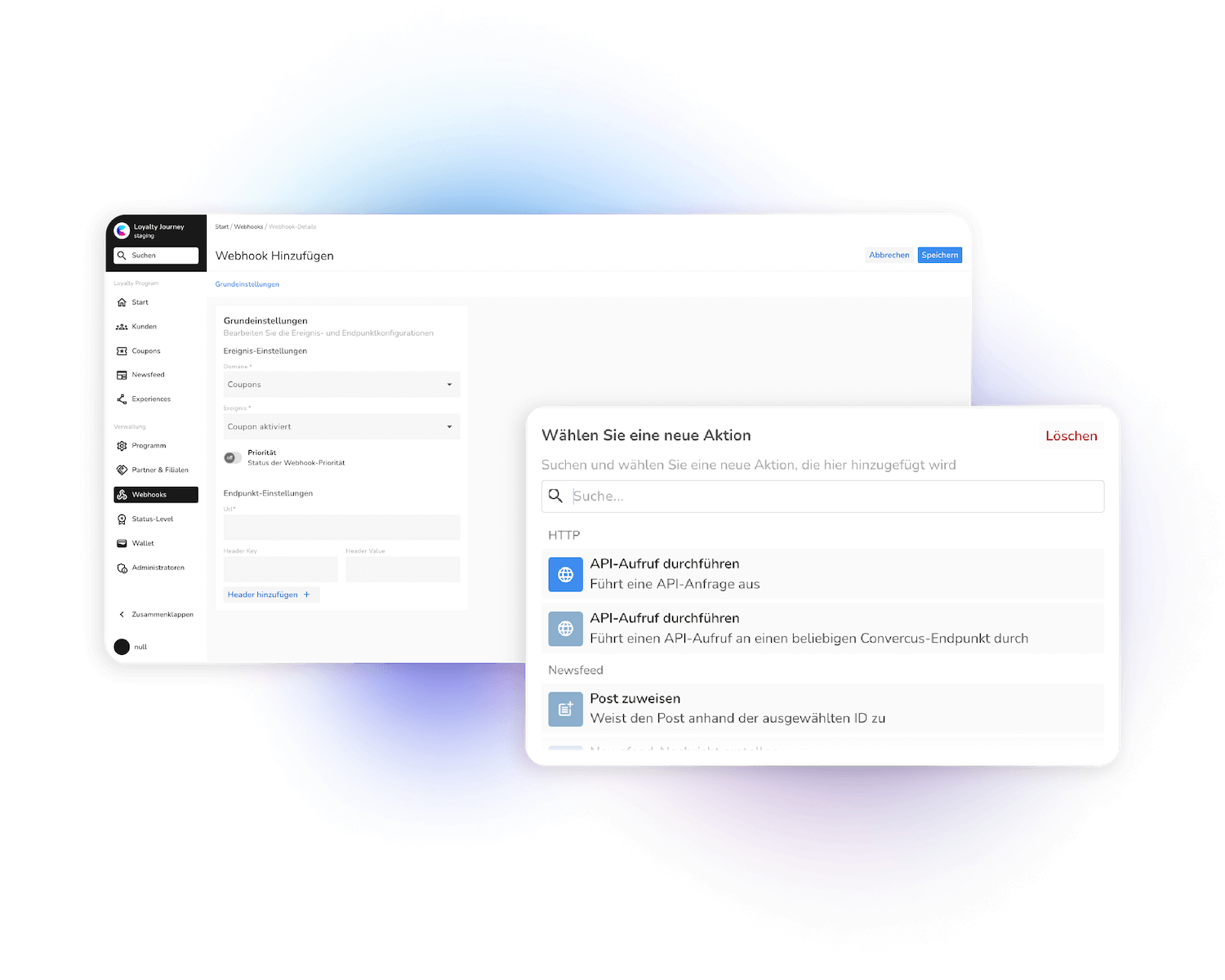
Technically, the platform should be API-first and headless-capable to integrate with existing POS, shop, and app ecosystems. From a data protection perspective, several points are mandatory in the DACH market: Art. 5 GDPR requires purpose limitation and data minimization, Art. 6 (1) GDPR the appropriate legal basis, such as for contract fulfillment or consent, Art. 13 GDPR transparent information, Art. 25 GDPR Privacy by Design, Art. 28 GDPR the data processing agreement with the provider, and Art. 32 GDPR appropriate technical and organizational measures. If tracking identifiers are set or read in the web or app, then § 25 TDDDG is also relevant.
For IT teams, this specifically means: Loyalty software must not only look good, but also be performant, audit-proof, and integratable . You can also find more about the technical aspects under Tech & Integration.
Success Factors for Modern Fashion Loyalty Programs
The best programs in fashion retail don't just reward sales; they build emotional loyalty . This is precisely the difference between a replaceable discount program and a platform that boosts repeat purchases, brand preference, and data depth. International benchmarks also indicate that personalized communication in retail can significantly drive sales. This is especially valuable for fashion retailers, as assortment, style, and needs are highly individual.
Personalization and the Critical 30–90-Day Window
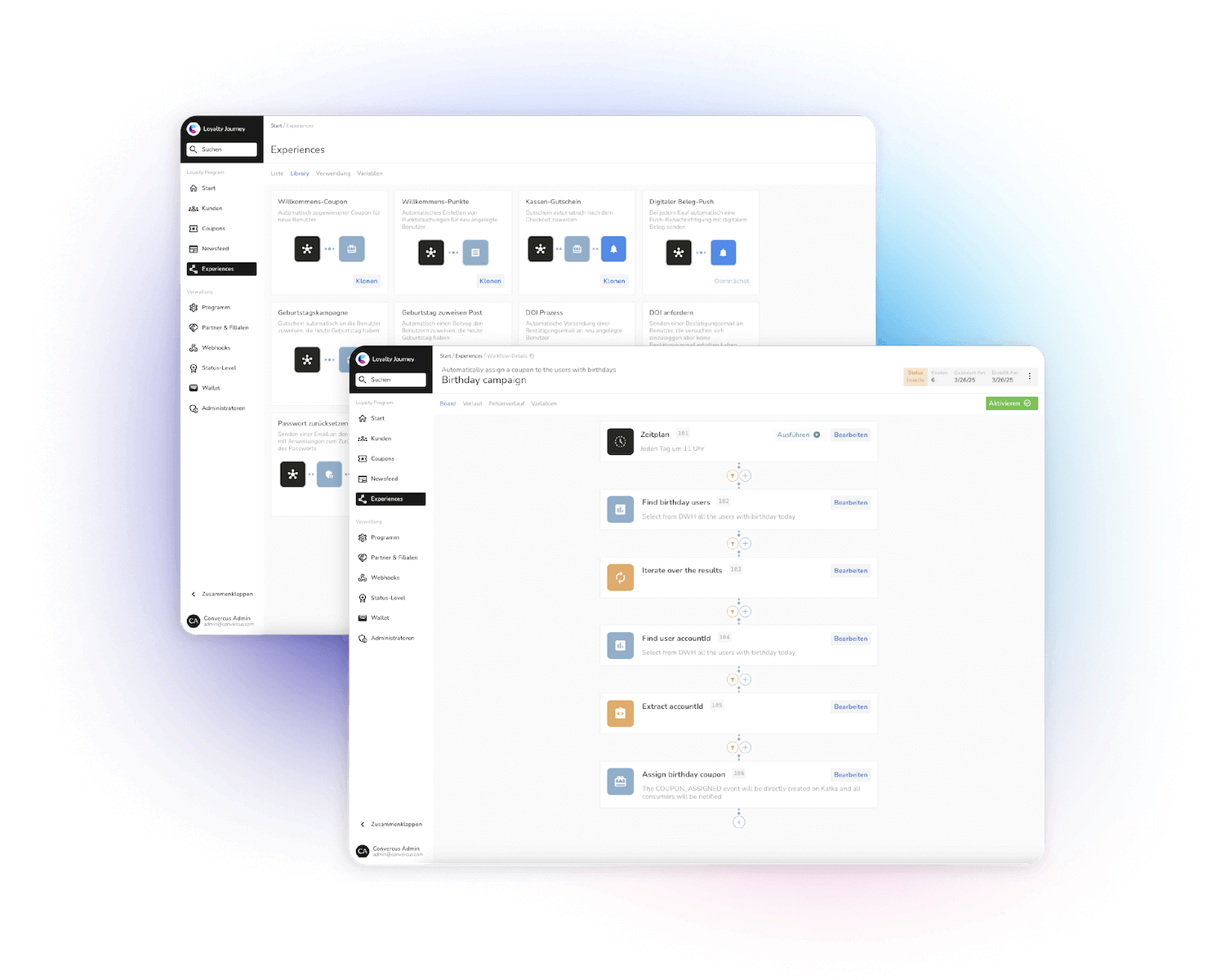
The critical phase begins after the first purchase. In the apparel segment, many repeat purchases occur within the first 90 days . Loyalty software should therefore automatically trigger journeys: welcome sequences, reminders before seasonal changes, recommendations based on purchased categories, and reactivation for inactive customers. Missing this phase often leads to losing customers before true habits form. Combining loyalty data with customer re-engagementis helpful here.

Early Access, Gamification, and Sustainable Earn Mechanics
Fashion is identity. That's why exclusivity, community, and recognition often resonate more strongly than mere discounts. Effective programs create reasons for interaction even between purchases, such as through app usage, style reviews, or event participation. This transforms loyalty from a discount channel into an engagement system. You can find more inspiration in the article on App-First Loyalty and in the Engagementsection.
- Early Access to new collections, limited drops, or sale phases is among the most highly perceived benefits in the fashion segment.
- Non-transactional Earn Mechanics such as reviews, referrals, app logins, or event participation, increase activity even without an immediate purchase.
- Sustainability Incentives such as points for returning old clothes or for consciously chosen shipping options, can strengthen brand positioning.
- Gamification with challenges, badges, or collection goals is particularly helpful for mobile audiences who expect feedback and progress.
Practical Examples: What Truly Works in Fashion Retail
When evaluating loyalty software for fashion retail, theory alone isn't enough; you need practical examples. The most visibly successful programs typically follow the same logic: They combine digital identification, emotional benefits, and omnichannel consistency. Differences primarily lie in the specific design, depending on the brand's positioning.
H&M, Breuninger, and omnichannel retailers from the DACH market
H&M Member demonstrates how effectively a program can scale through an app, points, Member Days, and Early Access. Breuninger's "Beyond" focuses more on premium experiences, services, and emotional added value rather than just discounts. In the DACH market, omnichannel retailers like Pier14 show that loyalty is particularly effective when the physical store, online shop, and mobile identification are seamlessly connected. This is crucial for brick-and-mortar fashion retailers, as advice, trying on clothes, and purchasing decisions often occur across multiple channels.
What these examples have in common
In fashion retail, loyalty works best when it aligns with the brand's world. Fast fashion requires frequency and mobile activation, premium needs service and accessibility, and luxury demands distinction. What they all share is this: the strongest programs don't just reward sales, but create a reason for customers to return, register, and voluntarily share data.
Evaluating Loyalty Software: These Criteria Are Crucial for Fashion Retailers
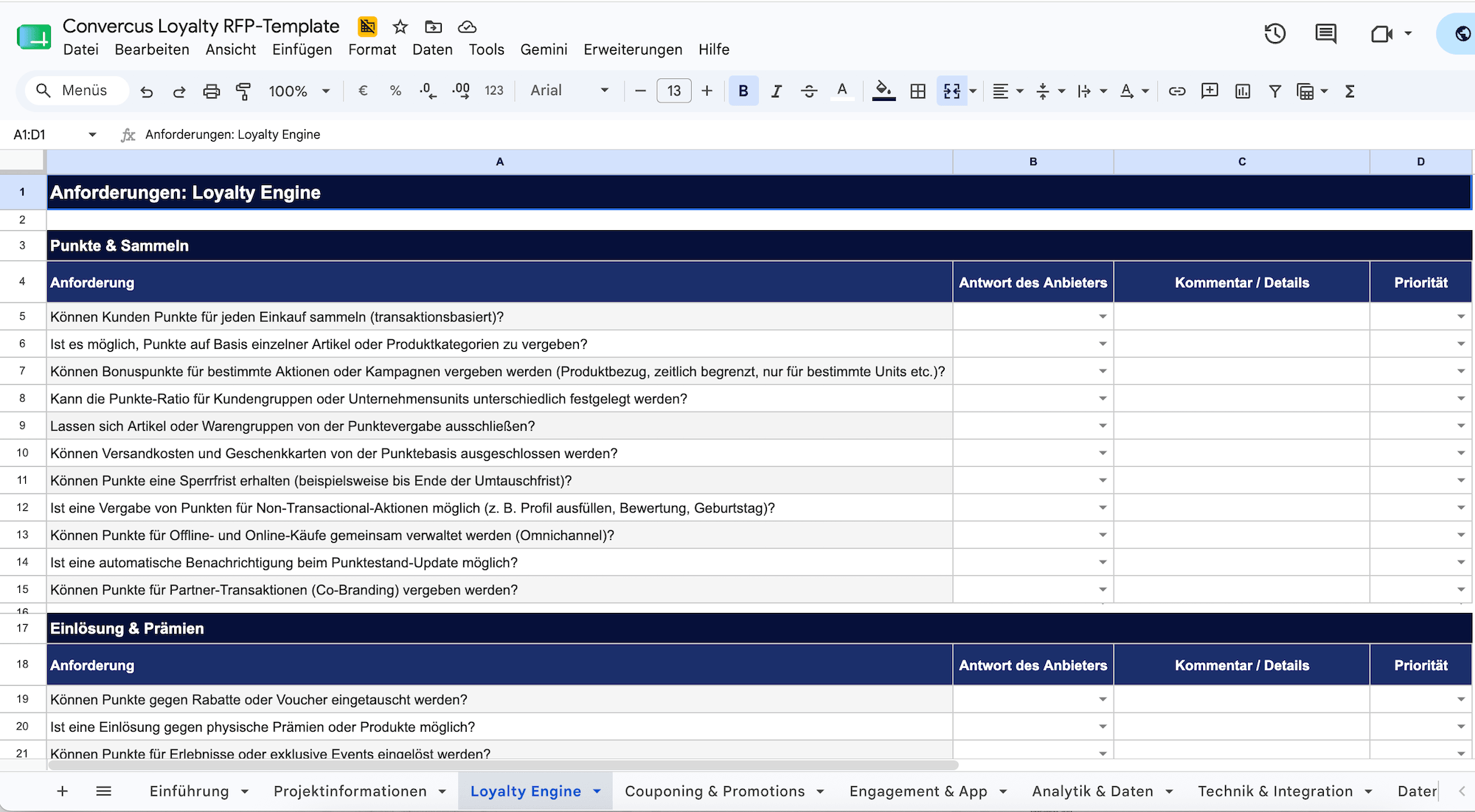
During the evaluation phase, projects rarely fail due to a lack of interest, but rather due to unclear requirements. Anyone preparing an RFP or looking to replace a legacy system should clearly separate functional, technical, and economic criteria. Integration capability, program logic, and measurability are particularly important. Without these three layers, you quickly end up with a nice-looking frontend but no robust business case.
The Requirements Catalog for CRM, IT, and Management
- Omnichannel capability means that points, status, and coupons function consistently at the checkout, in the online shop, and in the app.
- Return-proof logic is mandatory in the fashion segment to ensure that point crediting, cancellations, and redemptions remain financially sound.
- API-first architecture reduces dependencies and simplifies the connection of POS, CRM, shop, CDP, and Marketing Automation.
- Segmentation and personalization must be possible without complicated detours, enabling marketing teams to work quickly.
- KPI-level reporting should make retention, activation rate, repurchase rate, basket size, and redemption rates visible.
- GDPR and TDDDG compliance are not an add-on, but a fundamental prerequisite for productive operation in the DACH market.
If you want to systematically develop existing customers, it's also worth looking at strategies for how to increase customer loyalty. For operational implementation, it's also relevant whether loyalty, couponing, and marketing automation are managed separately or integrated.
When a specialized platform makes sense
At the latest, when a fashion retailer wants to connect POS, e-commerce, app, couponing, and automated journeys within a single logic, a specialized platform is usually more sensible than a custom build or multiple siloed solutions. Convercus is geared towards precisely these omnichannel scenarios in retail within the DACH market, connecting Loyalty, Couponing, Engagement and technical integration modularly. This is particularly relevant for fashion companies seeking rapid implementation without vendor lock-in. The platform already handles 40M+ loyalty accounts, 116M+ transactions, and 22M+ redeemed coupons. In programs with a strong mobile focus, it has also achieved up to 8x higher customer interaction and up to 5x ROI .
Conclusion: Loyalty Software in Fashion Retail Must Connect Sales, Experience, and Data
Loyalty Software for Fashion Retail is effective when it reflects fashion-specific realities: returns, seasonality, omnichannel purchases, early access, mobile usage, and high demands for personalization. Pure discount mechanics are no longer sufficient. Crucial elements include a flexible loyalty engine, clean POS and shop integration, automated journeys within a 30–90-day window, and a program that aligns with brand positioning.
If you want to modernize an existing program or set one up professionally for the first time, Convercus is an obvious choice for mid-market and enterprise fashion retailers in the DACH market. Learn more about our loyalty solutions or schedule a personal live demo with a loyalty expert.
FAQ
How complex is the implementation of a loyalty program in fashion retail?
That depends heavily on your existing system landscape. If your POS, shop, and CRM are already well-structured, a project can be implemented much faster than with fragmented legacy systems. The greatest effort usually lies not in the frontend, but in the data model, process logic, and integrations.
Does loyalty software work with our existing POS system?
In many cases, yes, provided the platform is built API-first or offers suitable interfaces. It's important that customer identification, point crediting, coupon redemption, and returns processing are supported at the checkout. This specific POS question should be clarified early in any evaluation.
Is loyalty software GDPR compliant?
GDPR compliance is not a single feature, but the result of architecture, processes, and contracts. Articles 5, 6, 13, 25, 28, and 32 of the GDPR are particularly relevant, as is Section 25 of the TDDDG, depending on the tracking scenario. Clear legal bases, transparent communication, and technically sound access controls are crucial.
What does loyalty software for fashion retail cost?
A reliable answer depends on the number of users, channels, integration effort, app scope, and desired program logic. The pure license price is less important than the business case: What effects do you expect regarding retention, repurchase, basket size, and redemption rates? Therefore, an ROI analysis is mandatory for enterprise projects.
How long does it take to migrate an existing program?
When replacing a legacy system, data migration, identity resolution, point balances, rule sets, and communication to existing customers must be planned. Depending on complexity, this can range from an accelerated rollout to a multi-month replatforming. It is critical that customers experience no disruption in the earning or redemption process.
How do you practically start with loyalty software in fashion retail?
The best way is to start with clear scoping: define goals, target groups, KPIs, channels, integrations, and benefit logic. After that, you should establish the mandatory criteria for CRM, IT, and management, and only then compare providers. This prevents the project from being driven too early by individual features instead of business objectives.


✓ Identify inactive customers
✓ Set up win-back campaigns
✓ Measurably increase reactivation rates
✓ Omnichannel – POS, App, Email, Push
.png)