









The topic in a nutshell
- Loyalty software in cafés must combine speed and data. During the morning rush, frictionless redemption at the POS is just as important as collecting first-party data for later personalization.
- Not every model fits every café. Digital punch cards are good for small setups, while point systems, status tiers, and couponing scale significantly better for coffee shop chains.
- The business case is driven by visit frequency, average spend, and customer reactivation. Even moderate improvements in visit frequency and average spend can generate a clear ROI for multi-location coffee shops.
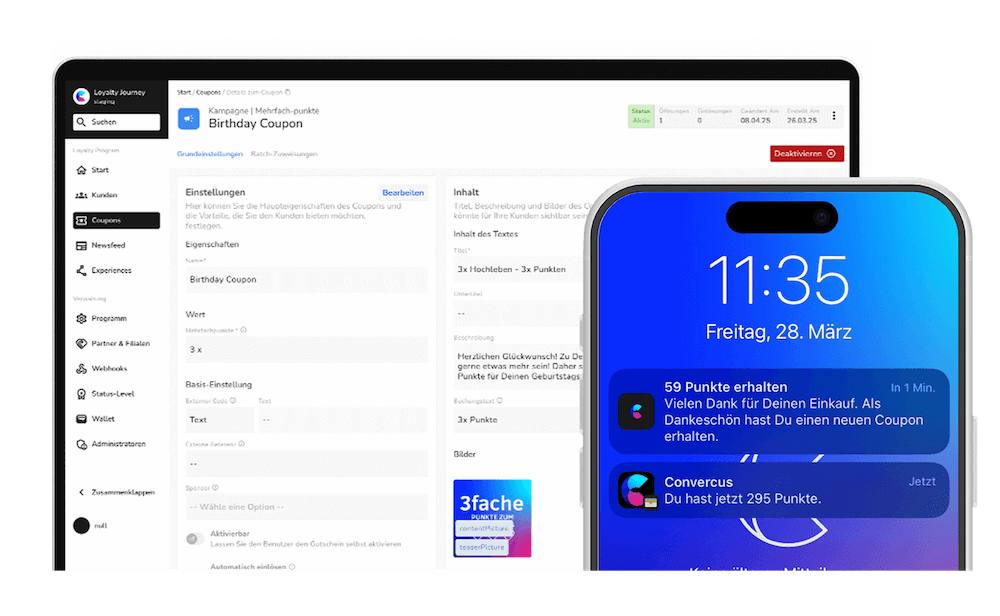
- Convercus is a loyalty software for sophisticated coffee shop chains. The platform combines loyalty, couponing, engagement, and API-first integration for building customer loyalty not just as a punch card, but as a scalable growth strategy.
Why Cafes Today Need More Than a Digital Punch Card
Loyalty Software for Cafes is no longer a nice-to-have in 2026, but a management tool for repeat visits, average spend, and first-party data. This is particularly relevant in the German market: The coffee market was estimated at around USD 7.50 billion in 2025, with USD 7.68 billion expected for 2026, and at the same time, the hospitality industry is facing margin pressure. Those who want to grow with high frequency and small average spend must systematically activate regular customers instead of just spontaneously hoping for walk-in customers.
The market offers reach, but also enormous competitive pressure
Around three-quarters of coffee sales are generated in the out-of-home market, i.e., in cafes, coffee shops, bakeries, and similar formats. At the same time, per capita consumption in Germany is about 170 liters per year. While this sounds comfortable, in practice it means: many providers are competing for a daily ritual that customers can shift by moving just a few meters to another location.
US and UK Benchmarks show how strongly loyalty influences the place of purchase: 79% of daily coffee drinkers say that a loyalty program influences their choice. These figures are not 1:1 transferable to the DACH region, but the direction is clear: those who don't offer relevant added value easily lose out to the competitor across the street.
Where Analog or Simple Systems Fail in Daily Cafe Operations
Paper punch cards work for getting started, but they don't solve the central growth challenges. They don't capture purchase history, preferences, or churn signals, and are difficult to manage across multiple locations.
- Without customer data marketing remains a shot in the dark, because neither regular customers nor inactive ones can be properly segmented.
- Without POS integration manual processes arise that cost valuable seconds during the morning rush.
- Without personalization cafes miss out on cross-selling opportunities, such as pastries, plant-based upgrades, or seasonal drinks.
- Without omnichannel logic the branch, app, wallet pass, and online ordering run in parallel instead of together.
- Without cross-location management a program might scale for 3 locations, but not for 30 or 100.
Which Loyalty Models Truly Work for a Cafe
The best model doesn't depend on trends, but on frequency, average spend, and branch structure. An owner-operated single cafe can start very well with a digital punch card. For cafe chains and hospitality groups, however, point systems, status logic, and couponing are usually more robust because they can be better personalized and rolled out across multiple locations.
Digital punch card, points, or status program?
The digital punch card remains attractive for cafes because it's immediately understandable: collect about 9 purchases, get the 10th coffee free. This is strong for small setups, but often too crude for larger chains because it doesn't account for different product margins or campaign goals.
Point systems and status management are more flexible. They can reward visits, revenue, product categories, or behavior such as reusable cup usage. This is precisely what's important in cafe chains when the goal is to increase not only repeat purchases but also premium drinks, breakfast, afternoon snacks, or app usage.

Gamification and Green Loyalty increase relevance
77% of consumers are more likely to participate in loyalty programs with gamification elements. For cafes, this doesn't necessarily mean a complex game, but achievable micro-goals: 3 breakfast visits in 7 days, 5 purchases with a reusable cup, or a seasonal drink badge.
Green Loyalty is particularly well-suited to the cafe market. Rewarding reusable cups, fair-trade products, or plant-based milk alternatives links transactions with brand values. The key is that the mechanics remain transparent and don't come across as greenwashing.
Rule of thumb for the reward structure: With an average spend of about €5 to €6, the first realistic reward should be achievable within 2 to 3 weeks. If the threshold is too high, motivation decreases; if it's too low, margins suffer.
What Successful Cafe Programs Have in Common
Good programs don't just reward purchases, but create routine, recognition, and data points for better communication. Starbucks remains the well-known benchmark, but especially in the DACH market, it's crucial to adapt the mechanics to one's own business model instead of replicating a global app economy.
Starbucks is a benchmark, but not a blueprint for copying
Starbucks Rewards drove almost 60% of US-operated revenue in fiscal year 2025 and had 34.6 million active members in Q1 2025. This demonstrates the power of an integrated system of app, payment, order-ahead, and rewards.
The Starbucks misconception is to copy only the surface. Many cafe operators see stars, free plays, and status levels, but overlook the underlying infrastructure. For most chains, therefore, the 1:1 model is not sensible, but rather a reduced, cleanly integrated variant with quick redemption, clear benefits, and robust POS logic.
What DACH Cafe Chains Should Do Better
In the German-speaking market wallet passes, digital customer cards, and simple app flows are often more effective than overloaded super apps. Especially during the morning rush, it's crucial that collecting and redeeming work in seconds and don't place an additional burden on employees.
Successful programs therefore focus on three things: an economically appropriate reward threshold, personalized incentives for times of day or product groups, and central management across all locations. Those who want to delve deeper into the topic of Mobile Experience will find helpful perspectives for hospitality programs in the article on App-First Loyalty helpful perspectives for hospitality programs.
What Matters When Choosing the Right Loyalty Software
For cafe chains, loyalty software is not an isolated tool, but part of the operational and data-driven infrastructure. Therefore, not only the frontend and rewards are crucial, but also integration depth, performance, data protection, and the ability to roll out campaigns without additional effort for branches.
POS Integration and Performance Are the Make-or-Break Factor
If points or coupons don't work directly at the POS, friction arises exactly where a cafe can least afford it: at the checkout, during peak hours, and with changing teams. A good solution must process transactions quickly, work consistently across all locations, and ideally remain robust even with shaky Wi-Fi.
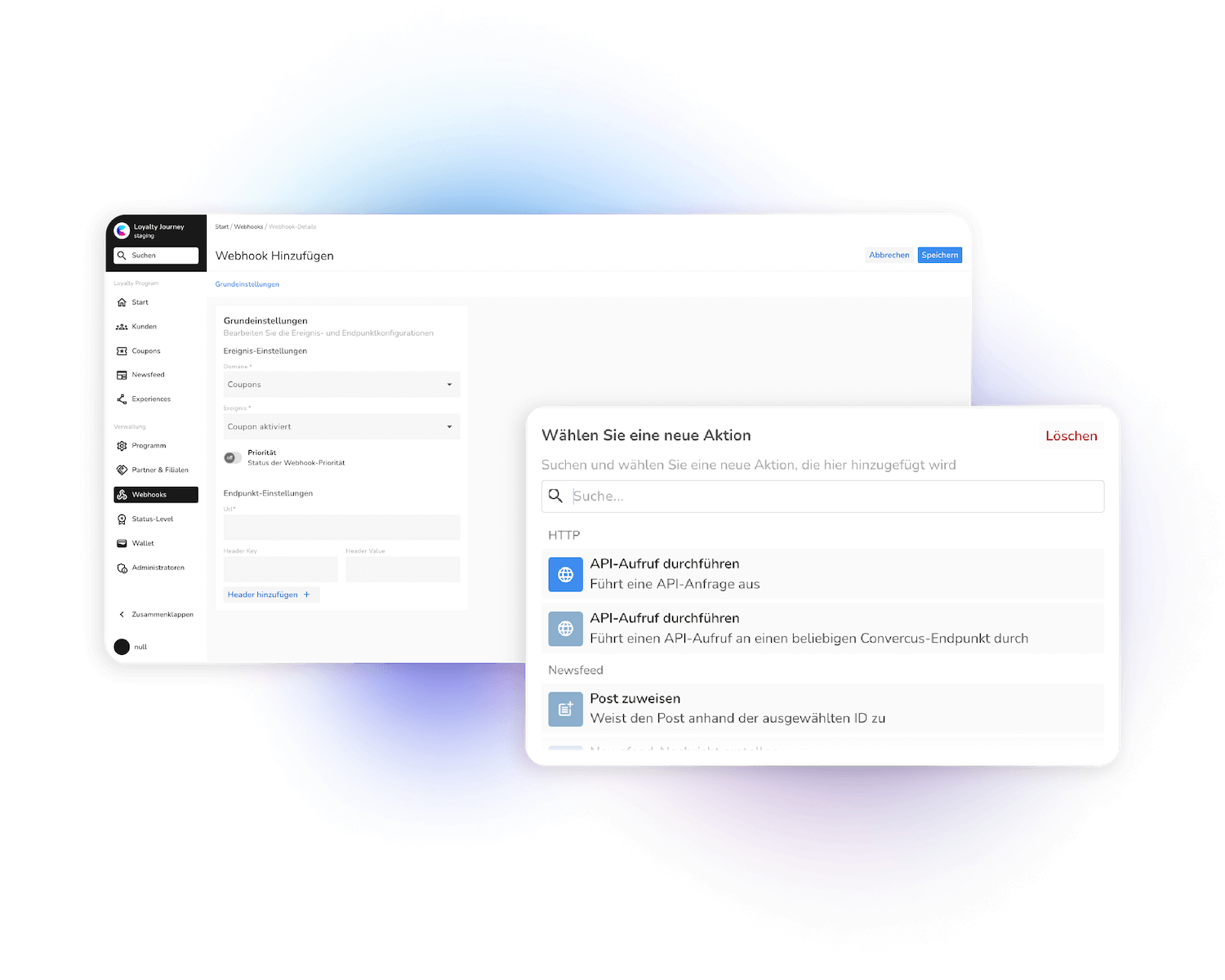
API-first architectures are clearly at an advantage here because they better connect existing system landscapes. Those who want to delve deeper into these requirements should check out Tech & Integration For growing hospitality brands, precisely this scalability is often the difference between a pilot project and a permanently usable platform.
Data, Personalization, and GDPR Must Be Right from the Start
The true value of digital loyalty arises from first-party data: visit frequency, times of day, favorite products, redemption behavior, and churn risks. This transforms generic free coffees into targeted measures, such as a breakfast coupon for early commuters or a re-engagement campaign for inactive guests.
Legally relevant are primarily clear information obligations under Art. 13 GDPR, a robust legal basis under Art. 6 Para. 1 GDPR, data processing agreements under Art. 28 GDPR, and for tracking in apps or on the web, additionally § 25 TTDSG. For promotional emails, SMS, or push mechanisms, a clearly documented consent management system, including double opt-in, is usually advisable in practice.
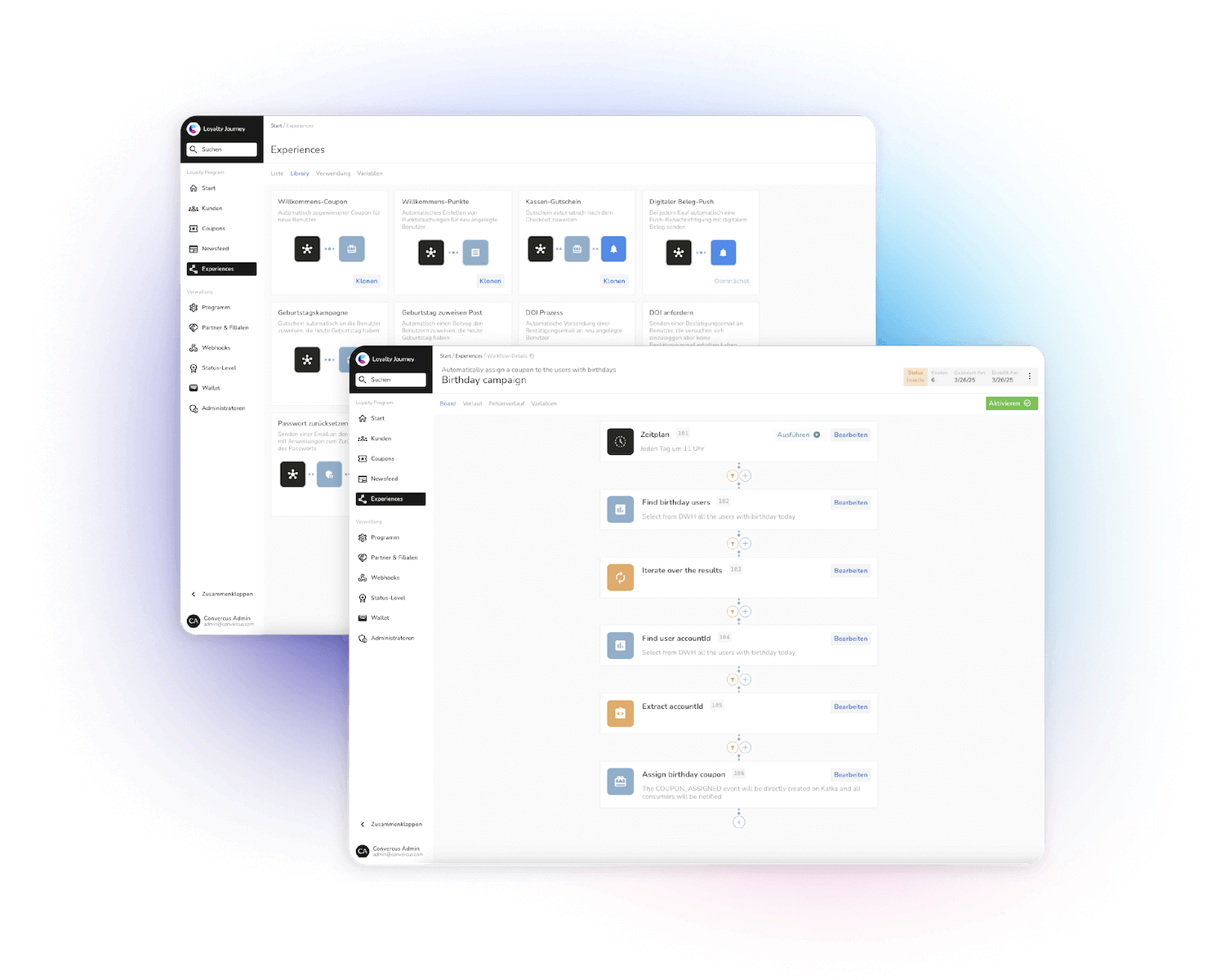
If loyalty, couponing, and engagement are to work together, a single platform makes more sense than multiple individual solutions. This is precisely where Convercus is interesting for cafe chains: Through Loyalty, Couponing and Engagement rewards, personalized offers, and marketing automation can be orchestrated across all locations, without the branch team having to deal with manual special processes.
- Ask for true POS integration, not just a separate app with QR code logic.
- Check for omnichannel capability, so that the branch, wallet pass, app, and online touchpoints use the same customer status.
- Demand transparency regarding GDPR, especially concerning roles, data processing agreements, and consents.
- Evaluate campaign management, i.e., segmentation, triggers, and re-engagement workflows instead of mere point administration.
- Pay attention to scalability, if 5 locations are to become 25 in two years.
The Business Case: What Loyalty Software Specifically Brings to Cafes
The ROI of loyalty rarely comes from a single free coffee in a cafe, but rather from more visits, higher average spend, and less churn. Across all industries, 93.1% of companies report a positive ROI from their loyalty programs. Additionally, enrolled customers spend on average 12% to 18% more than non-members.
Which KPIs Cafe Operators Should Measure from Day 1
Key metrics include active members, visit frequency, redemption rate, average spend of members, reactivation rate, and the share of personalized offers in redemptions. Only with these values can one assess whether the program merely shifts revenue or creates true added value.
Particularly relevant is the combination of frequency and basket size. A program that generates many registrations but no recurring usage is less valuable for cafes than a smaller, but active, member segment. You can find more background information on this in our articles on Increasing customer loyalty and Customer re-engagement.
Calculation Example for a Coffee Shop Chain with 10 Locations
Initial Situation: 50,000 active customers, average bill €6, average 6 visits per month. This results in €432 annual revenue per customer and approximately €21.6 million in total annual revenue. Let's conservatively assume that 20,000 customers actively participate in the program, and that this segment visits 10% more frequently and spends 15% more per visit.
The example shows not a guaranteed outcome, but the order of magnitude. Even with conservative assumptions, loyalty programs can provide a clear business case for multi-location coffee shops, especially when reactivation and couponing are used instead of blanket discounts.
Implementation in Practice: How to Ensure a Smooth Start
The best loyalty software fails, if rules are too complicated, processes too slow, or rewards are economically miscalibrated. Especially in a coffee shop, the program must be intuitive for guests and barista-proof for teams. A smooth rollout therefore focuses on a few, clearly understandable mechanics and measurable goals for the first 90 days.
Typical Project Workflow from Setup to Go-Live
In practice a solid project starts with a target vision, data sources, and reward logic, followed only then by UX, POS processes, and campaigns. If an existing program is already in place, migration rules for points, status, or historical accounts should be defined early.
For larger groups a pilot with a few locations is recommended before a nationwide rollout. This allows peak times, redemption processes, and store feedback to be tested under real conditions without risking the entire program.
Calibrating Reward Structure and Communication Correctly
With low average bills small, frequently attainable rewards work better than distant premium rewards. A birthday reward, a challenge for 3 breakfast visits, or a targeted afternoon coupon can be more effective than an impersonal, permanent 10-for-1 scheme.
Marketing Automation becomes particularly valuable when it utilizes behavioral data: welcome journey after registration, reactivation after 14 days of inactivity, or push communication for newly reached levels. This is precisely how loyalty evolves from a digital card into an ongoing engagement system.

Launch Checklist for the First Weeks
Conclusion: The Right Loyalty Software Turns Routine Purchases into Predictable Growth
For coffee shops and coffee shop chains loyalty no longer just determines free drinks, but also data quality, repurchase rates, and the ability to consistently engage customers across all locations. Especially in a market with high frequency, small average bills, and strong local competition, a solution that seamlessly integrates POS, personalization, and campaign management is worthwhile.
If you want to approach loyalty strategically rather than in isolation, Convercus is an obvious next option: The platform combines loyalty, couponing, engagement, and API-first integration for demanding hospitality setups. A good starting point is the overview of Loyalty Software; if you'd like to take the next step directly, you can request a personal demo via Convercus..
FAQ: Frequently Asked Questions About Loyalty Software for Coffee Shops
How complex is it to get started with a digital loyalty program?
The effort depends heavily on your existing system landscape. A simple setup with a digital customer card and a few rules goes live much faster than a cross-location program with POS integration, status logic, and marketing automation. For coffee shop chains, a more thorough implementation is worthwhile as it avoids later workarounds.
Does loyalty software work with our existing POS system?
This should be a core selection criterion. It's not just about whether a connection is fundamentally possible, but whether points, coupons, and redemptions are processed in real-time and without POS friction. Therefore, specifically ask providers about their API-first approach, latency, offline capability, and rollout experience in multi-location environments.
Can a loyalty solution for coffee shops be implemented in a GDPR-compliant manner?
Yes, if data protection is properly established from the outset. Important aspects include transparent information according to Art. 13 GDPR, an appropriate legal basis according to Art. 6 Para. 1 GDPR, a data processing agreement according to Art. 28 GDPR, and clear consents for promotional communication. For app or web tracking, Section 25 TTDSG must also be observed.
How much does loyalty software cost for a coffee shop or a coffee shop chain?
Costs vary significantly depending on complexity. For individual coffee shops, simple self-service models often prevail, while chains tend to invest in platforms with POS integration, central control, analytics, and multiple stakeholders. Therefore, it's less about finding the cheapest tool and more about the expected ROI per location and customer segment.
How long does implementation take?
Anywhere from a few weeks to several months is all realistic. Key factors include the number of locations, migration of an old program, integrations, approval processes, and the desired target vision. For many coffee shop groups, a pilot rollout followed by phased expansion is the most pragmatic approach.
Can we migrate an existing program or a punch card?
Yes, migration is sensible in many cases. It's important to transparently transfer existing balances so that loyal guests don't experience any disadvantage. In practice, existing points, stamps, or status levels are often transferred to a new system and accompanied by clear transition communication.


- 5x Return on Investment
- 80% Customer identification
- 8x Customer interaction
- +274% Repurchase rate

.png)
.png)
.jpg)
.png)