








The topic short and concise
- Psychological data strategy instead of discount mechanics: Anyone who introduces a loyalty program builds a structured strategy to generate first-party data. Success doesn't depend on discounts, but on the ability to transform customer data into personalized experiences.
- Pre-launch decisions: Program type, omnichannel integration, GDPR-compliant opt-in strategy, and internal acceptance must be clarified before go-live. If you do this, you will achieve measurable results more quickly, such as higher repurchase rates and an increasing Customer lifetime value.
- The most common reasons for failure are strategic: Mechanics that are too complex, lack of employee training at the POS and a profitability calculation that is only made after the launch jeopardize the success of the program.
- Convercus for Mid-Market and Enterprise: For companies that want to introduce or replace a program, Convercus offers a API-First Loyalty Engine with a proven onboarding playbook — from concept to scalable go-live at several thousand POS.
You are faced with the decision to introduce a loyalty program and ask yourself: What really needs to be clarified before the first launch? The answer: much more than just an IT connection. Program logic, opt-in strategy, and internal acceptance determine whether your Loyalty program delivers measurable results or fizzles out. The example of Takko Fashion shows that a structured implementation process works with Convercus: over 6 million registered app users after a short period of time, rolled out to more than 1,100 POS in 3 countries. Convercus accompanies exactly this path as an experienced Design partner until go-live.
Why is a loyalty program worthwhile? ROI, CLV uplift, and first-party data at a glance
A loyalty program is not a discount system, but a strategic growth driver. Companies that Increase customer loyalty and want to steer in a targeted manner benefit from this on several levels simultaneously:
- Customer lifetime value is increasing
- Valuable first-party data flows directly into marketing
- The churn rate is falling
- The share of wallet is growing measurably
Especially in times of rising acquisition costs and the elimination of third-party cookies, a data-driven loyalty program is becoming decisive competitive advantage. who Customer Retention Strategies consistently implemented and works specifically to increase customer loyalty, creates the basis for sustainable growth.
Before the introduction, there is a key question: Build your own solution or use a specialized SaaS platform?
Points program, tiered model or subscription: Which type is right for your company?
Not every loyalty program follows the same logic. Whether Points program, cashback or status model: Depending on industry, channel structure and strategic goal Are different program types suitable. The following overview shows which model fits which deployment scenario and how Convercus can help you with this.
Which program type is the right one depends on three factors:
- company size
- sector
- channel structure
Omnichannel retailers in retail benefit in particular from points-based models or tiered programs that work both online and at the POS. Pure online companies in ecommerce Put on more often gamification or subscription-based incentives. B2B2C models require, in contrast to B2B loyalty flexible mechanics that can be adapted to different groups of participants.
Self-run programs with a white label app and API-first platform Give you the full control over first-party data, personalization, and customer communication.
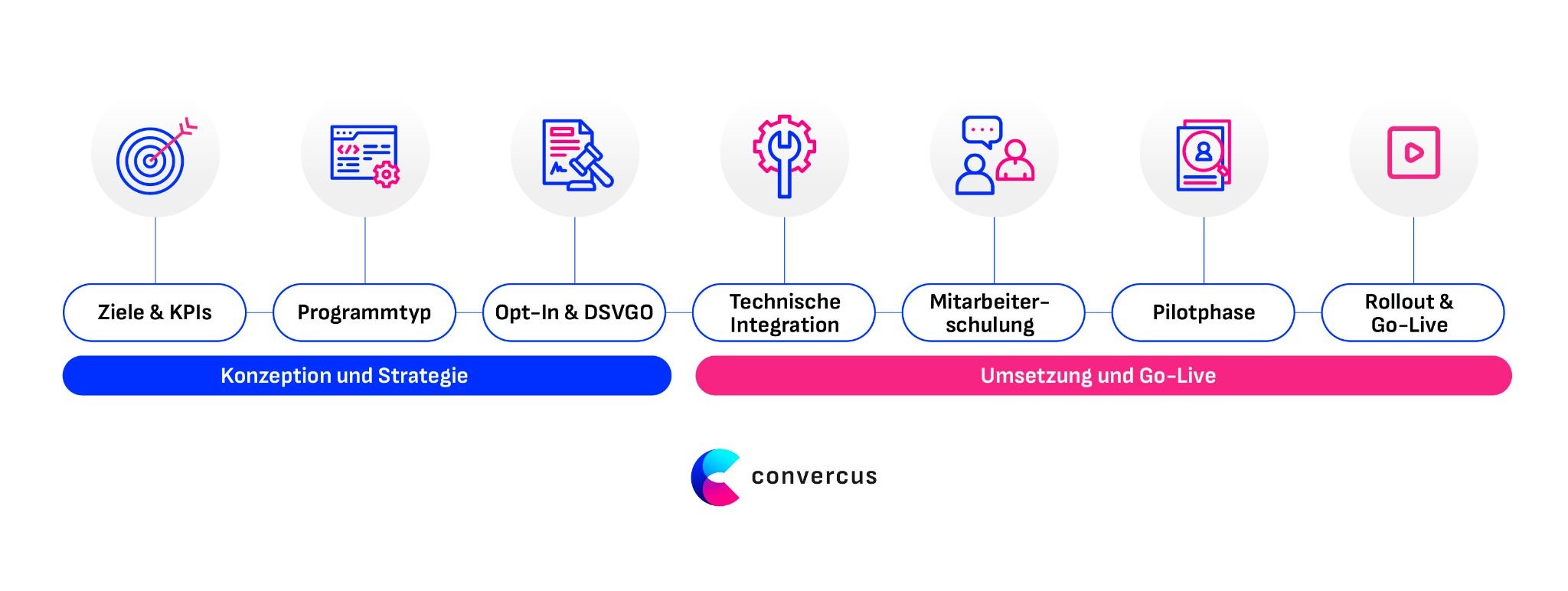
Introduce a loyalty program in 7 steps
From goal setting to full rollout: These seven steps cover the entire implementation process, including stakeholder involvement, employee training at the POS and a pilot phase that many companies underestimate.
Step 1: Which KPIs and goals should I define before introducing loyalty?
Every successful Customer loyalty software starts with measurable goals. Formulate your KPIs according to SMART principle: specific, measurable, achievable, relevant and timely.
Typical KPIs for your Loyalty program are:
- Repurchase rate
- Churn Rate
- Redemption rate
- Net Promoter Score (NPS)
Particularly important is the CLV baseline. Enter the Customer lifetime value before the launch, so that the subsequent uplift can be clearly proven. Involve internal stakeholders from IT, CRM, and sales right from the start. If you skip this step, you lose valuable time later when approving the budget.
For new programs, it is particularly important to monitor the basic KPIs, especially in the first few months which say a lot about the program's performance:
- Registration rate (total and per branch/unit)
- Share of loyalty transactions in total
- Loyalty revenue as a percentage of total
- Bon Augmentation
- Redemption rate
Based on these key figures, you can quickly see where there may still be a need for optimization.
Step 2: Which type of loyalty program and which mechanics suit my company?
The specific decision is subject to a The central rule: The simpler the mechanism for your customers, the higher the participation. Complex regulations with too many levels or conditions are a deterrent. Document your decision and coordinate it internally before you go into technical implementation.
Step 3: With an opt-in strategy and GDPR, what do I need to clarify before launching?
Before you collect customer data, you need a legally secure basis. The legal basis for data processing regulates Art. 6 GDPR. Information requirements vis-à-vis your participants arise from Art. 13 GDPR. If you use a loyalty software provider, an additional order processing agreement (AVV) is required.
The tax treatment of premiums depends on the specific model and should be checked individually. Sales tax treatment depends on the program type (e.g. discount model, voucher logic) and can include Section 17 UStG concern. Since tax classification can be complex, early coordination with your tax advisor is recommended.
Step 4: How do I plan the technical integration of a loyalty program?
The technical basis determines the speed and scalability of your program. Clarify early on: API-first integration or native connection? How is the POS connection made? Is omnichannel capability guaranteed from day one? Assess your IT resources realistically, as bottlenecks in the development team are one of the most common reasons for delays.
Also define your enrollment channels:
- Whitelabel app with your own branding (if applicable App-First Loyalty)
- Site registration
- POS terminal directly at the cash register
- Paper form (branch registration with downstream digitization)
- Instore app (tablet or terminal-based registration directly in the store)
platforms with API-first infrastructure like Convercus significantly shorten time-to-market, as existing systems can be flexibly connected and best practice templates make implementation much easier
Step 5: How do I ensure employee involvement and internal support for the loyalty program?
The best strategy fails if your employees don't actively promote the program. Branch teams are, for example, at Retail Loyalty The decisive activation channel. Without a personal contact at the cash register, the enrollment rate falls far short of what is possible.
Therefore, plan internal change management With from the start. Create understandable training materials that explain how the program benefits the customer and the company. Create incentives for branch teams, for example through internal competitions or bonuses for particularly high registration rates. Anyone who neglects this operational aspect is wasting the greatest potential during implementation.
Step 6: When does a pilot phase before full rollout make sense?
A full rollout from day one is possible and works. Some companies still opt for a short pilot in one or a few branches, not as a long-term test phase, but as a targeted reality check just before the start.
What can be tested sensibly in a pilot:
- Technical approval under real conditions: Is the POS connection stable? Are points booked and redeemed correctly?
- Test employee training for effectiveness: Do branch teams understand the mechanics? Are they actively appealing to customers about the program?
- Identify process gaps early on: Are there any registration issues that can be resolved before rollout?
A pilot should be clearly limited in time. If it runs too long, it is no longer taken seriously internally and KPIs from a single branch cannot be extrapolated 1:1 to the overall program anyway. If you want to scale quickly, start the full rollout sooner rather than later.
Proven enrollment tactics for the pilot phase:
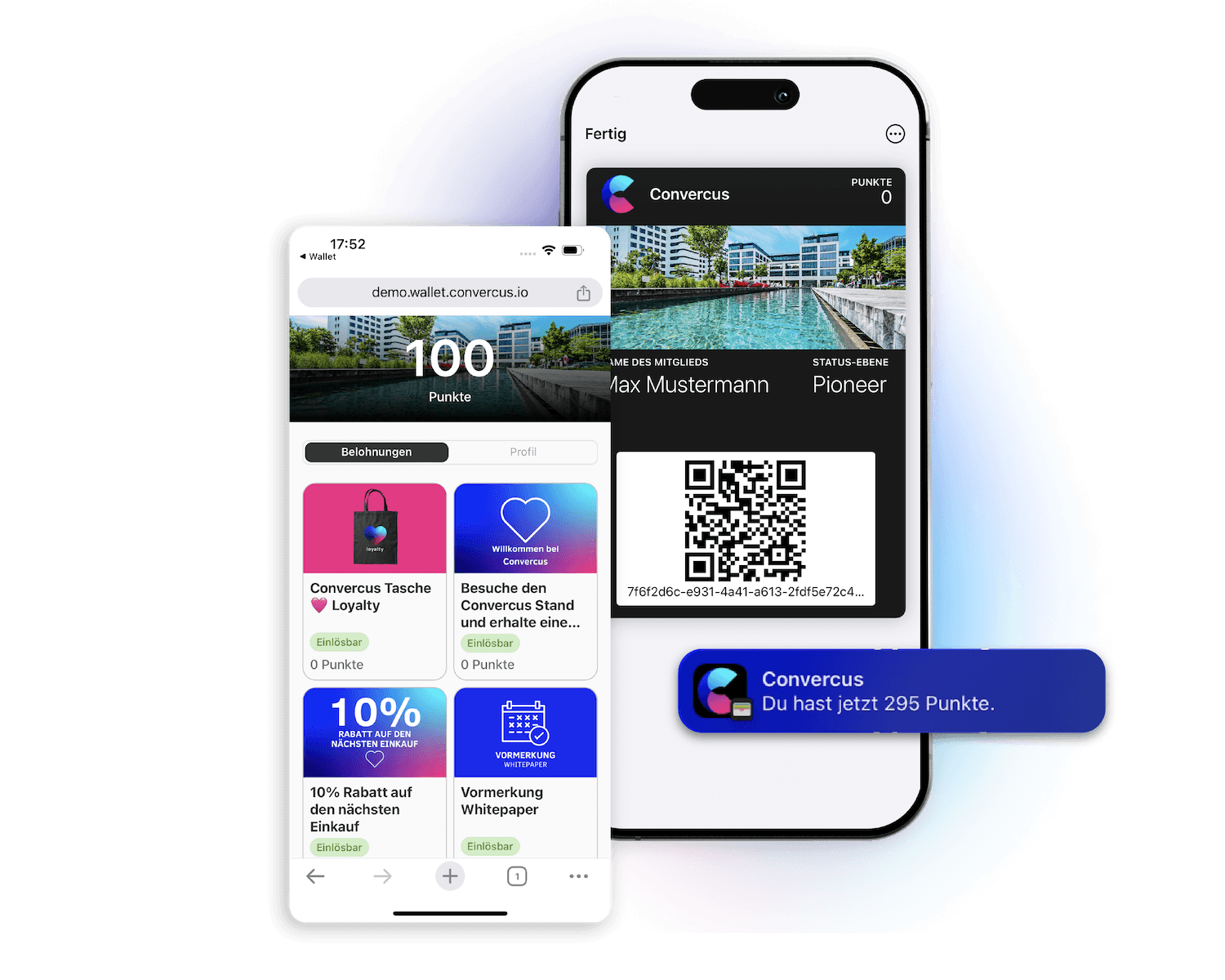
- Welcome points: Immediate credit upon registration as an activation impulse, can be implemented via app, web or mobile loyalty software.
- Exclusive first-time purchase benefit: Discount or reward when you make your first purchase as a member
Step 7: How does the rollout and go-live of a loyalty program work?
After a successful pilot phase, the phased rollout. Depending on the size of your company, gradually expand by branch or region instead of starting everything at once. This allows you to maintain control and react quickly if problems arise.
Before you release go-live, complete technical approval with end-to-end testing is essential. Check every enrollment channel, point booking, and redemption under real conditions. Only when everything is working smoothly do you actively communicate the launch to existing customers: via email, via the app and with POS signs in the branches and start the ongoing KPI monitoring.
What determines success after go-live
The go-live is not an end point, but the beginning of the most exciting part. Whether a loyalty program has a long-term effect depends less on its implementation than on what happens afterwards: consistent measurement, rapid response and the prevention of typical operational errors.
How do I measure and optimize my loyalty program after going live?
Start that KPI monitoring from day one and consistently measure against the baseline that you defined before the introduction. This is the only way you can see which adjustment screws really work.
Decreases the activity of individual members, React early. Personalized coupons, exclusive offers, or targeted status upgrades reactivate inactive participants before they finally leave. At the same time, you should Iteratively adjust program mechanics:
- Refine segmentation
- introduce new engagement formats such as gamification or challenges
- Adapt premiums to the changing needs of your customers
How do I further develop my loyalty program after the launch?
No program is finished after go-live. Customer needs are changing, competitors are following suit and new engagement formats are emerging. Anyone who does not continuously develop their program loses relevance, often gradually and without immediately noticing it.
Three levers help:
- Refine segmentation to deliver offers in a more targeted manner.
- Introduce new engagement formats such as gamification or challenges to keep participants active.
- Adjust premiums regularly so that the perceived added value does not diminish.
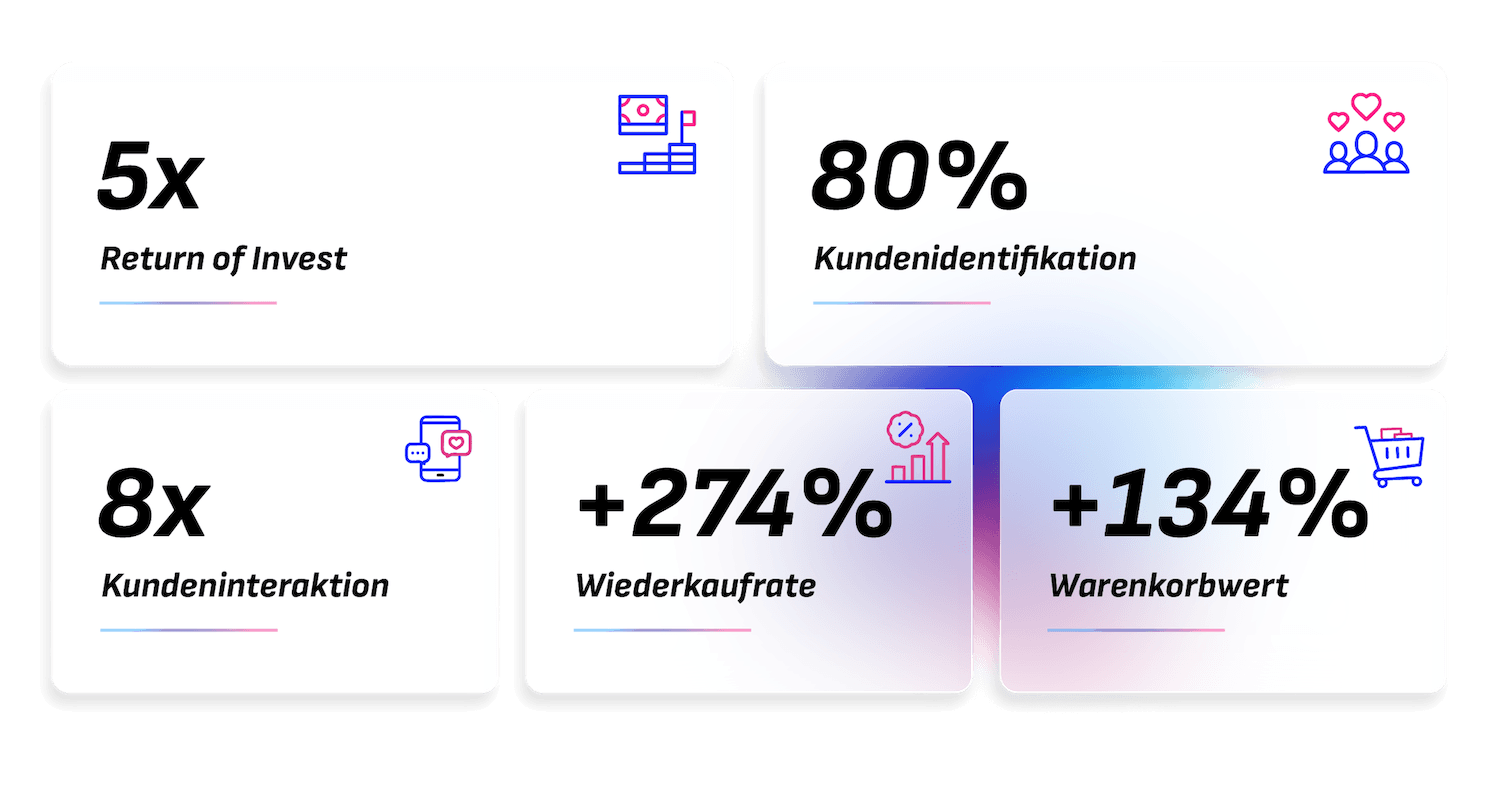
With this approach, Convercus customers achieve up to 8 times higher customer interaction through the white label app and an increase in the repurchase rate of up to 274%.
What mistakes should I avoid after go-live?
Most programs underperform not because of bad ideas, but because of avoidable errors during operation. You should know these three:
Managing a program from a company perspective instead of a customer perspective: Anyone who focuses bonuses and mechanics primarily on internal goals, without asking what motivates customers to actively participate, quietly loses members. Regular user surveys and redemption analyses help to correct the perspective.
Discount mechanism without emotional added value: Points that result exclusively in discounts create price sensitivity, not commitment. Exclusive experiences, community elements, or status-based benefits are the levers that purely transactional programs do not have.
Neglect enrollment strategy: The filing rate determines the business case. Anyone who doesn't actively work on it after the launch (through branch team incentives, prominent placement in the checkout, or targeted campaigns) is wasting the greatest growth potential.
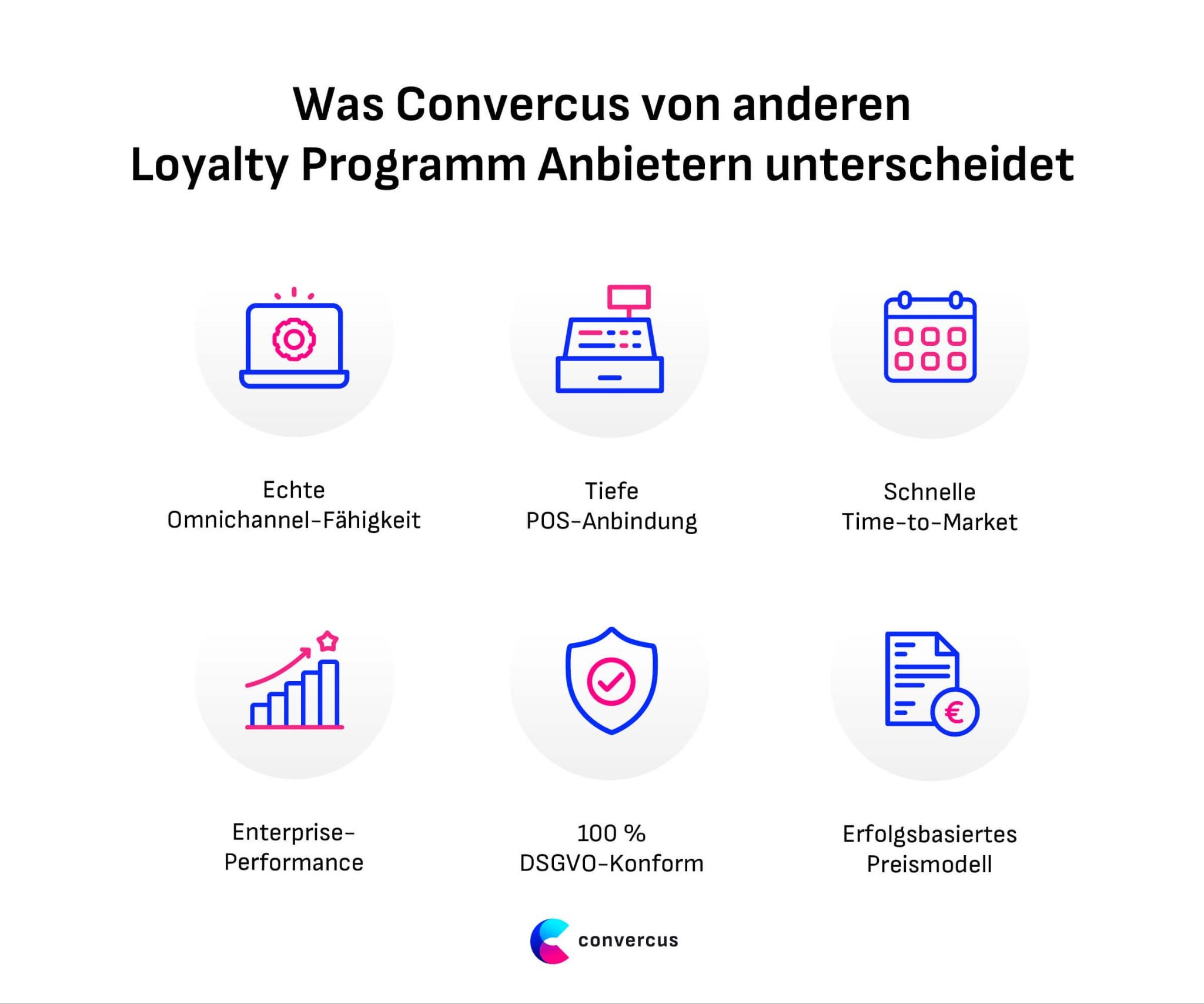
Implement loyalty program with Convercus: fast ROI, 80% customer identification
From initial conception to technical integration to go-live, Convercus supports companies with a proven onboarding playbook. Die Loyalty Engine Is for Omnichannel operation designed at thousands of POS, in apps and in e-commerce. Thanks to API-first infrastructure, Flexibly connect existing systems, while the white label app focuses on your brand. In subsequent success management, loyalty experts continuously optimize your program for measurable success.
Success stories that speak for themselves:
- Takko Fashion: Over 6 million app users, rollout in 3 countries via 1,100 POS in a short period of time.
- Toom hardware store: Smooth integration into complex IT architecture, over 10 million unique Coupons managed.
- Modepark Röther: Over 600,000 app registrations, more than 1 million coupons redeemed.
FAQ
Which type of loyalty program is suitable for omnichannel retailers?
Points-based programs or tiered programs are particularly suitable, even for Customer loyalty for online shops. The platform's technical omnichannel capability is decisive: Points must be earned and redeemed equally online and offline, without channel breaks. This is the only way to create a seamless customer experience across all touchpoints.
What does it cost to implement a loyalty program?
The most important cost components are software license, implementation (IT integration, POS connection), current premium budget and communication costs for launch and operation. Usage-based SaaS models such as Convercus significantly reduce the initial investment and make running costs more predictable than in-house developments. At the same time, the introduction of a customer loyalty program with a digital customer channel results in significant savings in printing and shipping costs as well as savings due to wastage losses.
How long does it take to implement a loyalty program?
Depending on complexity — number of POS, IT system landscape and omnichannel requirements — implementation typically takes several months. With an API-first platform and a structured onboarding playbook, an accelerated rollout is possible even for more demanding projects. From kick-off to go-live, around 3-5 months are realistic.
From what size of company is it worthwhile to have your own loyalty program?
There is no blanket threshold. Transaction frequency, customer base and strategic goal are decisive. Anyone who wants to build first-party data and use personalization as a growth lever often benefits from their own program earlier than the sheer size of the company would suggest.
Which KPIs measure the success of a loyalty program?
The most important KPIs are redemption rate, customer identification rate at the POS, repurchase rate, churn rate, customer lifetime value and NPS. Be sure to set your CLV baseline before implementation so that you can properly measure the uplift later and prove the ROI.
Find out what you can achieve with Convercus as a loyalty partner. Discuss your use cases in a personal live demo and find out what ROI your loyalty program can achieve.
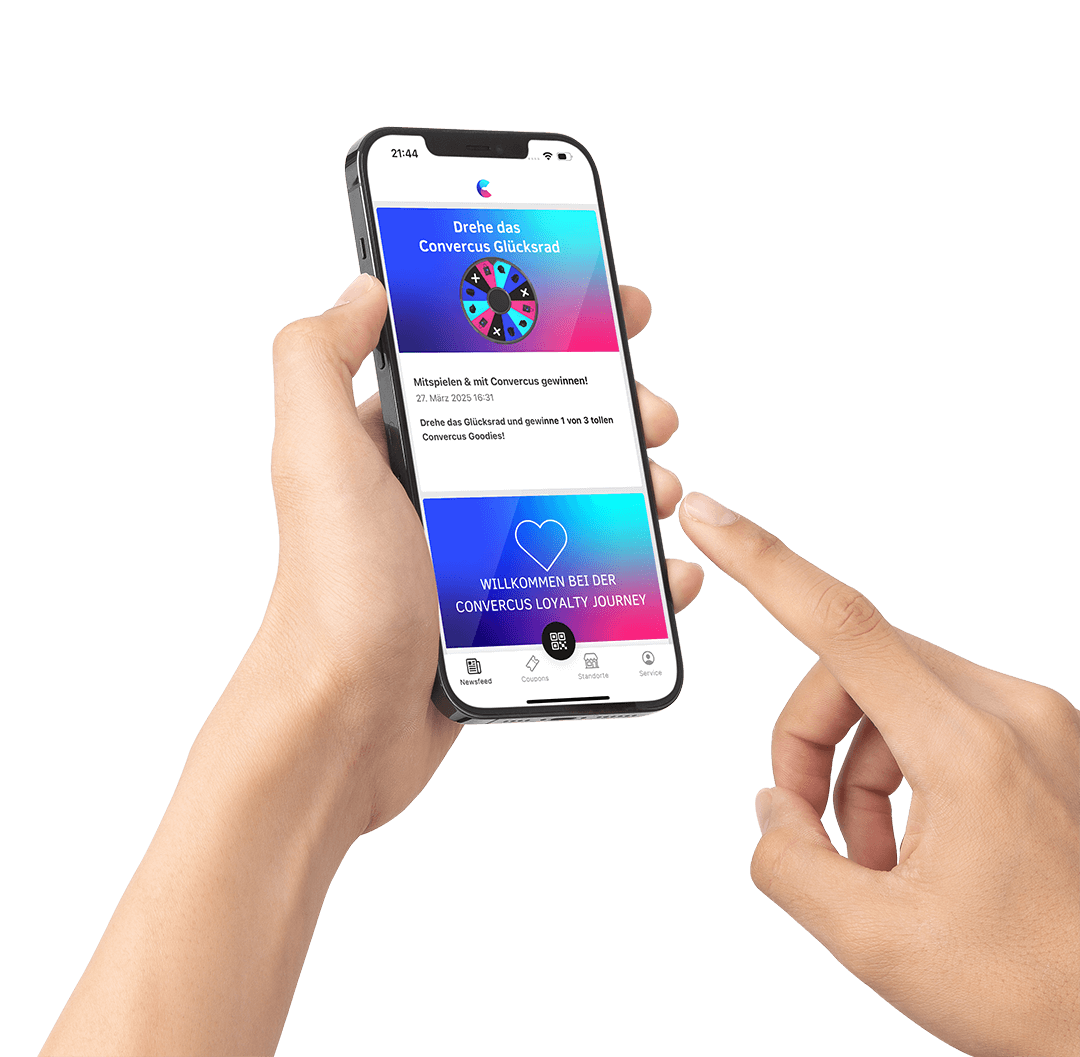

One of the most common questions we hear from customers in the design phase is: How much added value do I have to offer so that customers get involved? Our experience from hundreds of programs shows that perceived availability is more important than the absolute premium amount. A program in which customers already see a reward after their first or second purchase achieves significantly higher enrollment rates than one that only rewards after ten purchases — even if the total value is the same.
.png)
- API-first loyalty engine for retail & e-commerce
- Omnichannel-ready: POS, app, online
- Proven onboarding playbook