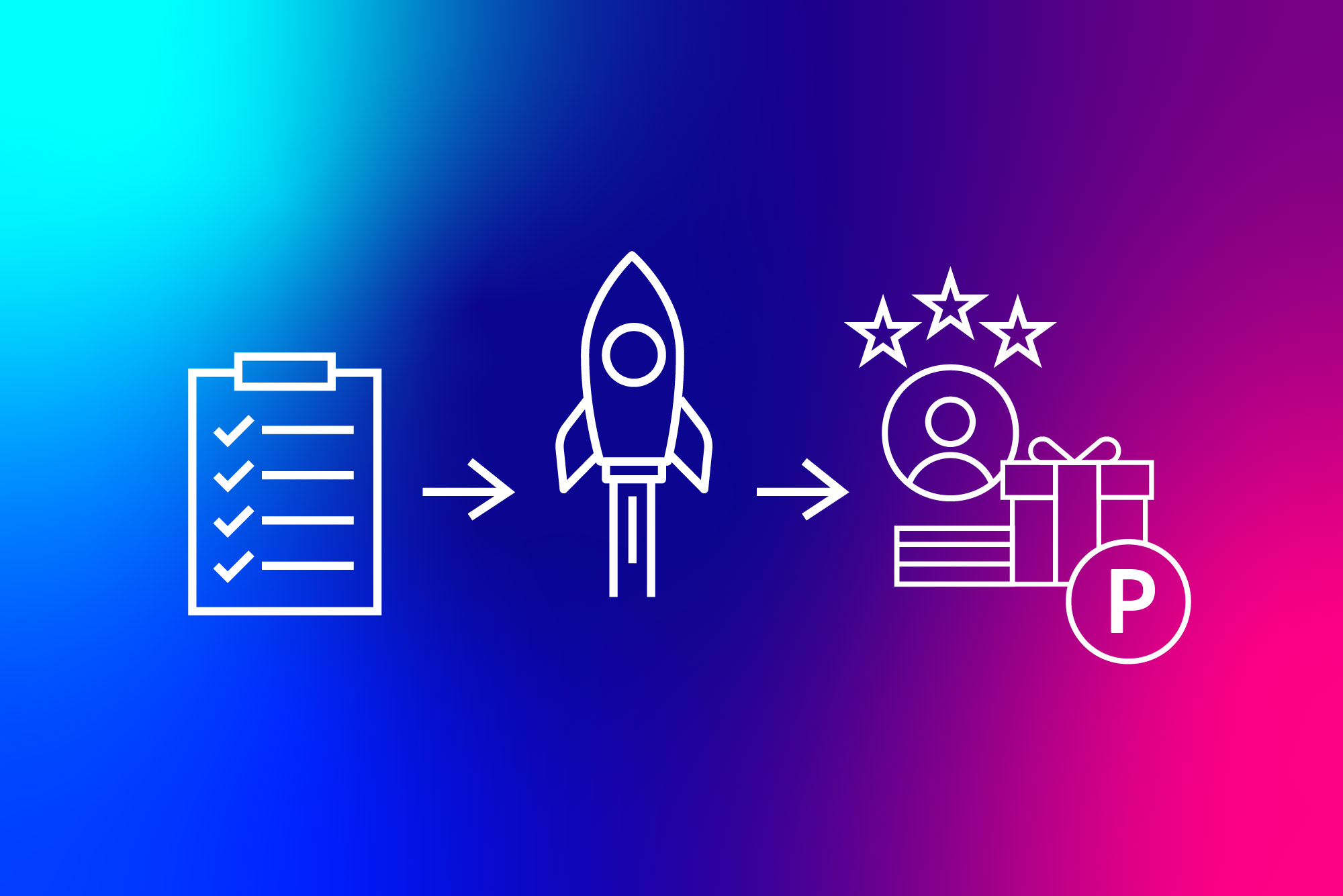








The topic in brief
- Service stations have an identification problem: Millions of customer interactions occur every year, but without a digital loyalty mechanism, most guests remain anonymous and thus invisible for personalization, repurchase tracking, and cross-selling.
- Network loyalty is more important than location loyalty: Because travelers rarely visit the same location twice, a program must function across multiple locations and connect fuel, shop, gastronomy, charging, and other services.
- E-mobility creates a new engagement window: Charging breaks of 20–40 minutes open up significantly more potential for coupons, upselling, and data-driven engagement than the classic short fuel stop.
- Convercus is a suitable loyalty software for service stations: For operators with complex omnichannel and multi-location structures, Convercus combines loyalty engine, couponing, engagement, and API-first integration in one scalable platform.
Loyalty Software for Rest Stops: Why This Topic is Now Strategic
Strictly speaking, a rest stop is a service operation on the highway; combined with a gas station, it becomes a service area. However, in their day-to-day operations, operators of rest stops, service areas, and truck stops are all looking for the same answer: How to turn anonymous walk-in customers into identifiable customer engagement? This is exactly where loyalty software comes in. It connects refueling, shopping, dining, sanitary facilities, EV charging, and potentially hotels into a digital customer relationship.
The market is large yet fragmented: In Germany, there are around 440 managed rest areas, plus about 230 truck stops and many different operator, franchise, and leaseholder models. Market leaders like Tank & Rast serve around 500 million guests annually. Despite this, most interactions remain anonymous. From a loyalty perspective, this is the industry's core weakness.
500 Million Visits – Almost All Untracked
Anyone who stops spontaneously on the road leaves no profile or purchase history without an identification mechanism. Without first-party data, there's no reliable personalization, no repurchase tracking, and no clear success measurement. This is particularly problematic in a transient environment, as loyalty needs to function across the entire network, not just individual locations.
Why SANIFAIR Vouchers, Payback, and Print Coupons Aren't Enough
While value vouchers, seasonal discounts, or third-party multi-partner programs may generate occasional traffic, they rarely provide true data ownership. Relying solely on third-party programs means relinquishing direct customer relationships. Furthermore, cross-location journeys – such as refueling on the A7 and eating on the A9 – can only be mapped to a limited extent with such programs.
The Dangerous Myth: "People Stop Anyway"
Travelers have choices: managed rest areas, unmanaged facilities, truck stops, and increasingly, charging parks away from traditional rest stops. Substitutability is a real business risk in the mobility sector. Those who rely solely on location forgo differentiation, higher average transaction values, and repeat visits within the network.
What Loyalty Software for Rest Stops Must Deliver
Rest stops don't need a generic bonus solution, but a platform that integrates retail, hospitality, and mobility. What's crucial is not just the points system, but the network-wide orchestration of all touchpoints. A good solution must therefore reflect both operational reality and customer behavior.
- Network-wide Identification means that the same guest can be recognized across multiple locations and services, even if they only stop at a single location 1-2 times a year.
- Cross-Service Loyalty links refueling, bistro, shop, sanitary facilities, EV charging, and hotel within a common logic for earning, redeeming, and personalization.
- Segment-Specific Mechanics are essential because holidaymakers, commuters, and professional drivers have completely different motives, purchase behaviors, and contact frequencies.
- API-First and Offline Capability are essential for properly connecting heterogeneous POS systems, apps, and charging infrastructure, even with fluctuating network quality.
Anyone looking for more information on modern customer loyalty software should primarily ensure that the solution truly supports multiple business areas, operator roles, and cross-channel journeys.
The E-Mobility Dividend: Why Charging Breaks Are the Biggest Loyalty Lever
The shift to electromobility is fundamentally changing the rest stop business. While a classic refueling stop often concludes in just a few minutes, fast charging creates a new time window of 20–40 minutes. This dwell time is the decisive game-changer for loyalty, because it transforms a technical process into an opportunity to actively shape the customer's stay.
20–40 Minutes of Dwell Time is a New Revenue Channel
Those who are charging have time for coffee, food, shopping, or additional services. Loyalty software allows relevant incentives to be deployed precisely at this moment: a coupon for the food court, a challenge for the next charging stop, or a reward for combining charging and dining. The charging break thus transforms from a waiting period into an engagement moment.
From Charging Stop to Orchestrated Customer Journey
A realistic scenario: An EV driver starts the charging process, receives a coffee coupon after identification via Wallet Pass, collects points with their purchase, and gets a trigger for the next location in the network upon leaving. This exact sequence transforms individual transactions into a measurable journey. For operational implementation, digital Couponing and automated engagement are crucial.
Illustrative Example Calculation for a Service Area Network
Let's consider 100 locations, each with 50 charging points, 40% utilization, and an average dwell time of 30 minutes. This results in approximately 730,000 charging processes per year across the network. If the average shop or gastronomy spend per charging stop increases from €5 to €9 due to loyalty-supported coupons, this generates additional revenue of approximately €2.92 million per year. This is just an example calculation, but it demonstrates why e-mobility is so relevant for rest stop loyalty.
Core Functions of a Loyalty Platform for Rest Stops
The best loyalty software for rest stops isn't the one with the most features, but the one with the right ones. Clarity Trumps Complexity: Operators need mechanisms that are quickly understood, cleanly integrated technically, and reliably managed in daily operations.
Point Systems, Status Models, and Digital Couponing Mix
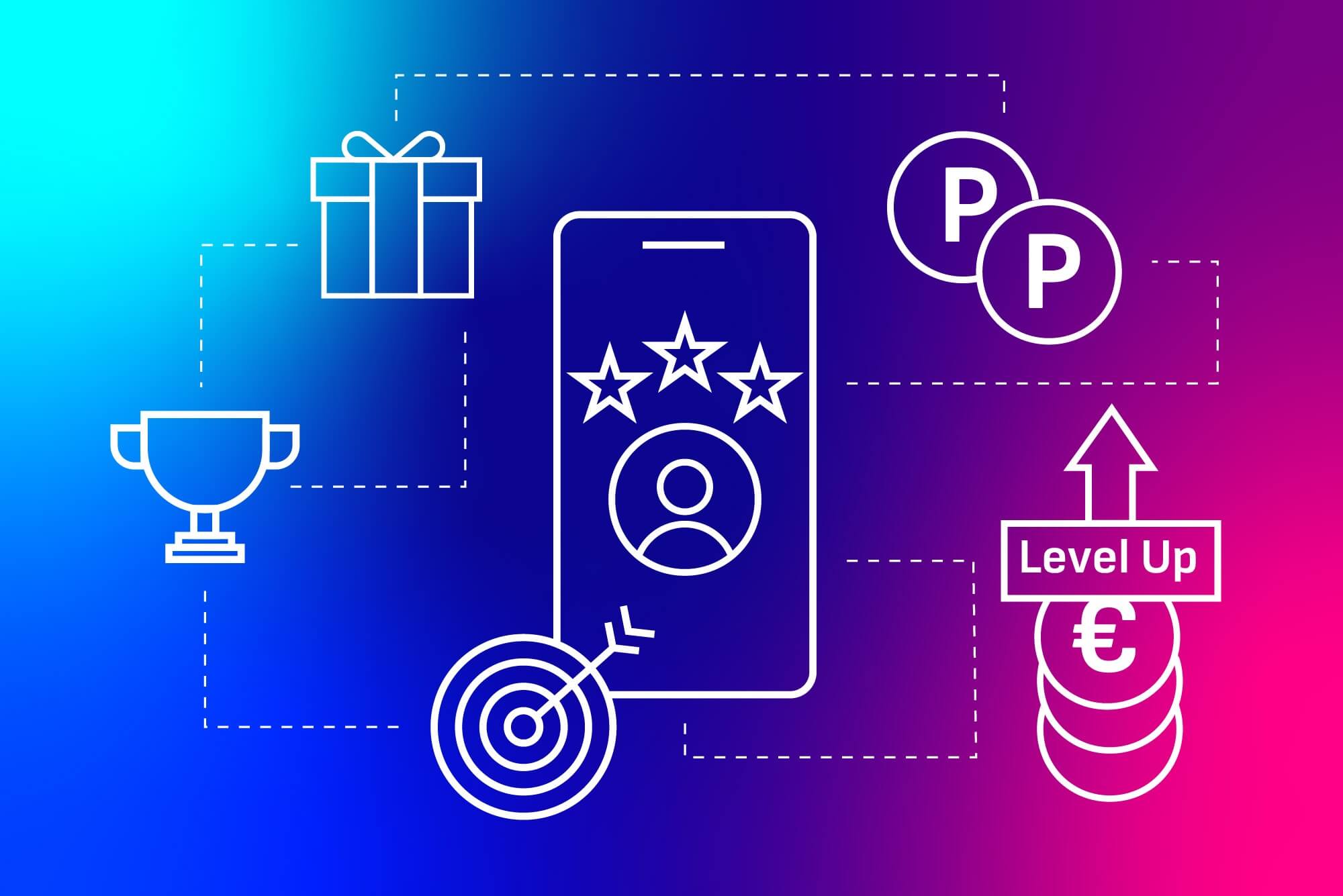
Points incentivize repurchases, status models reward frequent travelers, and coupons create situational purchase impulses. For rest stops, this combination is particularly effective because it addresses both spontaneous and recurring visits. A flexible set of rules is crucial, one that, for example, values refueling differently than food, showers, or EV charging.
Wallet Pass or App? The Right Entry Point Determines Conversion
In the rest stop context, a native app isn't always the best first step. Many guests don't want to install a new app while on the road. A digital customer pass in Apple Wallet or Google Wallet is usually much more accessible. For transient target groups, Wallet is often the more efficient identification point. For those who want to delve deeper, here's an overview of App-first Loyalty and suitable entry models.

Marketing Automation and Location-Based Engagement
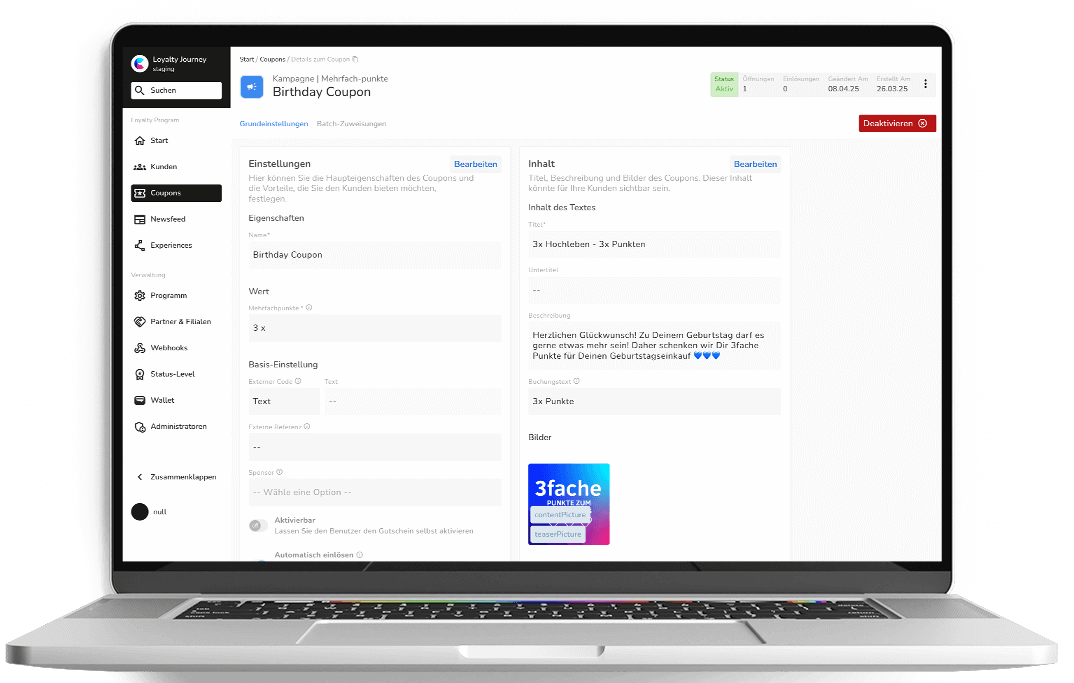
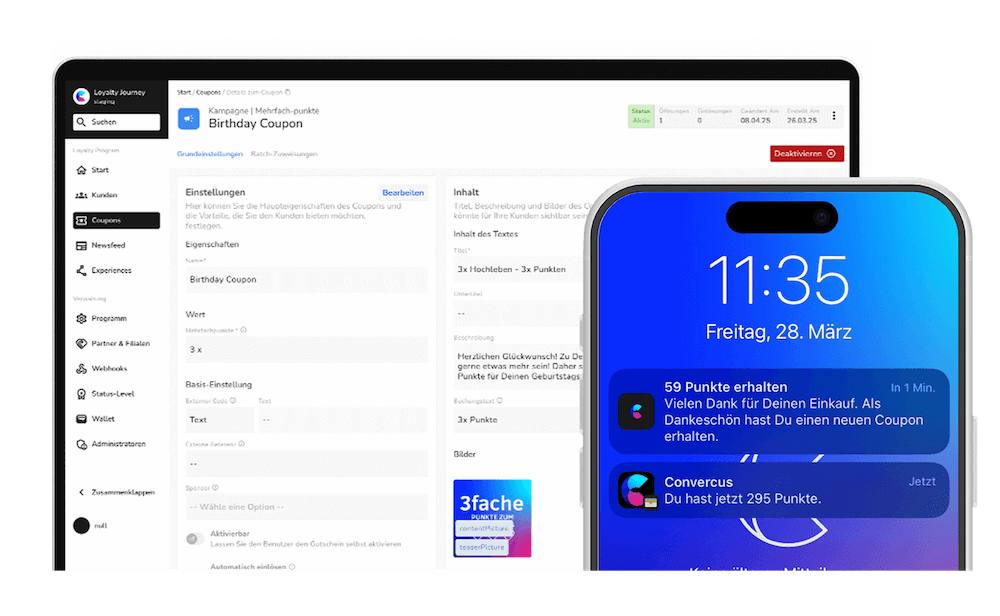
Good loyalty software reacts to behavior, not just schedules. A welcome coupon can automatically follow the first visit, an upgrade after three charging stops, or a re-engagement prompt if activity ceases. Marketing automation transforms visit data into actionable measures. For rest stops, geofencing and trigger logics are also relevant, provided that consents are properly obtained. More on this topic aligns with Engagement and Marketing Automation as well as strategies to win back customers .
Reporting with the Right KPIs
Not every metric is useful in the rest stop context. More important than mere registrations are network-wide return rates, cross-service usage, coupon redemption, revenue per charging stop, and the proportion of identified guests. Only these KPIs make the business case robust and help identify real connections between refueling, dining, shopping, and EV charging.
Integration into the Rest Stop IT Landscape: API-First is Not a Nice-to-Have
The biggest hurdle is rarely the loyalty strategy itself, but rather the existing system landscape. Gas station POS, gastronomy cash registers, shop systems, charging infrastructure, and potentially hotel software often come from different providers. Without a clean integration architecture, loyalty remains an isolated system.
API-First Connects Heterogeneous Systems Across All Touchpoints
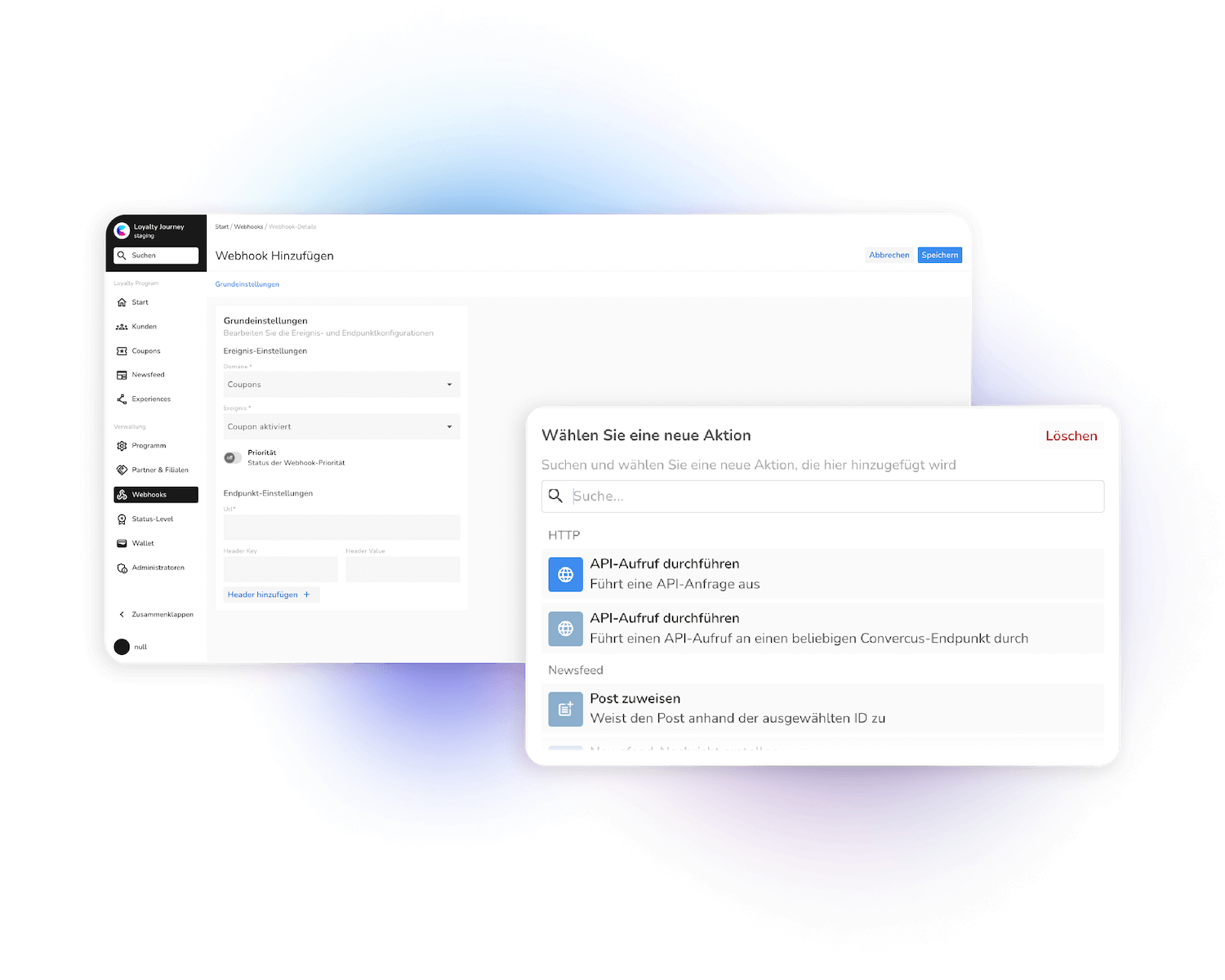
An API-First architecture makes it possible to cleanly consolidate data from POS systems, apps, wallets, or CRM and centrally control rules. This is particularly important for operators with many locations, as every additional custom logic increases complexity and costs. Scalability begins with standardized interfaces. That's precisely why focusing on Tech and Integration is so important when selecting a provider.
Franchise, Concession, and Operator Roles Must Be Technically Mappable
Rest stops often operate under multi-level models: concessions are awarded by the federal Autobahn GmbH, while operational areas can be managed by operating companies, franchise partners, or leaseholders. Loyalty software must precisely map rights, billing, and reporting according to roles, otherwise the rollout will fail due to organizational issues rather than technology.
Properly Implement GDPR, UWG, and Location-Based Data
For personalized offers and geofencing, data protection and consent management are central. The processing of personal data typically involves Art. 6 Para. 1 GDPR, information obligations from Art. 13 GDPR, Privacy by Design according to Art. 25 GDPR, and security measures according to Art. 32 GDPR. For promotional push notifications, robust consent is indispensable; depending on the technical implementation, § 25 TTDSG may also be relevant. § 7 UWG must also be observed for electronic advertising.
Practical Examples: Which Loyalty Mechanisms Really Work for Travelers
Rest stop customers are not homogeneous. Rolling out the same mechanism for everyone loses relevance. Successful programs differentiate by usage patterns, not just revenue. Three segments are particularly important.
Use Case 1: Commuters and Frequent Drivers
This target group responds to reliability, time savings, and status. Express benefits, defined thresholds for upgrades, or recurring benefits like a free coffee after the Xth visit in a month are useful. Status models are more effective here than one-off discounts, because they reward routines and encourage network usage.
Use Case 2: Vacationing Families and Occasional Travelers
Here, emotional and playful mechanisms work better: travel challenges, collection campaigns across multiple locations, or small rewards for combining food and shop purchases. Gamification turns a stopover into a positive brand experience, without the logic needing to be complicated.
Use Case 3: Professional Drivers and Truck Drivers
This user group primarily wants practical benefits: warm meals, showers, parking, reservations, or recurring routine advantages. For professional drivers, utility matters more than experiential staging. If B2B or fleet logics are also integrated, a particularly strong loyalty model for regular routes emerges.
First-Party Data instead of Third-Party Program Dependence
Multi-partner programs can be a useful component, but they are rarely a complete strategy. Those who want to develop rest stops into mobility hubs need their own data, their own segments, and their own control. First-party data is the foundation for personalization, measurability, and data sovereignty.
Especially for operators who want to integrate fueling, shop, gastronomy, and charging, a modular platform makes sense. Convercus is relevant here because the solution combines Loyalty Engine, Couponing, Engagement, and API-First integration, and has already scaled in omnichannel scenarios with 40M+ loyalty accounts, 116M+ transactions, and 22M+ redeemed coupons. For operators in the mid-market and enterprise segments, this is an important indicator of enterprise performance without having to commit to a large suite.
Anyone who wants to increase customer loyalty should therefore not just ask about discounts, but about the ability to recognize and react to behavior across channels.
How Rest Stops Can Pragmatically Start with Loyalty Software
The best entry is rarely a big bang. In practice, small, clearly defined pilot cases work significantly better. A phased rollout reduces risk and accelerates internal acceptance.
- Start at EV charging locations, because digital interaction and longer dwell times are already present there, and the use case for couponing is particularly clear.
- Use receipt QR codes or Wallet Pass, to identify guests without requiring an app and to make transactions usable even in heterogeneous POS environments.
- Scale only after validated KPIs, for example, when redemption, return rate, and cross-service usage show which mechanisms actually work within the network.
This way, a robust loyalty architecture is gradually built that is organizationally, technically, and economically viable.
Conclusion: Loyalty Software Transforms Rest Stops from a Stop into a Recurring Touchpoint
Rest stops are long since more than just fuel and restroom stops. With e-mobility, digital infrastructure, and new operator concepts, they are becoming mobility hubs. This is precisely why loyalty software becomes a strategic lever: It identifies anonymous guests, connects services, creates first-party data, and makes additional revenue measurable.
If you want to build a network-capable loyalty program for rest stops, service areas, or truck stops, Convercus is an obvious option for mid-market and enterprise operators. The combination of Loyalty Engine, Couponing, Engagement, and an API-First approach is particularly well-suited for complex omnichannel environments. Schedule a personal live demo with a loyalty expert.
FAQ
Do rest stops really need their own loyalty program?
Yes, if data sovereignty, personalization, and cross-location control are important. A proprietary program creates first-party data and transforms individual transactions into a manageable customer relationship. Multi-partner programs can supplement this, but usually do not fully replace it.
Does loyalty at rest stops also work without a dedicated app?
In many cases, it even works better to start. Wallet passes and QR-based identification significantly lower the entry barrier and are well-suited for spontaneous travelers. An app becomes particularly powerful when additional services like journey features or more intensive communication are planned.
How complex is the implementation of loyalty software?
That primarily depends on the system landscape and the number of operator roles. With a pilot at selected locations the effort can be kept manageable, and implementation can be significantly accelerated. Starting with EV charging, shop, or gastronomy with clearly measurable KPIs is particularly sensible.
Is location-based targeting GDPR-compliant?
Yes, if the legal basis, transparency, and security are properly implemented. Clear consents are important, comprehensible information according to Art. 13 GDPR, as well as technical and organizational measures according to Art. 32 GDPR. For app tracking or similar technologies, § 25 TTDSG may also be relevant.
Does this work with our existing POS system?
Often yes, if the loyalty software is designed API-first and offers flexible integration paths. Especially with heterogeneous POS landscapes interfaces, middleware logic, or receipt QR models are helpful. It is crucial that identification, transaction import, and rule sets work together seamlessly.
How can one practically start with the first location?
Ideally with a clearly defined use case, for example, digital couponing at the charging park or a wallet-based customer card in the food sector. A small, clearly measurable pilot provides insights faster than a nationwide rollout without a learning phase. Afterwards, the program can be systematically expanded to include additional services and locations.


- 5x Return on Investment
- 80% Customer Identification
- 8x Customer Interaction
- +274% Repurchase Rate