










The topic in brief
- Every additional return visit counts. In the hairdressing market, with an average of about 5.2 visits per year and high new customer churn, retention is often the fastest revenue driver.
- Loyalty is more than a digital punch card. A program only becomes truly effective when visit frequency, product sales, reactivation, and customer data are systematically brought together.
- Scalability is crucial for chains and franchise systems. Centralized customer profiles, API-first integration, marketing automation, and GDPR-compliant processes are more important than mere bonus logic.
- Convercus is a suitable software for loyalty in multi-location environments. The platform combines loyalty, couponing, engagement, and integration for businesses that want to build professional and data-driven customer loyalty in the hairdressing sector.
Why customer loyalty is crucial for hair salons
Loyalty software for hair salons is no longer a nice-to-have, but a response to a market simultaneously facing cost pressure, staff shortages, and declining visit frequency. Especially in the hairdressing industry, growth isn't just about acquiring new clients; it's primarily about the ability to systematically bring existing clients back to the salon, encourage additional purchases, and prevent appointment gaps.
The Hairdressing Industry in Numbers: High Competitive Pressure, Little Buffer
Approximately 80,500 hair salons face a highly fragmented market in Germany. Alongside numerous single-person salons, there are only a few chains and multi-branch systems, which are particularly relevant for scalable loyalty programs. Concurrently, the industry's taxable revenue recently stood at approximately €7.07 billion, while the number of employees has significantly declined since 2017. This exacerbates pressure on capacity utilization, productivity, and repeat visit rates.
- Many salons have to operate with rising wage, energy, and rent costs and are less able to absorb setbacks.
- Local competition is intense because clients usually choose between a few salons in their immediate vicinity.
- Additionally, for chains and franchise systems, customer loyalty must operate across all locations and not be dependent on individual staff members.
The 50% Problem: Why Half of All New Clients Don't Return
The approximately 50% one-time visit rate is particularly critical for hair salons: half of all new clients don't return after their initial visit. Without a structured loyalty program, many businesses only recognize this pattern when their chairs remain empty. Even more problematic is that it's often impossible to determine whether the client churned due to price, service, a lack of reminders, or a change in stylist.
Declining Visit Frequency Makes Retention More Valuable Than Reach
On average, clients only visit the hairdresser about 5.2 times per year. If the interval between two appointments becomes only slightly longer, several visits per location are quickly lost over the course of a year. With an average female client receipt of €72.28, it immediately becomes clear why systematic customer retention and robust customer retention software in the salon are not just marketing topics, but direct revenue drivers.
What Loyalty Software Can Do for Hair Salons – and What It Can't
A modern loyalty system doesn't replace personal connections, it makes them measurable, scalable, and transferable across all touchpoints. The biggest misconception in the industry is to equate loyalty solely with discounts or digital stamp cards. Software only becomes truly effective when it consolidates visit intervals, client history, consents, product interests, and branch data.
Stamp Card vs. Digital Loyalty System: The Crucial Difference
An analog stamp card only rewards the transaction, a digital loyalty software guides behavior before the next visit. It can automatically send reminders, create segments, deliver personalized benefits, and show which strategies truly drive repeat purchases. Especially in salons with multiple locations or changing teams, this is the difference between a nice idea and robust growth logic.

Key Loyalty Strategies for Salons at a Glance
Not every strategy fits every salon goal. For hair salons, approaches that influence visit frequency, product sales, and referrals are particularly relevant.
- A points system is suitable when services and retail products are to be incentivized together.
- A frequency bonus is useful when a client should return within a defined timeframe, for example, for color, glossing, or a trim.
- Status levels create incentives for regular visits and higher spending, without having to discount every interaction immediately.
- Referral rewards professionalize word-of-mouth and make the most important acquisition channel in the salon controllable.
- Couponing is ideal when no-shows, slow weekdays, or product sales are to be specifically influenced.
Which Strategy Fits Which Goal?
The best loyalty logic always addresses the bottleneck. If your problem is declining frequency, different triggers are needed than for weak product sales or low new client retention.
Calculation Example: What a Loyalty Program Can Specifically Bring to a Hair Salon Chain
The economic impact of loyalty is often underestimated in the hair salon industry, because many programs are only conceived as digital discount cards. However, as soon as visit frequency, reactivation, and cross-selling are actively managed, the business case can be modeled with astonishing precision. For decision-makers, this is precisely what's relevant: not just attractive app screens, but robust revenue logic.
Scenario: 50 Branches, 25,000 Visits Per Month
Let's take a hair salon chain with 50 locations and a total of 25,000 visits per month, with an average receipt of €72. Even small behavioral changes within the existing client base have a greater impact here than pure new client acquisition campaigns. This is because acquisition costs are rising, while additional visits from existing clients are usually achievable with significantly less marketing effort.
Leverage 1: One Additional Visit Per Year Noticeably Impacts the Revenue Base
If loyalty increases the visit frequency from 5.2 to 6.2 visits per year, this roughly corresponds to one additional visit per active client. With 25,000 clients and an average receipt of €72, this translates to approximately €1.8 million in additional annual revenue. This example demonstrates why frequency-based incentives in the salon often have a stronger impact than blanket discounts.
Leverage 2: Better New Client Retention and Increased Product Sales
If the new client retention rate increases from 40% to 55%, this can already mean additional revenue of over €561,600 over the course of a year. Additionally, there's the retail leverage: if suitable care products are personalized and offered at the right moment after an appointment, product sales improve even further. It's important to always view these calculation examples as guide values, as pricing structure, service mix, and branch performance vary greatly.
Hair Salon-Specific Loyalty Strategies That Go Beyond Collecting Points
The great advantage in the hair salon industry lies in the quality of client data. Few other service industries possess such specific information on preferences, routines, and recurring treatments. Precisely for this reason, loyalty in the salon should not be viewed as an isolated bonus program, but as a data-driven client engagement system.
Color Formulas, Hair Type, and Treatment History Are a Personalization Goldmine
Color formulas and service histories are highly relevant first-party data. Anyone who knows when a client last received a balayage, glossing, or color treatment and which care products they prefer can precisely time offers. Instead of a generic 10% voucher, a reminder for color refreshment with a suitable product recommendation is then delivered. It's precisely these strategies that differentiate general marketing from true relevance.

Reduce No-Shows and Specifically Increase Product Sales
No-shows in the salon are a direct loss of revenue. Loyalty can help here by rewarding punctual attendance, encouraging rebooking after the appointment, and reactivating at-risk clients in a timely manner. Simultaneously, care and styling products can be seamlessly integrated with the service: clients who purchase the appropriate home care after a keratin or color treatment don't just receive a discount, but meaningful added value aligned with their treatment.
For reactivation and follow-up communication , it's worth looking at structured client re-engagement. In the hairdressing environment, this is particularly effective because many clients don't actively cancel, but simply quietly churn. Software must make precisely this behavior visible.
Referral Marketing and Gamification Also Work in the Salon
Word-of-mouth can be digitally amplified, without appearing impersonal. Referral strategies, challenges, and status levels not only motivate repeat visits but also create opportunities for conversation between the brand and the client.
- A "Bring a Friend" logic is particularly suitable for local markets where trust and personal recommendations are crucial for purchasing decisions.
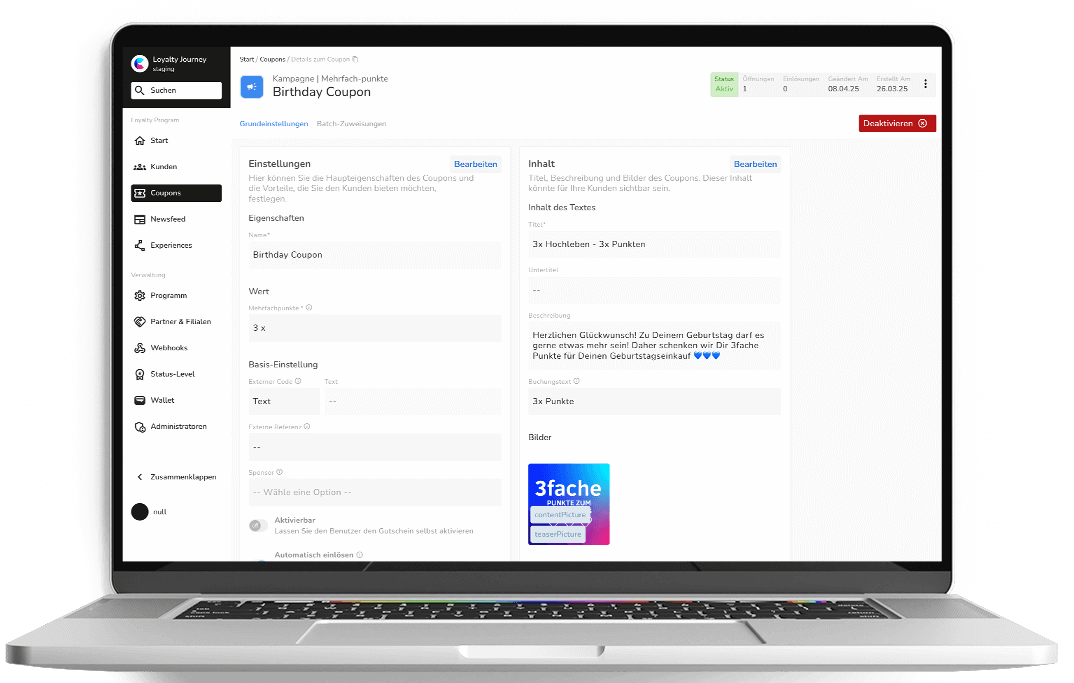
- Challenges like "3 visits in 4 months" promote regular frequency instead of one-time purchases.
- Status models make loyalty visible and replace short-term price promotions with recognizable benefits.
Loyalty for Hair Salon Chains and Franchises: Scalability Is Key
What still works manually in a single salon quickly falls apart in multi-location setups. As soon as clients switch between locations, employees rotate, or regional campaigns need to be centrally managed, customer loyalty requires a robust technical foundation. This is precisely where a typical salon function differs from true loyalty software.
Central Client Profile Instead of Branch Silos
Cross-location client recognition is the core benefit for chains. Only when history, preferences, consents, and status are centrally available can a client in Munich, Berlin, or Hamburg be recognized as the same person and addressed consistently. This reduces service friction and protects valuable knowledge from staff changes. For franchise systems, this is additionally important to ensure marketing standards and reporting are comparable across all locations.
Marketing Automation, App, and Integration Capabilities Must Work Together
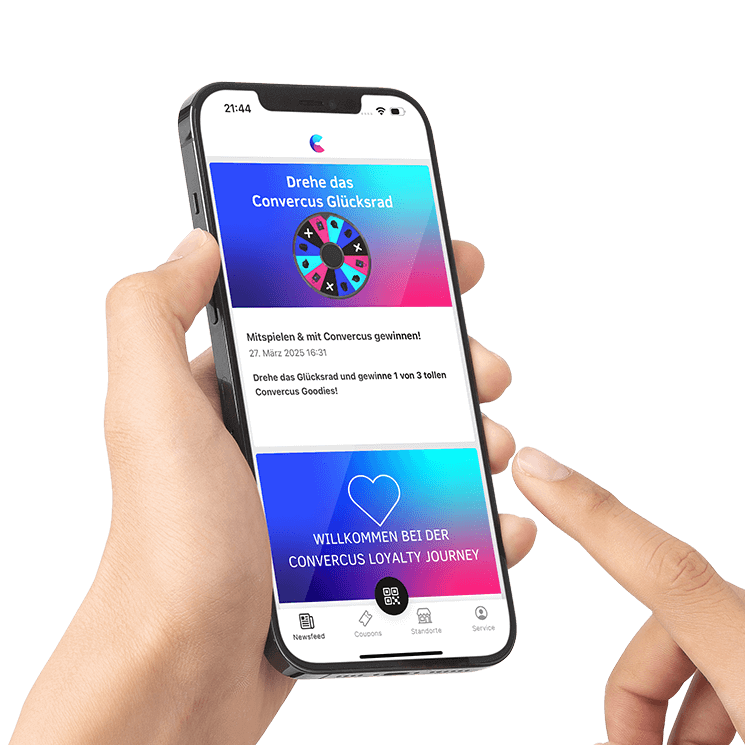
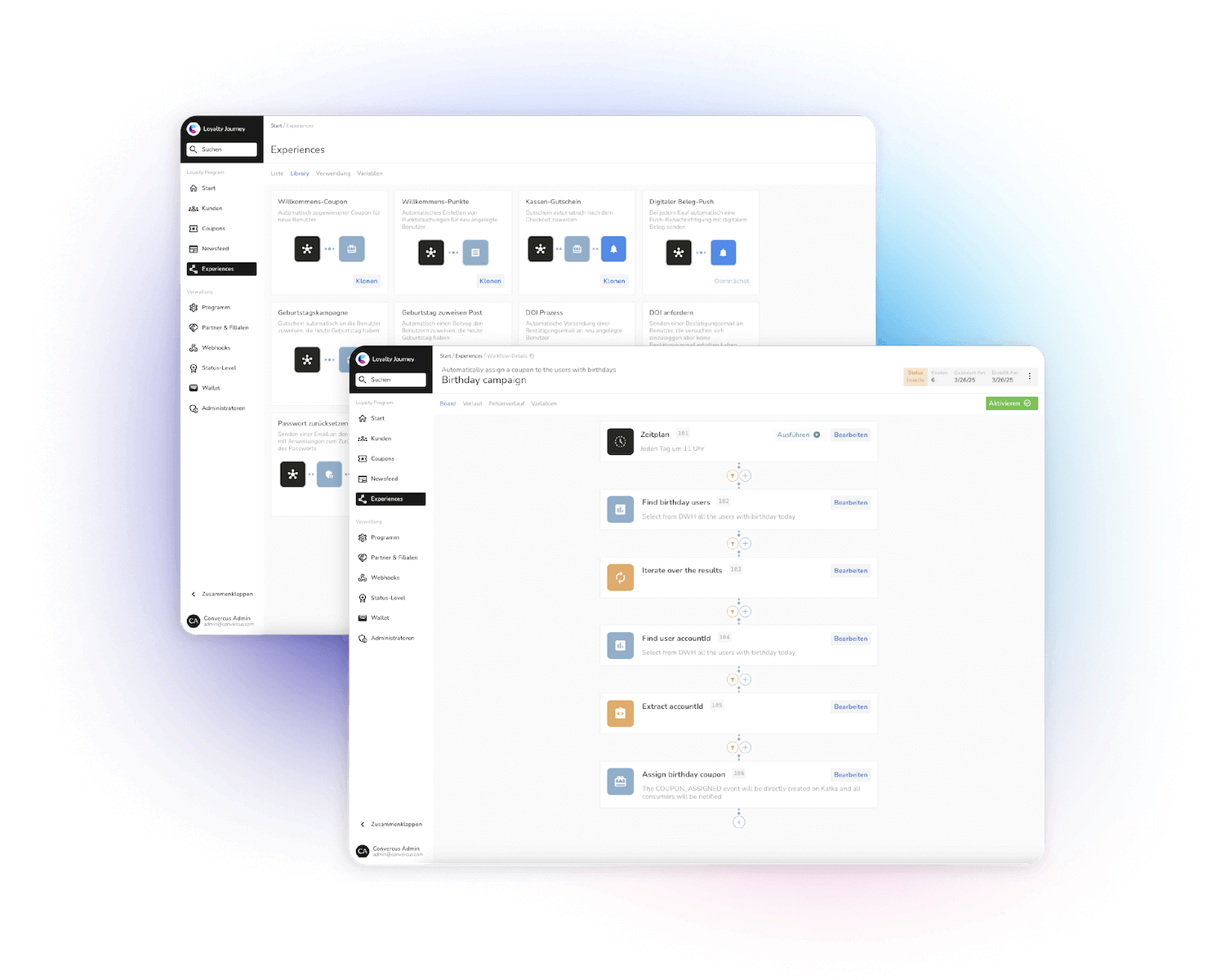
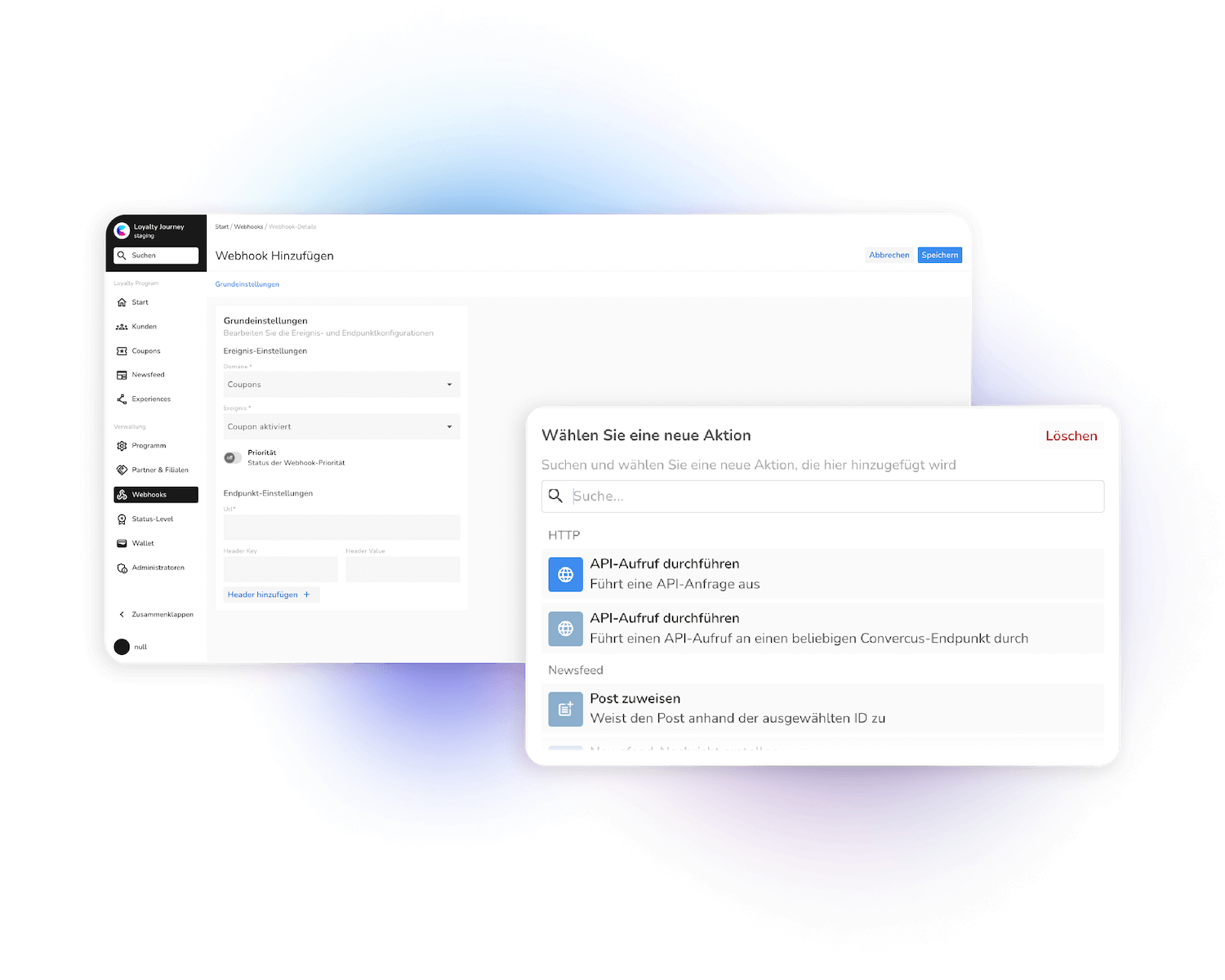
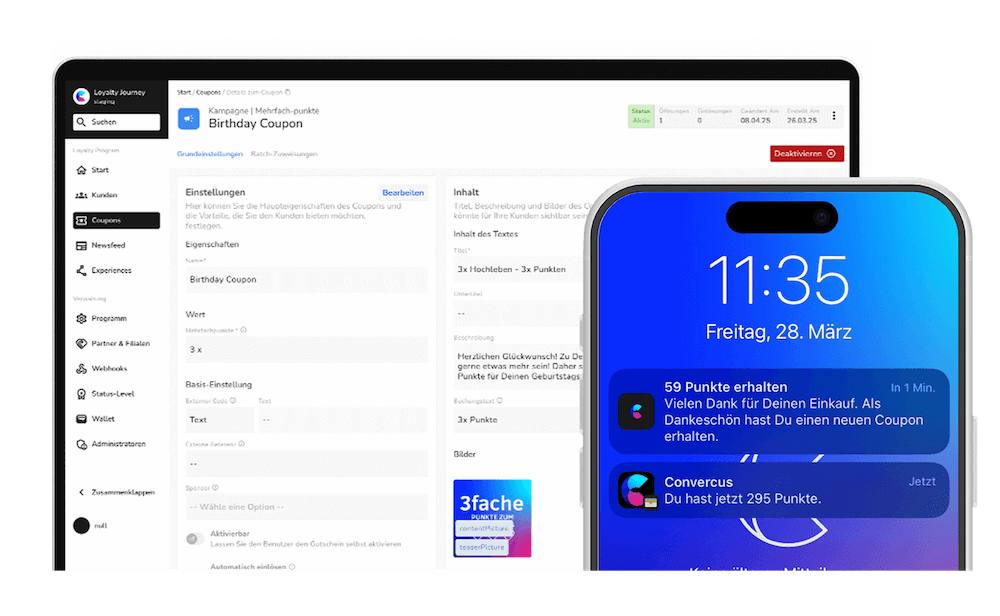
Enterprise loyalty in the hair salon segment requires API-first, omnichannel, and automation. A platform like Convercus Loyalty is relevant when hair salon chains or B2B2C models need more than a digital card: for example, central rule sets, couponing, cross-location profiles, a white-label app or wallet pass, and high-performance connections via Tech & Integration. In combination with Engagement , journeys can be automated, while an app-oriented approach can significantly increase interaction. Those who want to delve deeper into the topic of Mobile Customer Experience can find the appropriate strategic framework under App-First Loyalty .
The B2B2C Model: How Manufacturer Brands Can Use Salon Loyalty as a Platform
For manufacturers in the professional beauty market, loyalty is not merely a tool for end-customers, but a way to connect salons, stylists, and consumers within a shared ecosystem. This model is particularly exciting in the hair salon sector because service and product sales are closely intertwined. Those who understand the salon as a crucial moment for brand shaping can achieve significantly more through loyalty than through classic trade promotions.
Why the Model Is Strategically Interesting for Brands
Between brand, salon, and end-customer lie valuable, often unused data points. Manufacturers typically see sell-in and perhaps sell-out, but not reliably which end-customer needs which product after which treatment. A B2B2C program can close precisely this gap: salons are incentivized for product knowledge, sales, or training, while end-customers receive individual benefits for product purchases, services, and referrals.
How the Value Chain Works in Practice
Ideally, a closed loyalty system emerges: The brand provides benefits, content, or budgets; the salon chain integrates the strategies into POS, app, and consultation; and the end-customer experiences relevant advantages instead of generic promotions. The model becomes particularly powerful when couponing, service history, and product recommendations converge. This way, the sale of home care is not perceived as an upsell, but as a logical continuation of the treatment.
What to Look for When Choosing Loyalty Software
The selection of loyalty software in the hair salon market is always also an architectural decision. Anyone who only purchases an attractive frontend solution but fails to properly consider data, processes, and branch logic creates additional effort instead of true client loyalty. For decision-makers, therefore, not only features but also integration capability, compliance, and rollout suitability are crucial.
API-First, rollout capability, and clear KPI logic
It's important to have software that doesn't replace existing systems but intelligently connects them.. This includes connections to POS, appointment processes, CRM, app or wallet components, as well as clear rules for status, points, coupons, and reactivation. For chains, it's also crucial whether a pilot can be smoothly rolled out to 10, 50, or 100 locations and whether KPIs such as visit frequency, loyal customer rate, redemption rate, no-show risk, and product share are centrally measurable.
GDPR, UWG, and cash register regulations are not minor issues.
Customer data in salons is sensitive and clearly regulated by law.. Relevant minimum requirements include, in particular, the principles from Art. 5 GDPR, a viable legal basis under Art. 6 Para. 1 GDPR, transparent information under Art. 13 GDPR, and a data processing agreement under Art. 28 GDPR with the software provider. For promotional emails and SMS in Germany, §7 Para. 2 No. 3 UWG is also relevant; the well-known existing customer privilege from §7 Para. 3 UWG only applies under strict conditions. As soon as loyalty data is linked with cash register transactions, §146a AO, the KassenSichV (Cash Register Security Ordinance), and the technical security device in the cash register environment should also be considered.
Migration and operational implementation must be realistically planned.
Many chains wisely start with a pilot, before all branches are converted. It is crucial whether existing customer data, loyalty card logic, or old bonus rules can be migrated and how deeply salon staff are integrated into the new process. Good software reduces complexity at the cash register and in service, instead of creating new hurdles.
Conclusion: Loyalty Software for Hairdressers is a Growth Strategy.
Those who only think of customer loyalty in the hairdressing market as a digital punch card are missing out on a lot of potential.. Key factors are visit frequency, reactivation, product sales, no-show reduction, and the intelligent use of first-party data across all touchpoints. Especially for hairdressing chains, franchise systems, and B2B2C models, this requires a platform that not only manages rewards but also integrates processes, data, and communication.
If you want to professionally scale customer loyalty in your salon,, Convercus is an obvious choice for loyalty, couponing, and engagement in demanding multi-location environments. It's best to arrange a personal demo and check which loyalty mechanism suits your chain structure, KPIs, and system landscape.
FAQ
How do I practically start a loyalty program in a hair salon?
It's best to start with a clear goal,for example, higher visit frequency, better new customer retention, or increased product sales. Then, define a simple mechanism, choose a pilot location or region, and measure key figures such as repeat visits, redemption, and average receipt value from the outset.
How complex is the implementation of loyalty software?
. A simple start with a digital customer card and basic rules is implemented much faster than a cross-location program with POS integration, app, couponing, and automated journeys. For chains, a pilot is almost always recommended before a full rollout.Does this work with our existing POS or cash register system?
In most cases, yes, if the software is designed for integration.
. Crucial factors are clean interfaces, clear data flows, and the question of which events from the cash register process should be used for loyalty. Therefore, before selection, it should always be checked which data from POS, appointment processes, and CRM are actually available.Can loyalty software be implemented in the hairdressing market in compliance with GDPR?
Yes, but only with a sound data protection concept.
. In particular, you need transparent information, an appropriate legal basis for processing, documented consents for marketing, and clear roles between the salon, potentially the head office, and the software provider. Data minimization is especially important for sensitive preference data.How much does loyalty software for hairdressers cost?
Costs vary greatly depending on company size and functional scope.
. A local bonus program for a single salon is completely different from a platform for 50 branches with an app, couponing, reporting, and central control. Therefore, for decision-makers, not only the license price should matter, but also the expected effect on frequency, retention, and additional revenue.Can we migrate an existing loyalty program or old punch cards?
Migration is often possible and frequently makes sense.
. Existing points, statuses, or customer accounts can often be transferred if data quality and rules are well-documented. It is important to communicate the transition effectively so that loyal customers experience the change as an improvement and not as a fresh start without recognition of their previous loyalty.


- 5x Return on Investment
- 80% Customer Identification
- 8x Customer Interaction
- +274% Repurchase Rate
.png)


.png)