











The topic in brief
- Loyalty software is a growth driver in toy retail. It helps recognize seasonal buyers, link online and in-store purchases, and build first-party data for relevant engagement.
- The industry needs more than a standard points system. Successful programs consider both parents and children, utilizing birthday mechanics, gamification, couponing, and age-based personalization.
- Omnichannel, data protection, and real-time are mandatory. POS, online shop, wallet pass, or app must converge, while family and children's data are processed in compliance with GDPR and clear rules.
- Convercus is a suitable software for loyalty in toy retail. The platform combines Loyalty Engine, couponing, engagement, and API-first integration for scalable customer loyalty in brick-and-mortar and digital retail.
Why Loyalty Software for Toy Stores is Now Strategic
Loyalty software for a toy store will no longer be a nice-to-have in 2026, but a lever for revenue, data quality, and omnichannel engagement. The German toy market is back on a growth trajectory, reaching approximately €4.5 billion in 2025. At the same time, purchasing behavior is shifting significantly towards digital channels: over 50% of toy purchases now occur online. For brick-and-mortar retailers, this means double pressure: they need to excite customers in-store and then recognize them across all channels.
The market is growing, but value creation is shifting
More growth doesn't automatically mean more loyalty. According to Circana, the market grew by about 4% in 2025, but the number of brick-and-mortar toy retailers has significantly decreased in recent years. Those who rely solely on walk-in customers, print brochures, or analog stamp cards risk losing out to marketplaces, large chain stores, or the next online purchase. This is precisely where modern customer loyalty software comes in: It transforms individual purchases into a manageable customer relationship.
The biggest challenges in the daily operations of a toy store
- Without customer recognition, Christmas often remains a one-off effect. If seasonal shoppers aren't identified after the holidays, they can't be specifically re-engaged in spring or for their birthdays.
- Showrooming costs margin and conversion rates. Products are viewed and explained in-store, but later purchased online from the cheapest provider.
- The customer journey is fragmented. In many businesses, in-store purchases, online shops, and mobile interactions still run on separate systems.
- Communication rarely hits the right occasion. Without a data foundation, birthdays, school enrollment, holidays, or age transitions are not properly addressed.
Customer expectations have also clearly risen: According to the 2026 Loyalty Report, 87% of consumers expect loyalty benefits that can be redeemed immediately, and 74% would switch from physical to digital programs. For toy retailers, this is an opportunity to differentiate themselves not by price, but by relevance and experience.
What Loyalty Software Must Deliver in the Toy Retail Sector
In toy retail, a generic bonus program is rarely sufficient. The industry has unique characteristics not found in other retail segments: the dual target group of parents and children, highly fluctuating seasonality, age-dependent assortments, and the growing 'kidult' segment. Good loyalty software must translate this logic into rules, data models, and campaigns.
Convince Parents, Delight Children
The purchasing person and the consuming person are often not identical. Parents respond to immediate benefits, easy redemption, birthday vouchers, and relevant recommendations. Children respond to playful elements, collection mechanics, surprises, or small challenges. A good program combines both: a family account offering rational added value for adults and emotional engagement for the younger generation.
Lifecycle Marketing Instead of a Shotgun Approach
In toy retail, a child's age is a central personalization factor. A 2-year-old child needs different offers than an 8-year-old school child or a teenager. Therefore, loyalty software should use age groups, interests, and purchase history to precisely tailor product recommendations and campaigns. Legally, data must be collected for specific purposes and sparingly, according to Art. 5 GDPR , consents must be obtained transparently according to Art. 6 and Art. 7 GDPR , and information obligations from Art. 13 GDPR must be fulfilled.

Consider the Kidult Segment and Seasonality
Adult collectors and nostalgia buyers are no longer a niche topic. The kidult segment is one of the most dynamic growth drivers in the toy market. This target group responds less to standard discounts and more to status benefits, early access, limited items, and community-driven experiences. At the same time, retailers must actively manage seasonality: not just Christmas, but also Easter, school enrollment, the start of holidays, and children's birthdays should be part of a structured annual loyalty plan.
The Most Effective Loyalty Mechanics for Toy Stores
The best loyalty software for a toy store combines rewards, activation, and personalization. Pure earn-and-burn models are rarely sufficient today. Successful programs combine points, status logic, couponing, and playful interactions in a way that families quickly see value and are eager to return.
Point Systems and Tiered Programs
A point system works well when its benefits are quickly understandable and immediately tangible. Especially in toy retail, benefits should not only become visible after many months. Useful thresholds are those adapted to typical shopping baskets, such as instant coupons, bonus points for multiple purchases, or status benefits for recurring family purchases. Those who only collect long-term often lose momentum in a seasonal category.
Gamification is a Natural Match for Toy Retail
Few retail categories are as well-suited for gamification as toys. Digital sticker albums, challenges, badges, themed worlds, or seasonal missions directly translate the product experience into loyalty. International benchmarks show that gamified programs sometimes lead to higher engagement and significantly more interaction. For the German market, these values should be read as benchmarks, but the strategic direction is clear: playful engagement fits here not as an add-on, but as a core mechanic.
Birthday Club, Wallet Pass, and Couponing
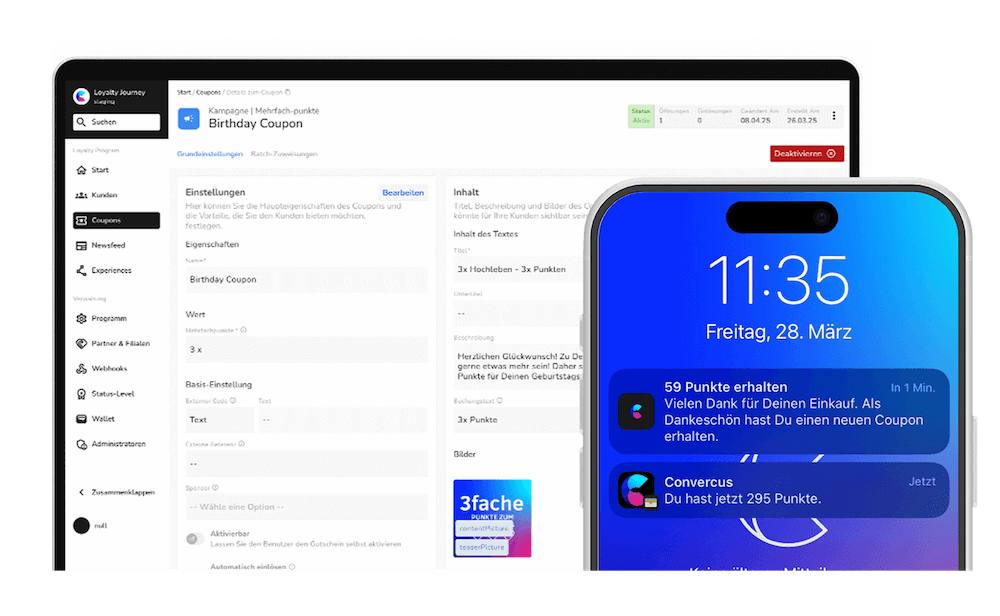
Birthdays are one of the strongest purchase occasions in toy retail. Birthday Club campaigns therefore perform exceptionally well because the occasion, assortment, and willingness to buy naturally align. Supplemented by digital couponing, a mobile customer card, or a Wallet Pass creates a program that is easily accessible even without a native app. Those who think app-first will find additional insights in this article on App-first Loyalty.

ROI: What Does Loyalty Software Truly Deliver in Toy Retail?
Loyalty must not only be appealing, but also profitable. This is particularly important in toy retail, as high seasonal peaks, personnel costs, and price pressure leave little room for measures without a clear business case. The relevant focus is therefore not on mere registrations, but on economic KPIs along the customer value chain.
The Metrics That Truly Matter
More important than the number of sign-ups are purchase frequency, active member share, average basket value, and retention rate. Additionally, coupon redemption rate, off-season revenue, reactivation rate, and Customer Lifetime Value are crucial. Especially for toy stores, it's interesting to see if Christmas shoppers make repeat purchases throughout the year and if families transition from single occasion purchases to regular buyers. Those who want to systematically increase customer loyalty will need reporting that consolidates stores, segments, and campaigns.
Simplified Calculation Example for a Chain Store
Even moderate improvements in average basket value create a significant revenue lever across many stores. The 2026 Loyalty Report can serve as a rough DACH benchmark, stating that members spend an average of 28% more. For a toy chain with 50 locations and 200,000 loyalty members, the following simplified scenario emerges:
The example is deliberately simplified, but it illustrates the magnitude. Not every program achieves this effect, but even smaller levers can have a strong impact if communication wastage decreases, print costs are replaced, and dormant buyers are specifically re-engaged. For the latter, the topic of customer win-back is relevant, for example, through birthday or reactivation coupons.
What Matters When Choosing Software
The difference between a good demo and a suitable platform often lies in the gap between a successful rollout and persistent project frustration. Especially in toy retail, decision-makers should not only focus on attractive frontends but also on the ability to seamlessly connect data, touchpoints, and rules. Because a program is only as good as its integration into daily operations.
Omnichannel and API-First are Mandatory
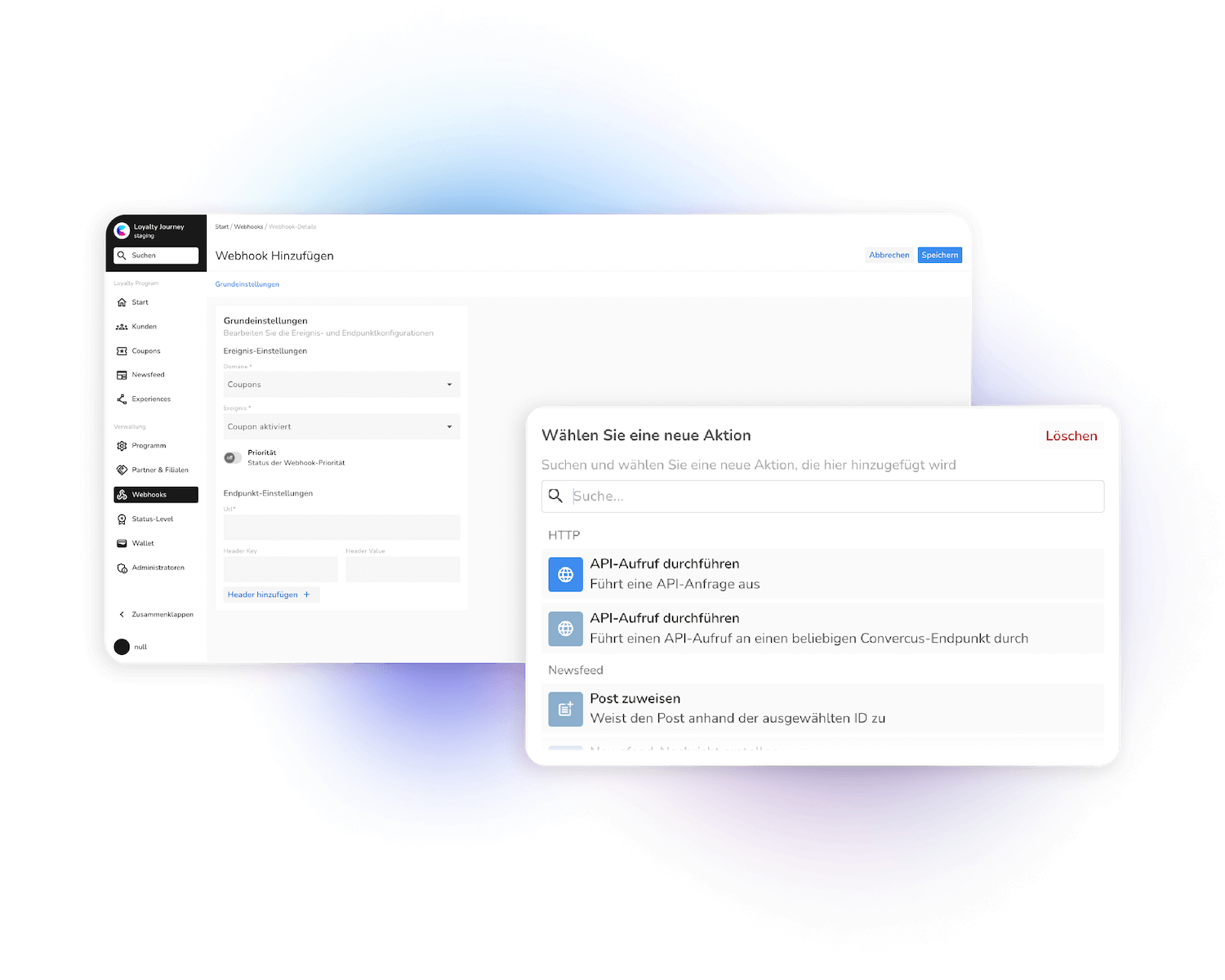
A loyalty solution for toy stores must integrate POS, online shop, mobile customer card, and campaign logic in real-time. If points are visible online but not at the checkout, the program has practically failed. The same applies to coupons, status benefits, or birthday offers. Technically, an API-first approach should therefore be chosen, which flexibly connects existing systems and reliably handles seasonal peaks. More on this can be found in the technical integration options of modern loyalty platforms.
Data Protection for Family and Children's Data
In the toy environment, data protection is not a marginal issue but a trust factor and decision criterion. In practice, the contractual partner should always be the adult account holder. Information such as a child's age or birthday may only be collected if it is truly necessary for the program and communicated transparently. Particularly relevant are Art. 5 GDPR for data minimization and purpose limitation, Art. 13 GDPR for information obligations, Art. 25 GDPR for Privacy by Design, and Art. 32 GDPR for technical and organizational security measures. For consents and services related to minors, Art. 8 GDPR must also be observed.
Checklist for Software Selection
- The platform should accurately map family and multi-child scenarios. Only then can age logic, birthdays, and preferences be effectively utilized.
- Couponing and loyalty should work together within a single logic. Separate systems complicate birthday promotions, instant benefits, and reactivation campaigns.
- The software must react in real-time across all channels. Points, status, and coupons must be identically visible in-store and online.
- Reporting should connect stores, segments, and campaigns. Without this visibility, optimization remains pure guesswork.
- The provider should be able to demonstrate scalability and GDPR compliance. Especially before Christmas, stability determines acceptance within the company.
For retailers who want to combine a modular Loyalty Engine with Engagement and couponing, Convercus is particularly relevant as an API-first platform, because omnichannel scenarios, wallet passes, and flexible rule sets can be integrated without suite dependency.
From Punch Card to Digital Loyalty Platform
The introduction of loyalty software doesn't have to be a big bang. For toy stores, a phased rollout is usually more sensible: first program architecture, then technical integration, then automation and optimization. This reduces risks and ensures smooth adoption by sales, store, and marketing teams.
Phase 1: Define Goals, Rules, and Migration
It starts not with the app, but with the program design. Which purchases should be rewarded, which target groups are relevant, how quickly should benefits become visible, and which occasions are business-critical? In this phase, existing punch cards, old customer cards, or bonus data are also migrated. It's important to plan consent texts, data protection notices, and family logic at this stage.
Phase 2: Technical Integration and Pilot
A pilot in selected stores or regions creates robust learning curves. In the pilot, POS, online shop, and customer profiles are connected, coupon rules are tested, and employees are trained in handling. Especially in the toy retail sector, the pilot should deliberately include a relevant season or a clear occasion, such as Easter, back-to-school, or the Christmas run-up. This reveals whether real-time redemption, scans, and segmentation function reliably under load.
Phase 3: Automation and Year-Round Retention
The real value only emerges after the go-live. Then, a bonus program transforms into data-driven journeys: Birthday Club, reactivation of dormant buyers, triggers when moving into new age categories, or personalized seasonal campaigns. This is precisely where software-supported loyalty unleashes its greatest leverage. With Convercus, loyalty, couponing, and automated engagement can be combined in one platform, so marketing teams don't have to switch between individual solutions and can more quickly turn data into concrete activation.
Conclusion: Customer Loyalty Becomes a Competitive Advantage in Toy Retail
Today, loyalty software for a toy store is far more than a digital points system. It links stores, online shops, and mobile touchpoints, makes families and "kidults" recognizable, creates valuable first-party data, and helps develop seasonal buyers into year-round customers. Programs that combine immediate benefits, personalized couponing logic, birthday mechanics, and playful engagement are particularly effective.
Anyone looking to professionally build or modernize loyalty in toy retail should consider platform, process, and data protection together. If you want to explore how omnichannel customer loyalty, couponing, and engagement can be implemented in your business model, Convercus is a suitable next option. Learn more about the solution or request a personal live demo .
FAQ
Which loyalty software is suitable for a toy store?
A platform that combines family logic, omnichannel capability, and personalized campaigns is suitable. In toy retail, simple points management is rarely enough. Important features include POS integration, couponing, birthday mechanics, wallet pass or app, and flexible segmentation by occasions and interests.
How complex is the introduction of a loyalty program?
The effort depends less on the idea and more on the system landscape. A structured rollout with a pilot phase is usually significantly faster than a complete overhaul. Key factors are clear goals, clean data migration, and a solution that integrates into existing processes.
Can loyalty software be implemented in toy retail in a GDPR-compliant manner?
Yes, if data minimization, transparency, and clear consents are consistently implemented. Articles 5, 6, 7, 13, 25, and 32 of the GDPR are particularly relevant. For information concerning children or family-related data, it should always be clear who the contractual partner is and which data are truly necessary for the program.
Does this work with our existing POS system?
In many cases, yes, provided the loyalty solution is API-based. It's important that points, coupons, and status information can be synchronized in real-time between POS, shop, and customer data. Therefore, before making a decision, retailers should carefully examine the integration architecture and pilot approach.
What does loyalty software cost?
Costs vary depending on scope, number of users, touchpoints, and integration level. In the mid-market and enterprise environment, not only license costs but also implementation, rollout, operation, and success management are important. Ultimately, the ROI is relevant, i.e., whether higher purchase frequency, larger basket size, and reduced wastage clearly outweigh the investment.
Can we migrate an existing bonus program or punch card system?
Yes, migration is possible in most cases and often the most sensible starting point. Typically, this involves transferring existing accounts, points, or card numbers into a digital program. Crucially, this requires clean data cleansing and clear communication to existing customers so that the change is perceived not as a disruption, but as an improvement.
Gamification and birthday mechanics achieve the highest customer loyalty in toy retail.


- 5x Return on Investment
- 80% Customer Identification
- 8x Customer Interaction
- +274% Repurchase Rate
.jpg)
