








The topic in brief
- Cruise loyalty is not just a discount model: The biggest leverage lies in higher rebooking rates, increased onboard revenue, and more effectively usable first-party data throughout the entire guest journey.
- The industry needs different logic than retail: Infrequent, high-priced voyages, multiple onboard revenue centers, offline requirements, and global fleets make loyalty software in cruising significantly more complex.
- The architecture is crucial: Good platforms combine tier management, real-time earning, experiential rewards, marketing automation, and API-first integration without expensive system replacements.
- Convercus is relevant as loyalty software: If cruise lines are looking for a modular solution for a loyalty engine, couponing, and engagement, Convercus can be a suitable foundation for modern cruise programs.
Loyalty Software for Cruise: Why Cruise Lines Must Act Now
The cruise industry is growing dynamically, but many loyalty programs are not designed for this growth. In 2025, over 3 million Germans went on a cruise, making the German market one of the largest worldwide. At the same time, expectations for personalization, mobile services, and cross-brand benefits are rising. For cruise lines, this means a loyalty program can no longer just count sea days or manage a small booking discount. It must connect bookings, onboard revenue, app usage, excursions, and communication into a manageable customer journey.
In addition, there's a structural problem that many cruise lines are now openly experiencing: Status inflation devalues exclusive benefits. If top tiers grow lifelong but differentiation decreases, the program loses economic and emotional impact. This is precisely why providers are reforming their models, introducing re-qualification, or shifting the logic from stay-based to revenue-based signals.
A modern loyalty software for cruise lines must therefore do much more than just manage points. It becomes the infrastructure for Customer Lifetime Value, first-party data, and onboard revenue. Those who implement loyalty programs with the right technology today not only strengthen repeat bookings but also monetize the entire travel journey much more precisely.
What differentiates cruise loyalty from retail, hotel, and airline
The engagement gap between two trips
In retail, customers interact weekly; in cruising, often only 1–2 times per year. This long silence is precisely the core problem of many programs. Those who fail to deploy personalized touchpoints during this phase lose attention to other cruise lines, airlines, hotels, or OTAs. Cruise loyalty software therefore needs marketing automation, reminder logic, app-based incentives, and content streams that generate relevance even without a current booking.
Closed onboard ecosystem instead of simple transaction logic
Onboard, revenue is generated simultaneously across multiple revenue centers: dining, spa, retail, shore excursions, beverage packages, or entertainment. The economic leverage lies not only in repeat bookings but also in onboard spend. A suitable platform must therefore be able to map earn and redeem logic in real-time across various systems, rather than just rewarding an isolated booking process.
Global fleets, local compliance
Cruise programs are almost always international. This requires multilingualism, multi-currency, and clear data protection processes. For European cruise lines, in particular, Art. 5 GDPR, Art. 6 para. 1 lit. a and b GDPR, Art. 7 GDPR, as well as Art. 25 and 32 GDPR are central: data minimization, a robust legal basis, documented consent, Privacy by Design, and technical security. For service providers, Art. 28 GDPR is relevant; for international data transfers, Art. 44 et seq. GDPR. If apps connect tracking, wallet functions, or push mechanisms with end devices, then § 25 TTDSG should also be reviewed.

Program Landscape Overview: What AIDA, MSC, Royal Caribbean, Carnival, and TUI Cruises Show
The market clearly shows where cruise loyalty is heading. AIDA, MSC, Royal Caribbean, and Carnival represent four different answers to the same challenge: How does a program remain attractive, economically viable, and technically manageable? It is particularly insightful that not only are programs being reformed, but in some cases, complete reboots are necessary. TUI Cruises is the most visible example of this, as there is no active new loyalty program as of March 2026.
The most important insight from these examples
The industry is moving away from static benefit lists and towards dynamic tier management, greater revenue correlation, and stronger digital engagement. AIDA now awards sea miles for additional revenue, MSC aggressively uses Status Match for new customer acquisition, Royal Caribbean is building a vacation ecosystem across multiple brands, and Carnival is correcting the long-term consequences of an overstretched tier model. The crucial lesson is: Program design is now inextricably linked with software architecture.
What functions cruise loyalty software must cover today
Anyone selecting a platform today should not look for a "points tool" but rather for an operational loyalty infrastructure for pre-cruise, onboard, and post-cruise. Because it is precisely at the transitions between booking, travel, and post-communication that the greatest data and revenue losses occur. Good systems manage not only earn and burn but also segments, triggers, benefits, wallet passes, and personalized offers.
- Real-time earning across all revenue centers ensures that spending on dining, spa, excursions, or retail can be immediately utilized in profiles and campaigns.
- Fleet-wide guest profiles create a single customer record across ships, markets, distribution channels, and touchpoints.
- Dynamic tier management enables re-qualification, spend-based thresholds, and differentiated logic for first-time cruisers, repeat guests, and VIP segments.
- Experiential Rewards represent exclusive experiences such as priority services, events, or limited access, not just discounts.
- Marketing automation and engagement bridge the gap between two trips with triggers, challenges, referrals, and personalized communication.
- API-first integration reduces IT effort because reservation systems, POS, app, and CRM are integrated rather than replaced.
Status logic and rewards must be economically manageable
Especially in the cruise industry, a lifelong status model is often no longer sufficient. Sustainable programs combine exclusivity with manageable re-qualification. At the same time, experiential rewards often work better than pure price discounts in premium and vacation contexts, as they emotionally enhance the trip and put less direct pressure on margins.
Mobile loyalty is not an add-on, but the operational channel
When loyalty members use the app intensively, data quality and response speed increase. This is crucial for cruising, as offers change situationally. With engagement, couponing and approaches from app-first loyalty , pre-cruise offers, boarding impulses, and onboard campaigns can be orchestrated. The app thus becomes the link between brand, wallet, offer, and revenue.

The Business Case: Repeat Bookings, Onboard Revenue, and First-Party Data
The economic evaluation of loyalty software in the cruise industry is often too narrowly focused. Many cruise lines only calculate based on booking discounts or program costs. The actual business case arises from three levers simultaneously: a higher repeat booking rate, more onboard revenue, and better usability of first-party data for personalization. Additionally, a growing portion of additional revenue is booked digitally before the trip even begins. Those who connect this phase with loyalty logic monetize earlier and more predictably.
Example calculation for a cruise line with 500,000 passengers per year
Assuming the average booking value is €2,000 and the average onboard spend is €600. If a program increases the repeat booking rate by 5 percentage points from 30% to 35%, this results in 25,000 additional repeat bookings. This corresponds to approximately €50 million in additional booking revenue. If, at the same time, 200,000 active loyalty members spend an average of 25% more onboard, this generates an additional €150 in revenue per guest, totaling another €30 million. The combined leverage in this model is approximately €80 million in additional revenue. This is not a blanket guarantee, but a realistic magnitude for the strategic benefit.
Pre-cruise monetization is often the underestimated lever
If ancillary services are sold digitally before the trip begins, loyalty can be precisely applied: upgrades, beverage packages, spa slots, or excursions can be combined with segmented benefits. A cruise line thus gains not only revenue but also early behavioral data for personalization. Those who know before departure which guests prefer wellness, fine dining, or family excursions can manage onboard communication much more relevantly.
How cruise lines implement the rollout without system disruption
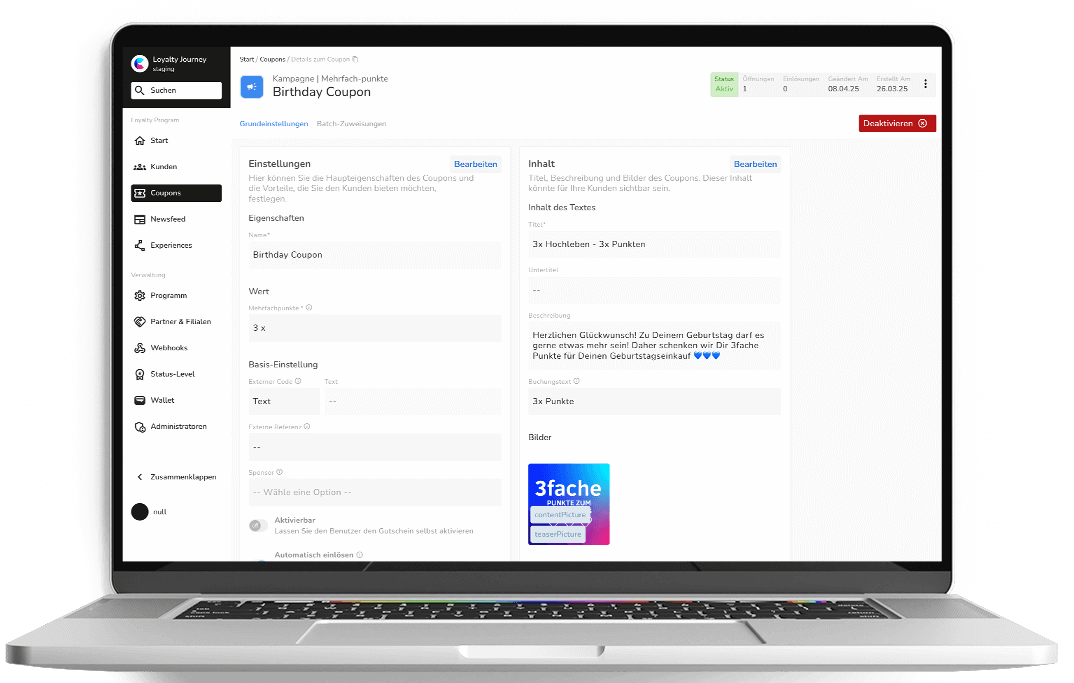
The biggest objection in IT and product teams is often: "Our system landscape is too complex." This is precisely why a no-rip-and-replace approach with API-first architecture is so important. Modern cruise loyalty software should be able to connect reservation systems, onboard POS, CRM, app, wallet, and reporting without core systems needing to be replaced. Depending on the maturity level, event-based connections, API calls, or even batch processes are appropriate. The key is that earn, tier, and campaign logic remain centrally manageable.
- Phase 1 begins with program design and defines which behavioral data should truly be used for earn, tier, and benefits.
- Phase 2 prioritizes integrations, usually starting with booking, customer data, POS, and mobile touchpoints.
- Phase 3 builds triggers and journeys for pre-cruise, onboard, and post-cruise, ensuring the program is not only technically live but also effective.
- Phase 4 optimizes based on KPIs such as repeat bookings, activation rate, redemption rate, additional revenue, and app usage.
What IT and Compliance should pay particular attention to
At sea, connectivity remains a real issue despite improved infrastructure. Offline capability, clean synchronization, and robust fallback processes are therefore more important than in many other industries. Equally relevant are rights and roles concepts, auditability, multi-tenancy, multi-currency, and low latencies for real-time cases. A solution is technically good if it not only scales but also remains stable in daily onboard operations.
Where Convercus makes sense for cruise lines
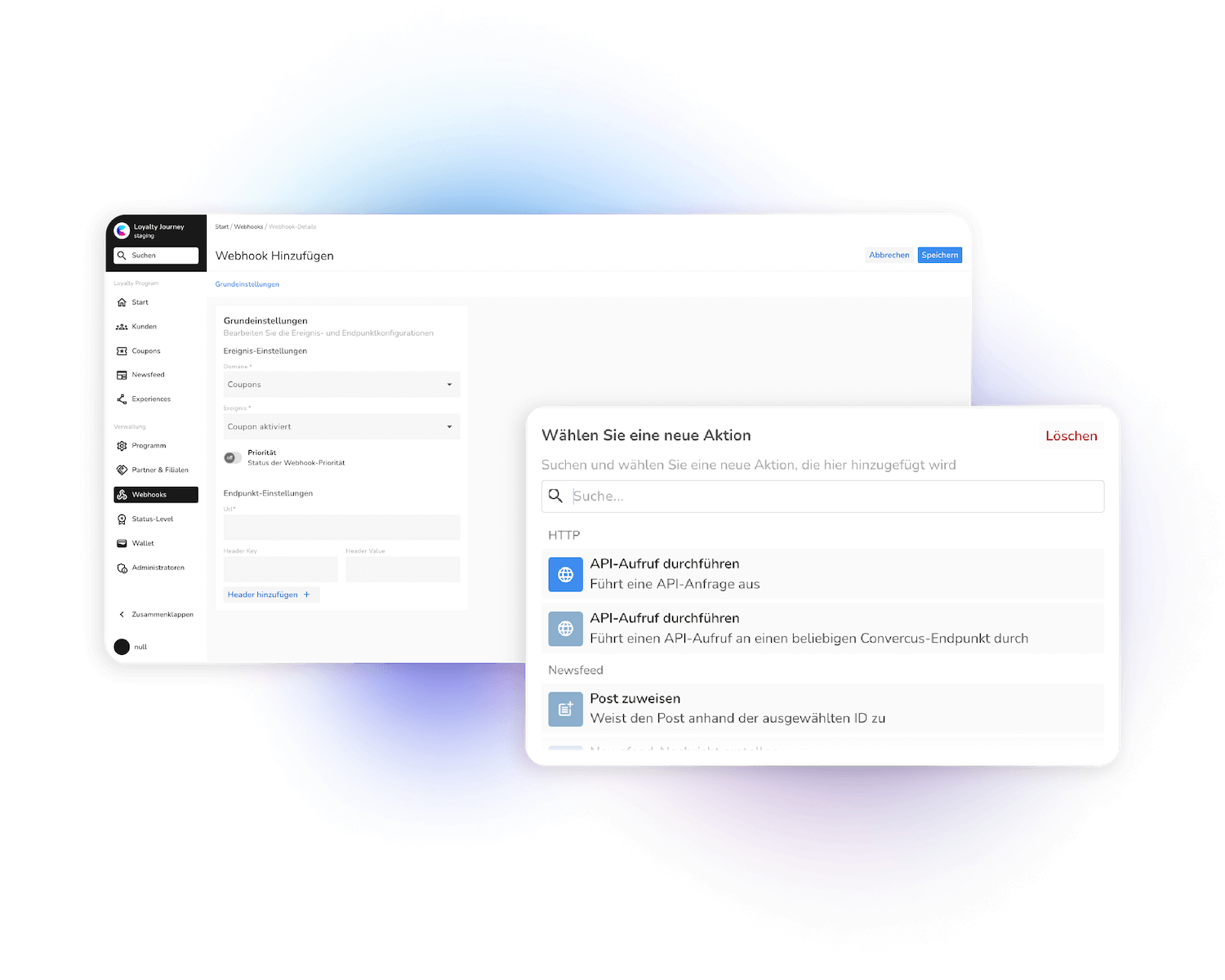
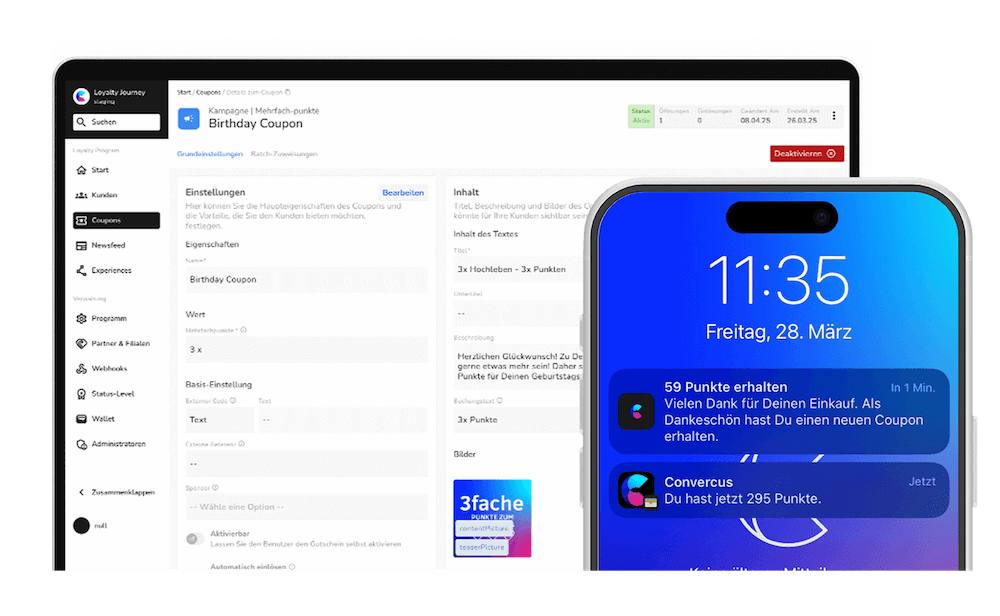
If you are looking for a modular platform instead of suite dependency, then Convercus as a Loyalty Partner particularly relevant where a loyalty engine, couponing, and engagement need to work together. The combination of Loyalty, Engagement and Tech & Integration is a good fit for cruise lines that want to implement complex program logic without rebuilding their entire system landscape. For app-centric journeys, it's also relevant that, according to Convercus, programs with a white-label app can achieve in some scenarios 8x higher customer interaction than models without app integration.
Conclusion: Modern Cruise Loyalty is Revenue and Experience Infrastructure
Cruise loyalty is evolving from a classic frequent traveler program into a networked growth platform. Today, what's crucial is not just points and status, but data, automation, and onboard monetization. Cruise lines must close the engagement gap between trips, actively manage status inflation, and integrate booking, app, POS, and communication into a single architecture.
When evaluating loyalty software for cruise lines, you should therefore focus less on feature lists and more on operational impact: How effectively can repeat bookings, additional revenue, first-party data, and experience quality be simultaneously increased? Convercus is a relevant option for this, if you are looking for a flexible, API-first loyalty platform that combines loyalty engine, couponing, and engagement. The most sensible next step is a concrete evaluation of your target architecture and program logic. Schedule a personal demo and see how your cruise program can be technically and economically re-positioned.
FAQ on Loyalty Software in the Cruise Industry
How complex is the implementation of a new loyalty program for a cruise line?
The effort primarily depends on the program logic and integration landscape.. If booking systems, POS, app, and CRM are already cleanly separated and accessible, a phased rollout can be significantly faster than a complete system replacement. In practice, a phased launch is usually more sensible than a big-bang project.
Can we migrate an existing cruise loyalty program without losing members?
Yes, provided that status, point balances, histories, and benefit rules are accurately transferred. The critical phase is not data migration alone, but communicating the new logic to existing members. Especially with re-qualifications or changed status rules, clear transition models are needed.
Does loyalty software work with existing reservation and POS systems?
This should be a central selection criterion. Modern platforms are API-first and integrate existing systems, instead of completely replacing them. For cruise lines, batch imports, event processing, and stable synchronizations are also relevant if not all systems can be connected with equally modern interfaces.
Can loyalty software for cruise programs be implemented in compliance with GDPR?
Yes, but only with a clean setup. Crucial factors are the legal basis, consent management, data processing agreements, and technical safeguards under GDPR, especially Articles 6, 7, 28, and 32. For international data transfers, the requirements under Articles 44 et seq. GDPR must also be considered.
What does loyalty software for cruise lines cost?
Costs depend on the number of users, transaction volume, integration scope, and functional breadth. What's crucial is not just the license price, but the expected ROI from repeat bookings, onboard revenue, and more efficient campaign management. For enterprise cruise lines, a business case analysis before tendering is therefore advisable.
How do you practically start if no modern program exists yet?
Ideally, with a clear vision: Which behaviors should be rewarded, and what data is currently missing? The best starting point is usually a scoping of program design, data sources, and priority integrations. Only after that should the tier model, rewards, and rollout phases be finally decided.


- 5x Return on Investment
- 80% Customer Identification
- 8x Customer Interaction
- +274% Repurchase Rate