







The Topic in Brief
- DIY stores need industry-specific loyalty software. Project purchases, high average order values, professional customers, and strong seasonality clearly differentiate DIY from other retail segments.
- POS integration, offline capability, and omnichannel logic are crucial. Only when branches, apps, online shops, and couponing interact in real-time can a valuable customer experience be created.
- The business case lies in repurchase, share of wallet, and first-party data. Modern programs not only increase discount usage but also improve personalization, re-engagement, and customer lifetime value.
- Convercus is loyalty software for DIY stores with complex requirements. The platform combines loyalty engine, couponing, engagement, and API-first integration for scalable programs in DIY retail.
Loyalty Software in DIY Stores: Why it's a Priority in 2026
€24.84 billion industry revenue with only slight stabilization show how crucial existing customers have become in the DIY retail sector. After two years of decline, the German DIY market was at -0.8% in 2024, while major chains like Bauhaus, OBI, and Hornbach barely managed to escape the downward trend. In such an environment, loyalty software is no longer a nice-to-have, but an essential tool for building repeat purchases, first-party data, and profitable growth. For those who want to delve deeper into the fundamentals, our article on customer loyalty software provides additional context.
At the same time, customer expectations for digital programs are noticeably increasing. According to the study by IFH MEDIA ANALYTICS and MEDIA CENTRAL 55% of DIY store customers already use loyalty apps; 77% want to collect points, and 75% want to redeem discounts digitally. The Customer Monitor Germany 2025 also shows improved satisfaction in DIY retail with an average value of 2.21. Service, app convenience, and seamless POS processes are therefore becoming measurably more important.
The industry is already visibly modernizing its programs. Globus Baumarkt is expanding its bonus card and app, hagebau is replacing instant discounts with bonus systems, and OBI is strengthening its B2B channel with heyOBI Profi. The central question is therefore no longer whether a DIY store needs loyalty, but which software can reliably manage the complex interplay of store, online shop, app, couponing, and status management.
Why Standard Loyalty Software Often Falls Short in DIY Retail
Project-Based Purchases Instead of Everyday Frequency
DIY store customers make project-based purchases, not weekly ones. Someone renovating a bathroom or building a patio will have high-value shopping carts for a few weeks and then potentially disappear for months. Loyalty software for DIY stores must therefore recognize project phases, encourage follow-up purchases within a project, and meaningfully reactivate customers after project completion. A simple points system without context quickly loses relevance here.
Private and Professional Customers Need Different Logic
The dual B2C/B2B structure is one of the most important selection criteria. Private customers expect inspiration, coupons, digital receipts, and seasonal benefits. Professional customers, on the other hand, want clear pricing logic, invoice purchasing, employee cards, faster processes, and service-oriented benefits. If a platform cannot accommodate both worlds within a single framework, it leads to data silos and operational redundancies.
Omnichannel, Season, and Consulting Must Work Together
In DIY stores, it's not one channel that makes the difference, but the sum of all touchpoints. POS, online shop, Click & Collect, app, Wallet Pass, service counter, and workshops must be interconnected. Especially in the DIY segment, with its gardening season, renovation cycles, and strong need for advice, simply sending coupons is not enough. The software must consolidate events from all channels and derive personalized actions from them. The growing online share in the industry, for example, Hornbach with a 12.9% online sales share in 9M 2025/26, also demonstrates its relevance.

Loyalty Programs of German DIY Stores in Comparison
The market is clearly shifting from static customer cards to digital bonus and service ecosystems. This is particularly evident in programs that integrate apps, bonus logic, and omnichannel services. Therefore, when selecting the right loyalty software, it's worth examining the current market standard.
The most challenging step is often the transition from instant discounts to intelligent bonus systems. This is precisely what the hagebau example demonstrates: customers need to understand new added value, while the software must simultaneously and cleanly map new rules, status levels, coupons, and POS processes. Globus also illustrates the trend of making the app the central interface for purchases, bonus balances, and digital receipts.
For decision-makers, this market overview is more than just a competitive comparison. It shows which capabilities a platform must possess today: multi-tenancy, POS integration, flexible rule sets, omnichannel couponing, and segmented communication for private and professional customers.
What Functions Loyalty Software Truly Needs in DIY Stores
POS Integration and Offline Capability
The POS is where the success or failure of loyalty in daily operations is decided. Bonus inquiries, coupon validation, status recognition, and digital identification must run in real-time, ideally without noticeable delay at the checkout. At the same time, offline capability is relevant in DIY stores, for example, in warehouse or garden center areas with fluctuating network coverage. A viable platform therefore requires robust POS connections and clean fallback logic. You can find more on this in the section on Tech and Integration.
Rule Sets for B2C, B2B, and Cooperation Structures
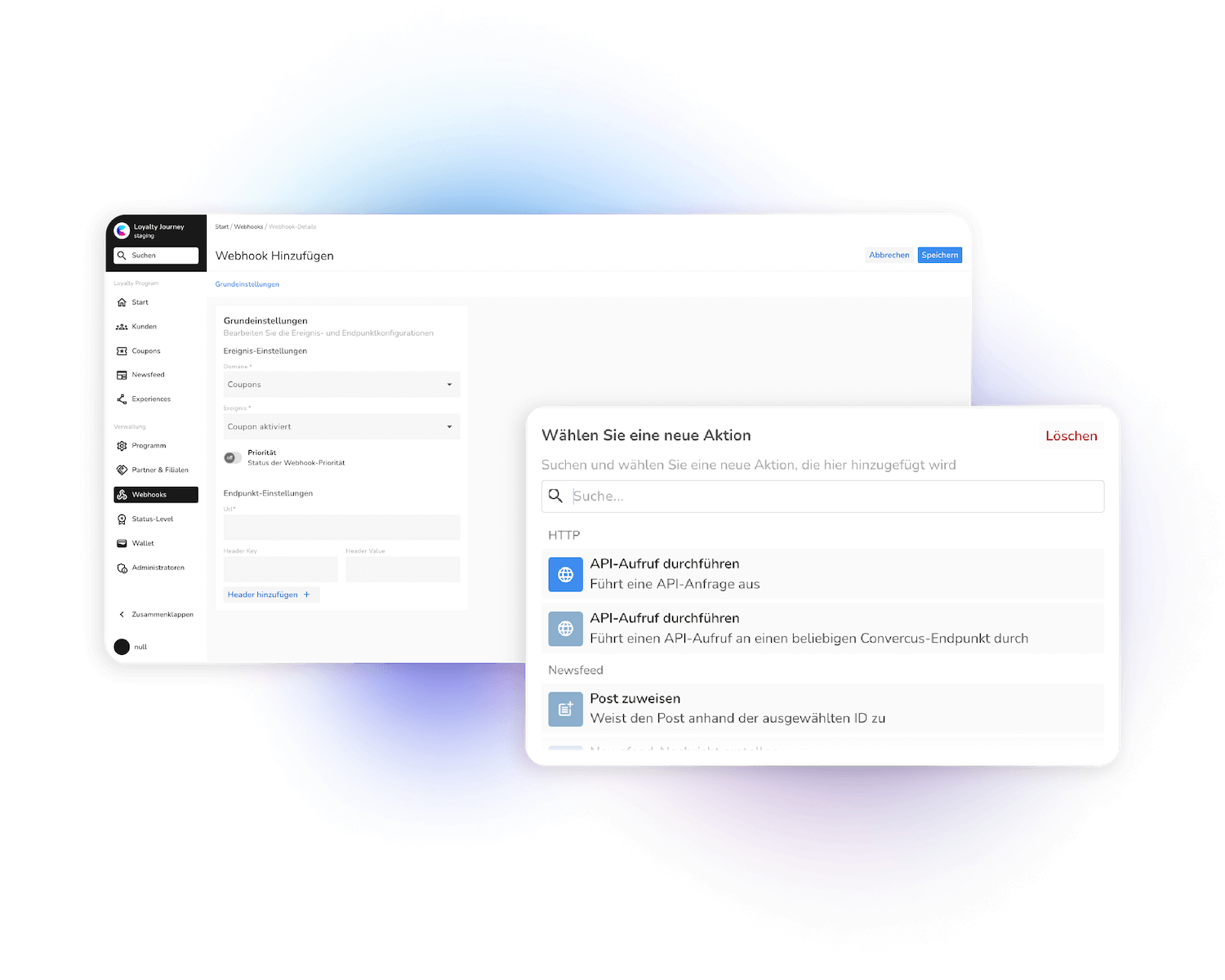
A DIY platform must be able to accommodate different business models within a single system. This includes annual sales tiers, status-dependent benefits, employee cards for trade businesses, local campaigns for individual locations, and central governance. Especially in cooperative models like hagebau, a granular role and rights system is crucial so that headquarters and individual locations can work with the same platform without impeding each other.
Couponing, Automation, and Project Support
Modern DIY store loyalty rewards not only purchases but also relevant behavior. This includes app registrations, workshop participation, product reviews, re-engagement after project completion, or project-related cross-selling offers. For example, someone buying tile adhesive and grout is very likely involved in a bathroom project and should receive different content than a garden customer in April. This is precisely where Loyalty, Couponing and Engagement converge into a single discipline.
- Real-time capability at the POS is a must. Points, bonus credits, and coupons must be seamlessly available at the checkout.
- Segmentation should not be limited to private customers. Professional customers, teams, and multi-card models require their own rule sets and benefits.
- Seasonal automation reduces operational load. Campaigns for gardening season, renovation periods, or winter service should be rule-based.
- Multi-tenancy and role concepts are often critical for purchasing decisions in the DIY segment. Central control and local flexibility must be possible simultaneously.
- Project logic creates more relevance in DIY stores than generic points programs. The software should be able to derive concrete follow-up actions from shopping carts and purchasing patterns.
If DIY stores want to manage these components from a single platform, Convercus becomes particularly relevant. The solution combines Loyalty Engine, Couponing, Engagement, and API-First integration for complex retail environments. With references like OBI and toom, as well as over 40 million loyalty accounts and over 116 million transactions, it demonstrates that such requirements are manageable even on a large scale.
Data Protection, API Performance, and Operational Security
Implement GDPR Properly
Loyalty in DIY stores is always also a data protection project. As soon as purchase histories, app usage, digital receipts, and personalized communication are combined, clear legal bases are required. Particularly relevant are Art. 6 Para. 1 GDPR for the processing of personal data, Art. 25 GDPR for Privacy by Design, and Art. 28 GDPR for data processing agreements with the SaaS provider. For push notifications, email, or app tracking, a consent mechanism may also be necessary; additionally, § 25 TTDSG must be observed for device access.
Enterprise Performance at the POS
Legal certainty alone is not enough if the checkout system falters. In DIY stores, APIs must remain stable even with many simultaneous transactions, weekend peaks, and seasonal peaks. Crucial questions for the provider are therefore: How fast is the response time? Are there monitoring, retry mechanisms, and offline scenarios? How are online and offline data combined without creating duplicates or delays? Especially with millions of customer accounts, scalability is not a technical detail but revenue assurance.
The Business Case: How Loyalty Software Pays Off in the DIY Segment
Illustrative Example Calculation for a Retail Chain
Even small behavioral changes can trigger significant revenue levers in DIY stores. Let's consider a retail chain with 100 locations, 500,000 loyalty members, and an average annual revenue of €400 per member. If 10% of these members make an additional purchase with an €80 shopping cart through better reactivation, this results in 50,000 additional purchases and thus €4 million in additional revenue. If the same retailer increases its share of wallet per member by just 5%, and we assume a DIY budget of €1,200 per household, this yields another €30 million in potential. These figures are illustrative but demonstrate the magnitude.
Which KPIs Truly Matter
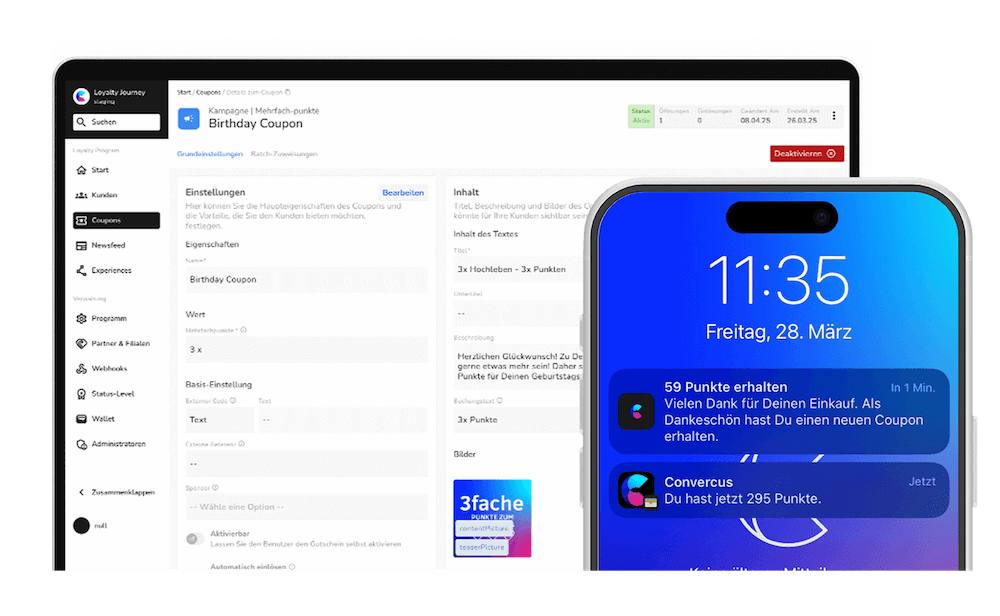
In DIY retail, Customer Lifetime Value is usually more meaningful than mere frequency. Those who only look at coupon redemption overlook whether projects are extended, shopping cart values increase, or professional customers become more stable. In loyalty setups with Convercus, up to +274% repurchase rate, +134% shopping cart value, and 5x ROI have already been achieved; a white-label app can also contribute to 8x higher customer interaction. Such figures are not a general DIY average but a realistic indication of the potential in well-orchestrated programs.
- Repurchase rate shows whether reactivation truly works. Especially with long purchase gaps, it is a key indicator.
- Share of Wallet measures the strategic impact. It answers whether more project budget ends up with your brand.
- Shopping cart value makes bonus and cross-selling effects visible. This is particularly relevant for renovation and gardening projects.
- Redemption rates alone are not sufficient. They should always be benchmarked against margin, additional revenue, and customer value.
- Building first-party data is its own ROI component. Every registered identity improves segmentation, media efficiency, and personalization.
Trends 2026: Where Customer Loyalty is Developing in the DIY Segment
AI-Powered Personalization and Project Clustering
The future of DIY store loyalty is project-related, not just transaction-related. AI-powered models can recognize purchasing patterns such as bathroom renovation, gardening season, or flooring projects and automatically trigger appropriate follow-up communication. Instead of generic newsletters, triggers are created for project progress, accessories, services, or re-engagement after completion. For retailers, this means less wastage and more relevant touchpoints throughout the entire project cycle.

ESG Incentives and Value-Based Benefits
Sustainability is evolving from a communication topic into a loyalty mechanism. According to the IMS Retail Loyalty Study DACH, 72% of surveyed consumers want loyalty programs to promote societal trends like climate neutrality. In DIY stores, this can be concretely translated into: rewards for sustainable products, recycling services, repair workshops, or donation-based rewards. Younger target groups, in particular, increasingly expect a brand to not only offer price advantages but also demonstrate its values.
App-first, Wallet Pass, and Gamification
The app is becoming the operational center of modern customer loyalty. Digital card, Wallet Pass, couponing, push communication, digital receipts, and appointment or workshop bookings are converging. Additionally, gamification elements are gaining relevance, such as seasonal challenges, project milestones, or rewarded reviews. Those who want to delve deeper into this approach can find more in the article on App-first Loyalty and in the area of Engagement further practical approaches.
Selection Guide: How to Find the Right Loyalty Software for Your DIY Store
Realistically Evaluate Make vs. Buy
In-house development often looks more attractive on paper than it is in practice. Especially in DIY stores, teams regularly underestimate the complexity of POS integrations, multi-client models, couponing rules, data protection, app logic, and ongoing optimization. A specialized SaaS solution significantly shortens time-to-value, provided it is built API-first, offers enterprise performance, and understands DIY-specific processes. If you want to work on your strategies in parallel, you will also find helpful starting points in our articles on Increasing Customer Loyalty and Customer Win-back helpful starting points.
7 Questions You Should Ask Every Provider
- How exactly does POS integration work? Have them show you how points, status, and coupons are processed at the checkout.
- Which offline scenarios does the platform support? Especially with fluctuating network coverage, you need reliable fallbacks.
- Can the software manage private and professional customers in one system? Without separate rule sets, things quickly get complicated in the DIY segment.
- How are cooperation or franchise structures mapped? Multi-tenancy and user roles are mandatory here.
- Which data and consent models are available? GDPR, consent, and data minimization must be considered from the product side.
- Which KPIs are evaluated by default? Look for CLV, repurchase rate, average order value, and not just coupon redemption.
- How complex is the migration of an existing program? Points, status, cards, histories, and digital receipts must be transferred cleanly.
The best platform is not the one with the most features, but the one that best fits your retail reality. For DIY stores, this specifically means: high branch traffic, complex POS systems, project-related purchasing patterns, and seamless integration of service, commerce, and customer loyalty.
Conclusion: Loyalty Software is a Growth Driver in DIY Stores, Not a Side Project
The DIY industry doesn't need generic customer card software, but a robust loyalty platform. Project purchases, high average order values, professional customers, seasonality, and omnichannel processes make DIY stores a special case in retail. Those who do not consider these specific characteristics in the software will get a program, but not an effective control instrument for repurchase, share of wallet, and first-party data.
If you want to set up loyalty strategically and technically soundly in your DIY store, a closer look at Convercus is worthwhile. The platform combines loyalty engine, couponing, engagement, and API-first integration for complex retail environments. If you want to find out how to modernize your existing bonus program or implement a new setup faster, you can take the next step via a personal live demo .
FAQ
How complex is the implementation of loyalty software in a DIY store?
The effort primarily depends on the POS, data situation, and program complexity. A clearly defined start with a digital customer card, couponing, and a few core rules is realized much faster than a complete relaunch including status migration, app, and professional customer logic. A realistic scope for Phase 1 is crucial.
Does loyalty software work with our existing POS system?
Yes, if the provider works API-first and has POS experience. Real-time queries, stable interfaces, offline fallbacks, and thorough testing before rollout are important. Especially in a branch network, POS integration should always be checked early.
Is loyalty software GDPR compliant?
The software can be operated in compliance with GDPR if processes and legal bases are properly implemented. Relevant aspects include Art. 6 GDPR for processing, Art. 25 GDPR for Privacy by Design, and Art. 28 GDPR for data processing agreements. Additionally, consents and deletion concepts should be considered from the outset.
Can we migrate an existing bonus program?
In most cases, yes, but migration is not just a data transfer. Points, status levels, vouchers, card identifiers, histories, and communication logics must be re-mapped professionally. A migration that cleans up old rules and specifically simplifies new mechanics is usually sensible.
What does loyalty software cost for a DIY store?
Costs depend on the number of users, transaction volume, channels, and implementation depth. Simple monthly statements are therefore usually insufficient. For a reliable calculation, you should always consider POS integration, app scope, couponing, analytics, and ongoing success management.
What should a DIY store practically start with?
The best starting point is a clearly measurable use case. This often includes the digitalization of a customer card, personalized coupons for seasonal campaigns, or the reactivation of inactive buyers after project completion. This quickly creates a business case before more complex status and professional logics are expanded.


- 5x Return on Investment
- 80% Customer Identification
- 8x Customer Interaction
- +274% Repurchase Rate