







The topic briefly and concisely
- Loyalty software for flower shops is more than a digital punch card. Crucial factors are occasion data, omnichannel linking, couponing, and automated reactivation.
- The biggest lever in floristry lies in occasion-based business. Those who systematically leverage birthdays, anniversaries, and seasonal peaks increase repeat purchases and smooth out seasonal dips.
- When choosing, integration and GDPR compliance are key. POS, online shop, wallet, and marketing must work together; Art. 5, Art. 6, and Art. 13 GDPR, as well as § 7 UWG, are particularly relevant in practice.
- Convercus is loyalty software for scalable customer loyalty. For branch operators, franchise systems, and omnichannel-capable florists, the platform combines loyalty, couponing, and engagement in an integrated solution.
Many flower shops invest heavily in product quality, location, and service – but too little in systematic customer loyalty. This is precisely where Loyalty Software for Flower Shops comes in: It combines repeat purchases, occasion-based communication, couponing, and omnichannel processes into a measurable retention system.
Why Customer Loyalty Works Differently in Flower Shops
Floristry is a market with high emotional appeal, but also noticeable competitive pressure. In 2023, the German market for flowers and plants was worth approximately €8.6 billion, of which 35% accounted for cut flowers. At the same time, trade data for 2025 shows declining monthly sales in the flower and plant retail sector. For operators, this means that growth less often comes from price, but more frequently from repeat purchases, differentiation, and better utilization of existing customers.
A Market with Repeat Purchase Potential, but Without Systematic Data Utilization
Flowers are not only bought spontaneously, but very often for specific occasions. This is precisely where the opportunity lies: Knowing when customers buy flowers for birthdays, anniversaries, or holidays allows you to make repeat purchases predictable. However, many businesses still operate with anonymous walk-in customer transactions, thereby losing valuable first-party data.
Seasonality is Not a Minor Issue in Floristry
Industry-related estimates suggest that a very large portion of sales occurs within a few weeks around Valentine's Day, Mother's Day, International Women's Day, or New Year's. Without countermeasures, this creates significant seasonal dips between peaks. A good loyalty strategy should therefore not only manage rewards but also actively boost frequency during slower months.
The "Anonymous Transaction" is the Real Loss Driver
When a customer buys a bouquet, pays, and leaves, the business often lacks any basis for re-engagement: no name, no occasion, no preference, no consent. Thus, the purchase remains isolated instead of becoming part of a relationship. Those who want to understand the fundamentals of modern customer loyalty will find the most important strategic principles in this overview of customer loyalty software .
What Loyalty Software Must Specifically Deliver for a Flower Shop
Good loyalty software in a flower shop doesn't just replace cardboard cards. It transforms individual purchases into a usable customer profile and connects POS, online shop, wallet pass, couponing, and automated communication. What's crucial is not so much the sheer number of features, but whether typical floristry processes are properly supported.
From Digital Punch Card to Real Customer Profile
The first step is often simple: digital points or stamps instead of paper. However, the real added value only emerges when, in addition, purchase history, favorite flowers, store preferences, and occasions are recorded. Then, a simple "Buy 5, get 1 free" system transforms into a system for recommendations, re-engagement, and personalized campaigns. [SEGENT 30] These Functions Are Particularly Important for Florists

A loyalty solution should
- support occasion-based triggers so that birthdays, anniversaries, or seasonal peaks can be automatically addressed with suitable offers. It should
- connect POS and e-commerce so that customers can collect points in-store and redeem them online without ending up in separate data silos.Couponing and vouchers should be centrally manageable
- because short-term demand impulses around holidays and slow weekdays are particularly effective in the flower business. A
- wallet-based customer card lowers the barrier to entry, as many customers don't want to install an additional app. Segmentation
- by purchase occasion, frequency, basket size, and location is important to engage loyal customers, occasional buyers, and B2B clients differently. Especially for multi-store retailers, it's worth looking at
modern loyalty solutions that centrally manage point systems, status management, and rewards.
Which Loyalty Model Suits Which Flower Shop?
Not every loyalty model fits every floristry business.
A premium independent florist needs different mechanics than a chain with an online shop or a garden center with a floristry department. In practice: simple programs accelerate implementation, while differentiated programs excel in scalability and personalization. Comparison of Common Models
The
best program structure depends on customer numbers, channel structure, seasonality, and desired data depth. The following overview shows which mechanics typically suit which business type. In many cases, a combination makes sense: initially digital points or stamps, later
status benefits, occasion reminders, and couponing . For omnichannel models, this integration is crucial from the outset, as online and in-store sales would otherwise remain separate.
Loyalty Strategies That Really Work in Floristry
The best software is of little use if the program only distributes generic discounts. In the flower business,
occasion-based, emotional, and seasonal mechanics usually work significantly better than purely transactional earn-and-burn logics. This is precisely what distinguishes customer loyalty from mere discount management. Occasion-Based Loyalty is the Goldmine of Floristry
If a profile includes not only the buyer but also the recipient and key dates, sales can be systematically recovered: a reminder 7 days before an anniversary, a suggestion for favorite colors, or a suitable bonus for a vase and greeting card. Such a
"Blossom Calendar" is more valuable for many florists than any blanket discount model, as it combines emotional relevance with a specific purchase occasion. Seasonal Boosters Smooth Out Sales Dips

Double points on slow days, January campaigns between Christmas and Valentine's Day, or summer challenges for cut flowers and decor help build frequency outside of peak occasions. In combination with
digital couponing , time-limited impulses can be controlled very precisely by store, target group, or basket value. B2B and Subscription Models Create Predictable Revenue
Hotels, offices, practices, or restaurants place recurring orders and are therefore strategically highly relevant. A separate model with fixed delivery schedules, bonus arrangements, and automated reminders makes this customer group more profitable. For precisely such scenarios, Convercus can be beneficial because the platform combines
loyalty, engagement, and marketing automation in an omnichannel setup, thereby enabling the coordination of personalized campaigns across POS, online, and wallet pass. What Measurable Benefits Does Loyalty Software Bring to a Flower Shop?
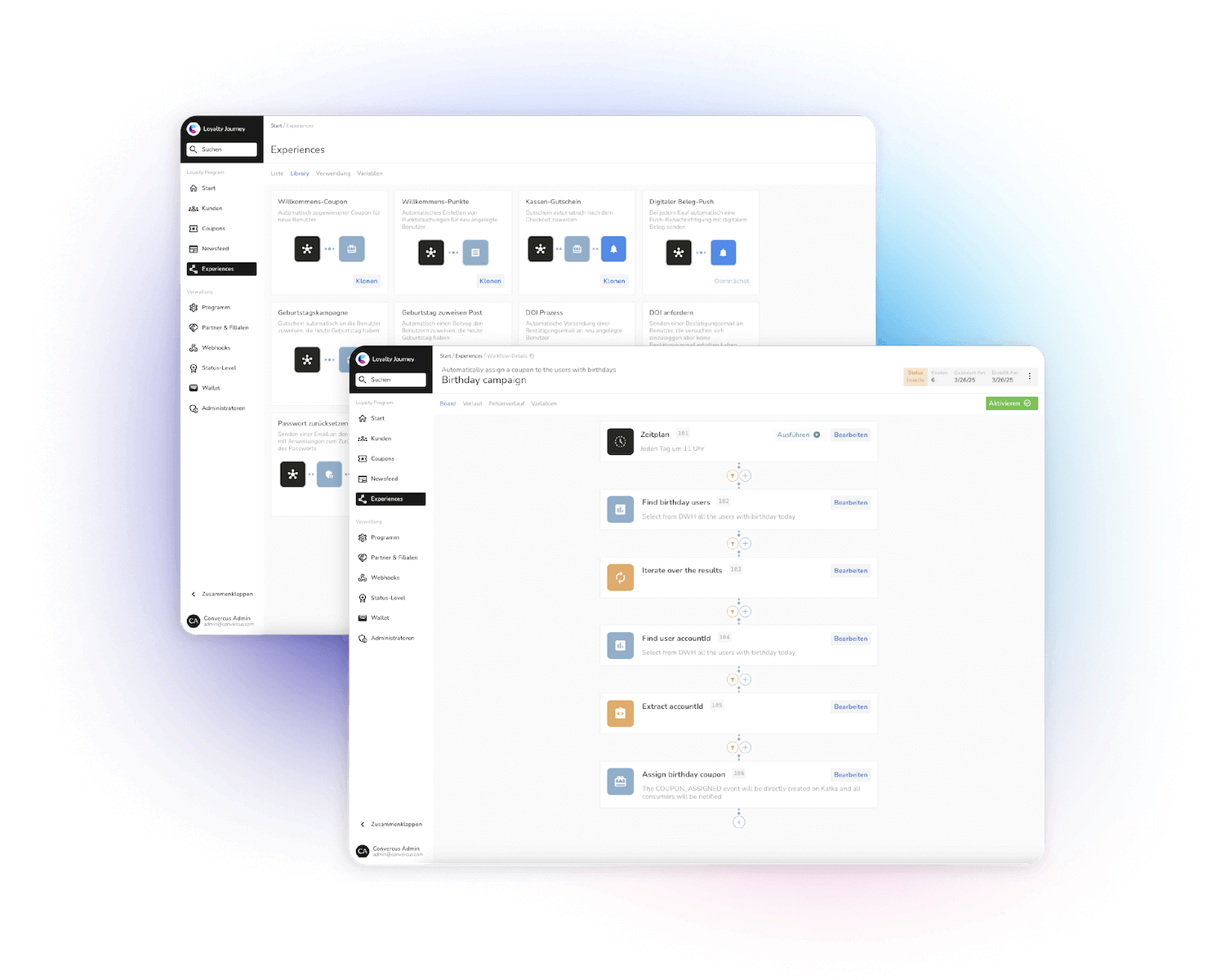
The business case rarely arises from a single major effect. It emerges when
purchase frequency, basket size, and re-engagement simultaneously increase slightly. Especially in floristry, conservative improvements are sufficient to make a loyalty program economically attractive. Calculation Example for a Multi-Store Retailer
A multi-store florist with
50 stores and 200,000 loyalty members achieves approximately €12.8 million in member revenue with 2 purchases per year and an average basket size of €32. If frequency increases to just 2.3 purchases through reminders and re-engagement, and the basket size grows to €34.56 due to additional items like a vase, card, or premium arrangement, revenue increases to approximately €15.9 million. This results in an uplift of about €3.1 million – without opening new stores. You Should Continuously Measure These Key Figures
Additional levers for
increased customer loyalty and for customer win-back usually emerge where inactive segments are systematically re-engaged. Repeat Purchase Rate
- shows whether occasional buyers become true loyal customers and whether triggers like birthday reminders actually lead to orders. Customer Lifetime Value
- reveals whether customers build more value across multiple occasions, categories, and channels. Churn Rate
- is particularly important when customers are only active during individual peaks and then disappear for months. Redemption Rate of Coupons and Rewards
- helps understand whether rewards are relevant or merely cost margin. Omnichannel Usage
- shows how many customers purchase both in-store and online, and are thus typically more valuable.
What Florists Should Consider When Choosing Loyalty Software
When selecting a tool, it's not just about reward logic. Key factors are integration, data protection, and scalability. Anyone who invests in an isolated points solution today will create duplicate processes in their POS, shop, CRM, and campaign management tomorrow.
POS, Online Store, and Wallet Must Work Seamlessly Together
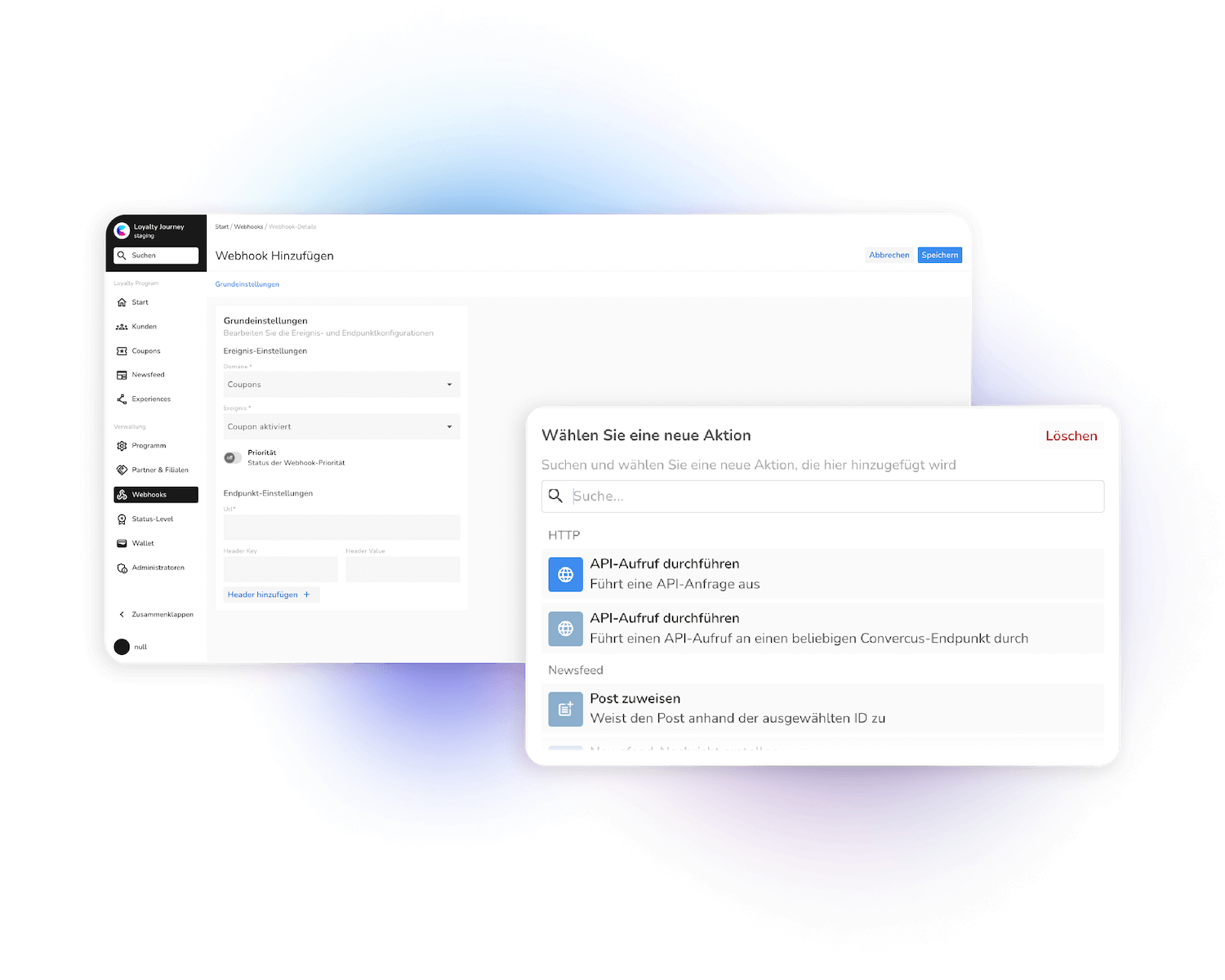
A loyalty software for flower shops should process POS purchases as smoothly as online orders, click & collect, and mobile customer cards. An API-first approach is particularly relevant because it allows existing POS systems, shops, and marketing systems to be integrated more flexibly. You can find more information in the section on Tech & Integration.
GDPR and Advertising Consent Are Operationally Critical
As soon as a flower shop stores names, purchase history, occasions, or preferences, the principles outlined in Art. 5 GDPR such as purpose limitation and data minimization, apply. For personalized email or SMS communication, a legal basis under Art. 6 Para. 1 GDPR is required; in practice, for promotional communication, consent under Art. 6 Para. 1 lit. a GDPR is typically relied upon. Additionally, Art. 13 GDPR mandates transparent information duties, and for electronic advertising, § 7 UWG is relevant. If wallet passes or other device functionalities are used, then § 25 TTDSG may need to be considered.
Scalability Quickly Becomes Critical with Multiple Locations
Regional chains and franchise systems require centralized rule sets, high availability, and minimal operational friction in daily branch operations. Therefore, look for multi-tenant architectures, centralized control, and high-performance transaction processing. Especially when in-store sales, online stores, and seasonal campaigns run in parallel, it becomes clear whether a solution is truly enterprise-ready.
From Punch Card to Loyalty Software: How to Make the Transition Successfully
Implementation rarely fails due to technology, but usually due to excessive complexity at the outset. For flower shops, a gradual rollout is almost always more sensible than a perfect program on paper. Start with a clear core mechanic, and only then expand with segments, coupons, status benefits, or subscription models.
A Pragmatic 5-Step Plan
- Define goals: First, define whether repeat purchases, off-season frequency, B2B sales, or first-party data are the highest priority.
- Select core mechanic: Start with points or a digital punch card, and only introduce more complex rewards after initial learning experiences.
- Set up data model: Only collect information you genuinely intend to use later, such as occasion data, preferences, store location, and consents.
- Prepare communication: Train the store team, articulate a clear benefit for customers, and enable quick sign-up at the POS in just a few seconds.
- Start with pilot and KPIs: First, test the program in selected locations or segments, then optimize the rules, rewards, and communication strategy.
Typical Mistakes in Floristry
Overly complicated rewards, missing store processes, unclear consent logic, and programs lacking occasion data are the most common pitfalls. A low-barrier entry via Wallet Pass or digital customer cardis particularly effective because customers immediately receive a visible benefit. Those looking to delve deeper into the mobile perspective will find further insights here on App-first Loyalty.
Conclusion: Loyalty Software Transforms Occasional Purchases into Predictable Customer Loyalty
For a flower shop, loyalty software is valuable when it not only manages points but also intelligently brings together occasions, channels, and communication . Those who want to smooth out seasonality, build first-party data, and systematically cultivate loyal customers therefore need more than a digital punch card.
If you operate a branch network, franchise system, or an omnichannel-capable florist and are seeking a scalable solution, Convercus is an ideal partner for loyalty, couponing, and customer engagement. Arrange a personal live demo and discover how your loyalty program can be implemented cleanly from a technical perspective and make economic sense.
FAQ on Loyalty Software in Flower Shops
The most frequent questions revolve around implementation, costs, data protection, and integration. Here you'll find the most important practical answers.
How complex is the implementation of a loyalty program?
A clearly defined pilot program is significantly faster to implement than many florists assume. If goals, core mechanics, and POS processes are defined, it's usually more efficient to start with a basic logic rather than an immediately fully developed program.
Does loyalty software work with our existing POS system?
Key factors are clean interfaces and a unified customer view. A good solution must be able to consistently process POS and online data so that points, coupons, and redemptions function across all channels.
Can loyalty software be used in a GDPR-compliant manner for flower shops?
Yes, if data collection, consents, and information duties are properly implemented. Articles 5, 6, and 13 GDPR are particularly relevant, as is § 7 UWG for promotional communication.
What does loyalty software cost?
The costs depend on the number of users, channels, integrations, and scope of features . For multi-store operators and franchise systems, implementation, internal processes, and ongoing optimization should always be factored into the business case, in addition to license costs.
Can we migrate an existing punch card or an old program?
In most cases, a migration of existing points, stamps, or members is possible. A clear logic is important so that customers don't lose their previous benefits and perceive the new program as an improvement.
Which rewards work best in a flower shop?
The most impactful are usually a combination of emotional and practical rewards: exclusive seasonal creations, free delivery, bonus points for special occasions, greeting card upgrades, or invitations to workshops. While pure discounts also work, they are rarely the most sustainable differentiator.


- 5x Return on Investment
- 80% Customer Identification
- 8x Customer Interaction
- +274% Repurchase Rate