






The topic, short and concise
- Cheaper than new customer acquisition: Reactivating former customers often costs only a fraction of acquisition costs and delivers faster results.
- Data as the foundation: Understanding churn reasons is the first step of any successful win-back strategy.
- Timing is key: Automated triggers reach inactive customers at precisely the right moment, before they permanently switch to competitors.
- Omnichannel approach: Customer win-back only works if all touchpoints are consistently utilized.
- Convercus as a lever: Loyalty Engine, Couponing and Marketing Automation provide the tools for scalable customer win-back.
How much revenue does your company lose each quarter due to customers quietly switching to the competition? Customer churn is one of the most expensive problems in retail and e-commerce, but it's often only recognized when it's too late. The good news: Systematic customer win-back with data-driven win-back campaigns specifically brings back churned customers. In this guide, you'll learn which strategies truly work. Convercus supports companies as a loyalty partner in implementing precisely this process efficiently and scalably.
What is customer win-back?
Customer win-back, also known as Customer Recovery Management or customer reactivation, describes the systematic processof winning back former or at-risk customers through targeted measures. It's not exclusively about ex-customers who have already switched to the competition. Currently inactive customerswho show clear signs of churn are also a focus. In contrast to pure customer retention customer win-back only begins when the customer relationship is already at risk or has been interrupted.
What is a win-back campaign? As an instrument of Customer Recovery Management, it is a targeted marketing measure that encourages inactive or churned customers to return through personalized communication, exclusive offers, and automated outreach.
A structured win-back management includes four key components:
- Planning
- Analysis of churn reasons
- Specific actions
- Consistent monitoring.
Loyalty programs like Convercus support this process with data and enable companies to identify inactive customers early and target them specifically.
Why win back customers?
Customer win-back offers companies tangible benefitsthat go far beyond individual win-back cases. Here are the most important reasons:
- Cost-efficiency: Winning back customers is 5–7x cheaper than new customer acquisition. This is because former customers already know your brand, products, and services.
- Higher Customer Lifetime Value: Reactivated customers often buy more and more regularly than new customers, which increases long-term customer value. Convercus customers, on average, see a 134% increase in average cart value.
- Valuable Insights: The reasons for churn provide direct optimization potential for products, services, and internal processes.
- Show appreciation: Customers that a company actively fights for feel valued. This strengthens trust and long-term customer loyalty.
- Curb competition: Every customer won back is one less for the competition and secures your revenue.
When is customer win-back particularly worthwhile? Especially when the Customer Lifetime Value is high, sufficient customer data is available, and the reason for churn is rectifiable. Convercus provides the data foundation to make precisely this assessment and to prioritize win-back measures effectively.
Understanding Churn Reasons: Why Former Customers Left
Before you take action and implement them into your customer retention strategy , you need to understand the causes of customer churn. Because not every customer loss has the same background. Some customers switch due to cheaper offers from competitors, while others simply feel neglected. Those who don't analyze the reasons for churn waste resources on win-back measures that lead nowhere. The following table shows the most common customer types, their typical churn reasons, and a suitable approach for reactivation.
These churn reasons form the basis for all subsequent customer win-back strategies. Without a thorough root cause analysis, win-back measures remain shots in the dark. The more precisely you identify the respective customer type, the more targeted you can tailor offers and communication.
How to identify at-risk customers? Churn rarely announces itself overnight. Typical early warning signs include declining purchase frequency, lack of app usage, or decreasing email open rates. Those who recognize these signals early can counteract before final churn, with the right measures at the right time.
How do I win back customers? – 6 Strategies for Win-Back Campaigns
The following six tried-and-tested strategies help you systematically reactivate inactive and churned customers. Each strategy addresses a different lever of customer win-back. The crucial point is: Not every measure fits every customer. Only the combination of data-driven segmentation, personalized offers, and automated processes unlocks the full potential of your win-back campaigns.
1. Data-Driven Identification and Segmentation of Inactive Customers
The first step in any customer win-back is: Who is actually inactive? The answer depends on your industry. In fashion retail, a missing purchase for three months can already be a warning sign, while in the DIY sector, six to twelve months without a transaction are considered a threshold. It's crucial that you don't treat your inactive customer base as a homogeneous group, but rather prioritize by win-back potential.
Convercus supports this step with KPI dashboards and AI-powered data analytics. This way, you can identify dormant customers early and focus resources specifically on the most promising cases. Typical segmentation criteria include:
- Last purchase date and purchase frequency
- Historical customer value (Customer Lifetime Value / Contribution Margin)
- Interaction behavior (app usage, email opens)
- Status level in the loyalty program
2. Leverage Expiring Points and Status Loss as Reactivation Levers
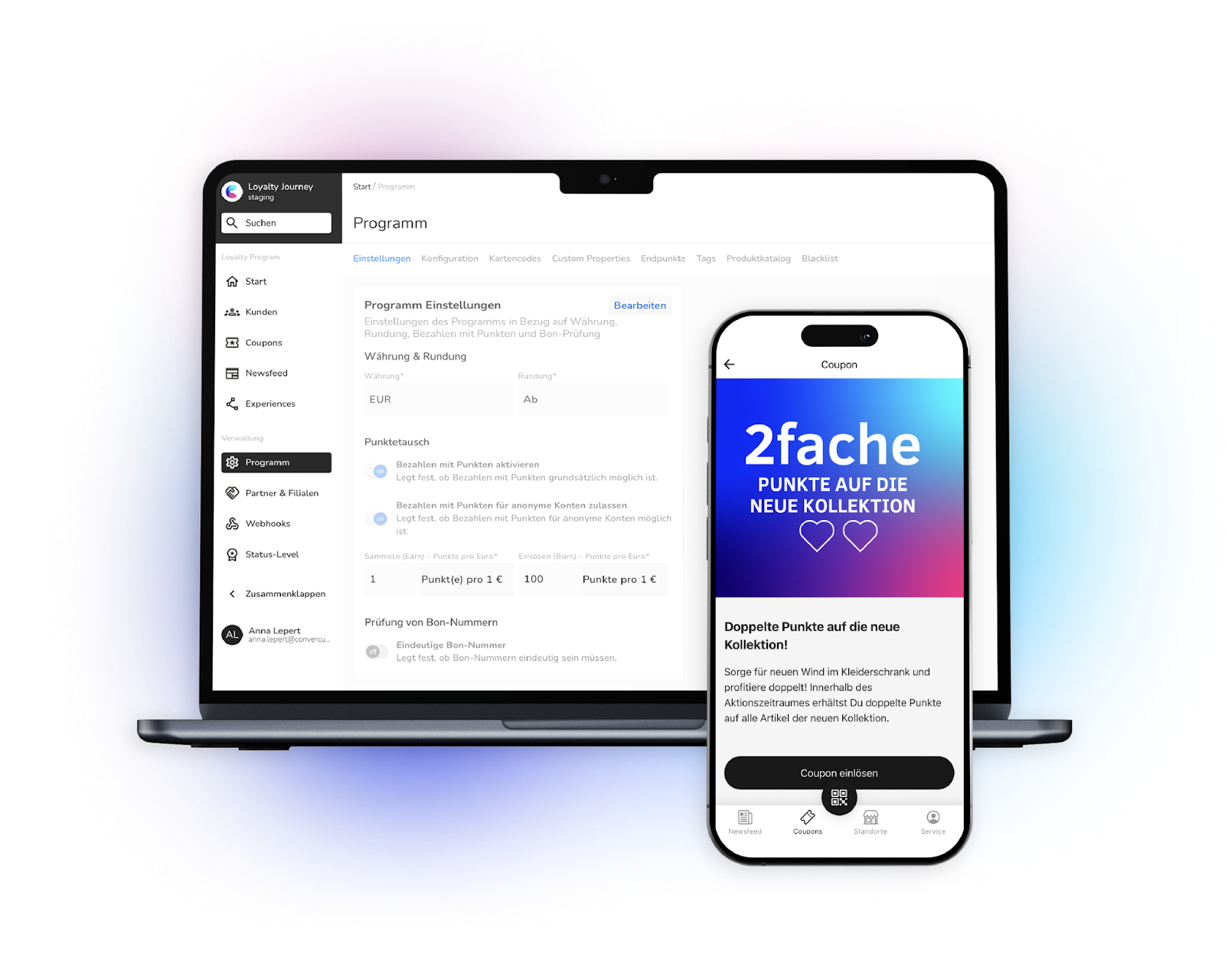
Loss aversion is one of the strongest psychological triggers in customer win-back. Customers react significantly more intensely to the threatof losing already accumulated points or an achieved status, than to the prospect of new benefits. Targeted reminders about expiring points or an impending status downgrade motivate many buyers to return before the business relationship completely fades.
The Convercus Loyalty Engine offers flexible rule sets for point expiration, collection periods, and retention periods. Status levels can be individually configured, and automated notifications for impending loss ensure that your customers can react in time. Elements of Gamification promote participation and engagement. This way, you transform a potential annoyance into an opportunity for customer reactivation.
3. Personalized Win-Back Emails and Letters
Personal outreach beats mass mailing. Win-back emails should be tailored to the individual churn reason and purchase history. A subject line like "We miss you" with a specific reference to the last purchase, a personalized offer, or an invitation to dialogue achieves significantly higher open and conversion rates than generic contact. Important: Don't beg, but rather offer real value.
Convercus enables hyper-personalization at a 1:1 level – von der Ansprache über den Content bis zum Angebot. Marketing-Automation-Templates machen es möglich, komplexe Win-Back-Journeys mit wenigen Klicks aufzusetzen. Vier Tipps für wirkungsvolle Rückgewinnungs-E-Mails:
- Betreffzeile personalisieren (Name, letzter Kauf)
- Klarer Mehrwert im ersten Satz
- Ein konkretes Angebot pro E-Mail
- Einfacher Call-to-Action
4. Gezielte Coupons und exklusive Angebote ausspielen
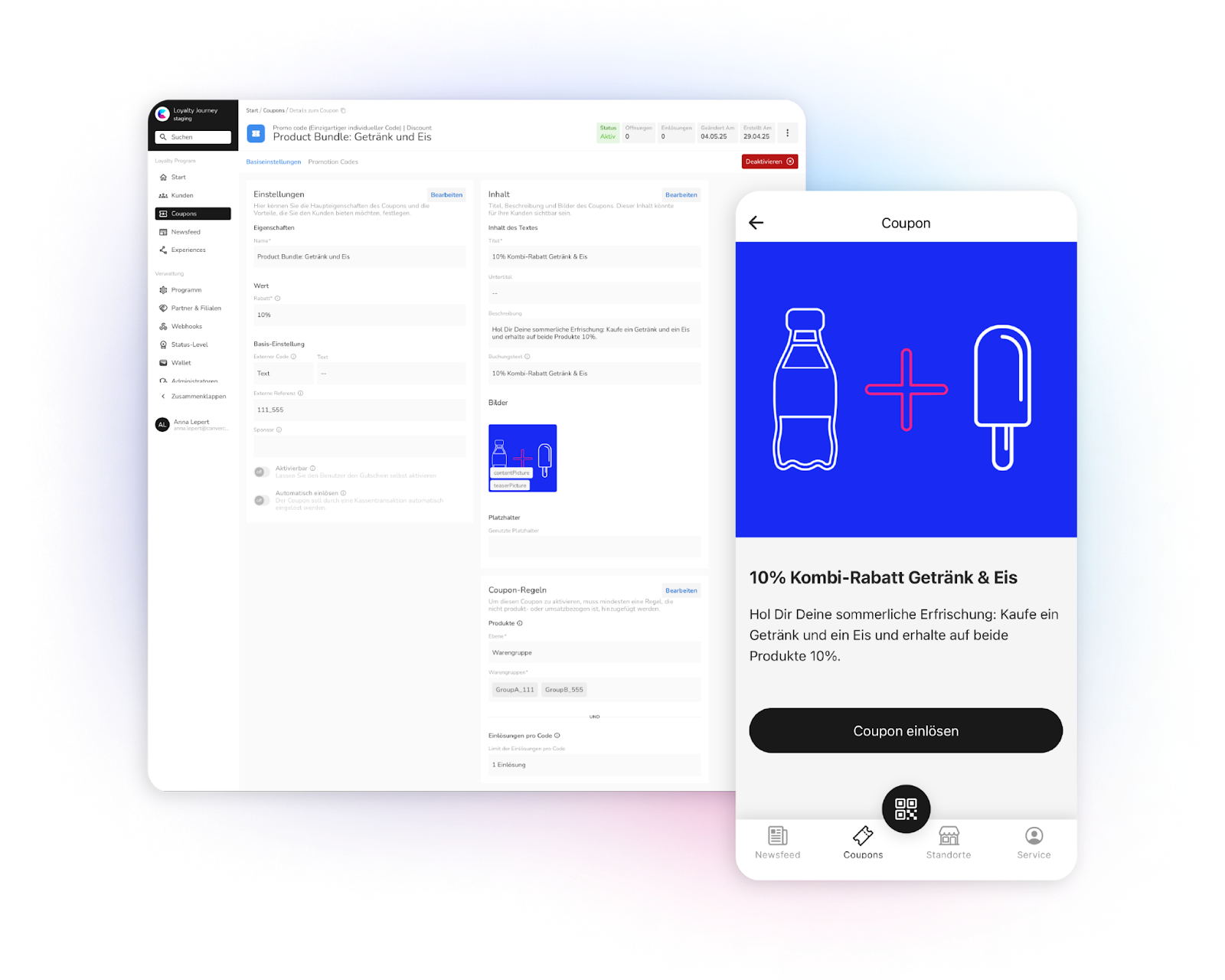
Coupons gehören zu den wirksamsten Maßnahmen zur Kundenrückgewinnung, vorausgesetzt, sie werden gezielt und personalisiert eingesetzt. Statt Rabatte nach dem Gießkannenprinzip zu verteilen, sollten Unternehmen individuelle Angebote auf Basis von Kaufverhalten und Kundenwert erstellen. Beispiele: Ein exklusiver Rabatt für inaktive Gold-Kunden, ein Bundle-Angebot für eine Produktkategorie mit hoher Affinität oder eine zeitlich begrenzte Sonderaktion.
Die Convercus Promotion Engine ermöglicht es, Coupons für jeden Kanal in Sekunden zu erstellen – personalisiert, mit flexiblen Einlöseregeln und integrierter Erfolgsmessung. Der Coupon-Designer erlaubt markenkonformes Design ohne Vorkenntnisse. So behalten Sie die Kontrolle über Ihre Rückgewinnungsmaßnahmen und vermeiden unnötige Margenverluste.
5. Omnichannel-Ansprache: Den Kunden dort abholen, wo er ist
Kundenrückgewinnung funktioniert nicht über einen einzigen Kanal. Ehemalige Kunden müssen dort erreicht werden, wo sie aktiv sind – ob App, E-Mail, POS, Social Media oder Wallet Pass. Die Botschaft sollte über alle Touchpoints hinweg konsistent sein, aber kanalspezifisch aufbereitet werden. Ein Push-Reminder zum Punkteverfall in der App wirkt anders als ein personalisiertes Anschreiben per E-Mail.
Das Convercus Omnichannel-Management ermöglicht es, Aktionen kanalübergreifend auszuspielen, in Echtzeit zu monitoren und bei Bedarf sofort anzupassen. Ob POS, Online-Shop oder App, alle Touchpoints werden nahtlos über die API-first-Architektur integriert. Das gesamte Vorgehen ist DSGVO-konform dank serverseitigem Tracking.
6. Trigger-basierte Automatisierung für skalierbare Win-Back-Kampagnen
Manuelle Rückgewinnung von Kunden skaliert nicht. Event-basierte Trigger lösen automatisch die richtige Aktion zum richtigen Zeitpunkt aus und machen Ihre Kundenrückgewinnung planbar. Ob nach einer bestimmten Anzahl von Tagen ohne Kauf, bei Statusverlust, nach App-Deinstallation oder bei Warenkorbabbruch, automatisierte Kampagnen reagieren schneller als jedes Team es manuell könnte.
In Convercus lassen sich Echtzeit-Events wie Aktivierung, Kauf, Statuswechsel oder App-Öffnung als Trigger für automatische Coupon-Zuweisung, Push-Benachrichtigung oder E-Mail-Versand konfigurieren. Marketing-Automation-Templates machen komplexe Kampagnen auch ohne IT-Ressourcen in wenigen Klicks umsetzbar.
Vier Beispiel-Trigger für Ihre Win-Back-Strategie:
- Kein Kauf seit 90 Tagen → Personalisierter Coupon per E-Mail
- Punkteverfall in 14 Tagen → Push-Benachrichtigung via App
- Status-Downgrade → Exklusives Halte-Angebot
- Geburtstag eines inaktiven Kunden → Persönliches Reaktivierungsangebot
Warum scheitern Win-Back-Kampagnen – und wie vermeiden Sie die häufigsten Fehler?
Selbst die beste Strategie scheitert, wenn typische Fehler den Prozess von Anfang an untergraben. Die folgenden Fallstricke begegnen Unternehmen bei der Kundenrückgewinnung besonders häufig:
- Fehlende Datengrundlage: Ohne saubere Kundendaten und eine vollständige Kaufhistorie ist keine gezielte Segmentierung möglich. Maßnahmen bleiben dann ungenau und verschwenden Ressourcen.
- Zu späte Reaktion: Wer erst nach Monaten der Inaktivität reagiert, hat verlorene Kunden oft schon endgültig an die Konkurrenz verloren. Frühzeitige Trigger sind entscheidend.
- Rabattschlacht statt Mehrwert: Reine Preisnachlässe entwerten die Marke langfristig und ziehen Schnäppchenjäger an, statt echte Kundenbindung aufzubauen.
- Zu aggressive Ansprache: Häufige Kontaktversuche wirken aufdringlich und können gegen DSGVO und UWG verstoßen (§ 7 UWG beachten). Das schadet dem Vertrauen nachhaltig.
- Fehlende Erfolgsmessung: Ohne KPIs lässt sich nicht bewerten, ob Rückgewinnungsmaßnahmen tatsächlich wirken oder nur Kosten verursachen.
- Silodenken: Wenn Marketing, Vertrieb und Service isoliert arbeiten, bleibt die Ansprache inkonsistent. Kunden bemerken das sofort.
Diese Fallstricke lassen sich vermeiden, wenn Unternehmen auf eine datenbasierte Strategie, klare Prozesse und die passenden Tools setzen.
Dos und Don'ts bei der Kundenrückgewinnung – was wirklich funktioniert
Zwischen einer erfolgreichen Rückgewinnung und verschwendetem Budget liegt oft nur ein schmaler Grat. Die folgende Tabelle zeigt Ihnen auf einen Blick, welche Maßnahmen zur Kundenrückgewinnung tatsächlich Ergebnisse liefern und welche Fehler Sie unbedingt vermeiden sollten.
Der entscheidende Unterschied zwischen erfolgreichen und wirkungslosen Win-Back-Kampagnen liegt in der Kombination aus sauberen Daten, konsequenter Personalisierung und dem richtigen Timing. Wer diese drei Faktoren zusammenbringt, steigert die Rückgewinnungsrate deutlich und stärkt gleichzeitig die langfristige Kundenbindung.
Effektive Kanäle zur Kundenrückgewinnung
Nicht jeder Kanal eignet sich gleichermaßen für jede Kundschaft. Die wirksamsten Kanäle für Win-Back-Kampagnen im Überblick:
- E-Mail: Nach wie vor der effektivste Kanal für personalisierte Rückgewinnungskommunikation mit hoher Skalierbarkeit.
- Push-Benachrichtigungen (App/Wallet): Hohe Öffnungsraten und ideal für zeitkritische Angebote wie Punkteverfall oder Statusverlust.
- POS-Integration: Coupons direkt an der Kasse einlösen – schließt den Kreis zur Offline-Welt und macht Angebote sofort greifbar.
- Social Media Retargeting: Inaktive Kunden über bezahlte Anzeigen erneut ansprechen und zurück in den Kaufprozess holen.
- Postalische Mailings: Für hochwertige Kunden als Zeichen besonderer Wertschätzung – physische Post signalisiert Exklusivität.
Alle diese Kanäle lassen sich über die Convercus-Plattform zentral steuern, kanalübergreifend ausspielen und in Echtzeit auswerten.
KPIs und Erfolgsmessung im Customer Recovery Management
Nur was gemessen wird, kann verbessert werden. Damit Ihre Kundenrückgewinnung nicht zum Blindflug wird, brauchen Sie klare Kennzahlen, die den Erfolg Ihrer Maßnahmen transparent machen. Die folgenden KPIs bilden das Fundament für eine datenbasierte Erfolgskontrolle im Customer Recovery Management.
Convercus bietet integrierte KPI-Dashboards und AI-gestützte Reporting-Tools, mit denen Sie Kampagnen-Performance, Coupon-Einlöseraten und Kundenaktivität in Echtzeit tracken können. Berichte lassen sich per Natural Language Model erstellen, ganz ohne BI-Experten. So behalten Sie jederzeit die Kontrolle über die Performance Ihrer Rückgewinnungsmaßnahmen.
Fazit: Mit Convercus abgewanderte Kunden systematisch zurückgewinnen
Kundenrückgewinnung ist kein Zufall, sondern ein strukturierter Prozess. Von der datenbasierten Identifikation inaktiver Kunden über personalisierte Maßnahmen bis zur automatisierten Skalierung entscheidet jeder Schritt über den Erfolg Ihrer Win-Back-Kampagnen. Wer die Gründe für die Abwanderung versteht und die richtigen Hebel nutzt, gewinnt nicht nur Kunden zurück, sondern stärkt die gesamte Kundenbindung nachhaltig.
Die Kombination aus Loyalty Engine, Couponing, Omnichannel-Management und Marketing-Automation macht Convercus zum idealen Partner für systematische Kundenrückgewinnung im Mid-Market und Enterprise-Segment. Die Ergebnisse sprechen für sich: Convercus-Kunden erzielen nachweislich einen 5× ROI, eine 80 %ige Kundenidentifikationsrate und eine um +274 % gesteigerte Wiederkaufrate.
FAQ on Customer Win-back
What is the difference between customer win-back and customer retention?
Customer retention and customer win-back share the same overarching goal – building valuable long-term customer relationships – but they target different points in the customer lifecycle. Customer retention measures, such as loyalty programs, personalized offers, or exclusive benefits, are aimed at active existing customers to continuously strengthen their engagement and repurchase rate. Customer win-back, on the other hand, only comes into play when customers have already churned or been inactive for an extended period. Both disciplines complement each other perfectly: those who retain customers early and continuously increase customer loyalty, will have to win them back less often.
How long does customer win-back take?
There's no one-size-fits-all answer; the duration depends on the industry, purchase cycle, and measures implemented. As a rule of thumb: the first response to inactivity should occur within 30–90 days of the last purchase. Waiting too long often means the customer has already permanently switched to a competitor. The entire process until repurchase can take anywhere from a few weeks to several months, depending on the customer segment. Trigger-based automation, as offered by Convercus, ensures that the right moment is automatically detected and utilized – without your team needing to intervene manually.
Is customer win-back worthwhile compared to new customer acquisition?
In most cases, yes – and significantly so. According to Harvard Business Review , new customer acquisition is 5 to 25 times more expensive than reactivating existing contacts, depending on the industry and study. The reason: winning back customers builds on an existing foundation of trust. Former customers are already familiar with your brand, products, and processes – which significantly shortens the decision-making path. Additionally, reactivated customers often develop a higher Customer Lifetime Value than new customers because they have consciously chosen to return. However, it's crucial to win back the right customers: data-driven segmentation by CLV and churn reason is the basis of any economically sound win-back strategy.
When is a customer considered inactive or churned?
There's no universal answer here – the threshold depends heavily on the industry and purchase cycle. As a rule of thumb: anyone who hasn't interacted or purchased for twice the usual purchase interval is considered inactive. In fashion retail, this could be after just three months, while in furniture retail, it might be after two years. It's important to define individual inactivity thresholds based on data – and not to wait until customers are already buying from competitors. With Convercus Loyalty Software, such thresholds can be automatically set per segment and directly linked to reactivation measures.
Which channels are best suited for win-back campaigns?
Email remains the strongest channel for customer win-back – especially when it's personalized and includes a specific incentive. Push notifications via an app achieve higher open rates and are suitable for time-sensitive offers. POS coupons are particularly effective in brick-and-mortar retail for bringing inactive customers back into the store. However, the key is not the individual channel, but the omnichannel combination: engaging customers where they are currently active, with a consistent message across all touchpoints. Those who intelligently link email, push, and POS achieve significantly higher reactivation rates than with isolated, single-channel measures.
How do I measure the success of a customer win-back campaign?
Successful customer win-back can be measured using several KPIs. The win-back rate shows how many churned customers were actually reactivated. The cost per win-back puts the effort in relation to the result. Particularly insightful is the Customer Lifetime Value after reactivation – it shows whether won-back customers remain active long-term or only respond once. Additionally, the retention rate after 3 and 6 months is recommended to measure sustainable customer loyalty. With the integrated dashboards of the Convercus Engagement Modules, you keep track of all relevant metrics in real-time and can iteratively optimize campaigns.
- Personalized Coupons & Offers
- Loyalty points as a reactivation lever
- Automated Win-back Campaigns
Let's find out! Convercus has already integrated over 6 million customers for a single brand into a loyalty program – with redemption rates of up to 80%.

✓ Identify inactive customers
✓ Set up win-back campaigns
✓ Measurably increase reactivation rate
✓ Omnichannel – POS, App, Email, Push