











The topic in brief
- CRM Limitations: Classic CRM systems manage data but do not create active purchase incentives for existing customers.
- Data-Driven Loyalty: First-party data forms the basis of every effective customer loyalty strategy.
- Emotional Incentives: Points systems, status levels, and gamification retain customers more effectively than mere discounts.
- Measurable Results: KPIs such as retention rate, churn rate, and CLV make the success of loyalty measures transparent.
- Convercus Loyalty Engine: The platform combines points systems, omnichannel management, and AI insights in a scalable SaaS solution.
Existing customers are a company's most valuable asset – and often the most neglected. Traditional CRM manages contacts and segments target groups, but it doesn't give customers a reason to return. A well-designed loyalty program , however, actively engages customers and builds genuine loyalty.
The crucial difference lies in activation: companies that don't specifically reward customers, address them personally, and engage them across all channels will sooner or later lose them to the competition. In this article, we show which five customer loyalty measures truly work – and how Convercus Loyalty Software helps companies turn transactions into genuine customer relationships.
Why many companies struggle to improve customer loyalty
Imagine this scenario: A company invests significant budgets month after month into acquiring new customers. At the same time, existing customers quietly drift away to competitors. The customer base isn't growing; it's just churning. The cause is rarely a lack of motivation, but rather three specific problems:
- Fragmented data foundation: Customer data is scattered across various systems. Without a central view of purchasing behavior, there's no basis for targeted customer loyalty initiatives.
- Generic mass communication: Instead of personalized communication, all customers receive the same offers. The result: declining relevance and dwindling loyalty.
- Underutilized loyalty programs: Many companies already operate loyalty programs but don't fully leverage their potential. Point systems gather dust, and rewards remain generic.
The crucial question is: What's missingto transform existing CRM data into genuine customer loyalty?
CRM vs. Loyalty Program: What's the difference?
A CRM system manages contacts, stores communication histories, and segments customer groups. This is valuable, but it's not enough to actively influence behavior. A loyalty program goes a step further: it provides targeted incentives, rewards repeat purchases, and creates personalized experiences that build emotional connections.
CRM and loyalty complement each other perfectly. However, only a loyalty program provides the mechanism to generate genuine repeat purchases from data. Convercus bridges this gap with its Loyalty Engine, which translates CRM data into active customer loyalty measures.
Increase customer loyalty and measure success
How can customer loyalty even be measured? Many companies implement customer loyalty initiatives but lack a clear overview of their actual impact. Actions are launched, campaigns run, but whether the connection to the customer base truly improves often remains unclear. The solution: defined key figuresthat make the success of your measures transparent within a planned customer loyalty strategy .
Every company should keep an eye on the following five KPIs:
- Retention Rate: Shows the percentage of customers who remain active within a specific period. The higher the value, the stronger the loyalty.
- Churn Rate: The counterpart to the retention rate. It measures how many customers are lost within a specific period.
- Customer Lifetime Value (CLV): The total revenue a customer generates over the duration of the relationship. A rising CLV indicates that your customer loyalty strategies are effective.
- Repeat Purchase Rate: Indicates how often existing customers make repeat purchases. A direct indicator of loyalty and satisfaction.
- Net Promoter Score (NPS): Measures your customers' willingness to recommend and shows the strength of their emotional connection to the brand.
Without clear KPIs, any loyalty strategy is a shot in the dark. Only systematic measurement revealswhich measures are effective and where optimization is needed.
But how do I measure customer loyalty? A good starting point is the combination of Retention Rate and CLV: If the Retention Rate increases while the CLV stagnates, it indicates frequent small purchases without real growth potential – a signal to rethink the reward structure in the loyalty program.
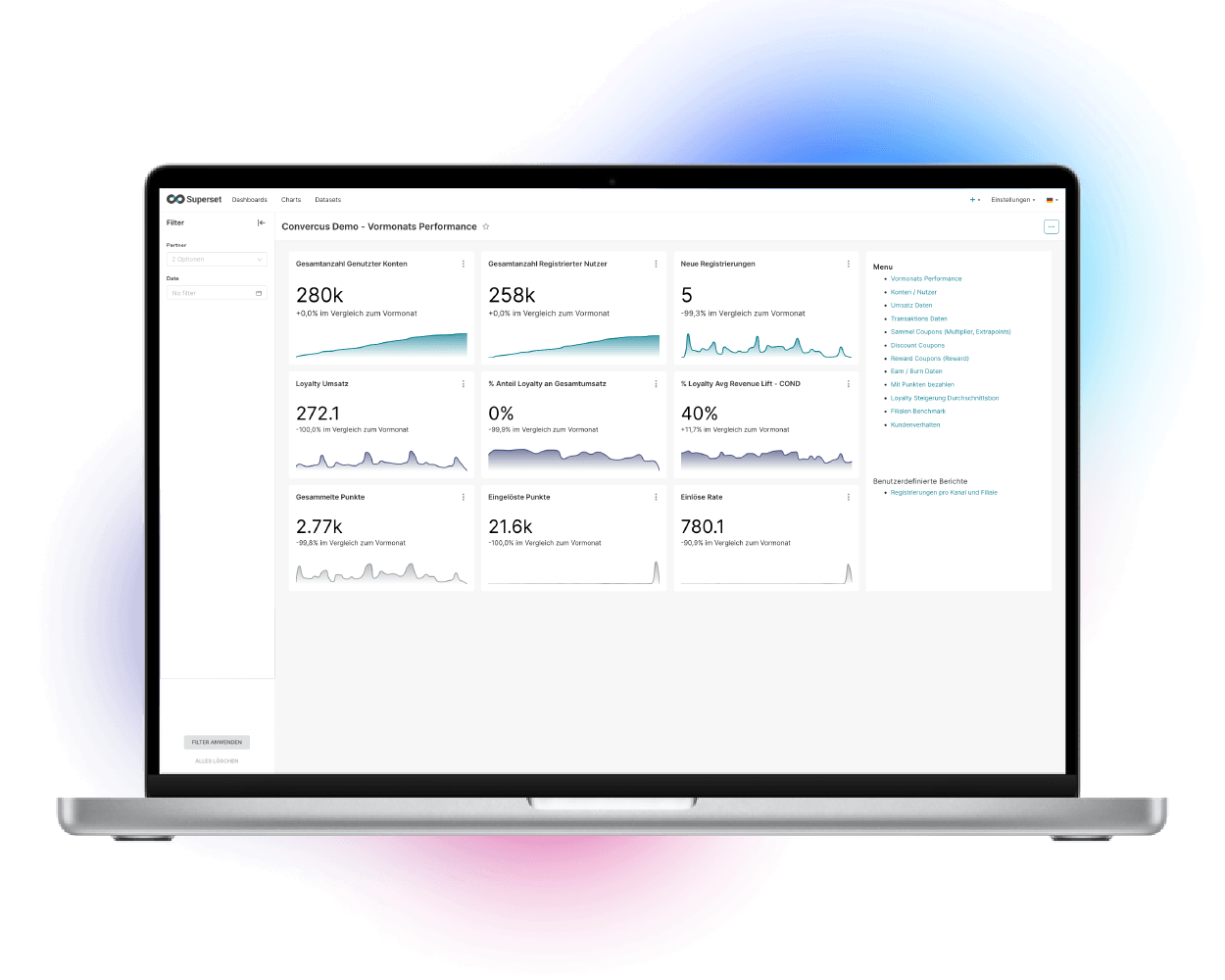
Reporting and Insights with Convercus
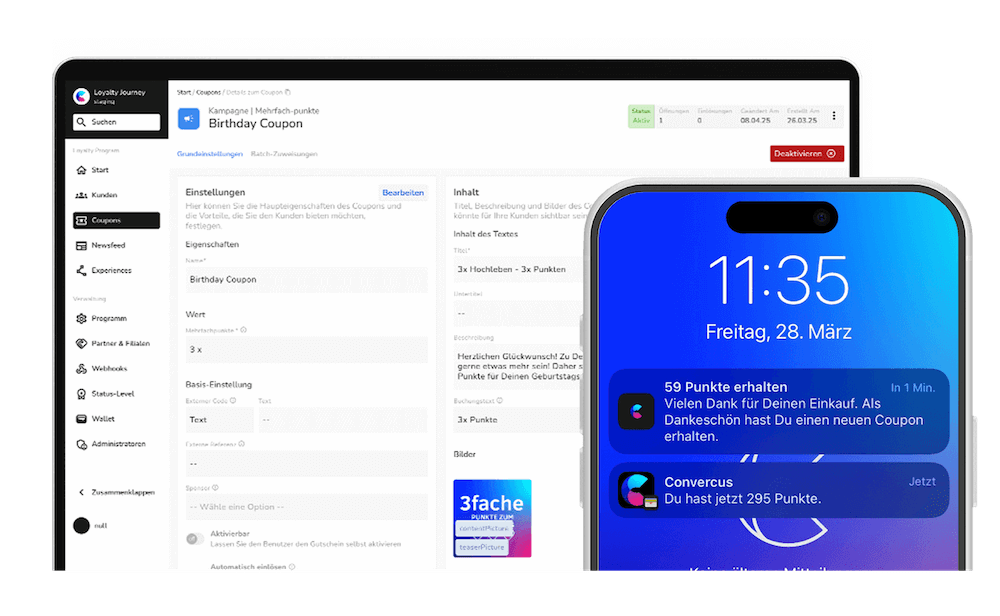
The platform makes all relevant key figures visible in real-time. Through the integrated KPI dashboard, you can keep track of retention rate, active members, redemption rates, and campaign successes at all times. You can create reports without needing BI experts. Thanks to AI-powered reports, users simply enter a question, and the system automatically generates a suitable analysis. Additionally, data-driven triggers can be set for loyalty actions , so campaigns are not managed by gut feeling, but ratherdriven by real data . This makes customer loyalty not just tangible, but measurable.
5 Measures to Increase Customer Loyalty That Really Work
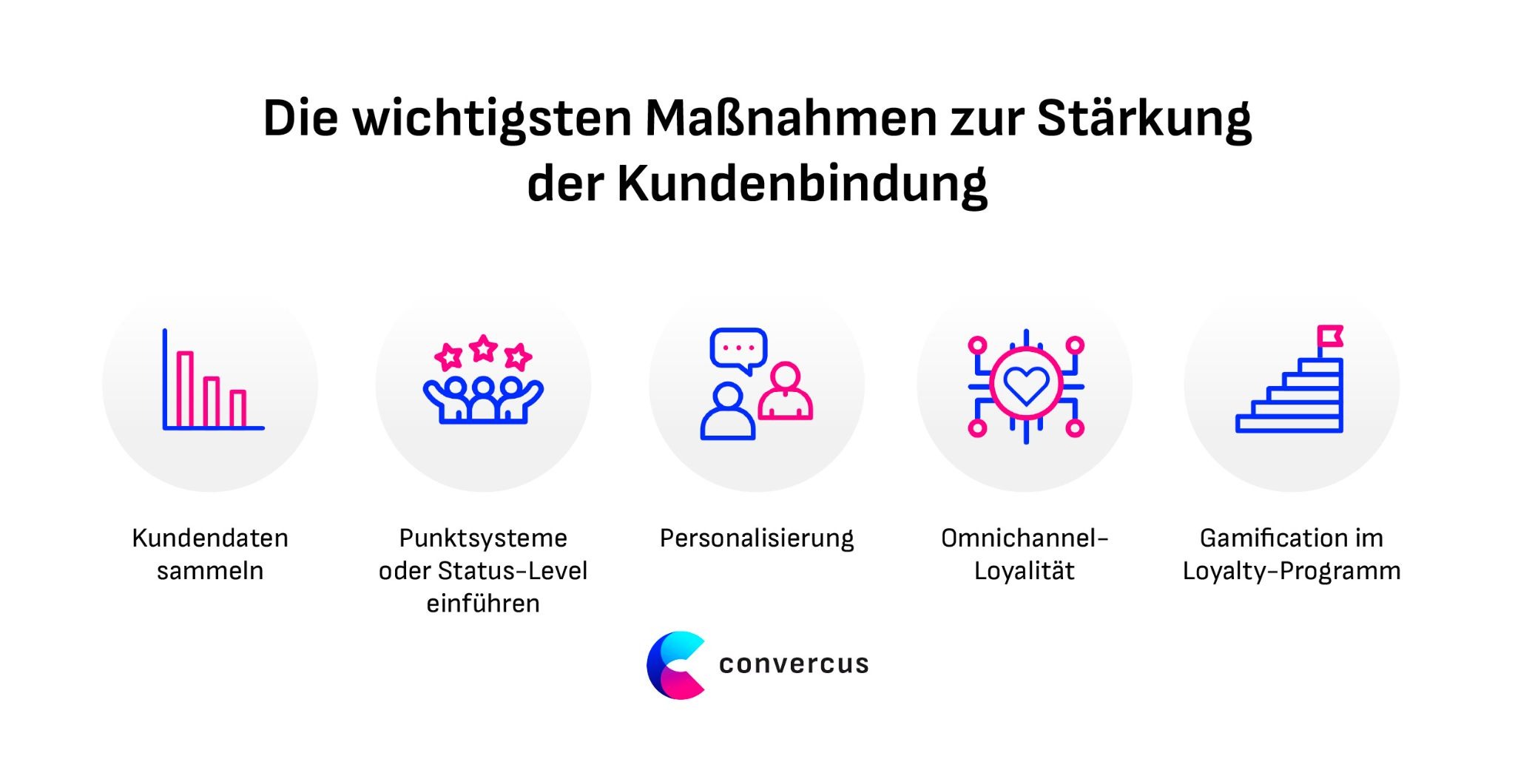
The following five customer loyalty measures are proven in practice and can be implemented immediately with the right loyalty infrastructure. Each measure addresses a specific lever that strengthens your customer relationships and delivers measurable results. The key is not isolated implementation, but rather the interplay of all instruments on a central platform. How can I improve customer loyalty? The answer lies in these five steps.
1. Collect Customer Data: How First-Party Data Forms the Foundation of Every Loyalty Strategy
Third-party cookies are disappearing, meaning companies are losing an important data source for marketing and personalization. This makes first-party data, i.e., data that customers voluntarily and directly share with your company, even more valuable. A loyalty program is the ideal tool for acquiring this data: customers willingly share information when they receive genuine added value in return, such as points, exclusive offers, or personalized rewards.
A well-structured loyalty program generates, among other things, data on purchasing behavior, channel usage, product preferences, and marketing consents. Convercus allows all this customer data to be centrally collected and directly used for personalized campaigns. The result: a data foundation that grows with every interaction. Because without data, there's no personalization, and without personalization, there's no sustainable customer loyalty through data-driven loyalty programs.
2. Introduce Point Systems and Status Levels: Why Emotional Incentives Retain Customers Longer Than Discounts
Discounts work short-term; they attract price-sensitive buyers but don't create genuine loyalty. As soon as competitors offer lower prices, these customers leave. Point systems and status levels, however, create a sense of belonging. Psychologically, the Endowment Effect applies here: What customers already "possess" (collected points, an achieved status) they are reluctant to give up.
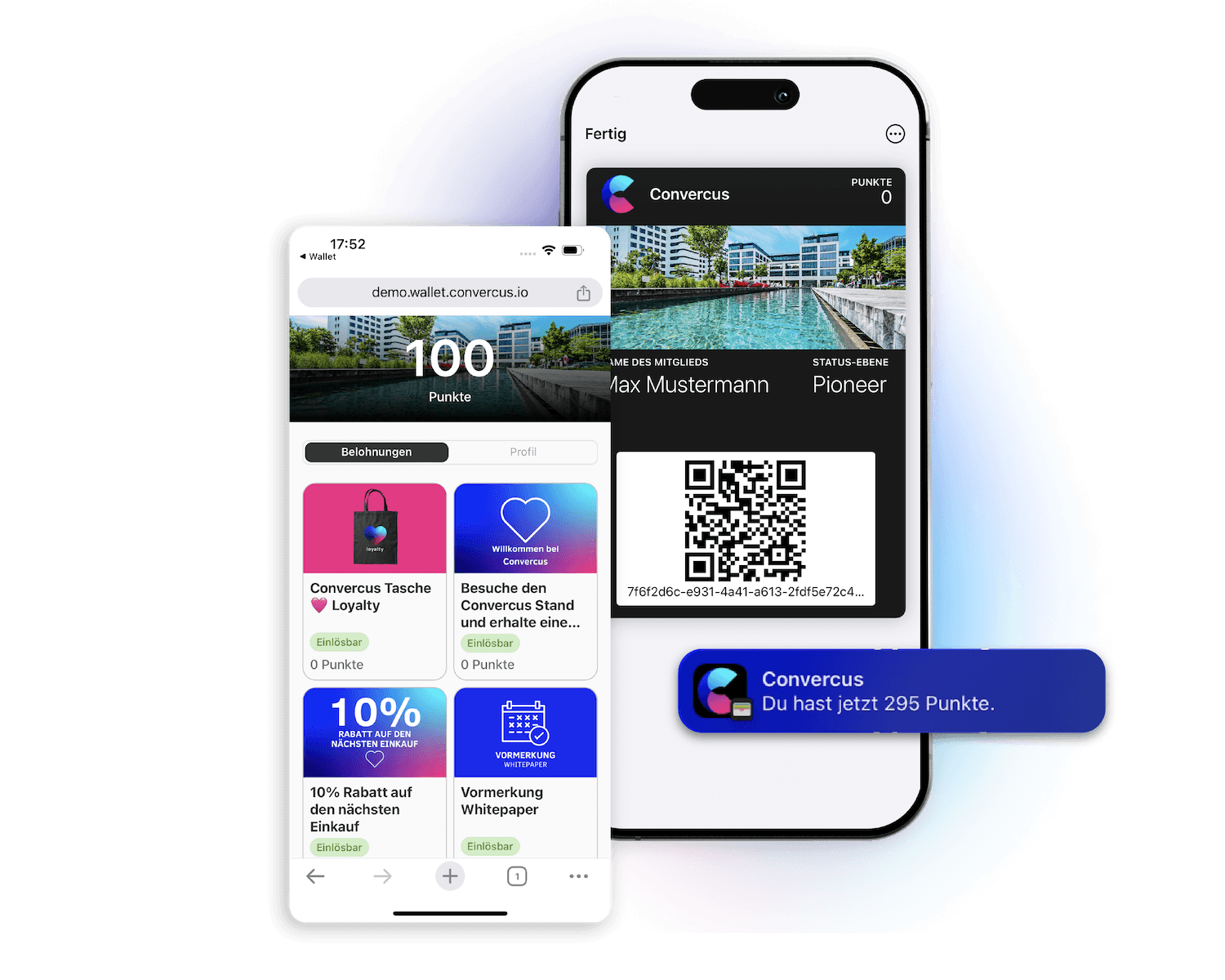
With Convercus, you can configure flexible rules for point allocation and individual status models like Silver, Gold, or Platinum. Each level offers unique benefits that emotionally connect customers to your brand. Examples of such incentives:
- Exclusive previews of new collections for Gold members
- Status-based service benefits such as free express shipping or a personal shopping advisor
- "Money-can't-buy" experiences: VIP events, backstage access, or exclusive product launches for top-tier members
The core message is clear: Emotional connection trumps price loyalty. Companies that want to retain customers long-term need incentives that go beyond mere discounts. This is also particularly important for B2B Loyalty .
3. Personalization: Increase Customer Loyalty Through Individualized Communication
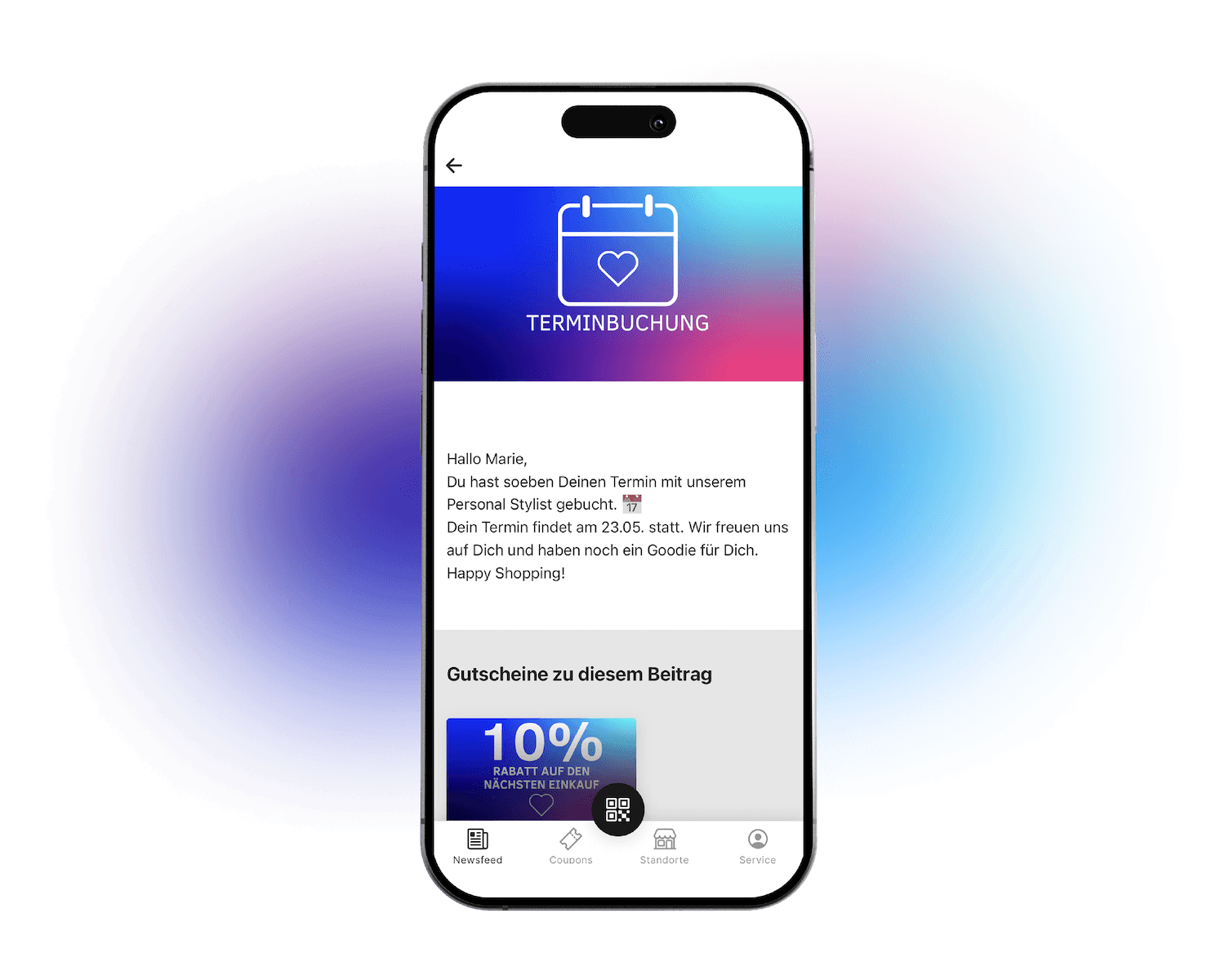
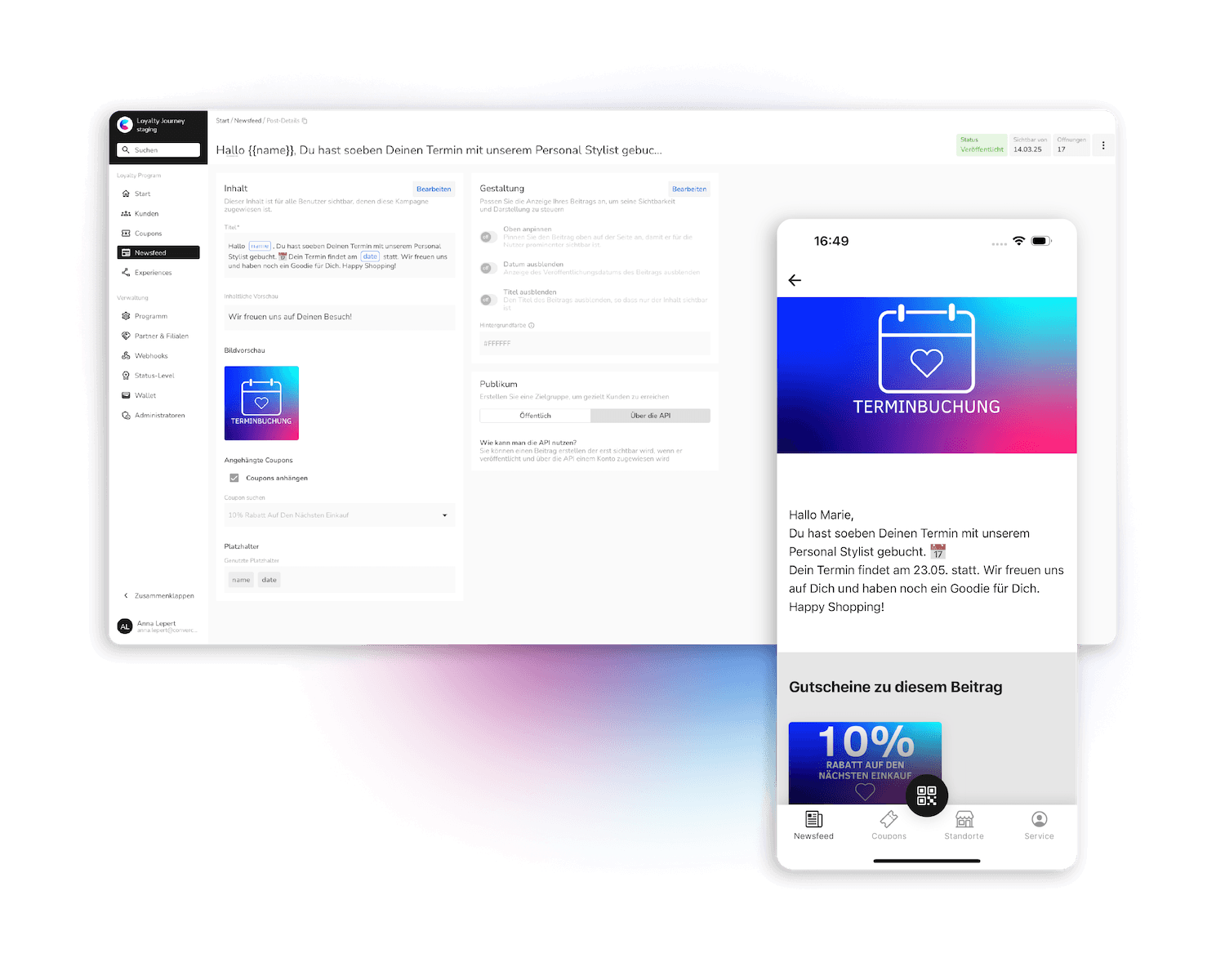
Today, customers expect offers and communication to be tailored to their individual needs. A generic approach is no longer sufficient. True personalization goes far beyond "Hello [First Name]": relevant product recommendations, occasion-based rewards, and channel-specific communication make all the difference.
The foundation for this is provided by the Data from your loyalty program. Convercus offers Marketing automation and personalization features based on real-time behavioral data, creating campaigns that truly resonate.
For example: A customer regularly buys sports shoes from your online shop. Instead of a generic newsletter, they receive a personalized points promotion for matching sports accessories. The result: higher relevance, stronger engagement, and more repeat purchases. Because relevance is the key to long-term customer loyalty.
4. Omnichannel Loyalty: How POS, App, and Online Shop Work Together Seamlessly
Points collected in-store but not redeemable online? That frustrates customers and destroys trust, which is particularly detrimental to customer loyalty in retail . Fragmented customer experiences are among the most common reasons why loyalty programs fail. The solution: Omnichannel, where customers experience a consistent program across all touchpoints, whether they are in-store, in the online shop, or using the app.
Convercus integrates seamlessly into POS systems, online shops, and apps. Companies that rely on the Convercus white-label app achieve an 8x higher customer interaction than programs without an app. Key touchpoints at a glance:
- POS / Store
- E-commerce
- App (White-label)
- Wallet Pass (Apple/Google)
- Email & Push Notifications
Customer loyalty only works if it's tangible everywhere. A cross-channel experience strengthens the brand relationship and makes all the difference in the competition.
5. Gamification in Loyalty Programs: Increase Purchase Frequency with Challenges and Status Levels
Gamification leverages the natural human play instinctto playfully boost customer loyalty. Challenges, quizzes, and collection campaigns increase engagement while also promoting cross-selling. Psychologically, three mechanisms are at play:
- the urge to complete tasks
- the brain's reward system, and
- social comparison with other participants.
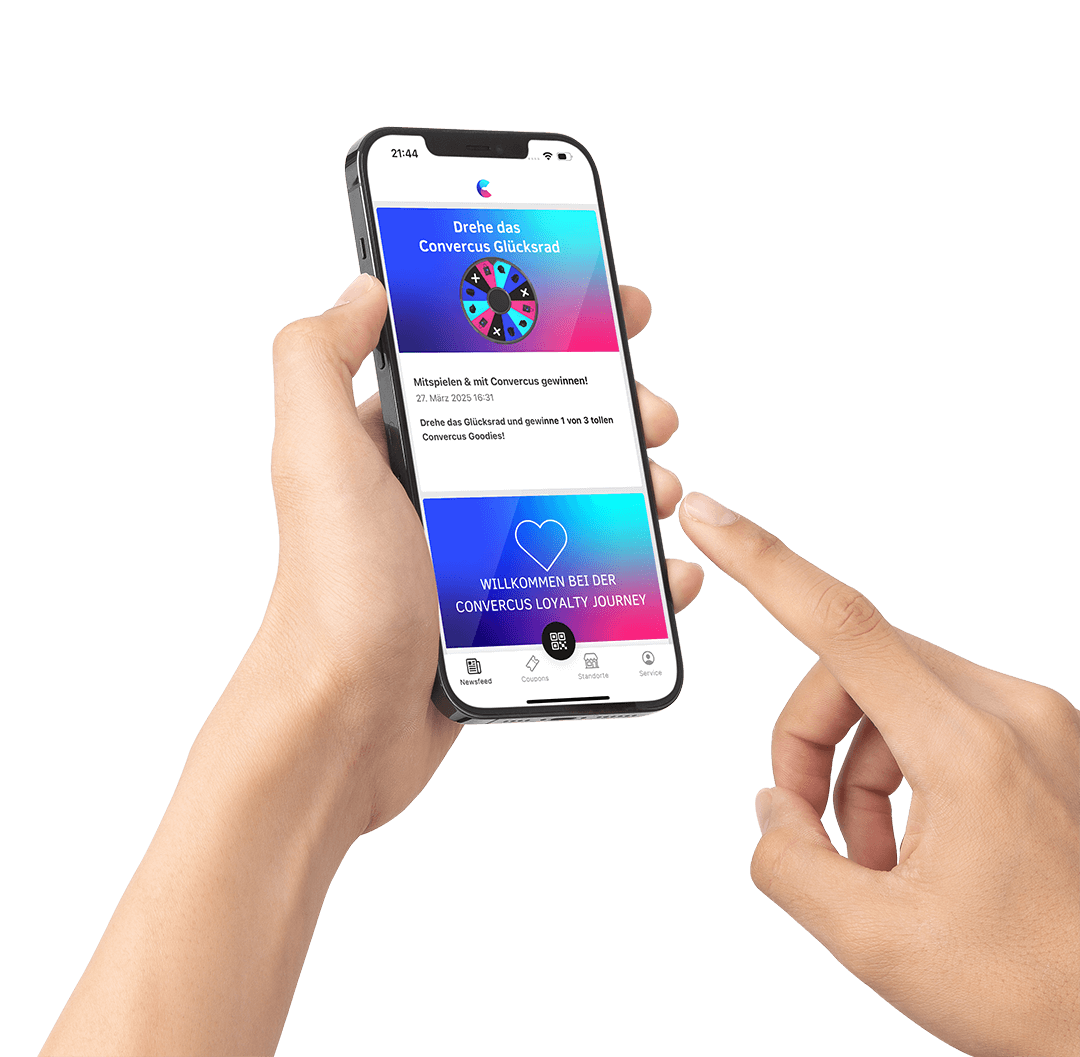
Convercus offers a variety of game mechanicsthat can be individually configured: from digital stamp cards and spinning wheels to knowledge-based quizzes. A concrete example: A fashion brand launches a "Style Challenge." Customers earn points for purchases from various categories and unlock an exclusive reward upon completion. The result: higher purchase frequency, broader shopping carts, and a stronger emotional connection to the brand. Gamification makes customer loyalty tangible and measurable.
Data collection, points systems, personalization, omnichannel, and gamification as the most important customer loyalty measures
%20(1).png)
Increase Customer Loyalty – Loyalty Software from Convercus
All the described measures only unfold their full potential when they converge on a central platform. This is precisely what Convercus delivers: The customer loyalty software combines data collection, points systems, personalization, and omnichannel management into a single solution that not only improves customer loyalty but also makes it measurable.
The results speak for themselves: Programs achieve up to an 80% redemption rate for collected points, integrate 6 million customers into a single program in a short time, and record over 40 million loyalty accounts and more than 116 million transactions. The platform is GDPR-compliant and hosted in Europe.
Convercus is built on four pillars: Loyalty Engine for points and status management, Couponing for personalized offers, Engagement with AI insights and marketing automation, and Tech & Integration for seamless connection to existing systems. Thanks to its API-first approach, the platform is quickly integrable and requires minimal IT resources.
Conclusion: Systematically Increase Customer Loyalty
Customer loyalty is no accident; it is the result of a data-driven strategythat understands, activates, and continuously optimizes customer behavior. Modern loyalty programs go far beyond discounts: they create emotional connections, deliver personalized experiences, and generate measurable results throughout the entire customer journey.
With the right technology, customer loyalty can be implemented scalably and across all channels. Convercus supports companies on this path as a strategic partner, from initial data collection to ongoing program optimization. Those who invest in loyalty today secure a decisive competitive advantage tomorrow.
FAQ on Increasing Customer Loyalty
Why is customer retention more important than new customer acquisition?
Acquiring new customers costs more than nurturing existing ones. Loyal customers buy more frequently, spend more, and actively recommend the brand. Even a 5% increase in retention rate can boost profitability by 25–90%. Targeted customer loyalty measures are therefore one of the most cost-effective investments a company can make.
When does a loyalty program become worthwhile?
Companies particularly benefit from a loyalty program with a customer base of approximately 100,000 users. However, the repurchase potential of the respective industry is also crucial. Convercus offers scalable solutions that grow with the company.
Which industries benefit most from loyalty programs?
Retail (fashion, DIY, food, sport), hospitality, mobility, and e-commerce particularly benefit. Wherever there are regular purchasing opportunities and customers can choose between multiple providers, customer loyalty measures create a measurable competitive advantage.
Which factors are particularly important for customer loyalty?
The most important factors are a solid data foundation, personalized communication, emotional incentives such as points systems and status levels, a consistent omnichannel experience, and the continuous measurement and optimization of all customer loyalty measures based on clear KPIs.
- Point systems, status levels & gamification
- Omnichannel integration into POS, app & online shop
- AI-powered insights & marketing automation
Convercus has already integrated over 6 million customers for a single brand into a loyalty program, with redemption rates of up to 80%.

In our experience, missing system integration, anonymous customer data, and irrelevant communication are the three biggest weaknesses. The Convercus Loyalty Software addresses precisely these issues – with an API-first infrastructure that seamlessly integrates into existing POS, e-commerce, and CRM systems, and engagement tools that transform anonymous buyers into identifiable, addressable customers.
- 5x Return on Investment
- 80% Customer Identification
- 8x Customer Interaction
- +274% Repurchase Rate
.jpg)

