







The topic, briefly and concisely
- Elektronikhändler haben ein Long-Cycle-Problem. Kunden kaufen große Geräte oft nur alle 2 bis 5 Jahre, deshalb muss Loyalty zusätzliche Anlässe über Zubehör, Services und digitale Touchpoints schaffen.
- Omnichannel und API-First sind Pflicht. Eine wirksame Loyalty Software für Elektronikhändler verbindet POS, Online-Shop und App in einem zentralen Kundenkonto und ermöglicht Echtzeit-Einlösung, Segmentierung und Personalisierung.
- Service-Benefits schlagen reine Rabattlogik. Garantie, Geräteschutz, priorisierter Support, Zubehör-Incentives und relevante Coupons schaffen mehr Bindung und schützen die Marge besser als Standardpunkte allein.
- Convercus ist eine Software für Loyalty mit Branchen-Fit. Wer Loyalty Engine, Couponing, Engagement und API-First-Integration für den Elektronikhandel in einer Plattform verbinden will, findet in Convercus eine passende Lösung.
Why Customer Loyalty is Particularly Challenging in Electronics Retail
Loyalty Software for Electronics Retailers must solve a structural problem that other retail sectors don't experience with such intensity: long purchase cycles. If you buy a TV, a fully automatic coffee machine, or a washing machine today, you often won't return for another major purchase for months or even years. This is precisely why generic points programs often fall short in CE retail.
Added to this is extreme price transparency. Products are easily comparable online, margins are under pressure, and many product ranges appear interchangeable from a customer's perspective. In the e-commerce context of the consumer electronics industry, therefore, sometimes churn rates of up to 82% are cited. At the same time, according to cross-industry data, retention in this category is only around 18%. It's important to differentiate: these figures primarily concern digital purchasing relationships; well-orchestrated omnichannel models usually perform better.
The "Long Cycle" Problem: When the Next Device Purchase is Too Far Away
The real challenge isn't the initial purchase, but the time in between. A loyalty program for electronics retailers therefore shouldn't just wait for the next TV or laptop purchase. It must create additional opportunities for interaction : accessories, consumables, services, repair offers, app- or wallet-based communication, and personalized reminders.
This interim period is particularly economically relevant. Existing customers in CE retail generate a significant portion of accessory sales; international data quantifies this potential at 37% of revenue from accessory purchases. If loyalty is implemented correctly here, it monetizes the gap between two major purchases.
Omnichannel is Not an Extra, but a Necessity in Electronics Retail
Today, electronics retailers rarely sell exclusively in-store or exclusively online. In-store advice, Click & Collect, service counters, apps, webshops, and marketplace logics must all work together. A loyalty solution that works differently at the checkout than in the online shop creates friction instead of loyalty. Therefore, a central customer account across POS, shop, and app is the crucial starting point.
Major market developments also demonstrate this: the merger of MediaMarkt and Saturn's programs in 2025 was primarily an omnichannel project. Earning and redeeming points across both brands, online, in-store, and in the app – this expectation has now become standard.

What Loyalty Software for Electronics Retailers Must Achieve
Not every loyalty platform is suitable for electronics retail. Decision-makers shouldn't just look at points logic and coupon designers, but at industry fit: omnichannel capability, API-first architecture, flexible rule sets, high performance during transaction peaks, and clean data and consent logic. Those who want to delve deeper into the topic will find an overview of customer loyalty software , including fundamental system types and application areas.
The technical perspective is particularly important. In many electronics retailers, historically grown system landscapes exist with POS, ERP, online shop, CRM, service desk, and app. Good loyalty software must not complicate this landscape, but rather must function as a connecting layer for data, benefits, and communication .
Central Account, POS Integration, and Real-time Capability
In everyday operations, it matters whether a customer sees the same points balance at the checkout, in the webshop, and in the app. Electronics retailers therefore need a solution with real-time POS and e-commerce integrationso that earn-and-burn, couponing, and status benefits are consistent everywhere. Especially for store networks with repair or service counters, it's also crucial that offline cases can be processed securely.
You should check these mandatory criteria during software evaluation:
- The platform consolidates purchases from in-store, online shop, and app into a single loyalty account.
- Rule sets can be flexibly defined for device categories, accessories, services, and promotional periods.
- Redemptions and coupons work at all relevant touchpoints without manual special processes.
- The solution also scales during peak loads, such as Black Friday, launches, or national campaigns.
- Reporting and segmentation are available to the business department without permanent IT dependency.
API-First Architecture and Integration into Existing Systems
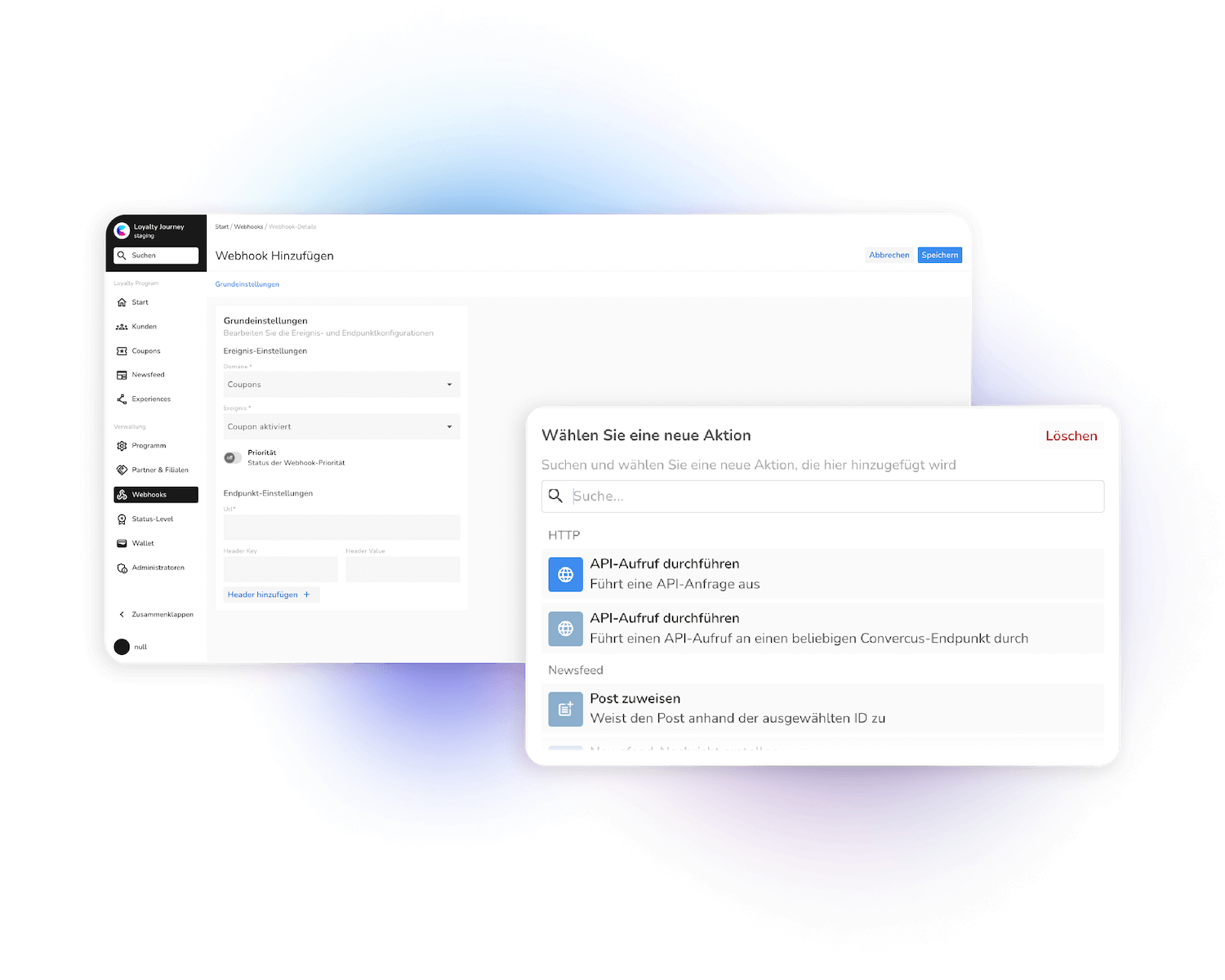
Because integration represents the biggest hurdle for 38% of companies, API-first in CE retail is not a buzzword, but risk minimization. A modern loyalty software must be able to seamlessly integrate ERP, CRM, POS, webshop, app, and marketing systems. For IT teams, it's crucial that data flows are documented, events standardized, and response times remain stable even with millions of data records. You can find more on this on the page about Tech and Integration.
For electronics retailers, it's also important that product and service data work together. If you only know that "something was purchased," you can't personalize effectively. However, if you know the device type, purchase date, warranty status, and channel, you can manage upgrade reminders, accessory recommendations, or service offers much more precisely.
Personalization, Points Logic, and GDPR Compliance
In electronics retail, points should not expire quickly. If customers inherently rarely purchase large devices, a rapid points expiry punishes the business model instead of supporting it. Longer validities, service benefits, personalized coupons, and triggers for accessories, consumables, or maintenance are better.
Legally, the platform must clearly separate contractual relationships from marketing. Particularly relevant are Art. 5 GDPR on data minimization and purpose limitation, Art. 6 (1) GDPR as a legal basis, Art. 13 GDPR for transparent information, Art. 28 GDPR on processor obligations, and Art. 32 GDPR on security of processing. Additionally, for newsletters and comparable direct advertising, § 7 UWGis relevant; for cookies, SDK tracking, and similar access to end devices, § 25 TDDDG is relevant. Therefore, anyone who wants to communicate personally needs not only good campaigns but also robust consent management.

The Loyalty Mechanics That Really Work in Electronics Retail
The biggest mistake in CE retail is too narrow an understanding of loyalty. If the program only awards points per € of sales, it remains interchangeable. More successful are mechanics that connect service, accessories, status, content, and community. This is precisely how a system for customer engagement emerges from pure discount logic.
Consumer expectations for 2026 also show that this is necessary: 80% of surveyed German consumers want immediately redeemable benefits, 62% expect personalized offers, and 73% would switch to digital loyalty solutions. Electronics retailers should therefore design rewards so that added value is immediately visible and digitally usable .
1. Service-based Loyalty Instead of Pure Discounts
In electronics retail, warranty extensions, device protection, installation assistance, prioritized repairs, or tech consulting are often more valuable than a 5% discount. Such services meet real needs while also better protecting margins. Service benefits are therefore the strongest loyalty leverif you want to move away from pure price competition.
Especially in high-priced categories like home entertainment, household appliances, or IT, service builds trust. Customers remember not only the price of their last purchase but also how easy setup, support, and troubleshooting were.
2. Accessories and Consumables as a Bridge Between Major Purchases
The best CE loyalty strategy doesn't just sell devices, but creates recurring purchase opportunities in between. Cases, cables, ink, cleaning products, power supplies, spare parts, or smart home extensions are ideal triggers. Accessories are the revenue bridge between two infrequent main purchases.
This works particularly well with rules like "double points on compatible accessories within 30 days of device purchase" or "personalized coupon for consumables 90 days after initial purchase." This is precisely where couponing and loyalty intertwine.
3. Tier Models, Gamification, and Paid Loyalty with Real Value
Status programs also work in electronics retail, but only if the benefits are substantial: early access to launches, prioritized support, exclusive service slots, or better return and shipping options. Mere named tiers without added value generate little loyalty. Tiers must unlock tangible privileges, not just cosmetic labels.
Gamification can also generate frequency, for example, through challenges, product knowledge quizzes, store check-ins, or app activations. Those who want to strengthen digital touchpoints will find more strategies under App-first Loyalty for mobile activation.
Best Practices: What Electronics Retailers Can Learn from Leading Programs
The German market is now sending a clear signal: loyalty in electronics retail is being strategically rebuilt, not just modernized. The most visible example is the merger of MediaMarkt and Saturn's customer programs in 2025. The real takeaway is less about branding and more about the architecture: a shared account, cross-brand earning and redeeming, in-store, online, and in the app.
This is particularly relevant for medium-sized retailers because it provides a pragmatic playbook: first, break down data silos; second, unify benefits across all channels; third, personalize communication more effectively. Retailers with 50 stores and 200,000 members need precisely this logic, not just corporations with a Europe-wide presence.
MediaMarktSaturn: Omnichannel Consistency Trumps Program Complexity
The most important lesson from the market leader's case is the reduction of friction. Today, customers no longer expect multiple programs, separate logins, or different redemption logics. Simplicity itself is a loyalty factor. Making the program consistent from a customer's perspective increases usage, data quality, and the likelihood of recurring interactions.
CECONOMY's strategic development also aligns with this: a higher online share, stronger services, more platform logic. In this model, loyalty is no longer an add-on but part of operational management.
Best Buy, Samsung Rewards, and Currys: Added Value Instead of Standard Points
International examples show how diverse effective loyalty can be in CE retail. Best Buy works with tiered benefits, Samsung Rewards relies on clear tier logic with accessory benefits, and Currys uses content, product tests, and tutorials as a loyalty tool. The common thread is relevance over genericness.
For German electronics retailers, this specifically means: Not every brand needs a paid membership model, but almost every brand benefits from better segmentation, more service value, and a content layer between purchases. Furthermore, anyone who wants to build interaction beyond the transaction receipt should engagement and loyalty should not be considered separately.
The Business Case: Does Loyalty Software Pay Off in CE Retail?
Yes, if the program is geared towards accessories, services, and omnichannel activation. Especially in electronics retail, the business case is often underestimated because decision-makers only look at the next major appliance purchase. However, the economic leverage comes from higher retention, more interim purchases, better coupon utilization, and additional first-party data for more efficient marketing.
An illustrative scenario: An electronics retailer with €200 million in revenue, 500,000 customers, an average of 1.2 purchases per year, and 18% retention improves their retention to 25% and increases purchase frequency to 1.5 purchases through accessory and service incentives. This results in an additional revenue potential of approximately €13.125 million based on 35,000 additionally retained customers, each with 1.5 purchases and an average basket value of €250. In addition, better margins are achieved when service benefits are used instead of blanket discounts.
Model Calculation for a Mid-Sized Electronics Retailer
The following table illustrates the logic behind the business case. It does not replace an individual calculation but demonstrates how quickly loyalty can transform from a cost center into a growth driver. Across studies, it also holds true that even 5% more customer retention can generate significant revenue effects in many business models; loyalty members are often cited as generating 12% to 18% higher revenues compared to non-members.
First-Party Data, Automation, and ROI
In addition to revenue, loyalty also impacts marketing efficiency. By systematically capturing preferences, purchase histories, device ownership, and consents through the program, businesses build first-party data as a strategic asset . In a post-cookie environment, precisely this data becomes crucial for personalization, re-engagement, and budget efficiency.
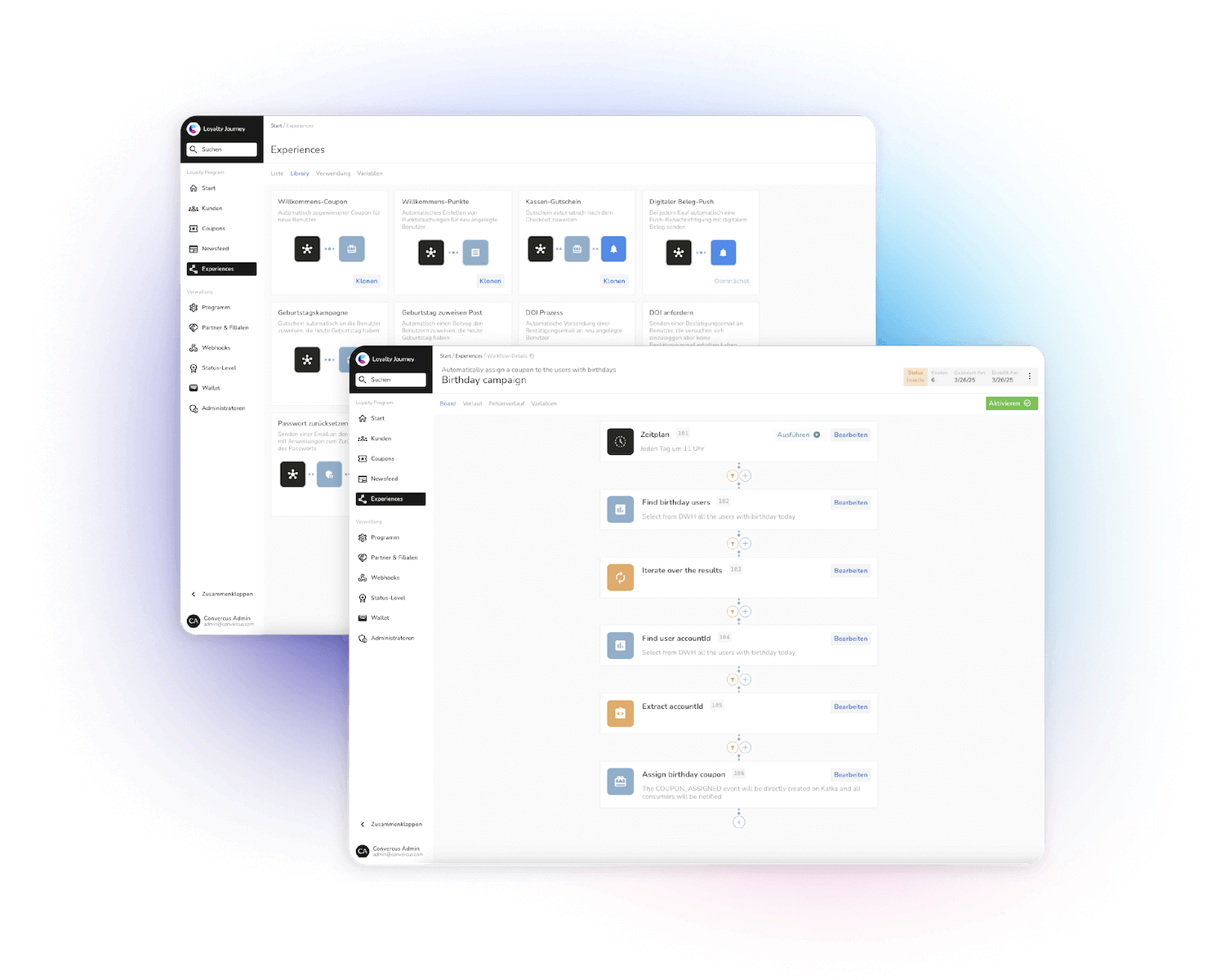
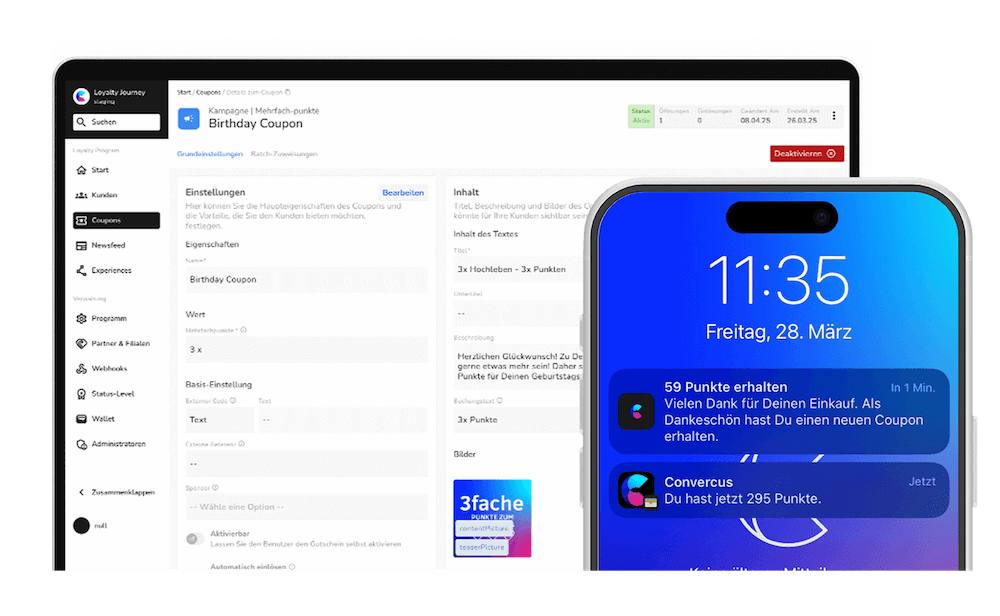
In practice, therefore, a platform that combines Loyalty, Couponing, Engagement and API-First Integration makes sense. Convercus is precisely designed for this combination and brings references from DACH retail like Euronics. What's relevant for retailers is not just the depth of features, but also the operational impact: according to project experience, white-label apps can lead to 8x higher customer interaction if mobile touchpoints are consistently integrated into the program.
Selection Criteria: How to Find the Right Loyalty Software
The best software isn't the one with the most features, but the one with the highest industry fit. For electronics retailers, this means: less tool demo, more architecture, process, and business case review. Anyone looking to replace a legacy system should also clarify early on how migration, point balances, status levels, and historical transactions will be handled.
Cloud-based deployments dominate the market, which makes sense for most electronics retailers: faster updates, lower operational effort, and better scalability. On-premise is usually only an option if there are group-wide requirements or specific infrastructure restrictions. More important than this fundamental question is often whether the solution integrates seamlessly with existing processes and responsibilities. .
These 8 Questions You Should Ask Every Provider
- How are POS, online shop, app, and CRM technically connected, and which APIs are available for this?
- How flexibly can rules for accessories, services, device categories, and time-based triggers be configured?
- How are existing programs, point balances, customer data, and historical status levels migrated?
- Which reporting, segmentation, and automation functions can the business department use independently without IT involvement?
- How does the platform handle peak loads on promotional days and during cross-branch campaigns?
- How are consent, data minimization, deletion concepts, and documentation obligations under GDPR supported?
- What real-world references are there in omnichannel retail, especially for product ranges requiring explanation?
- What do success management, rollout support, and the first 90 days after go-live look like?
Typical Pitfalls in Selection and Implementation
Many projects fail not because of the software, but due to an overly narrow scope. If loyalty is implemented without service processes, without a POS perspective, and without clear KPI definitions, the program will fall short of its potential. A clear target framework before go-live is therefore mandatory: enrollment rate, active members, redemption, additional purchases, service usage, consent rate, and retention should be defined in advance.
Equally important is the re-engagement of former buyers. In electronics retail, there is often untapped potential here, for example, with upgrade triggers or win-back campaigns based on inactivity. This also aligns with a look at further strategies for customer win-back and for increasing customer retention.
Trends 2026: How is Loyalty Evolving in Electronics Retail?
The market is moving away from isolated bonus programs towards networked customer engagement platforms. AI-powered personalization, headless architectures, and mobile program logic are gaining importance. Approximately 43% of loyalty solutions already use AI modules for personalization, and cloud-based models are the clear standard. This is particularly relevant for electronics retailers because product assortments, accessory purchases, and buying cycles provide strong data signals.
Headless Loyalty is becoming more important because retailers will need to deploy benefits and rules across more touchpoints in the future: in the store, in the app, in the wallet pass, at the checkout, in self-service, and potentially in retail media environments. The platform must then act as a flexible decision and rule engine working in the background, not just as a frontend for points.
What the Developments Around CECONOMY and JD.com Signal
The acquisition of CECONOMY by JD.com has also symbolically changed the market. It shows that electronics retail is becoming more data-, logistics-, and AI-driven. Loyalty thus becomes more operational and intelligent: faster recommendations, better upgrade predictions, more precise service offerings, and closer integration with commerce and fulfillment processes.
For mid-sized retailers, this doesn't mean a compulsion to reach corporate-level standards, but rather clear pressure to act. Anyone building new loyalty programs today should choose an architecture that allows for personalization, automation, and additional channels tomorrow without a complete overhaul.
Conclusion: Loyalty Software is a Growth Driver for Electronics Retailers
Electronics retailers don't need a generic bonus solution, but an industry-specific loyalty architecture. Successful programs are those that solve the long-cycle problem through accessories, services, omnichannel consistency, and personalized communication. This is precisely where the business case emerges: more active customers, increased frequency between device purchases, and valuable first-party data for more efficient marketing.
If you want to set up loyalty strategically and technically soundly in electronics retail, then Convercus is an obvious partner: with a Loyalty Engine, Couponing, Engagement, and an API-First approach for complex retail environments. Schedule a personal live demo and see how an omnichannel program for stores, online shop, and app can look in your setup.
FAQ
Is a loyalty program worthwhile in electronics retail despite low purchase frequency?
Yes, if the program is not solely focused on device purchases. The leverage lies in accessories, services, re-engagement, and digital engagement between major purchases. This precisely increases the likelihood of repeat purchases and better retention.
How complex is the implementation of loyalty software?
The effort primarily depends on your system landscape. If POS, shop, and CRM are already well-documented, a rollout can happen significantly faster than with highly fragmented legacy systems. A typical project involves multiple stakeholders from marketing, IT, e-commerce, and operations.
Does this work with our existing POS system and online shop?
In most cases, yes, if the platform is built API-First. It is crucial whether transactions, identities, product data, and redemption logic can be reliably exchanged via interfaces. This specific integration check should be technically validated before vendor selection.
Can loyalty software be used in compliance with GDPR?
Yes, but GDPR compliance is not automatically achieved by the tool alone. You need appropriate legal bases, transparent data protection notices, data processing agreements, secure processes, and robust consent management. For newsletters and tracking, in addition to GDPR, § 7 UWG and § 25 TDDDG also come into play.
How long does the migration of an existing program take?
Migration is usually more predictable than the organizational aspects. Technically, point balances, status levels, and customer data can often be transferred; new rules, internal approvals, and communication to existing customers are usually more complex. A clear migration plan with a parallel phase significantly reduces the risk.
What does loyalty software for electronics retailers cost?
Costs depend on the number of users, transaction volume, scope of functions, and integration effort. For mid-market and enterprise retailers, however, the license price alone is not the decisive factor, but rather the ROI through retention, additional purchases, service revenue, and marketing efficiency. Therefore, every selection should begin with a robust business case calculation.


- 5x Return of Invest
- 80% Kundenidentifikation
- 8x Kundeninteraktion
- +274% Wiederkaufrate