







The topic at a glance
- Market Development: The global market for marketing automation software is growing according to Fact.MR, to over $20 billion by 2034. Companies that don't automate now will lose ground to data-driven competitors.
- ROI Potential: Automated email campaigns generate more revenue than manual campaigns. Every dollar invested brings according to Nucleus Research, an average return of $5.44.
- GDPR as a Requirement: In the DACH region, privacy-compliant data management is a crucial selection criterion for any marketing automation software.
- Omnichannel is key: Only software that seamlessly connects POS, app, online, and email unlocks the full potential of personalized customer engagement.
- Convercus as a loyalty specialist: Convercus directly connects marketing automation with loyalty data and enables hyper-personalized customer loyalty across all touchpoints.
Which marketing automation software truly suits your business, and where does general automation end and genuine customer loyalty begin? CRM and marketing managers face precisely this question, as many tools promise efficiency in email campaigns and workflows.
However, companies with loyalty programs, omnichannel requirements, and a first-party data strategy need more than standard automations. Convercus addresses precisely this intersection and connects marketing automation directly with loyalty data. This guide compares five providers and shows which solution fits which goal.
What is Marketing Automation Software?
Marketing automation software systematically automates recurring marketing tasks along the entire customer journey. This includes email campaigns, lead scoring, segmentation, and cross-channel customer communication. Instead of manually managing individual processes, data-driven workflows manage the delivery of personalized content at the right time, through the right channel.
By using marketing automation software, various goals are pursued:
- Relieve marketing teams
- Develop leads more effectively and
- measurably increase revenue.
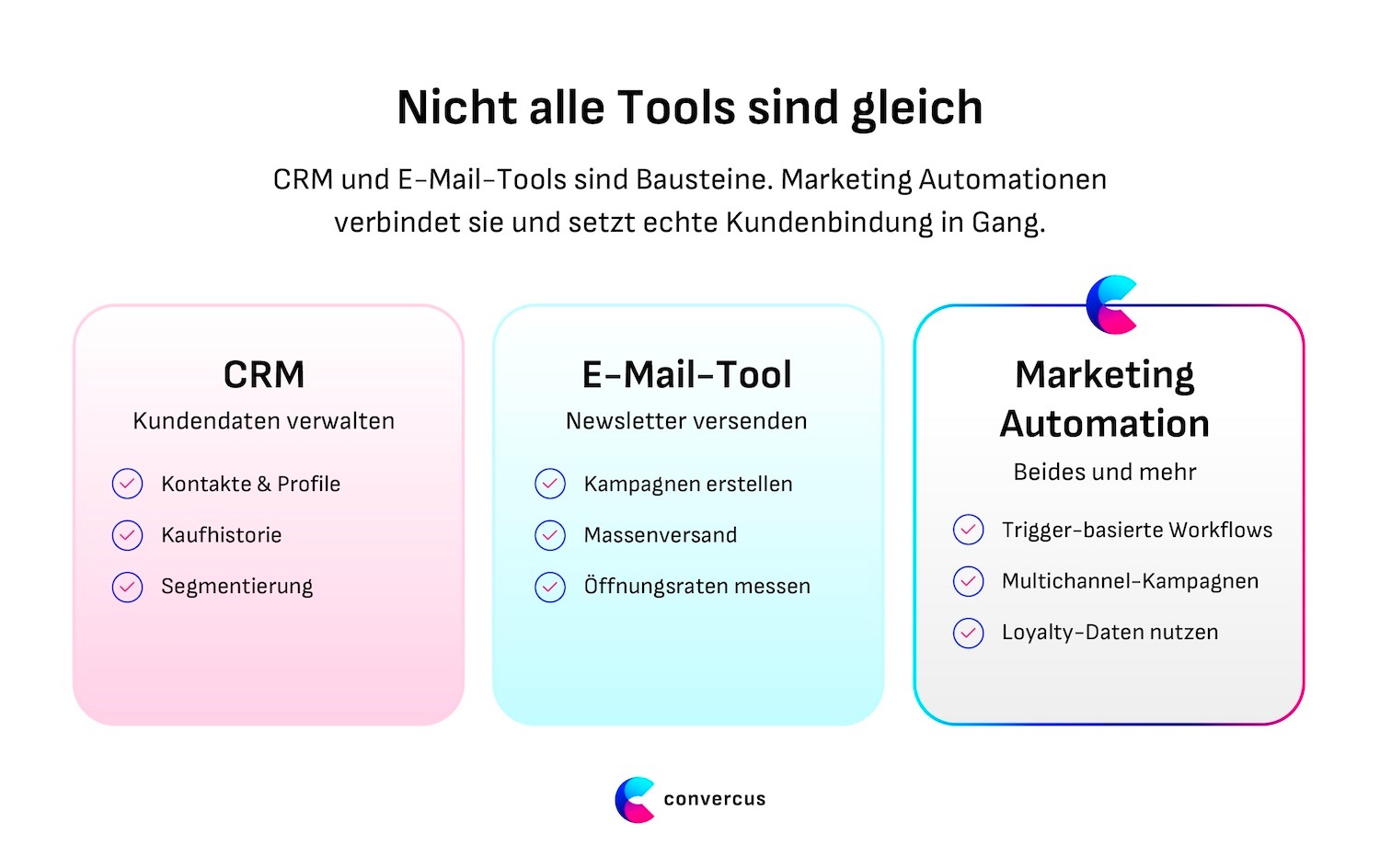
It's important to distinguish it from related systems. A CRM system manages customer data, a CMS organizes content, and pure email tools send newsletters. Marketing automation software goes much further: it combines trigger logic, segmentation, and multichannel campaigns in a central workflow. Especially for companies with loyalty programs , this opens up enormous possibilities, because behavior-based automations based on purchase data, point balances, or app usage create a depth of personalization that generic tools, compared to customer loyalty software , cannot achieve.
Nevertheless, according to the CINTELLIC Trend Study , 47% of companies still don't use marketing automation, even though 98% of marketers consider it crucial for B2B loyalty . This gap presents a clear opportunity for those who act now.
Key Features of Marketing Automation Software
Before comparing individual providers, it's worth looking at the features that marketing automation software truly needs to deliver. The specific requirements vary depending on the business model and industry. However, six core functions have become indispensable if automation is to go beyond simple email campaigns.
- Event-based Triggers: Automatic actions are triggered by specific user behavior, for example, a re-engagement email after 30 days of inactivity or a personalized coupon upon reaching a certain point balance. This creates workflows that precisely match the customer journey and can also promote customer re-engagement .
- Segmentation based on First-Party Data: Target groups are formed using proprietary, data-protection-compliant customer data. This is crucial, as third-party cookies are becoming scarce, and companies rely on reliable data sources.
- Email, Push Notifications, and App Communication: Multiple channels can be orchestrated within a single workflow. Customers are reached where they are actually active, rather than just in their inbox.
- Omnichannel Capability (POS + Online + App): All touchpoints are seamlessly linked to create a consistent customer experience. This is a crucial criterion, especially for retail and omnichannel businesses.
- GDPR-compliant Data Management: Consent management, EU server location, and privacy-by-design are not optional extras in the DACH region, but rather fundamental requirements for any reputable software solution.
- Integration into Existing System Landscape: An API-based connection to CRM systems, POS, and e-commerce platforms enables a quick start without complex IT projects.
The following detailed comparison shows how well individual providers actually cover these functions.
Best Marketing Automation Software: Detailed Comparison
The following five providers cover a broad spectrum: from beginner-friendly all-in-one platforms to enterprise solutions and specialized loyalty systems with integrated marketing automation. The evaluation is based on the previously defined core functions such as omnichannel capability, segmentation, GDPR compliance, and integration depth.
Convercus: Loyalty Platform with Integrated Marketing Automation
Convercus is not generic marketing automation software, but rather a specialized loyalty and engagement platform with integrated automation. It was developed for companies that view customer loyalty as a strategic growth driver and want to build their campaigns directly on loyalty data.
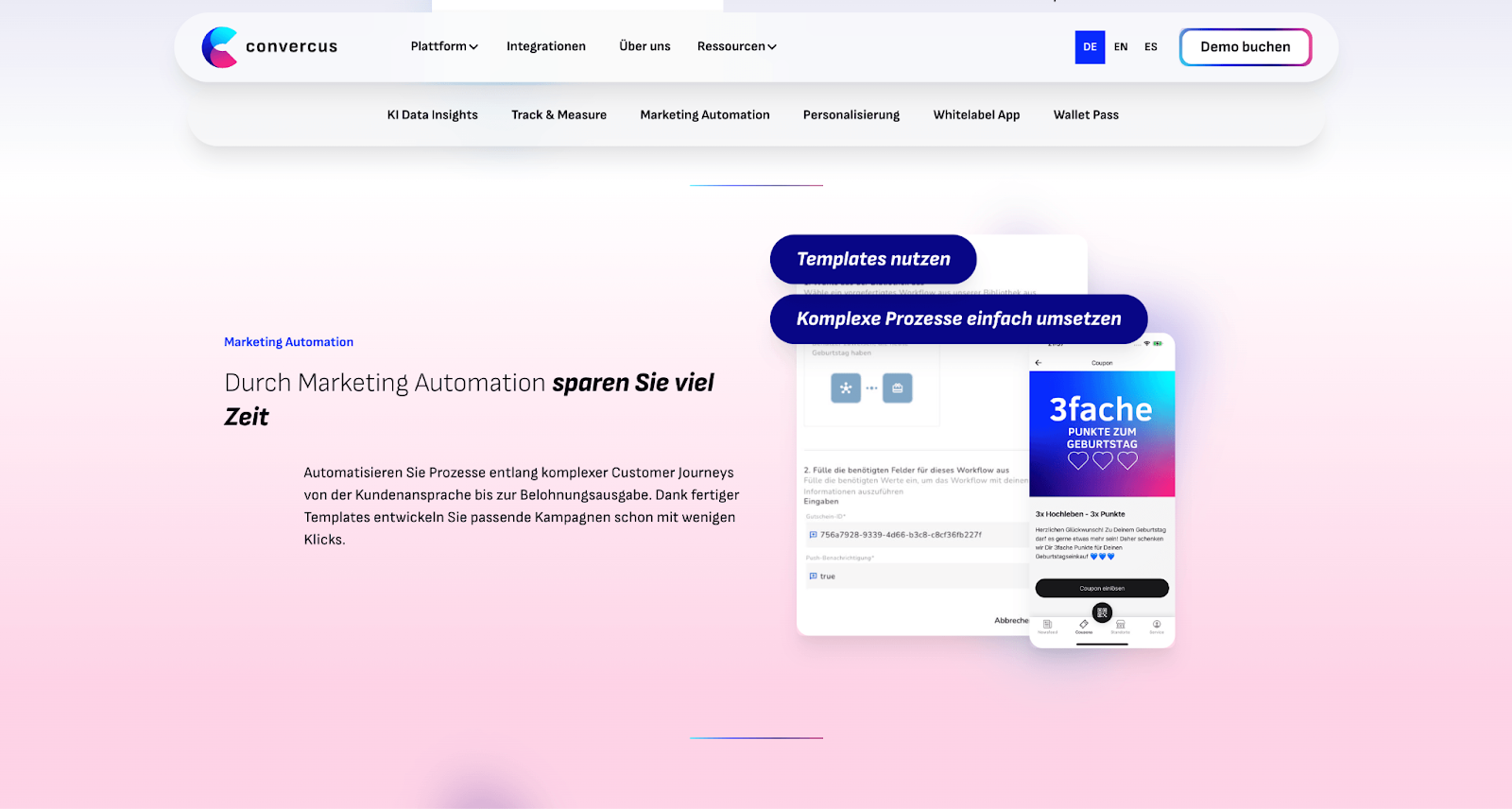
Strengths: Convercus picks up where generic tools leave off. Loyalty-based triggers directly trigger automations based on point balance, status changes, or purchase behavior. This means no generic workflows, but actions that precisely fit the customer journey.
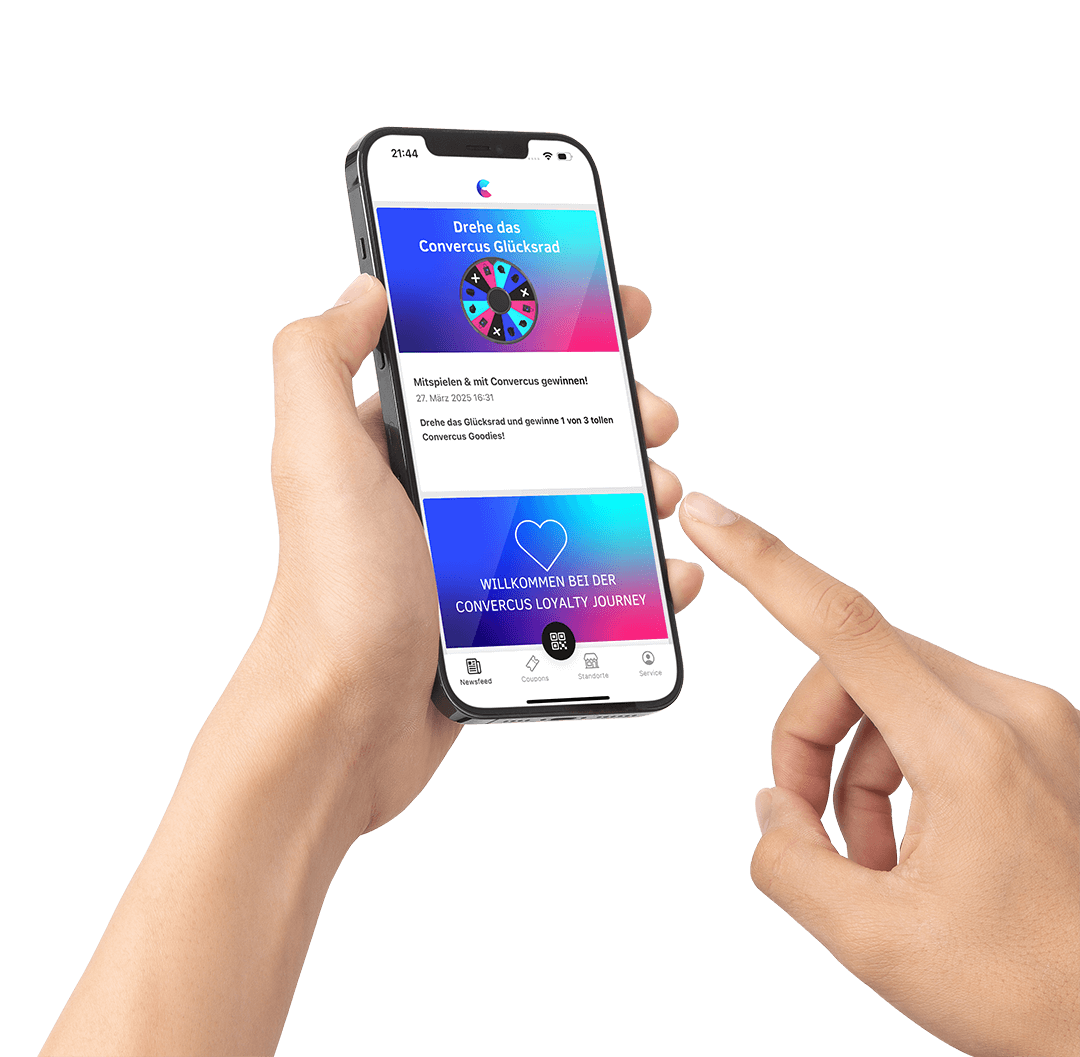
Additionally, Convercus focuses on seamless omnichannel: POS, white-label app, Wallet Pass, email, and push can be linked in a single workflow. AI-powered insights optimize campaigns based on real-time data, while the API-first architecture enables quick integration into existing CRM and POS systems . Additionally, Convercus uses gamification for customer loyalty to playfully foster loyalty. The usage and success-based pricing model is based on actual benefit, with all data being 100% GDPR-compliant processed on EU servers.
What to consider: Convercus is aimed at mid-market and enterprise companies with existing or planned loyalty programs. Those primarily looking to automate lead generation or B2B sales processes would be better served by a generic tool.
Ideal for: Retail, Fashion, DIY, Sports, and Hospitality. Convercus targets mid-market and enterprise companies with omnichannel requirements. Reference: Over 6 million customers registered for a single brand, up to 80% redemption rate for collected points. Convercus complements or takes over marketing automation where loyalty data forms the basis for personalized content.
Convercus in an Enterprise Ecosystem: In the mid-market, Convercus is often the sole solution. In the enterprise sector, the platform is frequently combined with specialized CRM and campaign management systems like Braze or Dymatrix. In this setup, Convercus provides real-time loyalty data, while the external campaign tool handles communication and automation, but can simultaneously trigger coupons and actions directly within the loyalty system. Not an either/or, but a coordinated interplay.
Pricing: Individual pricing
Brevo: All-in-One Solution for Email Marketing and Simple Automations
Brevo (formerly Sendinblue) positions itself as a beginner-friendly all-in-one platform with a strong email marketing core. The software is aimed at small and medium-sized businesses looking to start with marketing automation without high initial costs.
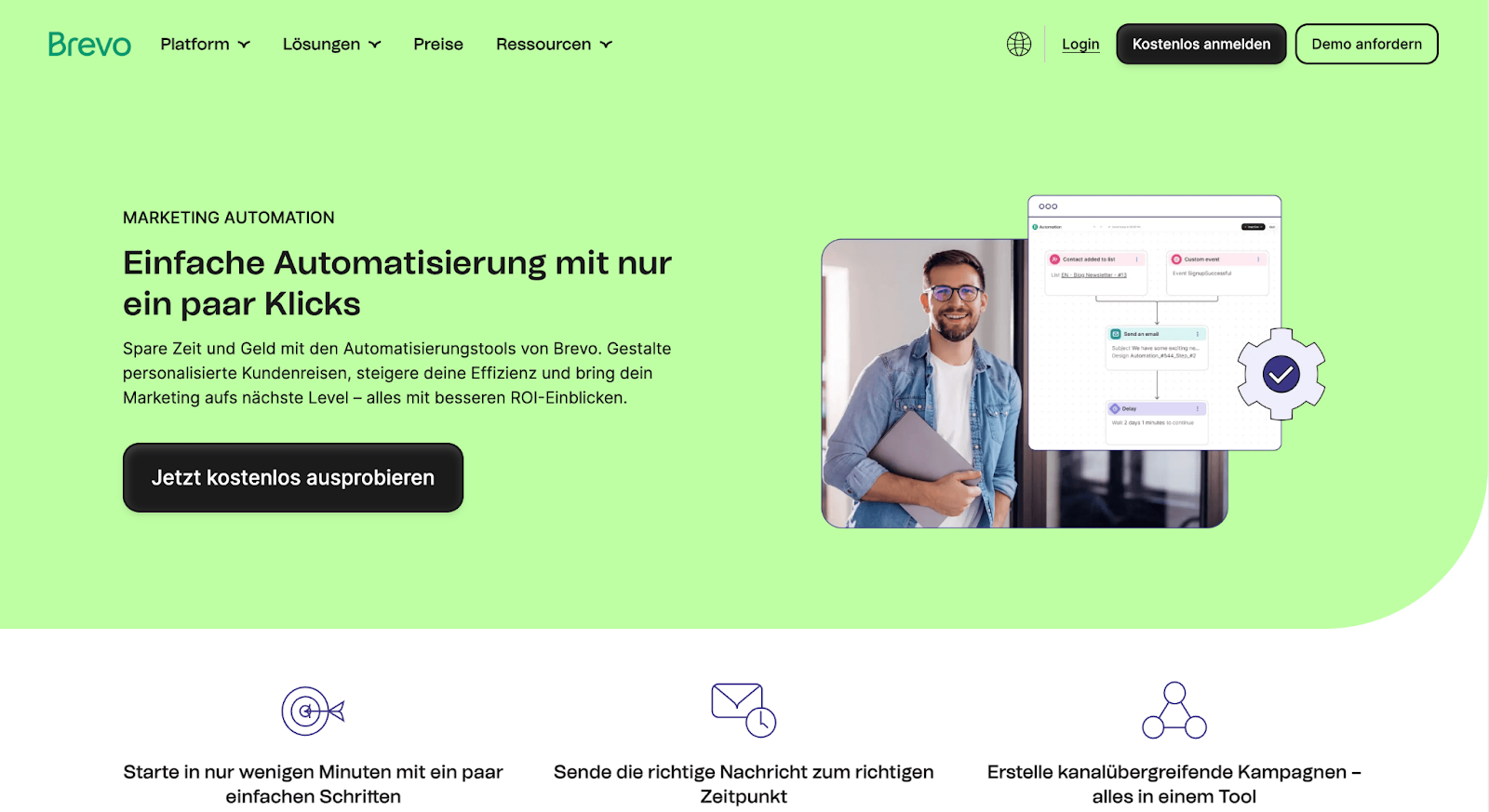
Strengths: The free entry with 300 emails per day significantly lowers the barrier. The intuitive workflow builder allows even beginners to set up automations quickly. SMS and WhatsApp integration expand the channels, and CRM functionalities are already integrated.
What to look out for: Omnichannel depth remains limited, as there is no native POS integration. The integrated Loyalty Engine covers basic functions but reaches its limits with complex omnichannel requirements, while segmentation is primarily based on email behavior rather than comprehensive customer data. For companies with sophisticated marketing processes, this is a crucial difference.
Ideal for: SMEs looking to start with email campaigns and simple workflows.
Price: From €7/month (Starter).
HubSpot Marketing: Market Leader for Inbound Marketing and CRM Automation
HubSpot is the market leader in inbound marketing and CRM-centric automation. With according to Bayelsa Watch approximately 29.5% global market share, the platform has established itself as a central solution for marketing teams looking to generate, nurture, and convert leads.
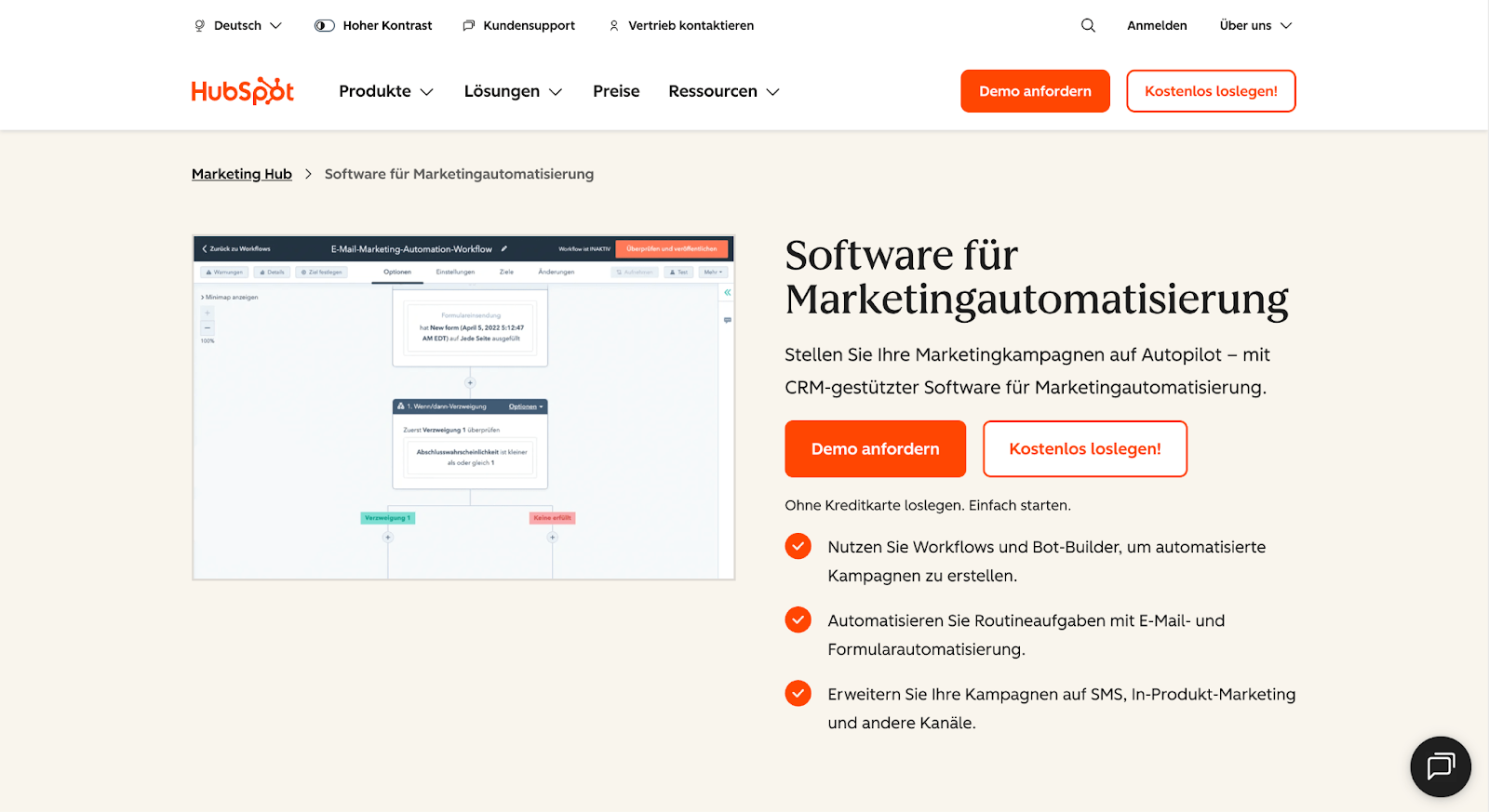
Strengths: The comprehensive CRM system forms the basis for all marketing activities. Usability is considered excellent, the ecosystem offers hundreds of integrations, and AI-powered features support content creation and lead scoring. Scalability is well-suited for growing businesses.
What to look out for: HubSpot is not designed for pure loyalty applications. There is no native POS integration, and costs quickly increase with a growing number of contacts. Companies with omnichannel requirements in retail will encounter functional limitations here.
Ideal for: B2B and B2C companies looking for a central marketing and sales platform.
Price: Free entry, Starter packages available from €15/month and per user.
Salesforce Pardot: Enterprise B2B Solution within the Salesforce Ecosystem
Salesforce Pardot, known since 2022 as Marketing Cloud Account Engagement (MCAE), is an enterprise B2B solution within the Salesforce ecosystem. The tool is aimed at large companies with complex sales processes and long sales cycles.
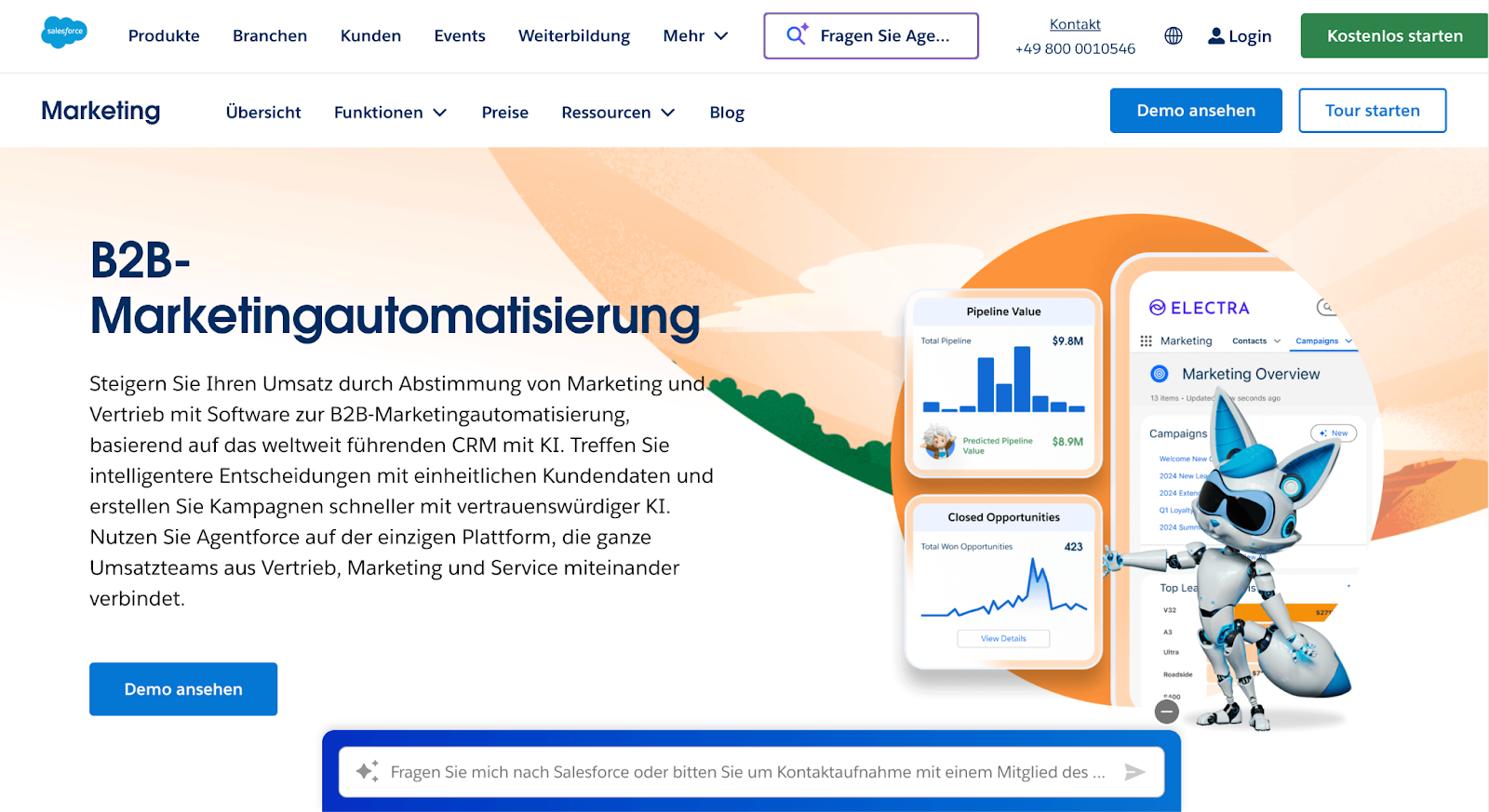
Strengths: The deep CRM integration with Salesforce is unparalleled. Einstein AI provides predictive scoring for leads, Account-Based Marketing enables targeted campaigns for key accounts, and reporting functions are extensive. For B2B marketers with Salesforce infrastructure, this tool is a logical choice.
What to look out for: The learning curve is steep, the entry price is high (from $1,250/month), and vendor lock-in within the Salesforce ecosystem limits flexibility. Native loyalty features are completely absent.
Ideal for: Large B2B companies that already use Salesforce and want to seamlessly integrate their marketing automation into existing sales processes.
Price: Approx. €1,500/month (Growth Plan).
ActiveCampaign: Flexible Automation Tool for Email and Sales Automation
ActiveCampaign is a flexible automation tool with a strong focus on email marketing and sales automation. The platform targets SMEs and the mid-market, offering excellent value for money.
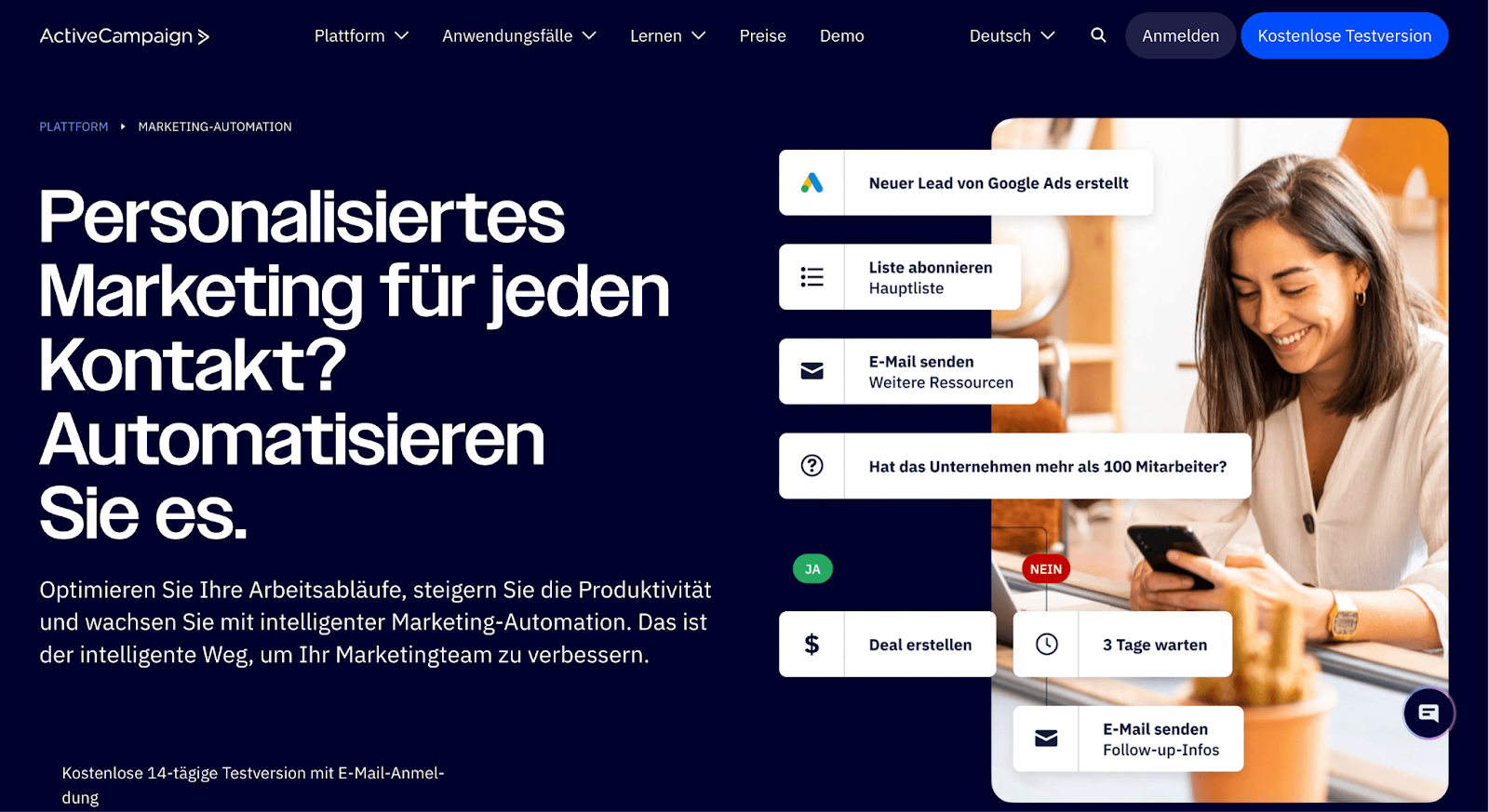
Strengths: The visual workflow builder is one of the most powerful on the market. Over 900 integrations, an integrated CRM, and flexible automations make the tool versatile. For companies prioritizing data-driven email campaigns and lead nurturing, ActiveCampaign is a solid choice.
What to look out for: Native omnichannel capability for POS is missing, loyalty features are limited, and the server location is predominantly in the USA. For companies in the DACH region, the GDPR relevance should therefore be carefully reviewed.
Ideal for: SMEs and growing businesses focused on email and sales automation.
Price: From €15/month (1,000 contacts).
All-in-One Platform vs. Specialized Loyalty Software – What Fits When?
When is a specialized loyalty platform worthwhile, and when is a generic marketing automation tool sufficient? There's no one-size-fits-all answer. The right choice depends on your business model, available data sources, and your customer retention strategy. Those primarily focused on lead generation have different requirements than an omnichannel retailer who wants to activate existing customers, to increase customer loyalty, and to boost Customer Lifetime Value.
For companies with an existing or planned loyalty program and omnichannel requirements, a specialized platform like Convercus is often the better choice.Automation directly leverages loyalty data, enabling personalized campaigns that generic tools cannot deliver. All-in-one platforms, on the other hand, are better suited for lead-centric scenarios in the B2B sector. Important: Both approaches can also be combined via APIs,so you are not limited to an either-or decision. Specialized CRM and campaign management tools like Braze or Dymatrix work seamlessly with Convercus, with Convercus providing real-time loyalty data while the external tool handles communication and automation.
Conclusion: How Convercus Connects Marketing Automation with Loyalty Data
Marketing automation software is no longer an optional add-on, but rather a prerequisite for efficient customer management.However, choosing the right tool determines success: companies focused on lead generation need different functions than those that prioritize long-term customer loyalty and retention.
This is precisely where Convercus comes in. For companies that view marketing automation with loyalty integration not in isolation, but as part of a comprehensive loyalty strategy,Convercus offers a unique solution. The platform directly connects automation with loyalty data, omnichannel touchpoints, and AI-powered insights. The result: no generic campaigns, but hyper-personalized customer experiences that measurably contribute to retention and revenue.
Studies show: Every dollar invested in marketing automation yields an average return of $5.44. However, fully realizing this potential is only possible when automation is based on real customer data. Find out what's possible with your data.
FAQ
What is marketing automation?
Marketing automation refers to the use of software to automatically manage recurring marketing tasks. These include email campaigns, lead scoring, or personalized customer communication. The goal is to deliver the right content at the right time through the appropriate channel, without manual intervention.
What is the difference between marketing automation and CRM?
A CRM system manages customer data and documents interactions; it is the data foundation. Marketing automation uses this data to automatically deploy campaigns: at the right time, through the right channel. Both systems complement each other but fulfill different tasks. Many companies connect both via an API interface to unlock the full potential of their customer data.
What marketing automation tools are available?
Among the best-known marketing automation tools are HubSpot, Brevo, ActiveCampaign, and Salesforce Pardot for general automation. For companies focused on loyalty, Convercus offers a specialized solution that directly links automation with customer loyalty data and omnichannel touchpoints.
Who benefits from marketing automation?
Marketing automation is worthwhile for any company looking to make recurring marketing processes more efficient and engage customers more personally. It becomes particularly profitable for companies with a larger customer base, omnichannel requirements, or a loyalty program. The more relevant customer data available, the more precise and effective automations can be set up.
What are typical marketing tools?
Typical marketing tools include email marketing platforms, social media management tools, CRM systems, analytics software, and marketing automation solutions. Depending on business goals, specialized tools for loyalty, couponing, or personalization are also used, such as Convercus's engagement platform.
We'll show you live how Convercus bases your campaigns directly on loyalty data and what that means for your customer loyalty.

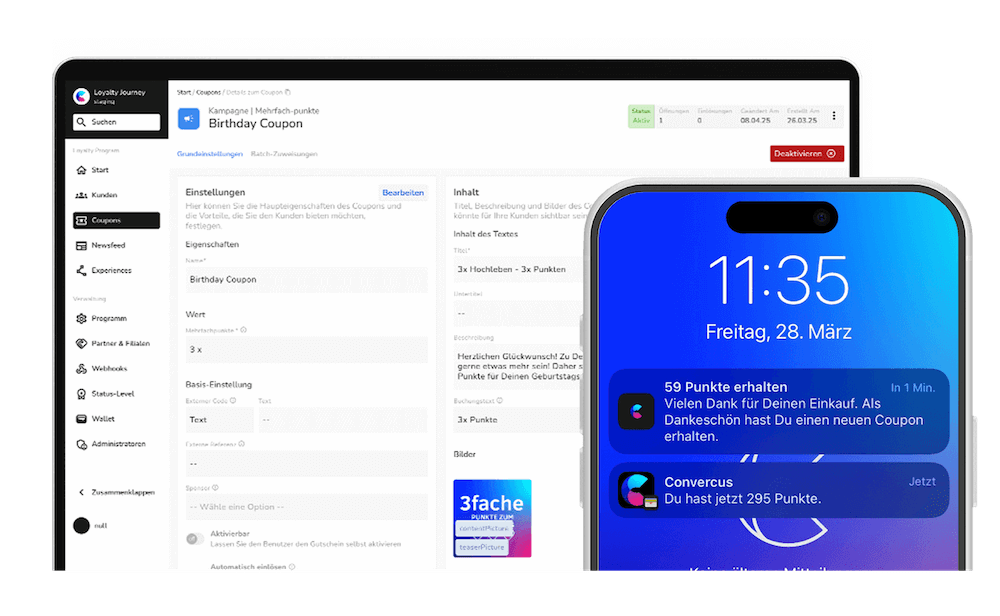
- Ready-made templates for complex loyalty journeys
- Triggers from real data: purchase, points balance, app usage
- Omnichannel: POS, app, email, and push in one workflow
- 5x ROI with data-driven loyalty marketing

.png)