








The topic, short and concise
- Loyalty software is a growth lever for cinemas, because it systematically brings together visit frequency, first-party data, and personalized communication.
- Concession is usually more important than free tickets, as in the cinema business, the more attractive margin often comes from snacks, drinks, and bundles.
- The biggest cinema peculiarity is the distributor logic, because free tickets, discounts, and certain revenue models must align cleanly with the respective billing rules.
- Convercus as loyalty software is particularly relevant, when larger cinema operators are looking for an API-first platform for loyalty, couponing, and engagement instead of an isolated bonus function.
Why Loyalty Software Will Be Strategically More Important for Cinemas in 2026
The German cinema industry is recovering, but it remains under pressure. 89.2 million tickets sold and almost €900 million in revenue in 2025 are a positive signal, but cinemas are simultaneously competing harder than ever with streaming, rising operating costs, and a significant need for modernization. Loyalty software is thus transforming from a nice-to-have extra into a strategic infrastructure for customer retention, first-party data, and repeat visits.
The numbers driving the need for action
The question of frequency is particularly relevant: In Germany, the average number of cinema visits recently was only 1.13 visits per inhabitant per year. If a cinema manages to bring occasional visitors back just slightly more often, it directly impacts ticket revenue, snack sales, and customer value. At the same time, the average ticket price in the first half of 2025 was already €9.92, which increases price sensitivity and makes value-added programs more attractive.
Streaming, rising prices, and lack of customer data
Many venues still only know their visitors at the box office. Without systematic data collection, marketing remains a scattergun approach: the same newsletter for everyone, no segmentation by genre, visit frequency, or concession preferences. This is precisely where loyalty software comes in: It connects ticket purchases, app, website, POS, and couponing into a manageable engagement system instead of just a discount mechanism.
What Loyalty Models Truly Work in Cinemas
In the cinema market, there isn't one perfect model. The combination of visit frequency, margin logic, and technical feasibility is crucial. Simply digitizing the paper punch card wastes potential. Good loyalty software maps multiple models in parallel and allows them to be managed across all channels.
Points Programs as Digital Punch Card 2.0
Points-based programs are the easiest entry point. They reward repeat visits, snack purchases, or app interactions and work particularly well for medium-sized cinemas looking to transition from analog cards to digital processes. It's important that not only tickets, but also concessions, upgrades, and promotional purchases are included.
Status Programs for Regular Guests
Multi-tiered models with Bronze, Silver, or Gold status are still underutilized in cinemas. Status benefits create exclusivity without an immediate discount spiral, for example, through early ticket access, premium seating upgrades, previews, or fast-lane benefits at the concession stand. For cinema chains and operators with multiple locations, this is often more attractive than solely free ticket rewards.
Subscription and Hybrid Models
Flat rates and memberships like Unlimited or Cineville approaches create strong loyalty, but are management-intensive. Hybrid models combine subscriptions, points, and personalized coupons and are therefore often the most robust solution: The subscription stabilizes frequency, points encourage additional purchases, and coupons activate guests situationally around film releases or slower weekdays.

The real profit driver lies in concessions
Many cinema programs instinctively rely on free tickets. While this seems familiar, it's often not economically optimal. The crucial margin in cinemas usually comes not from tickets, but from popcorn, drinks, and snacks. Due to film rental fees and distributor shares, significantly less remains from ticket sales than many operators initially assume.
Why Free Tickets Alone Are Rarely the Best Idea
If 40% to 55% of the ticket price goes to the distributor, rewarding with free tickets can quickly become expensive. A free popcorn has a high perceived value for guests, but costs the cinema relatively little. Therefore, loyalty mechanics should primarily stimulate concession sales, bundles, upgrades, and additional purchases instead of just giving away admission.
Model Calculation for a Medium-Sized Multiplex
Let's take a cinema with 300,000 visitors per year, approximately €3 million in ticket revenue, and an estimated €2 million in concession revenue. If a loyalty program increases the visit frequency of active members by just one additional visit per year, it can hypothetically generate up to approximately €590,000 in additional revenue per year be generated. The exact amount varies depending on the film mix, occupancy, and reward design, but the direction is clear: frequency plus concessions is the strongest lever.
- Prioritize rewarding concession purchases, because margins there are generally significantly more attractive than for tickets.
- Link rewards with bundles, for example, ticket plus drink or upgrade plus snack instead of isolated freebies.
- Don't just measure membership numbers, but also the additional visit and concession attach rate per active member.
The Distributor Trap and Legal Basics Are Often Underestimated
Hardly any loyalty topic in cinema is as industry-specific as billing with film distributors. Free tickets, discounted tickets, and revenue from customer cards can be relevant for billing. Anyone who simply copies generic loyalty logic from other industries here risks operational conflicts and margin losses later on.
Free Tickets, Limits, and Coordination with Distributors
In cinema operations, not every reward can be freely designed. For free tickets and loyalty-driven ticket benefits, the rules must be carefully checked with distributors and the distributors' association, because upper limits and film-related restrictions are possible. This is precisely why loyalty software in cinemas should not only issue rewards but also map the rules for redemption, exclusions, and campaign windows.
GDPR, UWG, and TTDSG in Loyalty Programs
A cinema program only becomes legally sound when data and communication processes are correct. For personalized advertising, Art. 6 Para. 1 lit. a GDPR, Art. 13 GDPR, and § 7 UWG are particularly relevant: consents must be obtained transparently, information provided comprehensibly, and promotional emails or SMS sent only with a permissible legal basis. If tracking technologies are used in the app or on the web, § 25 Para. 1 TTDSG is also relevant. Furthermore, according to Art. 28 GDPR, a data processing agreement with the software provider is mandatory.
- Consents must clearly state their purpose, for example, separately for newsletters, push communications, and personalized offers.
- Data minimization according to Art. 5 Para. 1 lit. c GDPR means collecting only data that is truly necessary for loyalty, analysis, and service.
- Offline processes at the box office also require legal certainty, for example, when employees collect email addresses or marketing opt-ins.
What Modern Loyalty Software Needs to Do in Cinemas Today
The biggest mistake in tool selection is looking for an isolated bonus module. Modern loyalty software for cinemas must connect POS, online ticketing, app, couponing, and marketing automation. Only then can consistent customer data and truly personalized experiences be created across all touchpoints.
API-First and Clean POS Integration
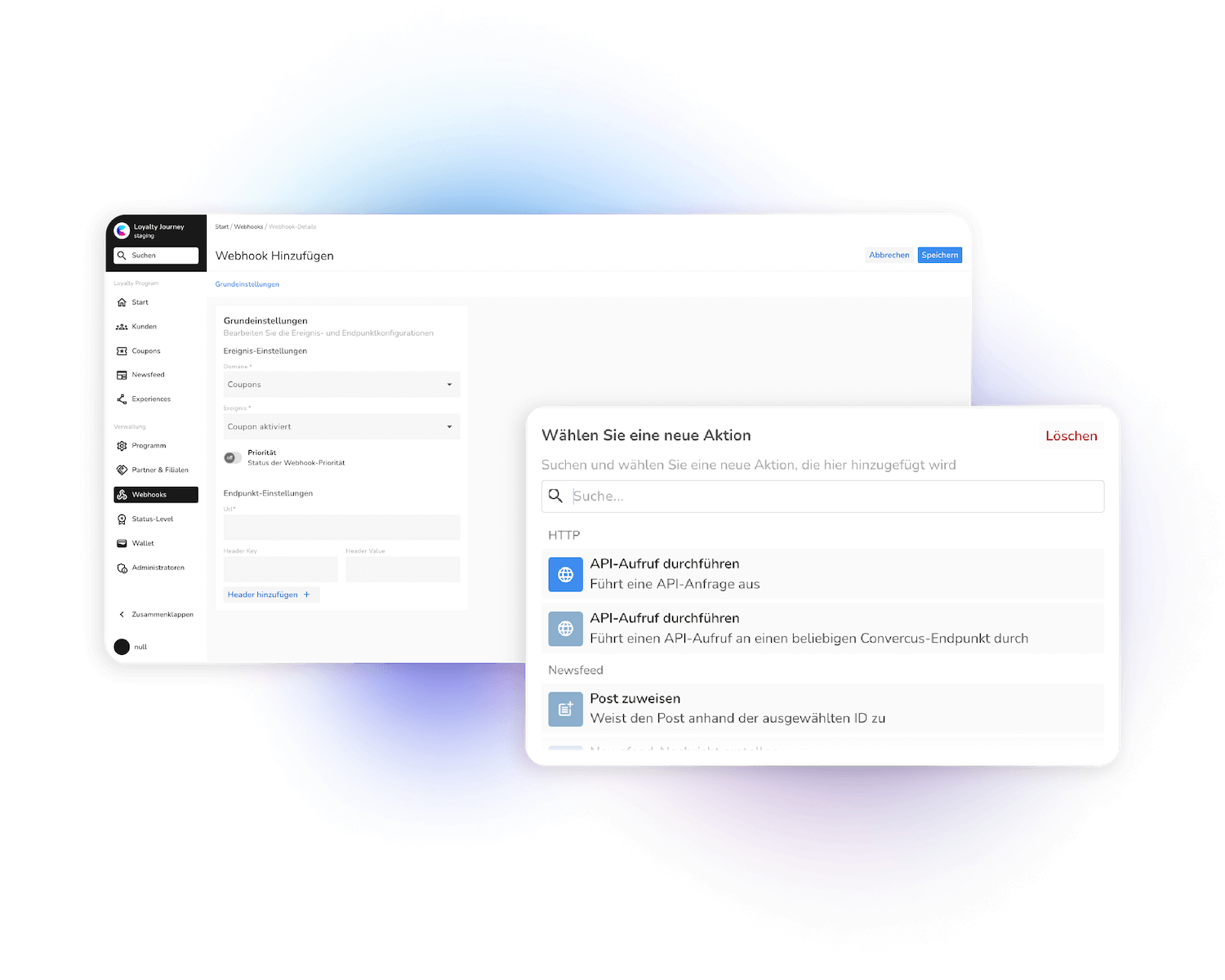
In many venues, POS systems, online ticketing, websites, and newsletter tools run in parallel. An API-first architecture reduces these silos and makes integration with existing systems like Compeso, Cinetixx, TICKET international, or Vista generally manageable. Key factors are low latency, offline capability at the POS, and a clear rights and roles model for multiple locations.
Omnichannel Enrollment instead of Separate Registration
The simpler the entry, the higher the participation rate. Joining the program should be possible directly within the purchase process, whether on the website, at the POS, in a self-service kiosk, or via QR code in the foyer. A digital customer card or a wallet pass further reduces friction, as guests don't have to understand or carry another plastic card.
Personalization, Couponing, and Engagement instead of a Scattergun Approach
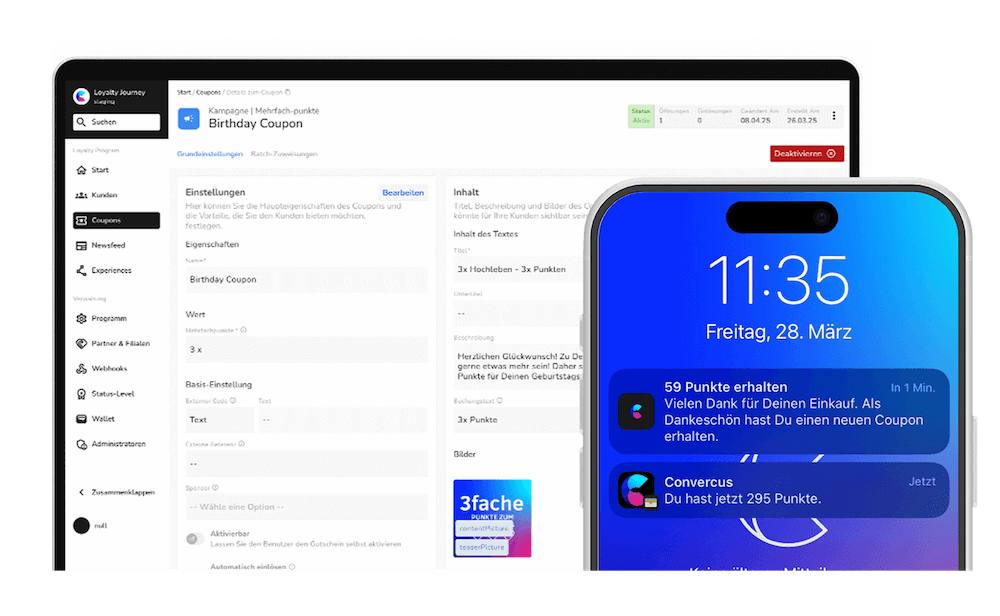
Anyone who wants to set up loyalty professionally in cinemas needs more than just points. For larger operators, a platform approach is sensible, combining Loyalty Engine, Couponing, Engagement and API-First Integration . This is precisely where Convercus is interesting as scalable loyalty software, if a cinema wants to build loyalty not as a POS plugin, but as a data-driven platform with automation, first-party data, and omnichannel control. In app-based programs, up to 8x higher customer interactions are possible compared to without an app.

From Data to More Visits: KPIs, Segments, and a Smooth Start
A loyalty program is only successful if it measurably generates more business. The central key metric in cinemas is not the number of registrations, but the additional visit frequency per active member. This is complemented by segmentation and a pragmatic rollout that doesn't overwhelm teams at the POS, marketing, and IT.
These KPIs You Should Prioritize in Cinemas
- Visit frequency per member shows whether occasional guests become true regulars and is thus the most important North Star metric.
- Concession Attach Rate measures how many members additionally buy snacks or drinks and whether rewards contribute to high-margin areas.
- Reward Redemption Rate shows whether benefits are relevant and understandable instead of just theoretically sitting in the account.
- Activation Rate After Registration reveals how well enrollment, app usage, and the initial value proposition work.
- Customer Lifetime Value and Churn Rate help to understand which segments can be retained and where win-back is necessary.
Typical Cinema Segments
With a clean data foundation, meaningful groups can be quickly formed: occasional visitors, blockbuster-oriented families, genre fans, arthouse regulars, or members with a high concession affinity. Only segmentation makes personalized film recommendations and offers truly effective. For example, someone who prefers horror should be addressed differently before a genre release than a guest who only watches animated films during holidays.
Here's how to get started in 5 pragmatic steps
- First, define the business goal, such as increased frequency on slow weekdays, higher concession sales, or improved data quality.
- Then choose the appropriate program model, i.e., points, status, subscription, or a hybrid with clear reward logic.
- Review your system landscape, especially POS, ticketing, app, CRM, newsletter, and existing data sources.
- Start with simple enrollment, ideally directly within the purchase process and with an immediately noticeable initial benefit.
- Then optimize based on data, for example, through segments, trigger campaigns, and targeted measures for customer re-engagement.
For those who want to delve deeper, you'll find additional background on modern customer loyalty software, on strategies for increased customer loyalty and on App-First Loyalty as a mobile approach.
Conclusion: Loyalty software in cinemas must bring together frequency, margin, and data.
Cinema loyalty today is much more than the digital version of the old punch card.Successful programs combine visit frequency, concession upselling, personalized communication, and legally compliant data usage. Anyone who ignores distributor logic or views loyalty merely as a discount engine will not fully exploit its potential.
For larger cinema operators looking for a scalable platform instead of an isolated single function, Convercus can be the right next step : with an API-first approach, Loyalty Engine, couponing, and engagement for cross-channel customer loyalty. If you want to see how this could look in your system landscape, book a personal demo.
FAQ on Loyalty Software for Cinemas
These questions arise particularly often in selection projects – from the initial economic feasibility study to the technical implementation.
Is loyalty software also worthwhile for medium-sized cinema operators?
Yes, if the goal is clearly defined. Even small improvements in visit frequency and concession sales can justify the investment, especially with multiple locations or existing online ticketing usage.
How complex is the introduction of a digital loyalty program?
The effort primarily depends on the system landscape. Projects are fastest with clear APIs, a clean data model, and a simple initial scope, such as a digital member account plus couponing, before more complex status or subscription mechanics follow.
Does loyalty software work with our existing POS system?
In many cases, yes, if open interfaces are available. What's important is not just the name of the POS system, but the quality of the available API or export logic, so that ticket data, concession purchases, and redemptions are correctly consolidated.
Is a cinema loyalty program implementable in compliance with GDPR?
Yes, but only with proper governance. Consents, transparency obligations under Art. 13 GDPR, data minimization, and a DPA under Art. 28 GDPR should be conceptually planned from the outset, as well as the rules from § 7 UWG (German Unfair Competition Act) for advertising communication.
How do we handle free tickets and distributor requirements?
This is one of the most important points in the cinema environment. Ticket-related rewards should always be designed with distributor terms, limits, and film-related exclusions in mind; often, concession rewards are economically and operationally the better choice.
Can we migrate an existing bonus program or a punch card?
Yes, in many projects, this is even the standard case. Existing points, member data, or card numbers can be transferred to a new system, provided that data quality, legal bases, and technical mapping rules are clarified beforehand.


- 5x Return on Investment
- 80% Customer Identification
- 8x Customer Interaction
- +274% Repurchase Rate
.jpg)