







Key points
- Car-sharing needs loyalty beyond discounts. Due to low switching costs and high app inactivity, activation, frequency, and retention matter more than mere registration numbers.
- Micro-tactical rewards are the most effective. Points, status, charging bonuses, challenges, and re-engagement offers work better than static promo codes when delivered in real-time.
- API-first and GDPR compliance are mandatory. Loyalty software must seamlessly integrate booking, billing, push notifications, email, and mobility data, and process it in compliance with data protection regulations.
- Convercus is a suitable software for loyalty in car-sharing. The platform combines Loyalty Engine, couponing, engagement, and API-first integration for app-based customer loyalty in the mobility sector.
Why Customer Loyalty in Car-Sharing Will Become Strategic in 2026
By 2026, loyalty software in car-sharing will evolve from a nice-to-have into a profitability driver. The German market is large, but under pressure: As of January 1, 2026, 293 organizations offer car-sharing in Germany, spread across 1,490 municipalities. At the same time, the total fleet shrank to 43,190 vehicles, with the free-floating segment in particular facing consolidation pressure with a -9.5% decline. In contrast, the station-based segment continues to grow, with 978,300 registered authorized drivers counted recently, an increase of 11.8% compared to the previous year. For operators, this means that pure expansion is no longer the deciding factor, but rather how efficiently existing users can be activated, retained, and developed.
What's crucial is not the number of registrations, but the active user rate. In car-sharing, a particularly high number of "dead accounts" emerge: Users download an app, register, but then only book sporadically or not at all. This is precisely why the topic of Enhancing Customer Retention comes into focus. Anyone who only looks at registrations is measuring a vanity metric. Instead, relevant metrics for management are Monthly Active Users, trip frequency, churn rate, and Customer Lifetime Value.
The real competition, therefore, sits on the customer's homescreen. An alternative mobility app can be installed in seconds, and switching costs are minimal. Added to this is the well-known app dynamic: On average, mobile apps lose 77% of their potential users within the first three days, and after 90 days, often only about 5% remain active. In car-sharing, this logic is even more pronounced because many users register with multiple providers simultaneously. Therefore, loyalty must directly intervene in the customer journey: when opening the app, at the end of a trip, after inactivity, and before the next mobility moment.
Which Loyalty Mechanics Truly Work in Car-Sharing
Car-sharing requires different loyalty mechanics than traditional retail. Because trips are billed on a minute- or hour-basis and usage is often spontaneous, rewards must be quickly understandable, immediately relevant, and technically deployable in real-time. Particularly important is the distinction between free-floating and station-based models: Free-floating requires strong re-engagement, spontaneous incentives, and location-based rewards; station-based systems also benefit from routines, commuter logic, and longer usage patterns.
Points and Status Logic for Recurring Usage
Points programs work when they are simple, fast, and visible. A well-known market example is SIXT share: For every € spent, 1 point is awarded, and a €5 voucher is automatically granted once 250 points are accumulated. Additionally, the unlocking fee is waived from the 8th trip within 30 days. In combination with SIXT ONE, the model is expanded with status tiers: Gold starts at 2,000 status points, Platinum at 4,000, and Diamond at 6,000. For car-sharing providers, this is an important indication: points alone are rarely enough, but in conjunction with status, comfort benefits, and clear usage incentives, a true progression logic emerges.
Frequency, Behavior, and Gamification Instead of Ongoing Discounts
The strongest programs reward not only revenue, but also desired behavior. In car-sharing, this includes charging electric vehicles, correctly returning vehicles to the designated area, reporting damage, refueling, referring friends, or participating in challenges. This is precisely where gamification becomes relevant: streaks for multiple trips in a week, badges for sustainable usage, monthly challenges, or "squad goals" for neighborhoods, offices, or groups of friends. Such mechanics create more loyalty than mere discounts, because they promote behavior, habit, and identification with the brand.
From Transactional to Emotional Loyalty: The Loyalty Trends for 2026
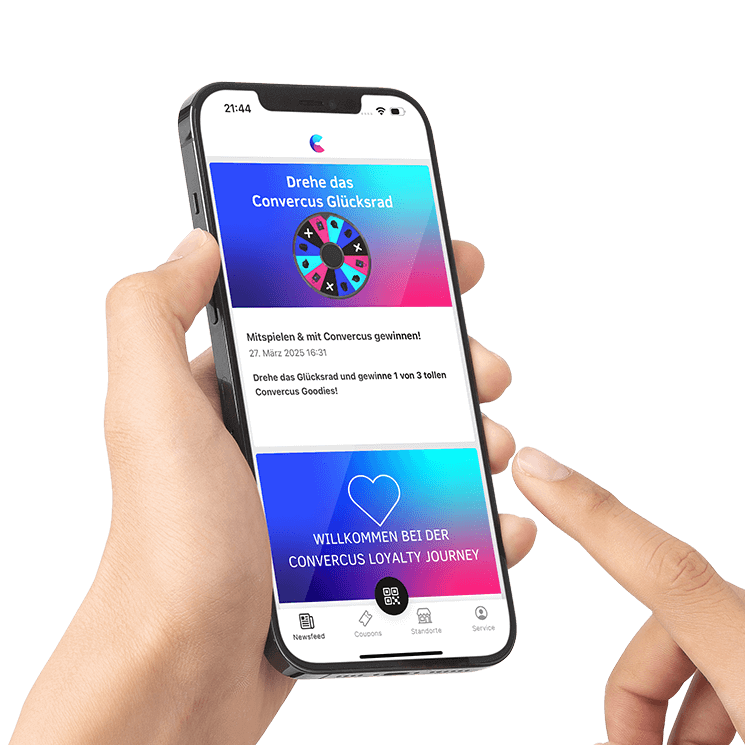
The next evolutionary step is "Invisible Loyalty". The best programs don't feel like programs, but like a better user experience. Customers don't have to study rules; instead, they receive a relevant prompt at the right moment: a weekend upgrade, a charging bonus after an e-ride, or a reactivation incentive after 21 days of inactivity. This is precisely the difference between transactional and emotional loyalty: It's not about the discount, but about relevance, convenience, and the feeling that the provider understands the user's situation.
Micro-Moment Loyalty in an App Context
Rewards must become visible at the moment of decision. In car-sharing, these are micro-moments: when the app is opened, when a vehicle is available nearby, when a trip ends, or when a user remains inactive for a noticeably long time. Such triggers can be orchestrated with app-first Loyalty much more precisely than with a static bonus program. Those who react days later via a standard email often lose the crucial moment when interest could have turned into a booking.
Sustainability, Zero-Party Data, and Predictive Churn
Car-sharing users respond not only to price, but also to convenience, sustainability, and relevance. This makes sustainability a real loyalty lever: making CO₂ savings visible, awarding green points for electric vehicles, or offering rewards for correct charging. At the same time, first-party and zero-party data gain value. When users voluntarily share preferences, such as preferred vehicle types, typical travel times, or interest in family vehicles, offers become significantly more precise. Combined with predictive churn models and Engagement-automation, programs emerge that not only react but also anticipate churn.

The Business Case: The Economic Benefits of Loyalty Software in Car-Sharing
The biggest lever rarely lies in a higher price per trip, but in more active users and higher frequency. For decision-makers, four key metrics are therefore central: the ratio of monthly active users to registered users, average trips per active user, revenue per trip, and churn rate. This is precisely where loyalty demonstrates its economic impact. Reactivating inactive users and encouraging active users to drive slightly more often often changes unit economics more significantly than additional media budget.
Why Activation is More Important Than More Registrations
A small improvement in retention has a disproportionately strong effect in car-sharing. Bain & Company is often cited with a well-known benchmark: a 5% reduction in churn can increase profitability by up to 25%. In car-sharing, this is plausible because registered users are already identified, onboarded, and capable of payment. A good loyalty strategy therefore not only saves acquisition costs but also improves utilization, upsells, and retention. Those who also systematically customer win-back often leverages the biggest untapped potential within its existing customer base.
The example calculation is illustrative, but it clearly shows the business logic. Even an increase in the active user rate from 15% to 22.5% and a slight rise in frequency can have an enormous impact. For management, CRM, and product owners, this is the crucial point: Loyalty software is not a bonus module, but a tool to measurably improve MAU, CLV, and the profitability of a mobility offering.
Practical Check: What leading providers are doing right and where many programs fail
The market already shows which patterns work. SIXT share demonstrates how points, frequency benefits, and a larger rewards ecosystem can be combined. The Leo&Go case study around Vulog shows that local partners, gamification, and app-based activation can also work in smaller or regional mobility setups. At the same time, many providers still work with simple promo codes, manual vouchers, or disconnected campaign logics.
SIXT share and Ecosystem Loyalty
SIXT combines a simple points system with concrete behavioral incentives and a larger rewards ecosystem. This is strategically important because car-sharing doesn't have to be considered in isolation. Airline programs, local retailers, dining, fitness, or MaaS partners can create additional redemption and earning opportunities. This is particularly interesting for regional providers: those who offer urban everyday mobility can link loyalty to real routines, such as commuting, shopping, leisure, or weekend trips.
The 4 most common mistakes in the market
- Many providers confuse promo codes with genuine loyalty. A one-time discount temporarily lowers the barrier, but it doesn't build lasting loyalty.
- Programs remain too generic. Without segmentation by occasional users, power users, and at-risk groups, incentives fizzle out.
- Rewards are delivered too late. If the bonus arrives days after the trip, the relevant mobility moment is often already over.
- There's a lack of integration with partners and channels. Without an app, push notifications, email, and local redemption partners, the program remains invisible.
Especially regional providers can be surprisingly strong here. Local loyalty in car-sharing is often more effective than widespread price promotions. Providers like teilAuto demonstrate with above-average customer growth that proximity, trust, and routine usage can be tangible competitive advantages. Combining this strength with partner couponing and relevant challenges significantly differentiates a service from pure per-minute pricing competition.
Technical Integration and Data Protection: What Decision-Makers Should Consider When Choosing Software
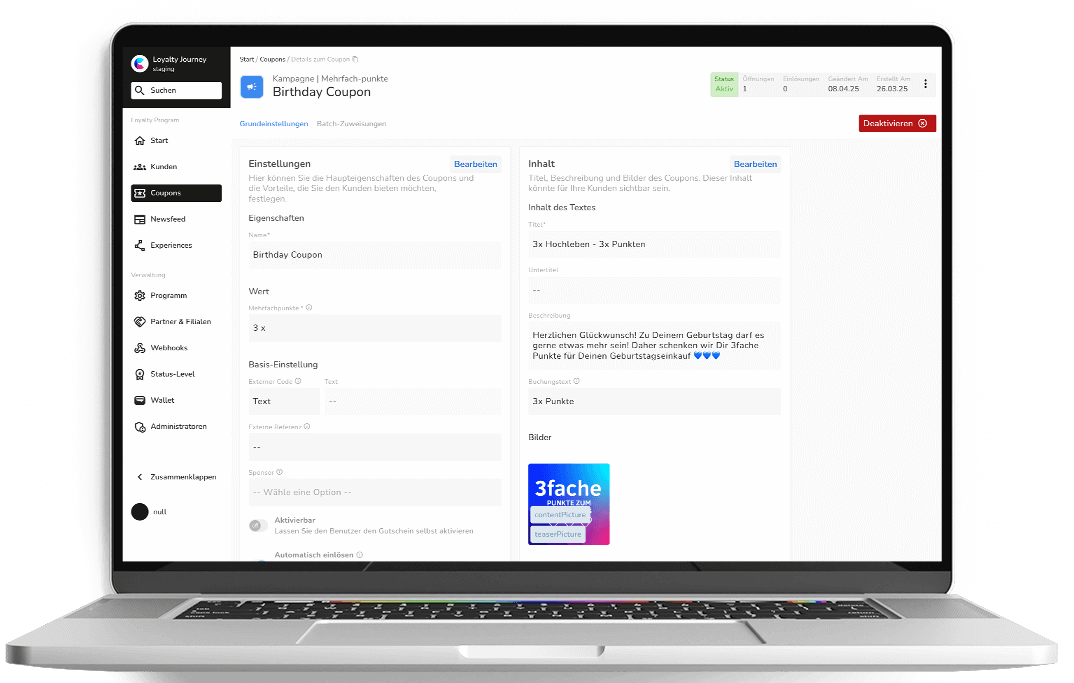
Car-sharing loyalty hinges on real-time capabilities, integration, and robust data protection. Unlike in traditional retail, every relevant event in the mobility context must be digitally available: registration, verification, booking, vehicle unlocking, trip end, billing, charge status, location logic, and communication. Purchasing a standalone solution for this quickly leads to media discontinuities and new operational burdens. Therefore, the right software must be integrable into existing car-sharing platforms, CRM systems, communication channels, and reporting structures.
API-first instead of a standalone solution
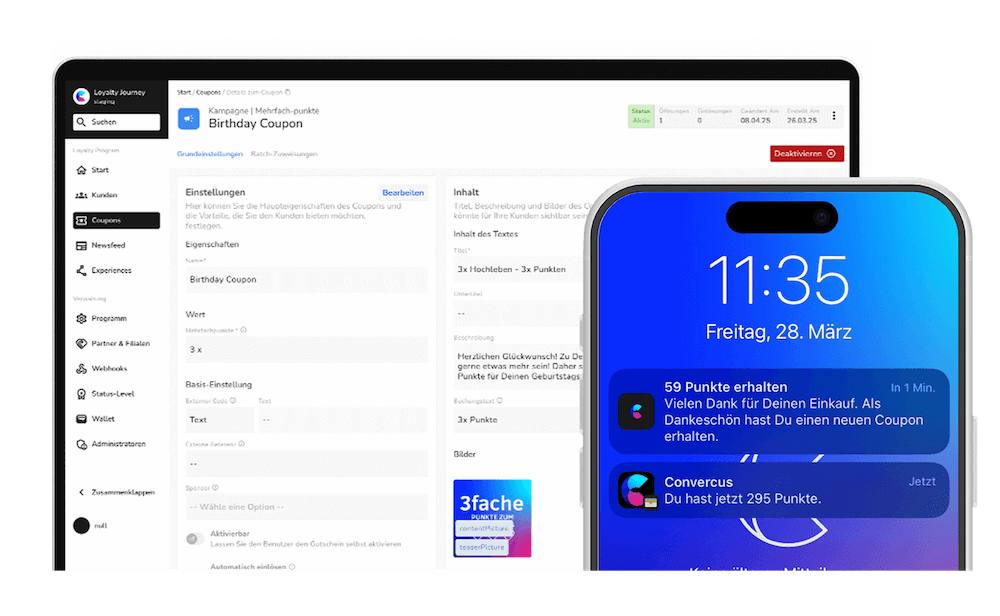
The loyalty engine must connect booking, trip start, trip end, billing, and communication within a clean event model. Only then are real-time rewards, automatic reactivation, and personalized coupon logic possible. For mobility providers, a modular approach is more sensible than a monolith. Convercus connects its Loyalty Engine, Couponing, Engagement and Tech & Integration API-first with existing systems. This is particularly relevant when an operational mobility platform already exists and loyalty needs to be added without a complete system overhaul. Additionally, scalability metrics such as 116M+ transactions and 22M+ redeemed coupons attest to the necessary enterprise performance. In app-centric programs, a white-label app can contribute to up to 8x higher customer interaction.
GDPR Compliance for Mobility Data
Location, usage, and behavioral data are particularly sensitive. For processes such as booking, billing, or vehicle-related service provision, Art. 6 para. 1 lit. b GDPR is regularly considered as a legal basis. For personalized campaigns, preference inquiries, optional profile creation, or push opt-ins, Art. 6 para. 1 lit. a GDPR is often relevant. Furthermore, providers should implement the principles of Art. 5 GDPR regarding purpose limitation and data minimization, consider Privacy by Design according to Art. 25 GDPR, conclude data processing agreements with software providers according to Art. 28 GDPR, and demonstrate appropriate technical and organizational measures according to Art. 32 GDPR. Professionally implementing loyalty thus not only builds better campaigns but also a robust first-party data structure.
5 Steps to a Car-Sharing Loyalty Program
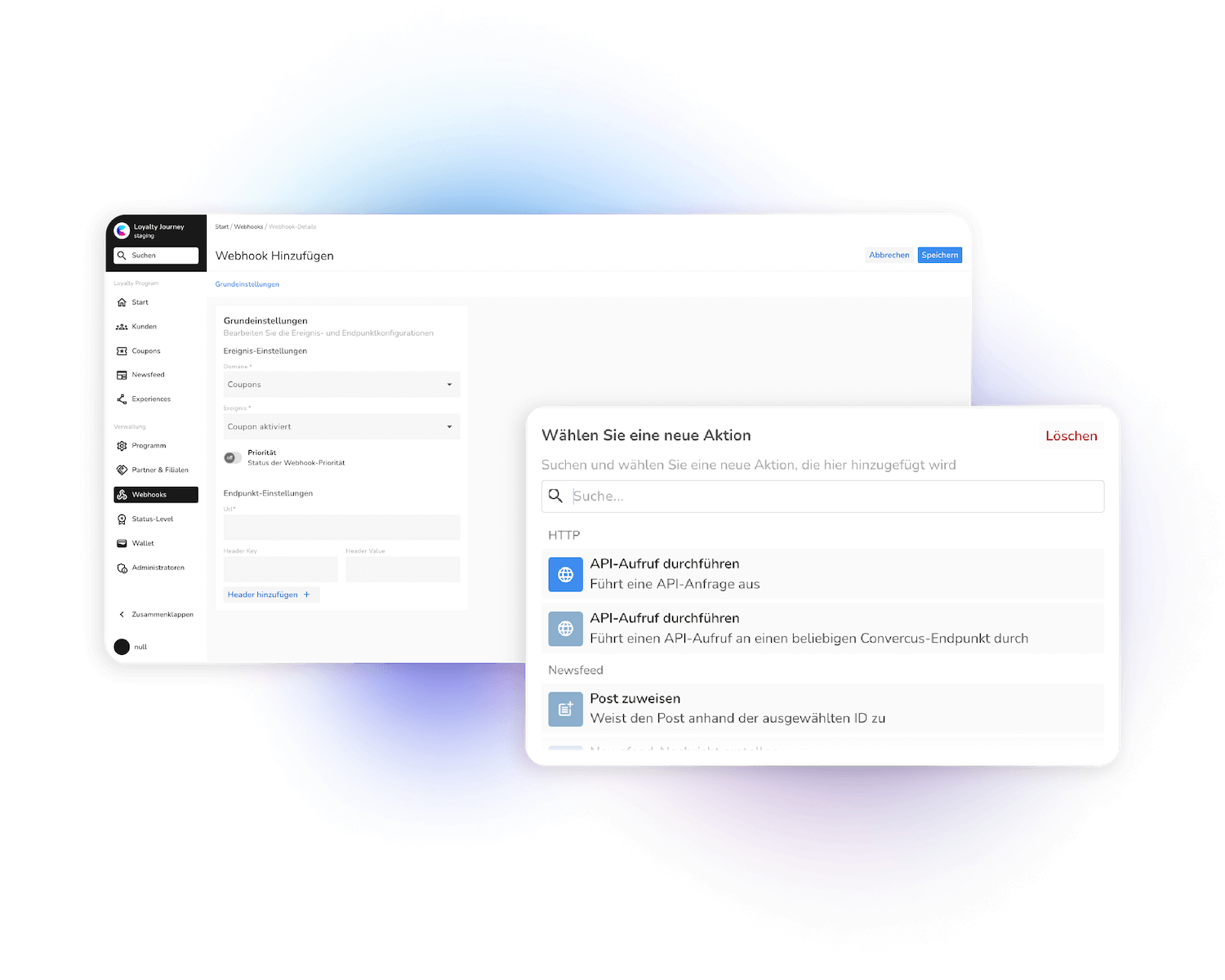
Successful programs don't start with a discount idea, but with a clear operating model. A structured approach avoids later friction between CRM, Product, Operations, and IT. Especially in car-sharing, a pilot approach in selected cities, vehicle classes, or user segments is worthwhile before the program is rolled out broadly.
- First, analyze your active user base. Segment by MAU, inactivity, ride frequency, city, vehicle type, and churn risk before defining rewards.
- Then define the program mechanics. Consciously decide whether points, status, frequency benefits, behavioral rewards, or gamification are your main lever.
- Define the event and data logic. Only when ride completion, charging events, coupon redemption, and communication channels are technically connected can true micro-moment loyalty emerge.
- Start with a measurable pilot. Use control groups, cohorts, and clear KPIs so that the effect on activation, frequency, and churn becomes quantifiable.
- Automate and scale only after validated learnings. This way, you avoid a small bonus model becoming prematurely too complex and operationally expensive.
Subsequently, a tight test and learn setup is crucial. Good programs evolve iteratively: adjusting triggers, changing thresholds, adding partners, automating campaigns, and refining reactivation journeys. This requires a reliable technical foundation and clean reporting. Those who want to delve deeper into platform selection can find in the article on Customer Loyalty Software additional guidance for software evaluation.
Conclusion: Loyalty is becoming an infrastructure for retention in car-sharing
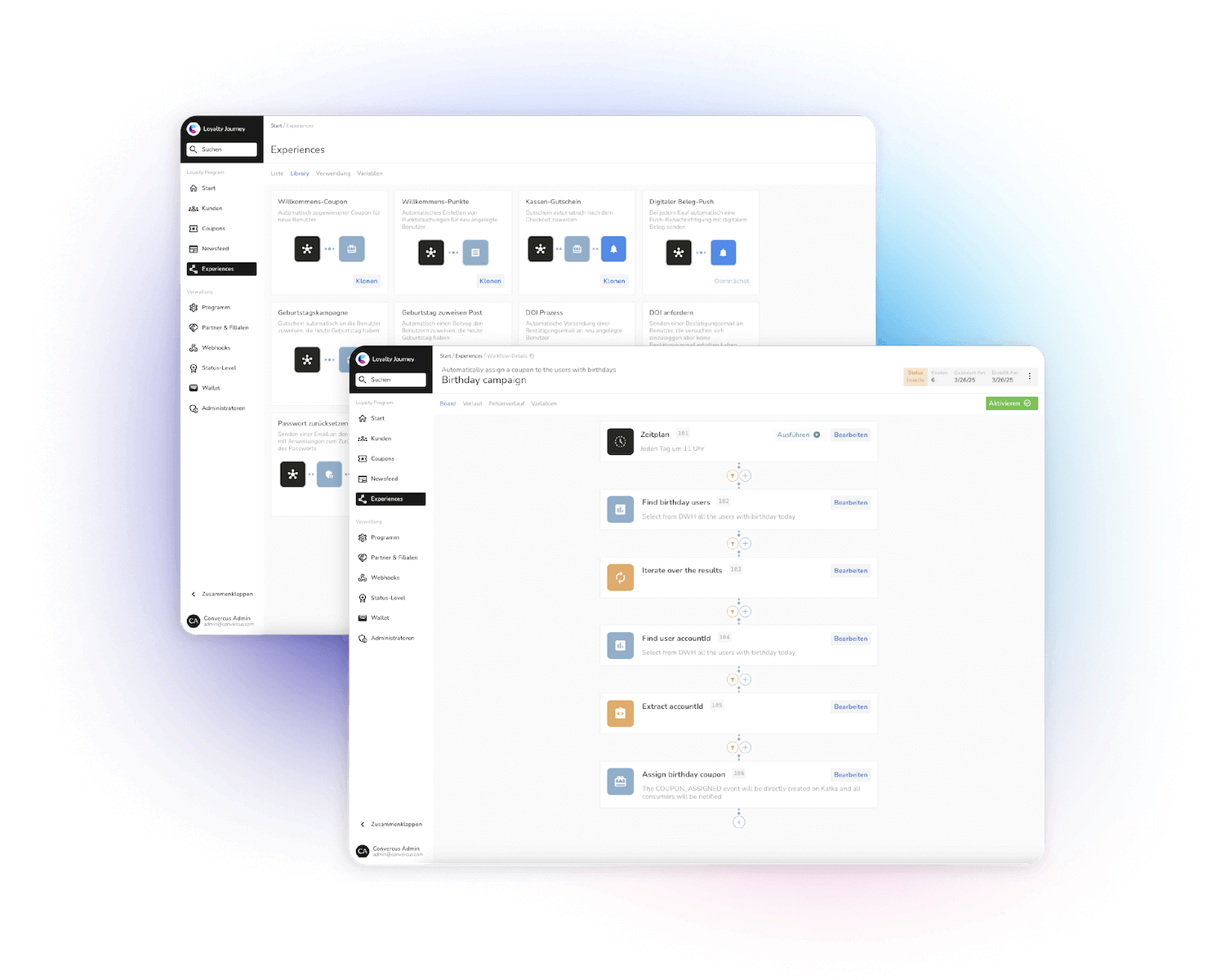
To grow in car-sharing by 2026, companies must better activate existing users, not just acquire new registrations. The most important levers are a higher active user rate, more rides per active user, behavior-based rewards, and app-integrated, personalized delivery. This is precisely why professional loyalty software replaces simple coupon logic with a scalable system for retention, engagement, and first-party data.
If you want to build loyalty not as coupon management, but as a strategic mobility infrastructure, Convercus is a natural partner. The platform combines modular loyalty logic, couponing, engagement, and API-first integration for sophisticated app-based customer journeys. Schedule a personal demo with a loyalty expert and see how your car-sharing offering can be specifically geared towards more activity, less churn, and stronger customer loyalty.
FAQ: Frequently Asked Questions about Loyalty Software in Car-Sharing
How much does loyalty software cost for car-sharing?
The costs primarily depend on the number of users, transaction volume, integration effort, and range of functions. For many providers, how quickly the solution improves MAU, frequency, and churn is more important than the pure license price. Therefore, every selection should start with a clear business case.
How complex is it to implement a loyalty program?
The effort is manageable if data sources, events, and target mechanics are clearly defined early on. A pilot in one city or for a specific segment is often more sensible than a big-bang rollout. API-first solutions significantly shorten implementation times because they complement existing systems instead of replacing them.
Does this work with our existing car-sharing platform?
Yes, if the software can be integrated event-based. It is crucial that booking, end of trip, billing, coupon redemption, and communication channels can be connected via APIs or webhooks. Precisely this integration capability should be a central selection criterion.
Can loyalty software be implemented in car-sharing in a GDPR-compliant manner?
Yes, but only with clear legal bases, roles, and processes. Providers must differentiate between contractually necessary data and optional personalization, meticulously document consents, and implement principles such as data minimization, purpose limitation, and privacy by design. Without governance, personalization quickly becomes a compliance risk.
Which mechanism is better suited for free-floating and which for station-based car-sharing?
Free-floating usually benefits more from reactivation, frequency, and location triggers. Station-based models can also work with routines, commuter logic, status benefits, and longer usage patterns. In both cases: behavior-based rewards and personalization are often more effective than blanket discounts.
How do you practically start with an existing voucher or bonus program?
Ideally, by conducting a thorough inventory of rules, data, and user segments. Afterwards, old promo codes, manual campaigns, and existing reward logic should be integrated into a unified target vision. This allows an existing program to be migrated step-by-step without disrupting operations.


- 5x Return on Investment
- 80% Customer Identification
- 8x Customer Interaction
- +274% Repurchase Rate