.png)









The topic in brief
- Membership isn't automatically loyalty. Golf clubs need more than just membership administration: True member loyalty is only created when playing behavior, additional revenue, and communication are brought together.
- The biggest levers are in retention and additional revenue. Even an improvement in retention by just a few percentage points can generate an annual effect of tens of thousands of € for a club with 800 members.
- Loyalty software complements club management systems. While traditional systems organize operations, loyalty software manages segmentation, personalization, couponing, tiers, reactivation, and data-driven engagement.
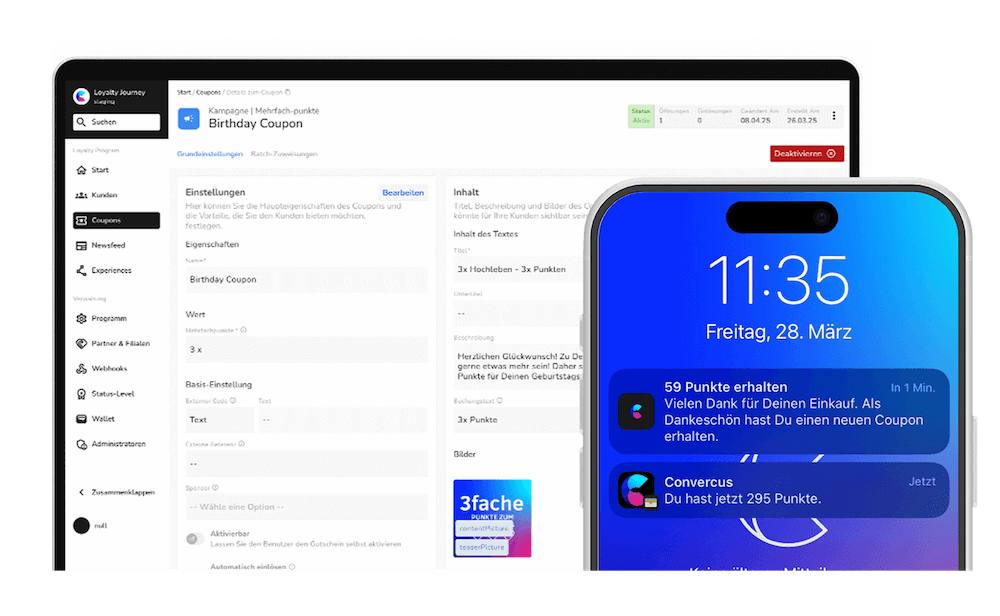
- Convercus is a suitable loyalty software for golf resorts or larger facilities looking to build scalable engagement. This becomes particularly relevant with multiple touchpoints, API-first integration, automated campaigns, and the goal of systematically developing members, guests, and additional revenue.
Loyalty Software for Golf Clubs: Why the Topic Should Be on the Agenda in 2026
The German golf market is experiencing noticeable growth again: By the end of 2024, there were 686,708 golf memberships registered, and for 2025, the industry reported even stronger growth. At the same time, there are approximately 721 golf courses and almost 860 clubs and operating structures in Germany. For club managers, boards, and operator groups, this means: Competition is no longer solely about course quality, but increasingly about digital experience, service, and loyalty.
Many golf clubs confuse membership with loyalty. An annual fee alone does not constitute a loyalty program. Those who only manage fees but do not systematically evaluate usage, additional revenue, event participation, and communication signals often recognize churn risks too late. This is particularly critical in golf, as benchmarks for member retention are around 92% to 94%, and two out of three departures occur for avoidable reasons.
Additionally, there's a generational shift. Younger target groups expect digital booking, mobile communication, and personalized offers. For those who want a fundamental understanding of this topic, here's a good introduction to modern customer loyalty software. For golf clubs, the strategic question is therefore no longer whether loyalty should be digitally supported, but how quickly a club can move from reactive member management to data-driven retention .

What Loyalty Software Specifically Does for Golf Clubs
Good loyalty software doesn't just link points and rewards; it also creates a unified member and guest profile across all relevant touchpoints. In a golf club, this is significantly more than just green fees and membership dues: Tee time usage, tournament registrations, pro shop purchases, dining, range visits, coaching lessons, and event participation collectively reveal how engaged a member truly is.
All touchpoints in one profile instead of data silos
In many clubs, tee sheets, club administration, POS, and communication run separately. This is precisely where the biggest blind spot occurs. Loyalty software consolidates behavioral data, so a club not only knows who is a member, but also who hasn't played for weeks, who regularly spends money in the restaurant, or who frequently returns as a guest player.
- Points and Tier Models reward desired behavior such as rounds, referrals, pro shop purchases, or tournament participation, without immediately resorting to permanent discounts.
- Club Cash or Closed Credit Systems keep value creation on-site, because benefits can only be redeemed at the club, in the pro shop, or in the restaurant.
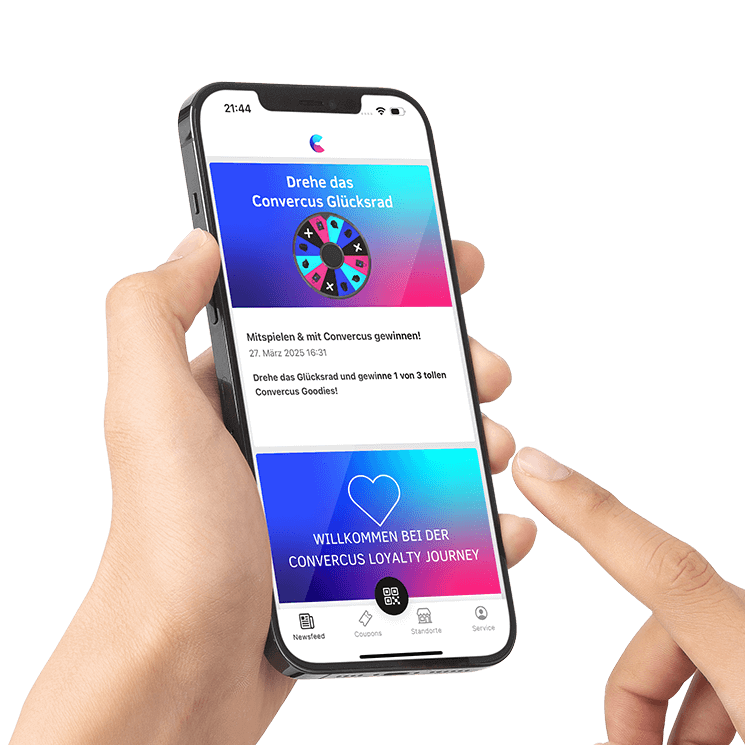
- Wallet Passes or App-First Approaches make the program visible and practical for everyday use, for example for check-in, offers, or status benefits.
Especially for mobile use, an App-First Loyalty Approach is interesting because members see their benefits where decisions are made: before booking, on the way to the course, and directly at the POS.
From Green Fee Guest to Loyal Member
An often underestimated lever is guest conversion. Green fee players are not a one-time revenue, but a potential membership funnel. Guests who repeatedly visit, book tournaments, or spend money in the clubhouse shouldn't disappear into an anonymous booking history. Loyalty software can segment these guests and automatically engage them with trial memberships, event invitations, or personalized introductory packages.
This transforms a transactional visit into a structured journey: guest play, repeat visit, benefit via wallet pass or coupon, invitation to a challenge, followed by an offer for a flexible membership. It's precisely this combination of Retention, Conversion, and Additional Revenue that makes loyalty strategically valuable for golf clubs.
Key Use Cases for Loyalty Software in Golf Clubs
The best golf programs don't operate as discount machines, but as operational systems for Member Loyalty, Capacity Management, and Additional Revenue. It's crucial that these mechanisms align with the club's business model: members, guests, and additional services must be considered holistically.
1. Onboarding new members in the first 90 days
The first few weeks shape habits. A structured welcome process can engage new members with an initial tournament registration, a complimentary range session, a pro shop voucher, or a dining invitation. Creating more touchpoints in the first 90 days increases the likelihood that a formal membership will evolve into genuine loyalty.
2. Churn Prevention and Reactivation
If a member suddenly books less frequently, stops playing tournaments, or rarely visits the facility, that's a warning sign. Early warning systems based on usage patterns enable targeted reactivation: personalized outreach, seasonal challenges, invitations to low-barrier formats, or customer win-back offers. You can also find strategic background information on this in the article on Customer Win-Back.
3. Activating Off-Season, Additional Revenue, and Referrals
Golf is seasonal. That's why loyalty programs should be particularly active in autumn and winter: indoor events, simulator offers, dining evenings, training series, or double-points days during less busy times. Seasonality thus transforms from a risk into an opportunity for engagement. Additionally, referral mechanisms can be utilized, where members receive benefits for referred guests or new members without permanently lowering the club's price point.
Loyalty Software vs. Club Management Software: What's the Difference
Systems like PC CADDIE, Albatros, or Nexxchange are indispensable in many clubs because they manage core operational processes. Club management software organizes operations; loyalty software drives behavior, engagement, and loyalty. Anyone who equates the two often expects administrative software to perform functions it wasn't designed for.
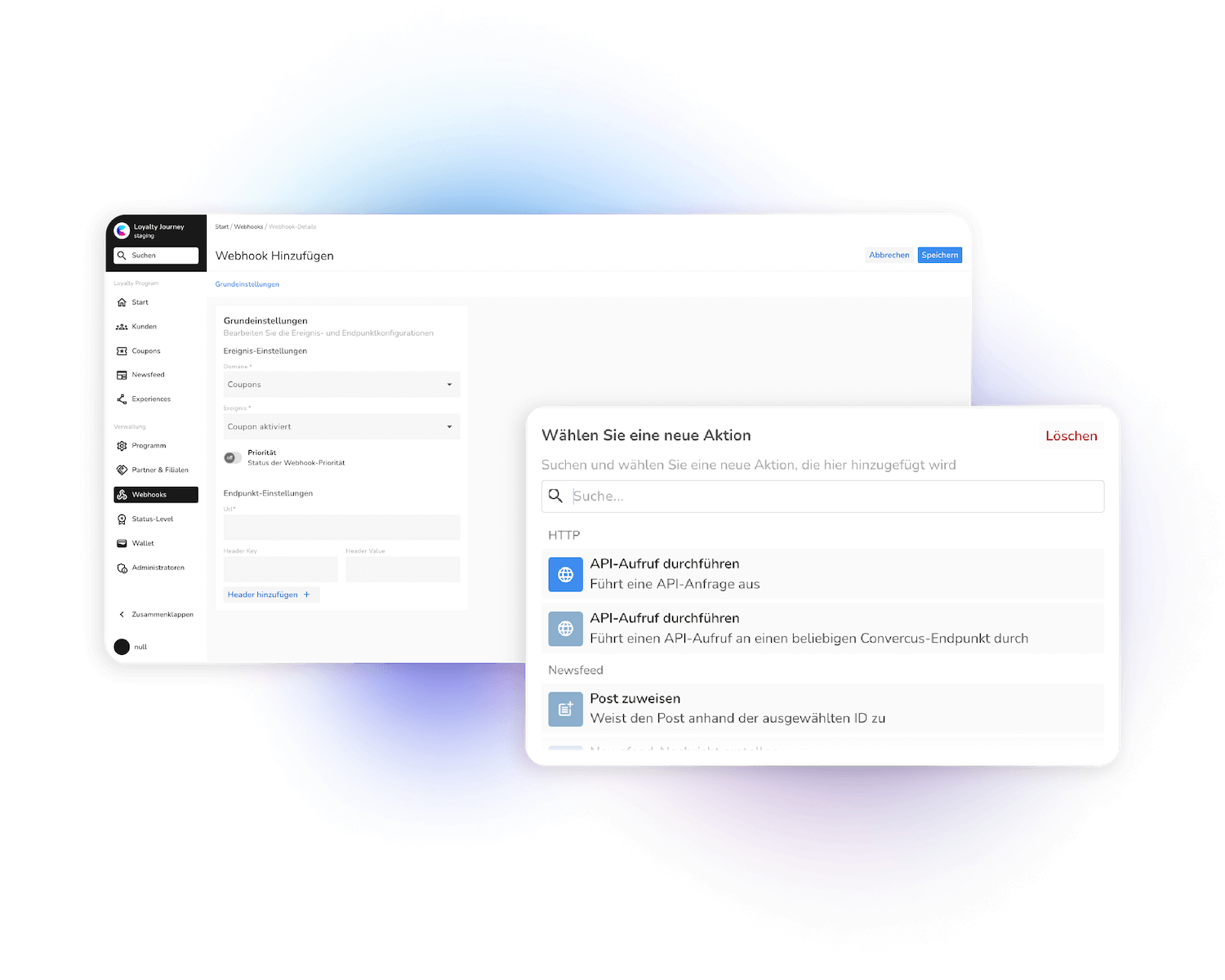
Integration is therefore crucial. API-first instead of siloed solutions is the right principle for tee sheets, POS, and communication to work together seamlessly. Simultaneously, data privacy must be meticulously set up. For clubs and operating companies, Articles 5 GDPR (data minimization and purpose limitation), 6(1) GDPR as a legal basis, 13 GDPR for informing data subjects, and 28 GDPR for data processing agreements are particularly relevant. Anyone using personalized communication and analytics should also document consents, deletion concepts, and role-based access rights.
How to choose the right loyalty software for your golf club
Whether it's a club, golf resort, or operating group: What's crucial isn't the longest feature list, but whether the solution fits your touchpoints, data landscape, and governance fits. This becomes particularly relevant for larger facilities with multiple revenue streams, multiple locations, or a strong hospitality component.
- The solution should support genuine segmentation, so that frequent players, inactive members, guests, event participants, and pro shop-oriented target groups can be addressed differently.
- Couponing and offer logic must be flexible, so that promotions for food and beverage, the driving range, lessons, or off-peak booking times remain manageable without an IT project.
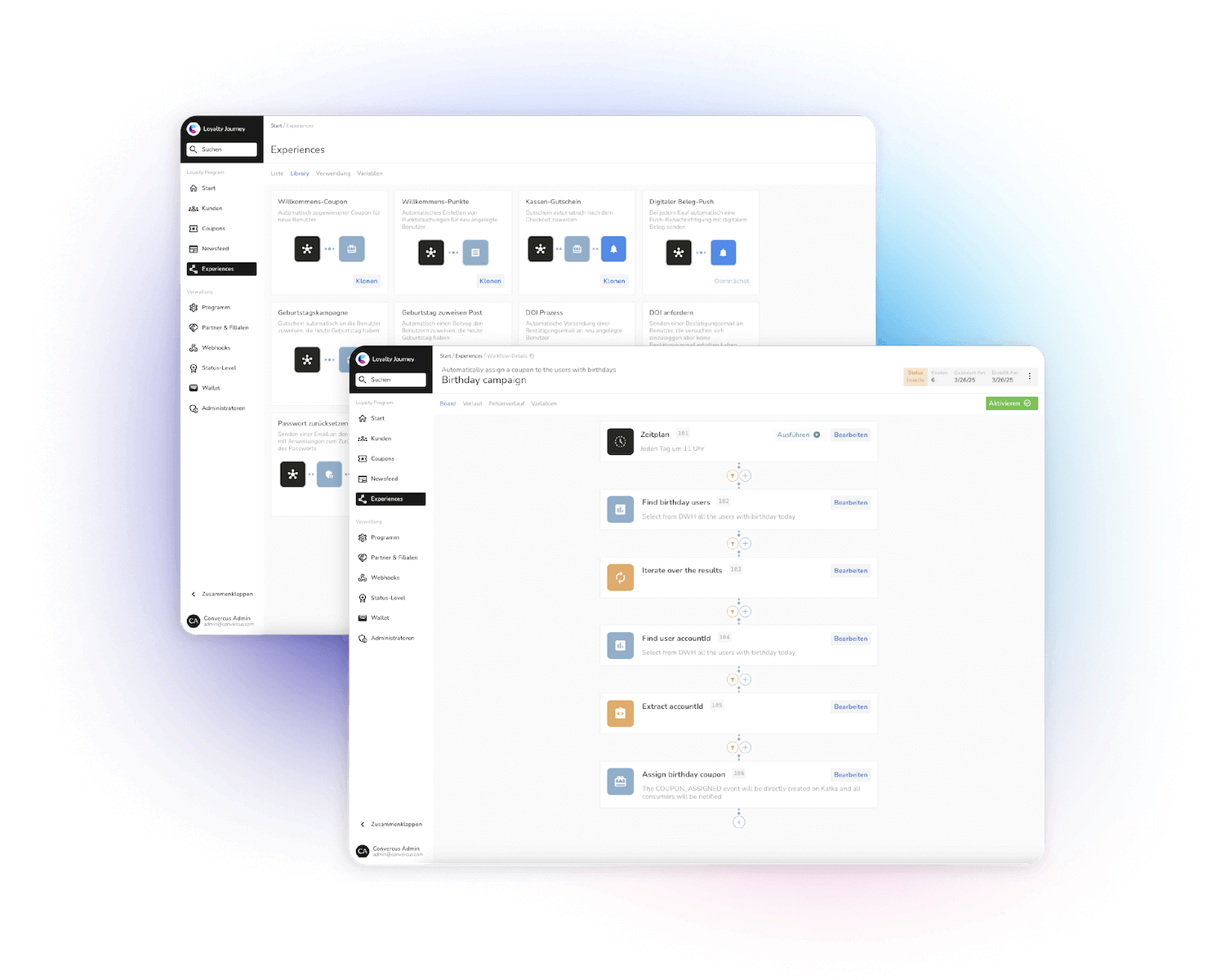
- Automation is a must, because otherwise welcome journeys, reactivation, birthdays, anniversaries, and win-back campaigns would get lost in daily operations.
- The integration strategy must be robust, so that club administration, booking, POS, and reporting do not continue as isolated data silos.
- Reporting should be business-relevant, meaning it should make retention, redemption rates, guest conversion, ancillary revenue, and campaign success visible.
For larger golf resorts, operating groups, and hospitality-oriented facilities, a platform like Convercus can be interesting if, in addition to a Loyalty Engine and Engagement Automation also Couponing and an API-first integration are in demand. The benefit then lies not in another siloed solution, but in a scalable engagement architecture that brings together multiple touchpoints and eases the burden on both marketing and operations.
Example Calculation: What 3 percentage points more retention can mean for a golf club
A business case illustrates the concept. Let's take a golf club with 800 members, an average annual fee of €1,500 and average additional revenues of €600 per member for catering, pro shop, training, and events. This results in an annual revenue of €2,100 per member.
This calculation is conservative because it doesn't account for additional revenues from reactivation or the effects of improved cross-selling. Loyalty software often pays for itself in golf by preventing just a few members from leaving. Additionally, there's a second lever: If guests are systematically converted into returning players and later into members, the Member Lifetime Value significantly increases beyond just the membership fee.
Best Practices for Implementation and Operation
Internationally, programs like Troon Access show that subscription and loyalty can be effectively combined . In the German market, the context differs due to the strong influence of club structures, boards, and data protection requirements. Nevertheless, the principle remains the same: Those who recognize behavior, offer relevant benefits, and automate communication increase engagement and additional revenue without solely focusing on discounts.
Current developments further support investments. The DGV is advancing the digital ID, Leading Golf Clubs of Germany are working on AI-supported approaches to member retention, and the GolfRoadShow 2026 prominently features the topic of AI and retention. The industry is currently undergoing measurable digitalization – and with that, member expectations also rise.
- Start with clear goals, such as retention, green fee-to-member conversion, or additional clubhouse revenue.
- First, define segments, for example, frequent players, inactive members, guests at risk of not returning, or event-oriented target groups.
- Start with a few strong journeys, such as onboarding, win-back, birthdays, and off-season activation.
- Maintain clean governance, including consents, information obligations under Art. 13 GDPR, data processing agreements, and authorization concepts.
- Measure consistently, whether retention, ancillary revenue, redemption rates, and guest conversion are actually improving.

Conclusion: Loyalty becomes a strategic competitive advantage for golf clubs
Golf clubs thrive on long-term relationships. That's precisely why traditional administration is no longer sufficient today. Those who integrate membership, playing behavior, additional revenue, and communication, can detect churn earlier, systematically develop guests, and expand value creation through the pro shop, gastronomy, training, and events.
Especially for larger facilities, golf resorts, and operator groups, loyalty software is no longer a nice-to-have, but a control instrument for retention and experience. If you want to explore how a modern loyalty architecture with automation, couponing, and API-first integration can be implemented in your setup, Convercus is an obvious choice. Schedule a personal demo here and speak with a loyalty expert about your specific golf club case.
FAQ
How much does loyalty software for golf clubs cost?
That depends heavily on club size, number of touchpoints, integration effort, and desired automation. What's crucial is not just the license, but the business case: Even a few avoided departures per year can economically justify the investment.
How complex is the implementation of a loyalty program?
A lean start is usually quicker than expected. Many clubs start with a few journeys, such as onboarding, reactivation, and birthday communication, and then gradually expand to include POS integration, couponing, or tier logic.
Does loyalty software work with existing POS or club management systems?
Yes, provided the provider offers a robust integration strategy. APIs, exports, or middleware are important, so that booking, POS, club administration, and campaigns no longer run separately.
Can loyalty software be used by golf clubs in compliance with GDPR?
Generally yes, if roles, legal bases, and information obligations are clearly defined. Articles 5, 6, 13, and 28 GDPR are particularly relevant; for personalized measures, consents and deletion periods should be clearly documented.
Do we need a dedicated club app for this?
Not necessarily. Wallet passes, email sequences, and automated campaigns are often sufficientto achieve quick results. An app is particularly worthwhile if the club regularly wants to highlight mobile interaction, self-service, and status benefits.
How do we practically start with loyalty at a golf club?
The best way to start is with a brief audit of your data sources, segments, and goals. First, check where member and guest data is currently stored, then define two to three core KPIs and start with a focused pilot for onboarding and reactivation.


- 5x Return on Investment
- 80% Customer Identification
- 8x Customer Interaction
- +274% Repurchase Rate
.png)