






The topic, short and concise
- Loyalty software is becoming strategically relevant in the beverage market. Declining outlet numbers, increasing pressure from food retailers, and changing customer expectations are making digital customer loyalty a competitive factor.
- Immediate benefits, personalization, and omnichannel approaches work best. Points alone are rarely enough; strong programs combine digital customer cards, couponing, status logic, and cross-channel data.
- Your own program creates first-party data and greater control. Compared to purely third-party programs, beverage retailers can control offers, segments, and communication much more precisely.
- Convercus is suitable software for loyalty in the beverage market. For those looking to combine loyalty, couponing, engagement, and API-first integration in a scalable solution, Convercus offers a specialized partner.
Why Loyalty Software is Now Strategic for the Beverage Market
The specialized beverage retail sector will face significant pressure in 2026. The number of outlets is decreasing, while competitive pressure from chain stores and food retailers is increasing. According to VDGE, affiliated beverage specialty stores had 2,415 outlets in 2025, a 3.9% decrease from the previous year. At the same time, chain concepts are growing, while non-chain stores are losing sales and foot traffic. For many operators, this means that it's no longer about more space, but about more revenue per customer.
This is precisely where loyalty software comes in. Instead of thinking about customer loyalty solely through flyers, price promotions, or third-party programs, it enables a measurable, digital, and personalized relationship with the customer.. This is particularly relevant in the beverage market because purchases are frequent but often seem interchangeable. Those who sell identical brands as supermarkets, discounters, or online delivery services need a differentiator other than price.
The market is changing faster than many programs
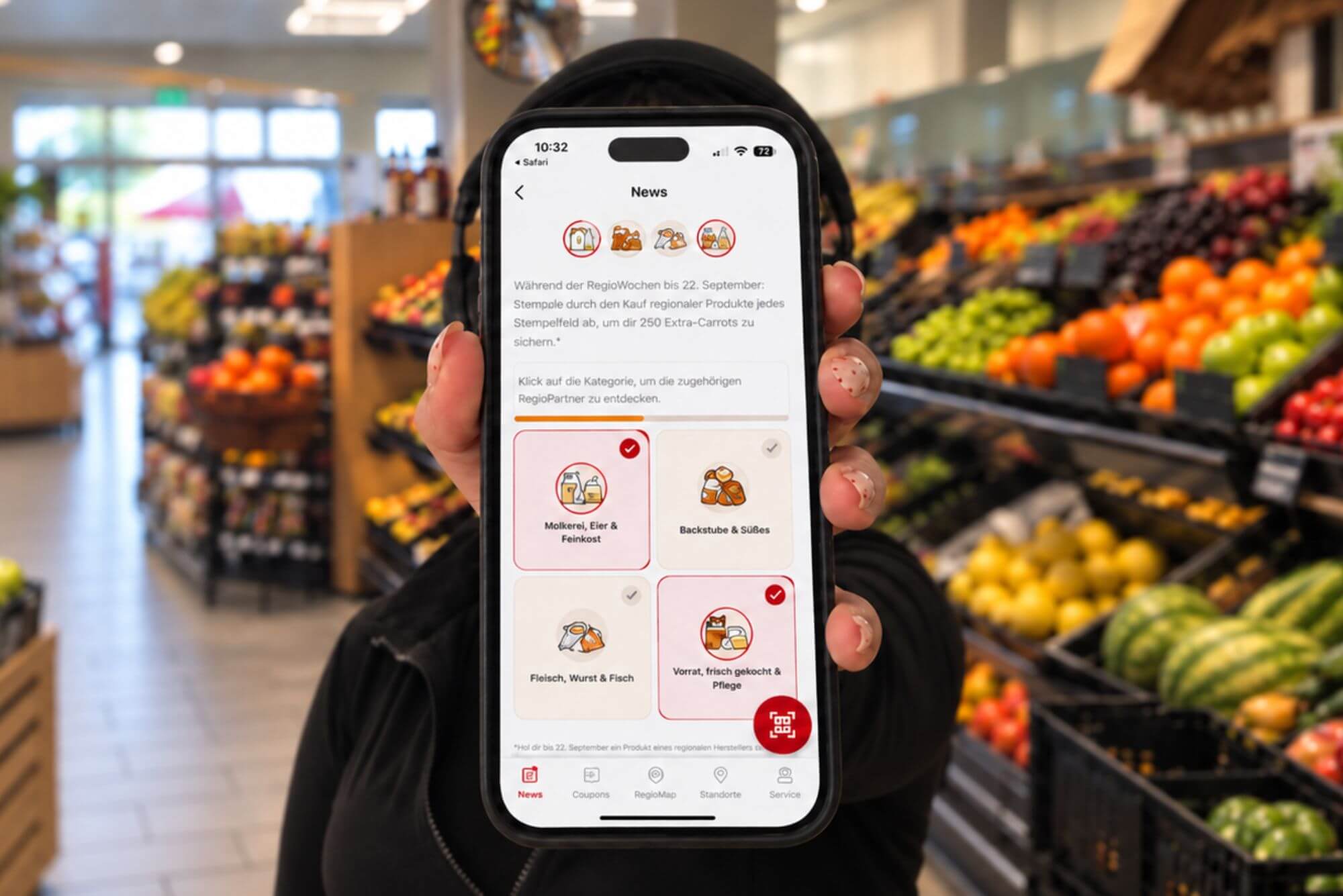
Consumer expectations have clearly shifted. Seven out of ten consumers actively use loyalty apps in retail, and 80% want instantly redeemable rewards. At the same time, Rewe Bonus, Lidl Plus, and other programs are setting everyday standards for easy app usage, digital coupons, and immediate benefits at the checkout. For beverage markets, a digital loyalty offering is thus transforming from a bonus to a basic expectation.
Furthermore, there's the data aspect: relying solely on third-party programs provides reach but doesn't automatically grant true data sovereignty. However, proprietary first-party data is becoming increasingly important for personalization, couponing, assortment management, and retention. To understand what modern customer loyalty software can achieve, the beverage market should not be seen as an exception, but rather as a particularly attractive loyalty use case.
What Loyalty Software Must Specifically Deliver in the Beverage Market
Effective loyalty software for the beverage market needs to do more than just manage points. Crucial is the combination of repurchase incentives, personalization, and omnichannel capability.. Beverage markets have a wide product range, seasonal demand, frequent repeat purchases, and often multiple touchpoints such as physical stores, delivery services, apps, or webshops. A solution that only covers one channel quickly creates new data silos.
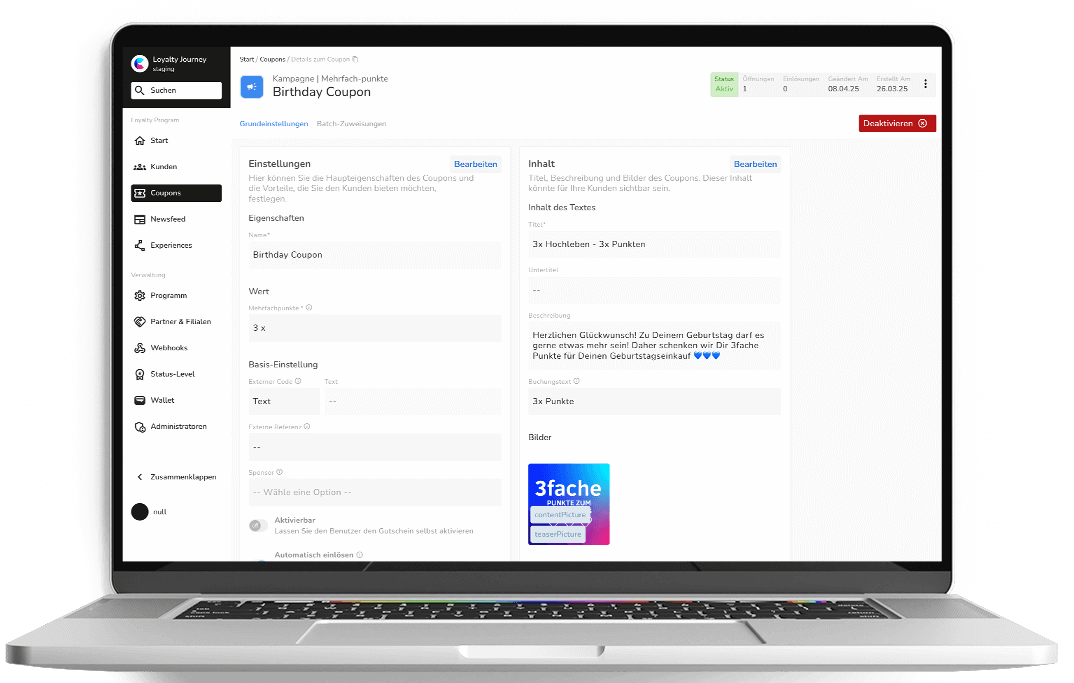
At its core, it's about a loyalty engine with flexible rule sets, digital couponing, status management, wallet passes or app-based customer cards, and the targeting of offers based on purchasing behavior. Especially in beverage retail, it's crucial that immediate benefits, bundle offers, and product-specific incentives can be accurately represented. 80% of consumers prefer instantly redeemable rewards – a classic indication that cashback, coupons, and direct benefit mechanisms often perform better than very long-term point systems.
These features are particularly important in specialized beverage retail
- Digital Customer Card and Wallet Pass lower the barrier to entry, as customers don't need to carry a physical card.
- Couponing for Assortments and Occasions allows for targeted offers for beer, water, soft drinks, grilling seasons, or holiday purchases.
- Status and Benefit Logic helps to address frequent buyers, delivery customers, or B2B2C-adjacent segments in a differentiated way.
- Omnichannel Accounts connect POS, app, online shop, and delivery service into a unified customer profile.
Those who want to delve deeper into mobile programs will find further starting points in the article on App-First Loyalty for cross-channel development.

Reward Models Compared
In practice, hybrid models are usually the most effective: a basic program with points or cashback, supplemented by personalized coupons and exclusive benefits for specific segments.
Own Loyalty Program vs. PAYBACK: What's Worthwhile for Beverage Markets?
Many beverage markets start with a multi-partner program because it quickly generates reach. This is legitimate – but not always strategically sufficient. The key difference lies in data sovereignty. Those who rely exclusively on PAYBACK or similar models benefit from a well-known ecosystem but don't automatically build their own, fully controllable customer relationship, which can be crucial for customer loyalty in retail can be decisive.
This doesn't mean that a third-party program is inherently wrong. Getränke Hoffmann demonstrates with its own app and parallel PAYBACK usage that hybrid models are also possible. However, the trend is clearly towards proprietary digital channels, because couponing, store communication, favorites, wallet passes, and first-party data are more controllable there. Especially in the beverage market with regional assortment differences and occasion-based purchases, this flexibility is crucial.
Key Differences at a Glance
For many chain retailers, the pertinent question is no longer "PAYBACK or our own program?", but "Which mix provides short-term reach and long-term data expertise?"
How Loyalty Software Pays Off in the Beverage Market
Strategic decision-makers don't want a feature list, but a business case. An illustrative example: A beverage market chain with 50 stores and 200,000 registered customers achieves a monthly turnover of approximately €9.9 million with an average of 300 customers per location per day and an average receipt value of €22. If a loyalty program improves both frequency and basket size for a portion of active customers, significant additional revenue is quickly generated.
Let's assume 30% of registered customers actively use the program. Then, personalized coupons, seasonal promotions, and status benefits can trigger additional purchases in higher-margin assortments such as premium water, craft beer, or non-alcoholic alternatives. The loyalty lever isn't just about discounts, but about a higher share of wallet.. Campaigns around grilling season, holidays, sports events, or delivery orders are particularly effective.
These KPIs You Should Measure in the Beverage Market
Truly relevant metrics include repurchase rate, retention rate, coupon redemption, active app usage, share of wallet, customer lifetime value, and churn rate. Additionally, there are store-specific metrics: Which locations best activate customers, which categories respond to couponing, and during which timeframes do campaigns perform particularly well? Without a robust KPI setup, loyalty remains a gut feeling; with data, it becomes a management tool.
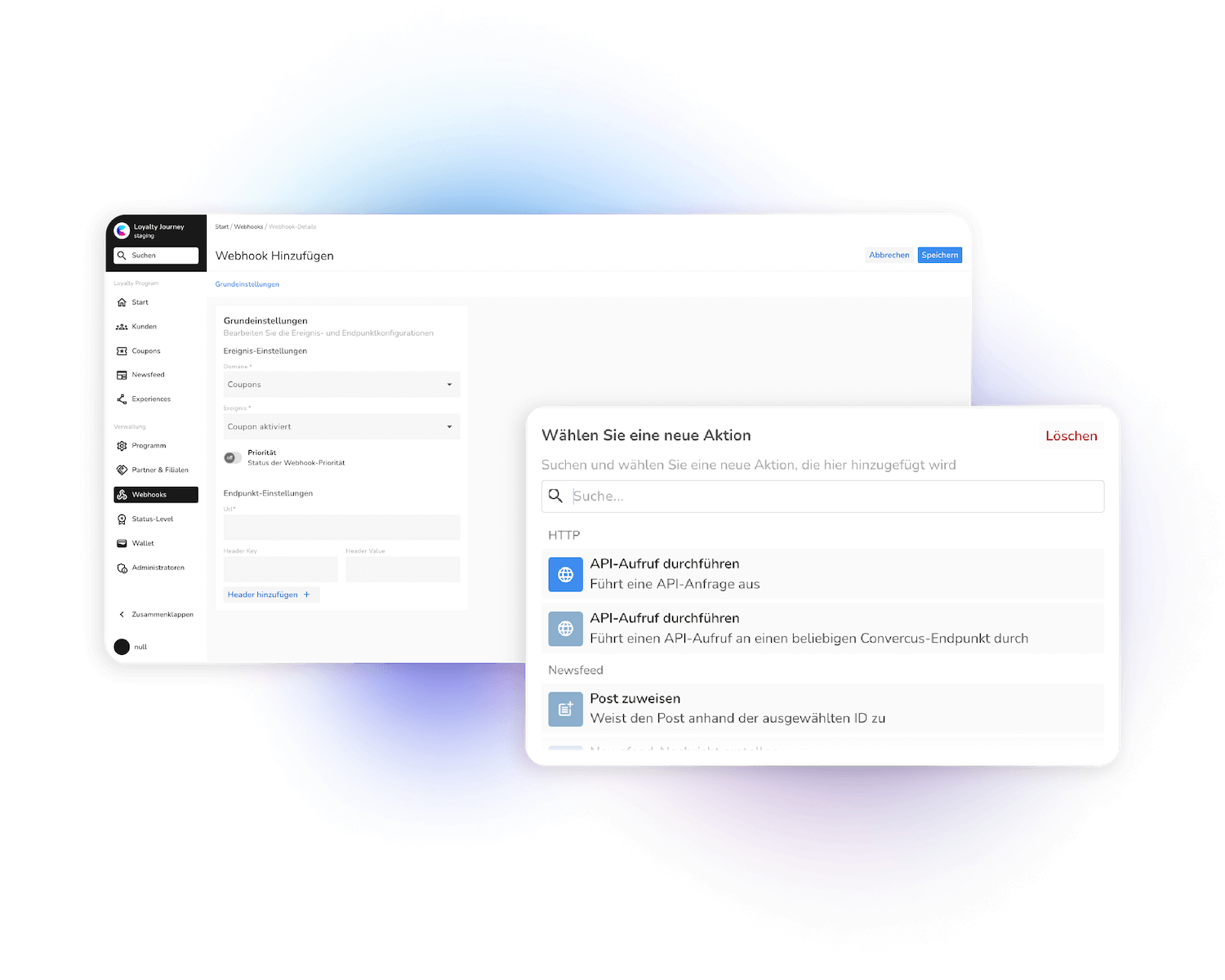
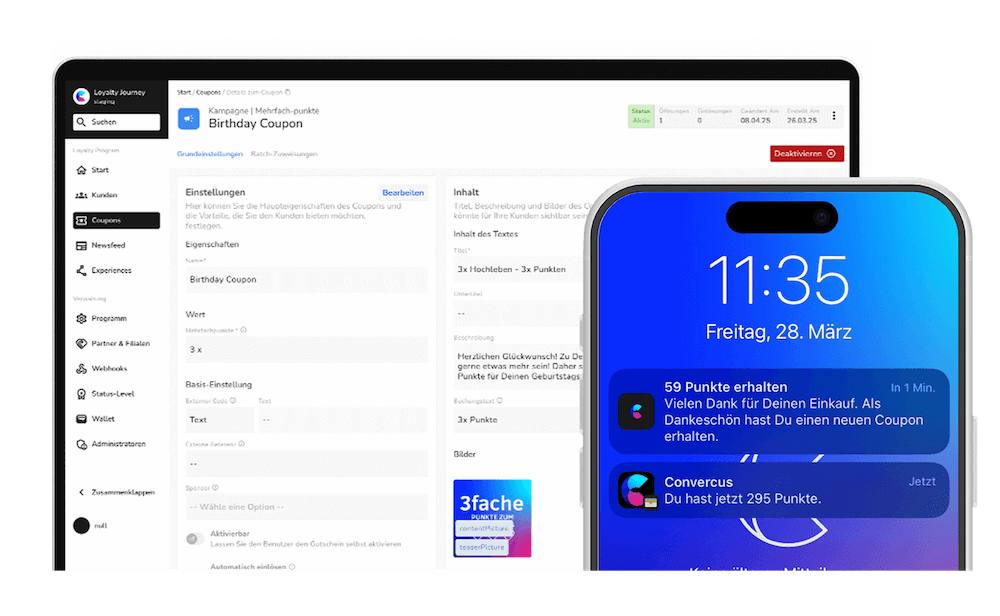
Those who want to manage loyalty, couponing, and automation from a single platform can look into solutions like Convercus . The main advantage is that rules, deployment, and evaluation do not have to be maintained in separate tools.
Practical Examples and Loyalty Mechanisms That Truly Work in Beverage Retail
Standard programs miss out on a lot of potential in the beverage market. The industry has several mechanisms that other retail segments do not possess in the same way: deposits, reusable packaging, crate purchases, event relevance, delivery service, and a very deep assortment structure. This is precisely why campaigns should be industry-specific, not generic.
What Works Particularly Well in Practice
- Seasonal Couponing Logic deploys offers for grilling weekends, holidays, or major sports events precisely when demand arises.
- Green Loyalty with Reusable Packaging Focus rewards more sustainable purchasing behavior, such as reusable packaging shares or regional products, without descending into arbitrary greenwashing.
- Delivery Service as a Loyalty Channel creates true differentiation, for example, through status-dependent delivery benefits or exclusive digital offers.
- Gamification leverages assortment depth, for instance, through challenges like "Discover 3 new non-alcoholic alternatives" or "Try 5 craft beers in 30 days."
The best-practice example of Getränke Hoffmann shows where the market is heading: proprietary app, digital offers, couponing, and store relevance instead of purely paper-based communication. Even market leaders today combine well-known bonus programs with their own digital touchpoints, to get closer to customers.

What to Consider When Choosing, Integrating, and Ensuring Data Protection
When selecting loyalty software, it's not the most attractive interface that matters, but its technical and organizational compatibility. In the beverage market, POS integration, API-first architecture, and offline robustness are particularly important. Many retail companies operate with established system landscapes comprising POS, merchandise management, marketing tools, and sometimes separate delivery or shop solutions. The loyalty platform must integrate with these, not the other way around.
The regulatory setup should also be sound. Customer data processing requires a legal basis depending on the use case, according to Art. 6 Para. 1 GDPR, usually in conjunction with consents under Art. 6 Para. 1 lit. a GDPR for advertising personalization. Information obligations under Art. 13 GDPR, data processing agreements under Art. 28 GDPR, and technical and organizational measures under Art. 32 GDPR are mandatory. Those who combine apps, email, wallets, and coupons should consider data protection not as an afterthought, but as part of the solution design.
These Selection Criteria Should Be on Your Checklist
- Open Interfaces for POS, merchandise management, app, e-commerce, and reporting prevent new siloed solutions.
- Flexible Rule Sets are necessary so that points, cashback, status, and couponing can be operated in parallel.
- Multi-Client and Multi-Store Capability is central for chains, retail groups, and regional assortment logics.
- Data Protection and Authorization Concepts must be documentable and auditable.
- Migration and Onboarding should be clearly planned when an existing program or customer data model is replaced.
For companies looking for a Loyalty Engine, Couponing, Engagement and an API-first integration from a modern setup, Convercus is an obvious choice. This is particularly relevant for multi-branch retailers who want to build scalable customer engagement, not just offer discounts.
5 Myths About Loyalty in the Beverage Market: Fact Check
- Myth 1: PAYBACK is enough. A third-party program can generate visibility, but it doesn't automatically replace your own data sovereignty, benefit logic, and direct customer communication. For many beverage retailers, a hybrid model or the gradual development of their own program is therefore more sensible.
- Myth 2: Our customers are too old for an app. The widespread use of WhatsApp, wallets, and retail apps proves otherwise. Seven out of ten consumers already actively use loyalty apps; the question is less about age and more about the simplicity of the added value.
- Myth 3: Beverages are too price-sensitive for loyalty programs. Especially in price-sensitive markets, loyalty helps shift the focus from individual prices to the overall relationship, assortment, and convenience. Instantly redeemable benefits and relevant coupons are often more effective here than blanket, ongoing promotions.
- Myth 4: Loyalty is just a discount machine. Modern programs work with status, benefits, personalization, gamification, and value-added services. In the beverage market, for example, delivery benefits, reusable packaging incentives, or exclusive themed worlds can create stronger loyalty than the next cent off.
- Myth 5: Implementation is too complex for SMEs. Modern SaaS platforms and modular rollouts allow for a pragmatic entry. Those who start with a wallet pass, couponing, or a focused benefit don't have to launch the perfect full program immediately.
Conclusion: Loyalty Software is Becoming a Must-Have in the Beverage Market
Today, specialized beverage retailers need more than just promotional prices and flyers. Digital customer loyalty, first-party data, and omnichannel engagement are becoming key levers against interchangeability, loss of frequency, and competitive pressure from food retailers. Loyalty is particularly powerful when it combines immediate benefits, personalized offers, store relevance, and clean data structures.
Therefore, when evaluating loyalty software for the beverage market, you should not only ask about points or discounts, but about strategic controllability: What data do you gain? Which systems do you integrate? What campaigns can be triggered? And how quickly can a robust business case be established? This is precisely where Convercus is worth a lookif you are looking for a scalable platform for loyalty, couponing, and customer engagement. It's best to arrange a personal demo directly and see what a suitable setup for your beverage retail chain could look like.
FAQ
Which loyalty software is suitable for multi-branch beverage retailers?
Platforms that are primarily suitable are those that are multi-branch capable, API-first, and omnichannel-ready . It is important that POS, app, couponing, reporting, and, if applicable, delivery services converge in a single customer profile.
How complex is it to get started with a loyalty program?
Getting started doesn't have to mean a full-scale implementation. Many retailers start with a wallet pass, a digital customer card, or personalized coupons and then gradually expand with points, status, or marketing automation.
Does loyalty software work with existing POS systems?
Yes, provided the solution has suitable interfaces. The integration architecture is crucial: POS, merchandise management, and customer data must be cleanly integrated for redemption, point allocation, and reporting to function reliably.
Can loyalty software be used in compliance with GDPR?
Yes, if legal bases, consents, information obligations, and data processing agreements are correctly implemented. Articles 6, 13, 28, and 32 of the GDPR are particularly relevant for practical implementation.
What does loyalty software for the beverage market cost?
This depends on the number of branches, integration scope, channels, and functional breadth. More important than the pure license price is the total value: If loyalty brings higher frequency, better redemption rates, and increased share of wallet, the investment often pays off much sooner than expected.
Can we migrate an existing program or customer data?
In many cases, yes. A clean migration of customer data, status logic, and consents should be planned early to ensure that historical behavior, segmentation, and communication are not lost.


- 5x Return on Investment
- 80% Customer Identification
- 8x Customer Interaction
- +274% Repurchase Rate