








The topic in brief
- Loyalty software for tour operators is more than just a points system. It manages rules, status, couponing, personalization, and engagement across the entire travel customer journey.
- The biggest challenge is the frequency gap. Because many customers only book 1–2 times per year, reviews, app usage, referrals, and additional purchases must also be integrated into the loyalty logic.
- The business case is often clearly positive. Even a moderate increase in the rebooking rate can generate millions in additional revenue and gross profit for operators with a large customer base.
- Convercus is a suitable software for loyalty in the travel sector. Those looking to combine loyalty, couponing, engagement, and API-first integration in a scalable platform can consider Convercus as a solution for modern customer retention.
Loyalty Software for Tour Operators: Why the Topic is Now Becoming Strategic
The German tour operator market is large, has become more digital, and is more competitive than ever. According to DRV, tour operators' revenues in 2024 were 39.8 billion €, while 68.3 million holiday trips of 5 days or more were taken. However, growing in this market doesn't automatically lead to loyal customers. More than 64% of travelers prioritize price over the tour operator's brand. This is precisely why professional customer loyalty is shifting from a marketing topic to a strategic lever for repeat bookings, margins, and data sovereignty.
The market is growing – but loyalty doesn't automatically grow with it
Following the FTI insolvency, rising media costs, and increasing OTA presence, many tour operators are under pressure to strengthen their direct customer access. New bookings alone are not enough, if repeat bookings are lacking and valuable customer data is scattered across fragmented systems. Loyalty software helps consolidate customer data, incentives, and communication into a single structure.
Why a purely price-driven approach falls short for tour operators
Discounts can stimulate demand, but they rarely create lasting loyalty. Tour operators don't sell an interchangeable product; they sell anticipation, security, advice, and experiences. This is precisely where modern loyalty comes in: with status benefits, personalized offers, relevant travel occasions, and a customer journey that extends far beyond the actual booking. Those who wish to delve deeper into the strategic perspective can find additional background on how to systematically increase customer loyalty can be achieved.
What is Loyalty Software for Tour Operators?
Loyalty software isn't just a CRM with points. For tour operators, it's the operational layer that manages rules, rewards, status levels, couponing, and triggers throughout the entire travel customer journey. CRM stores data, loyalty software activates behavior. Booking systems handle reservations, marketing automation sends campaigns – but the loyalty engine defines when a customer receives points, achieves a status, or should see a specific offer.
Distinction from CRM, Booking System, and Marketing Automation
A CRM primarily answers the question of who the customer is. Loyalty software answers the question of which behaviors should be rewarded and encouraged. This is particularly important in travel sales because booking processes, apps, call centers, and travel agencies often operate in separate systems. For a fundamental overview of the solution space, a classification of modern customer loyalty softwarehere.
The real challenge: only 1–2 bookings per year
The key difference from retail is the low transaction frequency. A classic earn-and-burn model quickly reaches its limits when customers only book once or twice a year. Successful programs for tour operators must also work non-transactionally: with points for reviews, profile enrichment, app usage, referrals, or engagement behavior before and after the trip.
A simple maturity model for self-assessment
- Level 1: Existing customers receive newsletters and occasional voucher codes, but there's no central logic for status, points, or segmentation.
- Level 2: A CRM is in place, but online bookings, travel agency contacts, and campaign data are only partially connected, and actions remain manual.
- Level 3: A loyalty engine centrally manages rules, offers, status levels, and success measurement across all channels based on first-party data.
Which loyalty mechanics work best in the tour operator business?
In the tour operator business, the most effective mechanics aren't those that loudly promise discounts, but rather those that bridge frequency gaps and create relevant touchpoints. The key lies in the combination of transactional and non-transactional incentives.
Point systems work – if they reward more than just revenue
Points remain popular, even in 2026. However, for tour operators, they shouldn't be exclusively tied to booking value. Additional earn logics are useful for profile completion, travel reviews, app logins, referral links, or booking ancillary services like transfers, insurance, or excursions. This turns low booking frequency into an ongoing engagement cycle.
Status programs and experience-oriented benefits create differentiation
Status models are particularly suitable for frequent bookers, families with recurring travel occasions, or high-value segments like package tours, cruises, or long-haul trips. Crucially, status shouldn't just mean a discount. Priority consultation, exclusive travel content, early access, or special service benefits are often more valuable than an additional price reduction and contribute more significantly to the brand.
Couponing, referrals, and gamification keep the relationship alive
Time-limited coupons help manage seasonality or re-engage former prospects. Referral bonuses are particularly strong in the travel sector because trust and social proof play a significant role. Gamification, in turn, creates engagement between bookings, for example, through challenges related to travel profiles, wish lists, or knowledge formats. Those who wish to delve deeper into active interaction mechanics will find good starting points in the area of Engagement and Couponing.
The Travel Engagement Arc: Loyalty Along the Customer Journey
Tour operators have an advantage that many other industries don't: the trip itself consists of several emotionally charged phases. This is precisely why loyalty shouldn't begin only at booking and end after the trip. Inspiration, anticipation, and post-trip engagement are often just as relevant for loyalty as the actual moment of purchase.
Before Booking: Registration, Preferences, and Inspiration
During the inspiration phase, loyalty can help build first-party data effectively. Desired destinations, travel types, companions, or preferred departure airports are highly relevant signals for later personalization. Those who offer early value here, for example, through wish lists, exclusive travel ideas, or member offers, gain not only leads but also structured preference data.
Between Booking and Departure: The Most Underestimated Phase
Weeks or months often lie between booking and travel. Many operators leave this window unused, even though it's precisely where high relevance for upsells and brand experience emerges. Useful triggers include personalized information, checklists, upgrades, ancillary services, or challenges for trip preparation. The anticipation phase is a natural loyalty lever, because customers are particularly attentive during this time.
After the Trip: Reviews, Referrals, and Reactivation
After returning, the next loyalty phase begins. Reviews, photos, referral links, and thematically relevant follow-up offers can be systematically integrated into a loyalty logic. For operators with longer booking cycles, this phase is particularly important because it lays the groundwork for later reactivation and customer win-back creates.
What features must loyalty software for tour operators offer?
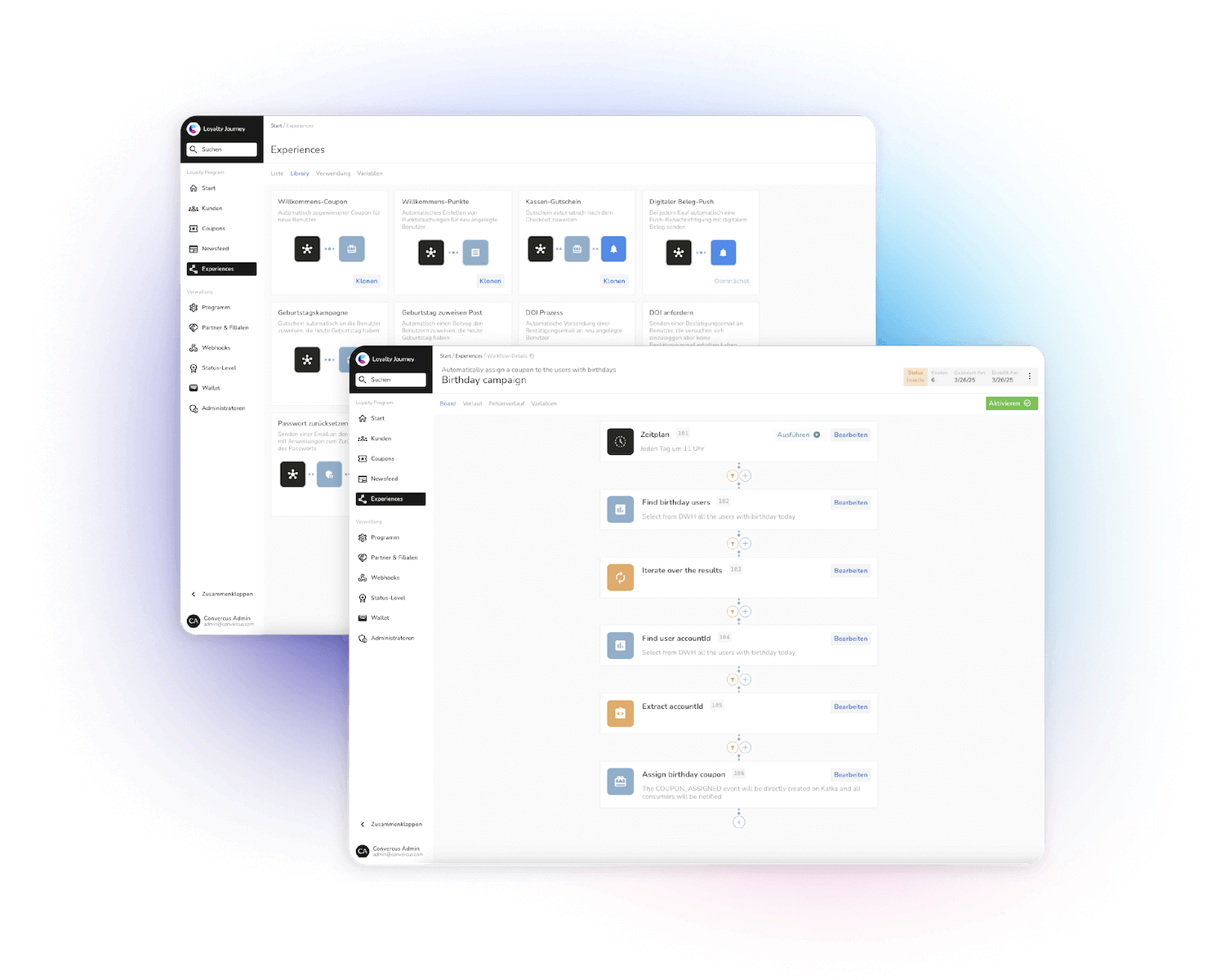
Whether a program scales later or ends up in siloed solutions depends on the software architecture. Tour operators don't just need an interface for points and rewards, but a platform that cleanly integrates data, channels, and rules. Omnichannel capability and strong integration are therefore more important than just a pretty points display.
Loyalty Engine, Omnichannel, and Cross-Channel Rules
The software should centrally manage points, status, benefits, couponing, and target group rules. It's crucial that the same logic applies across online booking, app, call center, and in-person consultation. A customer must not appear as a different customer per channel, otherwise loyalty becomes operationally invisible.
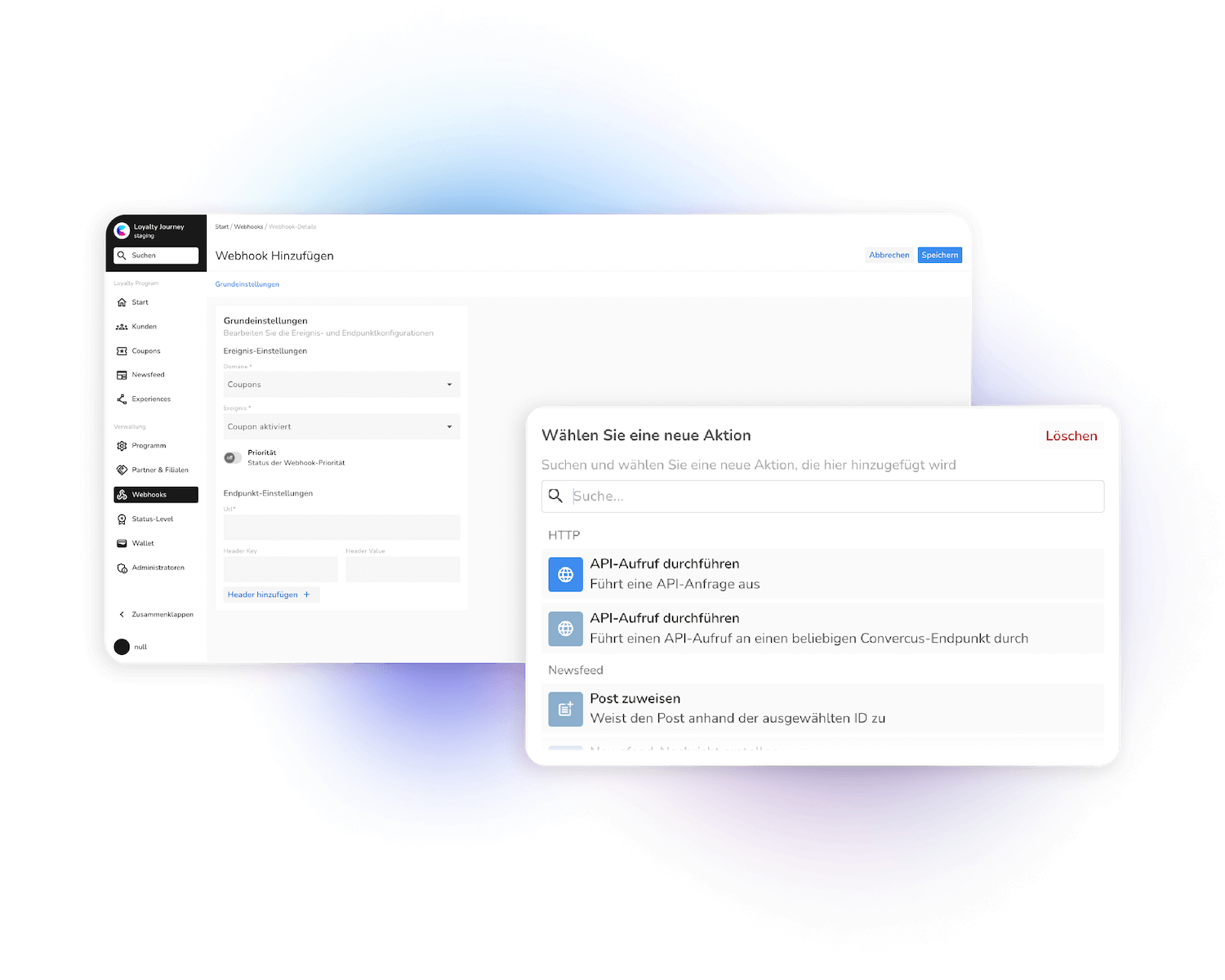
API-First, Integrations, and Performance During Seasonal Peaks
In the travel business, IBE, CRM, payment providers, apps, websites, and consultation interfaces often converge. Therefore, an API-first approach is usually the better choice for mid-market and enterprise operators than a rigid monolithic solution. Performance and scalability during peak seasons like January to March are also important. Those looking to connect modern system landscapes should pay particular attention to Tech and Integration .
Personalization, Whitelabel App, and Digital Customer Card
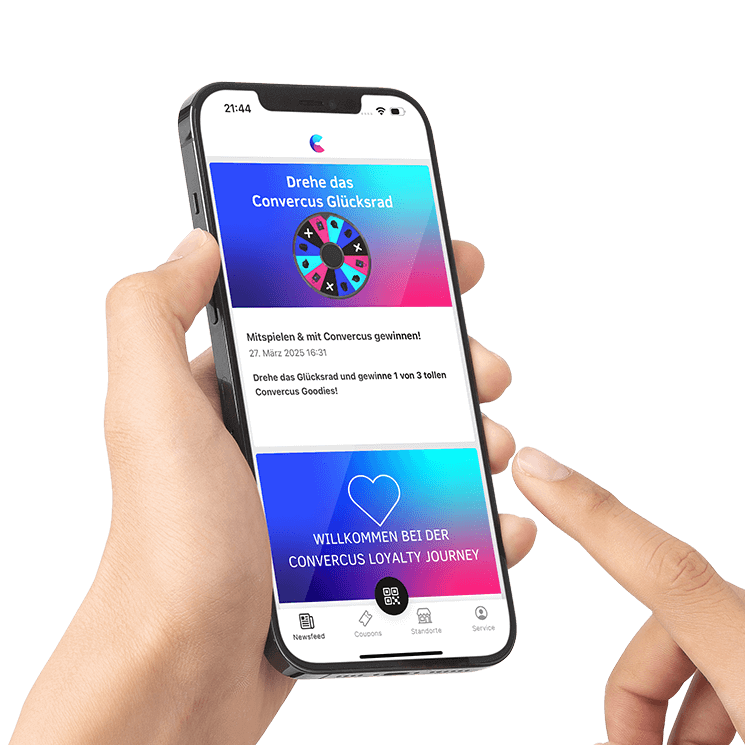
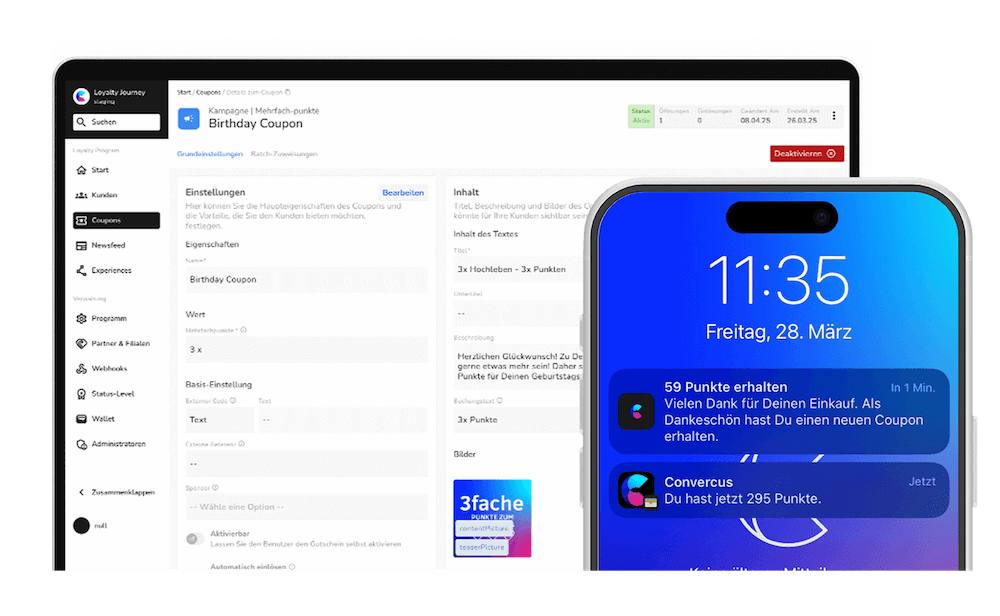
Relevant loyalty software must support segmentation, triggers, and personalized delivery. For tour operators, a whitelabel app or a Wallet Pass is particularly interesting because they keep the relationship visible during the long period between two bookings. Low-threshold access via Wallet or App significantly increases the chance of recurring interaction. Additionally, it's worth looking at App-first Loyalty.

GDPR compliance is mandatory, not an extra feature
Travel data is highly sensitive, even if it doesn't always concern special categories of personal data under Art. 9 GDPR. For loyalty and personalization, therefore, particular attention should be paid to Art. 5 GDPR with data minimization and purpose limitation, Art. 6 para. 1 GDPR for the appropriate legal basis, Art. 25 GDPR for Privacy by Design, and Article 28 GDPR relevant for data processing agreements. If email or push communication is based on consent, consent status must be properly documented and revocable; for front-end tracking, the TTDSG may also be relevant.
- Must-have: The platform should clearly separate consents, audience rules, and communication to prevent marketing, service, and loyalty from becoming legally intertwined.
- Must-have: Reporting must show which data originates from which touchpoint and which mechanism has what effect on rebookings, redemptions, and revenue.
- Must-have: Mobile touchpoints like Wallet Pass or apps should operate under the same rules as web and advisory services to ensure a consistent experience.

The Business Case: Is Loyalty Software Worthwhile for Tour Operators?
Yes – if the program is properly designed to increase rebookings, direct booking share, and additional revenue. The biggest misconception is to view loyalty merely as a cost center for benefits. The real value comes from influencing behavior, richer data, and more efficient reactivation of existing customers.
Example Calculation for a Medium-Sized Operator
Suppose a tour operator serves 200,000 customers with an average booking value of €1,500. If the rebooking rate increases from 25% to 32%, this generates 14,000 additional rebookings. This equates to €21 million in additional revenue. With a margin of 8% to 12%, this results in €1.68 million to €2.52 million in additional gross profit. This is offset by software, setup, and operating costs, which in many cases are significantly lower.
Which Metrics Truly Matter
Important KPIs include rebooking rate, share of identified customers, activation rate, redemption rate, additional revenue per booking, reactivation rate, and the share of direct bookings. The ratio of existing customer retention to new customer acquisition is also relevant: in many industries, activating existing customers is 5 to 7 times cheaper than acquiring new contacts. In the travel market, loyalty also serves as a first-party data strategy against OTA dependence.
Trends 2026: Where Loyalty is Heading in the Travel Industry
Travel loyalty in 2026 is clearly moving towards relevance, experience, and data intelligence. Programs that rely solely on discounts or static points are becoming interchangeable. The future is not louder, but more precise.
From Transactional to Experience-Oriented Loyalty
Tour operators have a natural advantage here: the product itself is an experience. Instead of exclusively offering discounts on the next booking, exclusive content, preferred access, special services, or curated travel experiences are gaining importance. Experience-oriented benefits strengthen the brand more than generic price reductions.
AI-Powered Personalization and Loyalty Fatigue
In the loyalty context, artificial intelligence should not be noticeable but rather reduce friction. Effective personalization doesn't showcase technology; instead, it delivers the right offer at the right moment. At the same time, loyalty fatigue is increasing: customers are registered in many programs, but only a few remain relevant. Differentiation therefore arises from context – such as family travel, cruises, active holidays, travel frequency, or preferred destinations – and not from yet another standard program.
Practical Guide: How Tour Operators Successfully Implement Loyalty Software
The best starting point is not the reward, but the overall objective. Should the program increase rebookings, connect travel agencies and online channels, boost additional revenue, or reactivate former customers? Only when these priorities are clear can the mechanics, data model, and rollout be meaningfully defined.
1. Define Goals, Data Sources, and Target Groups
Segment according to real business logic: first-time bookers, regular customers, high-value segments, families, seasonal buyers, or customers requiring extensive consultation. Without a clear goal definition, loyalty quickly becomes just a discount channel. In parallel, you should identify which data is already available in CRM, booking systems, apps, and campaign tools.
2. Start Small, but with the Right Technical Setup
For many operators, a pilot with a specific segment or sales channel makes more sense than a big bang approach. Typical starting points include reactivating dormant customers, status logic for regular customers, or wallet-based membership programs. A good pilot is clearly measurable and can later be rolled out to other brands, countries, or touchpoints.
3. Choose Software that Bridges Business Departments and IT
Decision-makers from CRM, e-commerce, product, and IT should use the same selection criteria: rule set, API capability, omnichannel, data protection, reporting, and usability. For companies that view loyalty not as an isolated solution but as a scalable platform, Convercus is an obvious choice: the combination of Loyalty, Couponing, Engagement and API-first Integration is particularly well-suited for omnichannel setups with high demands on performance and flexibility. Especially in programs with an app connection, modern user guidance can become relevant, as Convercus states that white-label app approaches enable up to 8x higher customer interaction .
Conclusion: Loyalty Software is a Growth Lever for Tour Operators
For tour operators, loyalty has long been more than just a bonus program. It is an instrument to increase rebookings, expand direct customer access, activate additional revenue, and turn fragmented data into a usable system. The right architecture is particularly important: those who close the frequency gap with non-transactional engagement and include the entire travel customer journey create significantly greater leverage than with isolated discount campaigns.
If you are looking for a solution that practically combines loyalty, couponing, engagement, and integration, Convercus is worth a look. Schedule a personal live demo and evaluate how a loyalty program can be set up for your tour operator in an economically and technically sound manner.
FAQ on Loyalty Software for Tour Operators
Which Loyalty Mechanism is Best Suited for Tour Operators?
A combination of points, status benefits, and targeted couponing usually works best. What's crucial is not the individual mechanism, but that interactions outside of bookings are also rewarded, so there's no communication gap between two trips.
How Complex is the Implementation of a Loyalty Program?
That primarily depends on your system landscape and rollout approach. A pilot with a clearly defined target group can often be implemented within a manageable timeframe, whereas an omnichannel rollout across online, app, call center, and travel agencies requires significantly more coordination.
Can Loyalty Software be Implemented in a GDPR-Compliant Manner in the Travel Context?
Yes, provided that roles, legal bases, consent processes, and data flows are clearly defined. Particularly important are Article 5, Article 6, Article 25, and Article 28 GDPR , as well as a clear separation between contractually necessary processing and consent-based marketing.
Does this work with existing booking and CRM systems?
Generally, yes, if the platform is built API-first. Typically, booking data, customer data, campaign triggers, and mobile touchpoints are integrated without completely replacing the existing core system.
How Much Does Loyalty Software Cost for Tour Operators?
Costs vary depending on the number of users, feature set, complexity of integrations, and desired rollout. For mid-market and enterprise companies, the license alone is less crucial than the overall business case derived from rebookings, additional revenue, and lower reactivation costs.
Can we migrate an existing bonus program?
Yes, existing point balances, status levels, membership data, and coupon logic can usually be transferred. Clean migration planning is important to ensure that old rules are not unknowingly transferred to the new platform and that the customer experience remains consistent.


- 5x Return on Investment
- 80% Customer Identification
- 8x Customer Interaction
- +274% Repurchase Rate

.jpg)