








The topic at a glance
- Pet supplies are an ideal loyalty market, because food, litter, snacks, and care products are repurchased at predictable intervals, creating an exceptionally high repeat purchase logic.
- First-party data determines long-term value, because only with an owned or controlled program can pet profiles, lifecycle marketing, and personalized offers be truly effectively built.
- Omnichannel is a must, because many pet owners shop both in-store and online, meaning points, coupons, status benefits, and wallet or app access must function seamlessly across all channels.
- Convercus is a suitable loyalty software for pet supplies, if companies want to combine loyalty, couponing, engagement, and API-first integration in a scalable setup for their store network and e-commerce.
Why loyalty software is an ideal use case for pet supplies
The German pet market offers exceptionally good conditions for customer loyalty. In 2024, the sector's turnover was around €7 billion, including a good 1.5 billion euros in online retail. At the same time, 33.9 million pet animals lived in German households, and 44% of all households had at least one animal. For retailers, brands and omnichannel providers, this means: a stable, emotional market with a high repurchase frequency and a large data base for personalization.
The buying cycle is particularly relevant. Pet food, snacks, litter or care products are bought in at clear intervals. A 15 kg bag of dog food or cat litter does not create a one-off requirement, but a predictable one. That is exactly why Loyalty Software Pet Supplies more than a digital points system: It becomes a tool for retention, repurchase management and first-party data development. Anyone who still works with stamp cards, generic customer cards or isolated e-commerce plug-ins today is giving away potential.
There is also the omnichannel effect: Around 60% of pet owners buy across channels. This makes programs valuable that bring together stationary retail, online shop, wallet pass, app and couponing. If you want to delve deeper into the basics, you will find in the article on Customer loyalty software the appropriate overview for strategic classification.
The status quo in the DACH market: Fressnapf, Zooplus and pressure from Amazon
The Fressnapf case shows the basic strategic question
Fressnapf's current hybrid approach is particularly instructive for the DACH market. The retailer originally wanted to end the cooperation with Payback and focus more on its own Fressnapf Friends program. In the meantime, the cooperation has continued. There is no contradiction behind this, but a typical dilemma: multi-partner programs provide reach, easy participation and awareness, while a separate program provides better control over customer experience, data model and personalization. When customer data is mostly held by the bonus partner and there are fees for use or redemption, data ownership quickly becomes a strategic issue.
Zooplus and Amazon are tightening the bar
Zooplus has also visibly modernized Loyalty recently and focuses more on a comprehensible, attractive program model. At the same time, Amazon is increasing pressure on recurring food purchases with Subscribe & Save. Anyone who has pet food delivered conveniently automatically gets used to convenience and is difficult to sink back into open competition. For retailers, this means that a loyalty program must offer more than points. It must combine reminders, personalized benefits, bundles, services, and cross-channel experiences. This is exactly where simple discount logic separates from real customer loyalty.
The market reality is therefore divided into two parts: Big players professionalize their programs, while many medium-sized providers are still working with fragmented data, limited POS connections and generic mechanics. This opens up opportunities for retailers who are now cleanly modernizing.
Your own program, multi-partner or hybrid: the strategic decision
For decision-makers in pet supplies, the central question is rarely whether loyalty is needed, but which model provides the best business case. A separate program strengthens first-party data and differentiation. A multi-partner approach brings reach and lower barriers to entry. The hybrid model can make sense, but it increases the complexity of data consolidation, communication, and customer experience.
Data sovereignty is particularly valuable in pet suppliesbecause the animal profile itself is a commercial asset. Animal species, age, food preferences, allergies or weight changes enable lifecycle communication that a general bonus program barely reflects. Anyone who wants to use this depth strategically is usually better off in the long term with their own loyalty architecture or a controlled hybrid model.
Which loyalty mechanics really work in pet supplies
Points and status levels remain important but are not enough alone
A good points system in pet supplies not only rewards turnover, but desired behavior: predictable repurchases, cross-channel purchases, bundle purchases or profile completion. Status levels can give premium customers earlier access to new products, exclusive advice or better coupon logic. Tiers are a powerful instrument for differentiation, especially in a market with premium and budget polarization.
The animal profile is the actual loyalty gold mine
The biggest lever lies in the pet profile. When a retailer knows that a customer is keeping an 11-year-old Labrador with a sensitive stomach, there are significantly more relevant triggers than a generic target group of “dog food buyers.” Automatic replenishment reminders, senior food coupons, sample offers or accessory recommendations then become useful and measurable. Lifecycle marketing from puppy or kitten to senior is realistic in pet supplies because demand remains stable for years.

Emotional loyalty, couponing, and community increase retention
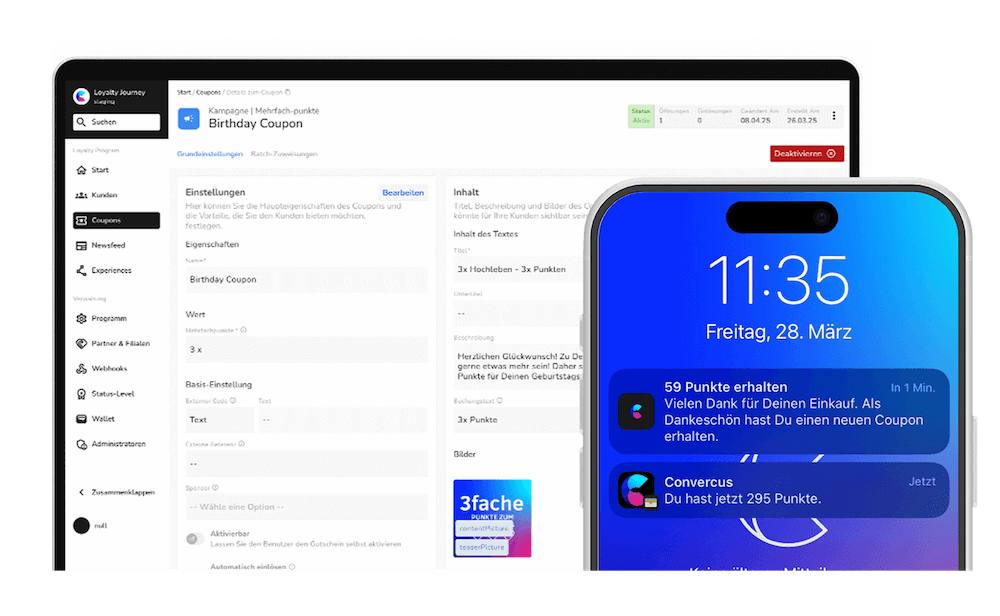
Pet owners don't react permanently to discounts alone. Combined models of personalized approaches work better Couponing, educational content, surprise moments, and community elements. Examples include birthday benefits for the animal, post-adoption welcome journeys, reminders of seasonal needs, or bundles of food, snacks, and care. Playful challenges also work when they fit into everyday life: for example, collection campaigns around health checks, trial phases, or recurring purchases. If you want to systematically expand customer engagement, you should not only design transactions but also interaction. The focus on engagement and on strategies to increase customer loyalty.
Which technical and legal requirements must loyalty software in pet supplies meet
Omnichannel, POS, and offline capability are mandatory
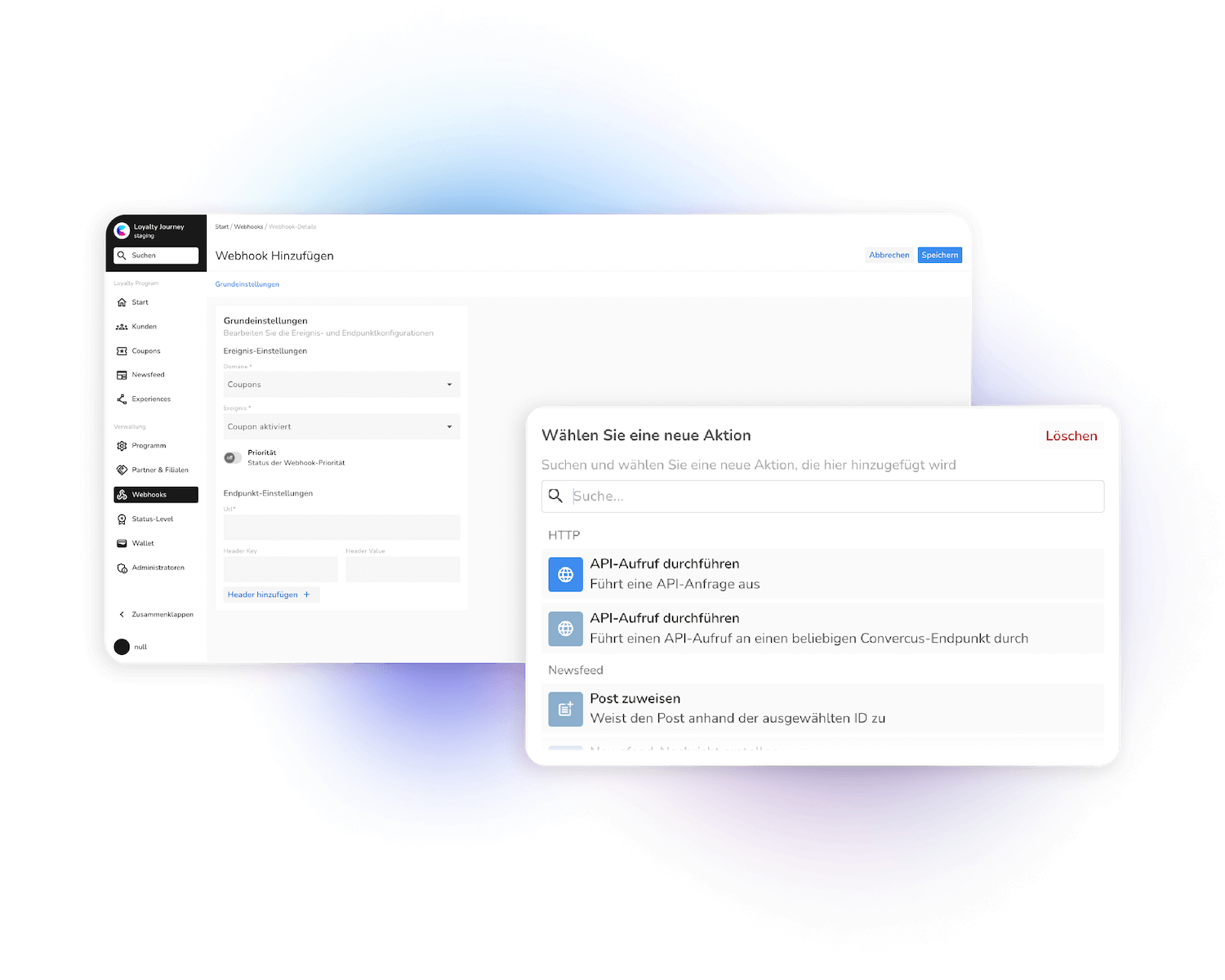
A loyalty program in pet supplies must offer a consistent experience across both in-store and digital channels.. Point accrual, coupons, status benefits, and redemption must work consistently at the POS, in-store, in wallet passes, and ideally also in an app or mobile web interface. This is not only about convenience but also economically relevant: When 60% of pet owners buy across channels, separate logics almost necessarily lead to data inconsistencies and frustration. API-first architecture, clean POS integration, and reliable synchronization are therefore important. For branches in peripheral locations or specialist stores with weaker connections, offline capability is a practical necessity. More on this can be found in the section Tech & integration.
GDPR and UWG must be considered from the outset
Legal certainty starts with program design. Depending on the design, Art. 6(1)(b) GDPR or (f) GDPR may be considered for pure program execution; reliable consent in accordance with Art. 6(1)(a) GDPR is regularly relevant for personalized email or push communication. In addition, § 7 UWG applies to electronic advertising in Germany. Information requirements under Article 13 GDPR, data subject rights under Article 15 and Article 17 GDPR, privacy by design under Article 25 GDPR, processor agreements under Article 28 GDPR, and technical and organizational measures under Article 32 GDPR should already be covered in the selection of software.
- The software should support clean consent management for email, push, SMS, and wallet-related communication.
- It should combine customer data, animal profiles, and transaction data within a clear authorization concept.
- It should enable data minimization, deletion concepts and documentable processes for requests for information and deletion.
Especially in pet supplies, where sensitive preference data quickly deepens, this governance is not a secondary issue, but a prerequisite for scaling.
ROI of loyalty software in pet supplies: a realistic example calculation
The business case in pet supplies is often better than in other retail segments because Shopping carts and purchase cycles can be planned are. An exemplary example of a medium-sized chain with 50 branches and 200,000 active customers shows the scale: With an average shopping cart of 45€ and a purchase frequency of 8 purchases per year, this results in an annual turnover of 72 million €. If the repurchase rate rises by 15% as a result of loyalty mechanics and better personalization, the frequency increases to 9.2 purchases per year.
The model calculation shows the actual principle: Even moderate improvements in frequency and cross-selling are heavily levering in pet supplies. Even when software, implementation, and operation represent a significant budget item, the potential ROI remains high. It is important not only to look at points redemption, but also at repeat purchase rate, CLV, churn, coupon uplift and share of wallet. Especially when it comes to food and consumables, the resumption momentum multiplies every small step forward.
This is how the introduction to branch networks and e-commerce is successful
In practice, loyalty projects rarely fail because of the idea, but because of too broad scope, poor database or unclear prioritization. The best way to get started is a clearly defined core program with few but effective mechanisms: digital customer identification, points logic for recurring purchases, personalized coupon routes and an animal profile that is enriched step by step. Especially because, according to market research, less than 10% of dog owners use dedicated apps in everyday life, access should not only be app-centered. Wallet passes, mobile web flows and simple POS processes significantly lower the participation hurdle. If you are interested in mobile programs, you can find out more about App-First Loyalty.
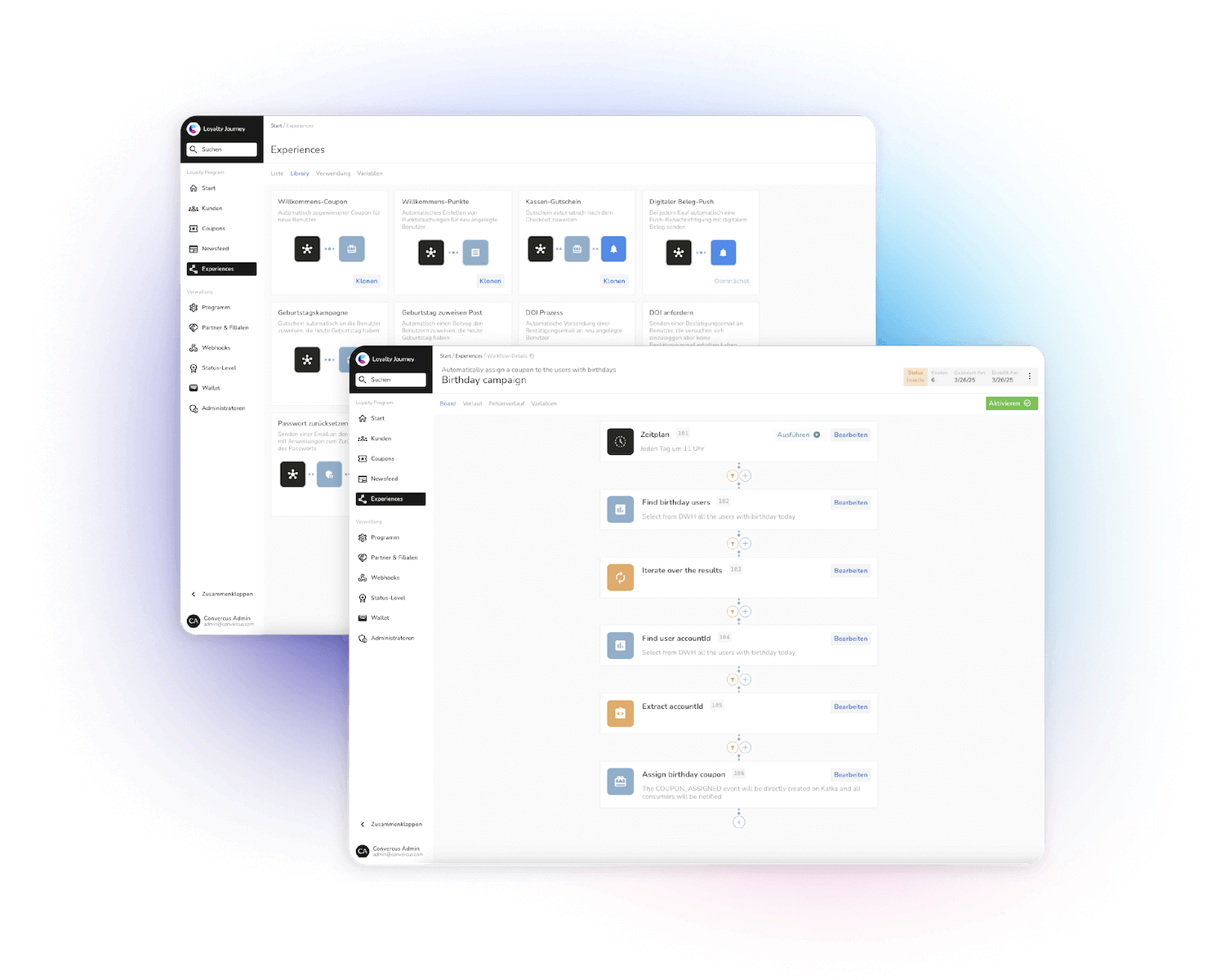
For mid-market and enterprise providers, this combination of loyalty engine, personalized couponing, marketing automation and API-first connection is crucial. Convercus is an obvious option for this because Loyalty, Couponing, engagement and enable technical integration to be combined within a single platform. Depending on the setup, this has demonstrably led to up to +274% repurchase rate, +134% shopping cart value and 5x ROI available; programs with an app can also achieve up to 8x higher customer interaction produce.
Conclusion: Convercus as loyalty software for pet supplies
Pet supplies is one of the strongest loyalty markets in retail: high repurchase frequency, strong emotional bond and a clear omnichannel shift create the best conditions for measurable customer loyalty. It is crucial not to stop at discounts, but to combine animal profiles, first-party data, couponing, lifecycle communication, and PoS-related processes in a reliable system.
If you want to replace an existing program, question a Payback or DeutschlandCard approach, or set up your own omnichannel model for branch networks and e-commerce, Convercus a suitable contact person. Arrange a personal live demo with a loyalty expert and check which setup promises the fastest ROI for your pet supplies.
FAQ on Loyalty Software for Pet Supplies
What is more important for loyalty software in the pet supplies industry than in other sectors?
The Pet Profile is the biggest difference. Because purchase cycles, life stages, and product needs depend heavily on the animal, personalization here is significantly more valuable than in many other retail categories.
How complex is the implementation of a loyalty program?
That depends primarily on the system landscape. If POS, shop, and CRM can be cleanly integrated, a phased rollout with core mechanics is significantly faster and less risky than a big-bang project.
Does loyalty software work with our existing POS system?
Usually yes, if the solution is designed API-first. Important are a robust POS integration, clear customer identification, and stable synchronization between store, online shop, and campaign logic.
Is a proprietary program better than Payback or DeutschlandCard?
Not automatically. Multi-partner programs are good for reach and a quick start, while a proprietary program is stronger in data sovereignty, differentiation, and pet profile-based personalization.
Can loyalty software for pet supplies be implemented in compliance with GDPR?
Yes, with sound legal and process design. Crucial are appropriate legal bases under GDPR, robust consents for advertising, transparent information, and technically implemented deletion and information processes.


- 5x Return on Investment
- 80% Customer Identification
- 8x Customer Interaction
- +274% Repurchase Rate