







The topic in brief
- The biggest lever is customer identification. Many transactions at car washes are anonymous; digital loyalty turns casual customers into known, activatable loyal customers.
- A subscription model alone is not yet a complete loyalty program. True customer loyalty, rather than just a subscription model, is only created with tiering logic, couponing, reactivation, and data utilization.
- ROI is generated through increased frequency and improved manageability. Even an increase from 8.3 to 10 washes per year can mean approximately €204,000 in additional annual revenue for 10,000 registered customers.
- Convercus is the right software for loyalty in a multi-location context. The platform combines loyalty, couponing, engagement, and API-first integration for car wash operators looking to systematically scale customer loyalty.
Why customer loyalty is becoming business-critical for car washes
The German car wash market is large, but many operations are still surprisingly analog. According to industry figures, there are around 18,800 car washes in Germany, which recently generated a combined revenue of approximately €1.43 billion. At the same time, the average wash frequency per vehicle owner is only around 8.3 washes per year. This is precisely where car wash loyalty software comes into play: long-term success isn't determined by the next discount campaign, but by the ability to turn occasional visitors into recognized, recurring customers.
The fundamental problem: high anonymity combined with low switching costs
In hardly any other service industry is the proportion of anonymous transactions so high. Many customers pay cash or contactless at the terminal, drive off, and leave no usable data. As a result, operators lack information on wash frequency, program selection, location history, or churn risk. Without identification, there is no real customer loyalty, only one-time revenue.
Why price competition alone isn't sustainable
Those who manage customers solely through price quickly find themselves in a spiral of discounts and interchangeable offers. For operators, this means shrinking margins without building genuine loyalty. A more sustainable model combines convenience, recognition, and relevant benefits: digital membership, automatic identification via app or license plate, personalized advantages, and communication that specifically brings customers back. Anyone who wants to understand how to systematically increase customer loyalty will find a particularly significant lever in the car wash business.
What is loyalty software for car washes?
Loyalty software for car washes is neither machine control nor a mere POS system. It refers to a platform that customer identification, reward logic, communication, and analysis brings together. It digitizes classic instruments like 10-wash cards, credit cards, or wash passes and extends them with app functions, couponing, status models, subscription logic, and marketing automation.
From 10-wash card to digital platform
The classic stamp card only works until it's lost, forgotten, or not accepted across multiple locations. A digital solution stores customer status centrally. Points, credit, free washes, or coupons are automatically recorded. The customer no longer needs to carry anything physical, and the operator simultaneously receives first-party data instead of paper cards that yield no insights.

Distinction from POS and operational control
A POS system processes payments. Car wash management software often controls operations, billing, or maintenance. Loyalty software sits above this: it decides which customer receives which benefits, when a coupon is issued, how a wash subscription is billed, or how a status level is achieved. Thus, it acts as the link between the frontend, cash register, app, CRM, and identification logic.
Flat rate is not the same as loyalty
Many operators equate wash flat rates with customer loyalty. However, a subscription is merely one tool. A complete loyalty program only emerges with status models, couponing, reactivation, and data utilization. Those who wish to delve deeper into the fundamentals of modern customer loyalty software should keep this distinction in mind.
Which loyalty models truly work in the car wash business
There isn't one perfect model for every car wash. Key factors are location structure, target audience, average ticket value, existing technology, and the strategic question of whether frequency, predictability, or data depth is prioritized. Hybrid models are usually the most successful, combining subscriptions, recurring incentives, and targeted campaigns.
Points, credit, subscription, and status in comparison
Simple mechanics often work well for single locations, while chains and gas station brands benefit significantly more from digital status management and cross-location logic. It's crucial that the rules are immediately understandable to customers and function in operation without additional effort.
In practice, three combinations are particularly strong: credit plus instant discount, subscription plus license plate recognition, and status model plus seasonal couponing. This transforms a transaction-oriented business into a manageable engagement model.
ROI: What are the economic benefits of loyalty software?
The central question for every operator is: Is it economically worthwhile? The short answer is yes, if the solution doesn't just distribute discounts but increases frequency, customer value, and utilization. The biggest lever usually isn't a higher single transaction value, but more visits per year, more predictable revenues, and fewer lost customers. Even small behavioral changes generate noticeable additional revenue.
Example calculation: More wash frequency, more revenue
Based on 10,000 registered customers, 8.3 washes per year, and an average price of €12, the annual revenue is €996,000. If the frequency increases to 10 washes per year through a well-managed loyalty program, revenue grows to €1,200,000. This corresponds to +€204,000 in additional annual revenue, without the need to build new locations.
Flat-rate customer versus single-wash customer
A frequently used market example: If a customer pays €40 per month for a wash flat rate, their annual revenue is €480. Compared to 8.3 single washes at €12 each, totaling €99.60 per year, the customer value is significantly higher. Even if usage initially increases, international practice shows that behavior often normalizes later. The 4.8x factor in annual revenue makes it clear why subscription models receive so much attention.
The often underestimated ROI: seasonality and data
Loyalty software not only smooths demand, it also makes it manageable. Operators can fill quieter days with coupons, direct frequent users to off-peak times, and automatically send an incentive to inactive customers after 30 or 45 days. International providers sometimes report 30% to 40% revenue growth in a membership context after introducing digital programs; for the DACH market, such benchmarks should always be individually validated. However, the most strategically important point remains: known customers can be actively developed, anonymous customers cannot.
What features a car wash loyalty software should have
In the car wash business, the question of features is always also a question of integration. A good solution must accurately identify customers, automatically assign transactions, and execute marketing rules without media discontinuity. Especially for regional chains, gas station brands, and mobility-related operators, it's crucial that new processes don't feel like a heavy IT project. API-first, scalability, and low operational friction are more important here than a colorful feature catalog.
Core requirements at a glance
- The software should centrally manage digital customer cards, points logic, vouchers, and memberships, so all locations operate under the same rules.
- It should be able to map subscription and flat-rate models, including terms, limits, permissions, and cross-location usage.
- It should be able to seamlessly integrate license plate recognition, POS, app, Wallet Pass, or terminal, so identification works without manual intermediate steps.
- It should offer segmentation and automation, so customers are targeted based on behavior rather than gut feeling.
- It should provide reporting for frequency, redemption, churn, and customer lifetime value, enabling data-driven decisions.
ANPR, POS, and offline capability
License plate recognition is often the most elegant identification mechanism in the car wash business. It reduces friction, speeds up entry, and makes subscription models truly convenient. At the same time, the loyalty solution must correctly process transactions from POS systems, terminals, or apps. For self-service facilities, it's also important that core processes don't immediately fail with an unstable connection. Offline capability and robust synchronization are therefore not a luxury, but operational requirements.
GDPR: What operators specifically need to consider
License plates and usage data are regularly personal data as soon as they can be assigned to a customer or owner. Particularly relevant are the principles from Art. 5 GDPR such as purpose limitation and data minimization, the legal bases under Art. 6 Para. 1 GDPR, information obligations under Art. 13 GDPR, as well as data protection by design under Art. 25 GDPR and security of processing under Art. 32 GDPR. For memberships, processing can often be based on Art. 6 Para. 1 lit. b GDPR if the license plate is necessary for contract fulfillment; for further marketing use, additional consents may be required depending on the setup. Operators should meticulously document deletion periods, role and rights concepts, and data processing agreements. This does not replace legal advice, but it shows: GDPR compliance is plannable if considered from the outset.
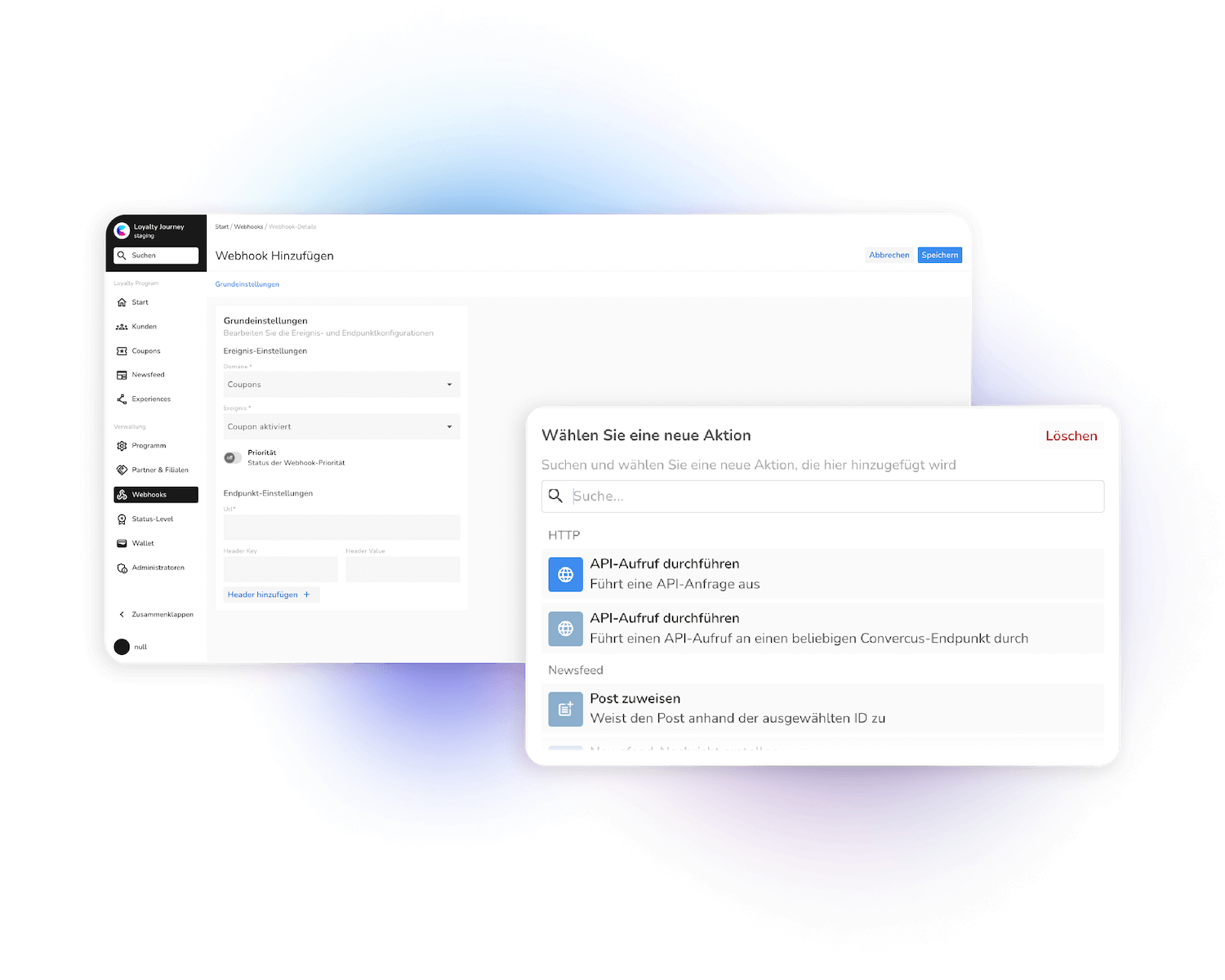
For operators who don't want to build loyalty, couponing, and marketing as isolated solutions, an API-first integration architecture is crucial. This is precisely where Convercus fits for multi-location setups with higher demands: Loyalty Engine, couponing, and engagement interlock instead of distributing data across separate tools.
First-Party Data and Marketing Automation: the real growth engine
The value of digital customer loyalty doesn't end with a free wash. Once customers are identified, their behavior, preferences, and visit patterns can be systematically analyzed. Operators then see who regularly uses premium programs, who only comes during de-icing salt seasons, who hasn't been active for weeks, and which location needs a particularly high number of reactivations. First-party data thus transforms from a byproduct into a strategic asset.
Which data truly helps in the car wash context
It's not about having as much data as possible, but the right data: wash frequency, last visit, preferred program, location used, reaction to coupons, subscription status, complaints, and activity in the app or wallet. This creates segments such as frequent washers, seasonal customers, churn risks, or premium-oriented users. Anyone dealing with customer win-back quickly realizes how valuable such signals are for automated reactivation campaigns.

Which automations work particularly well
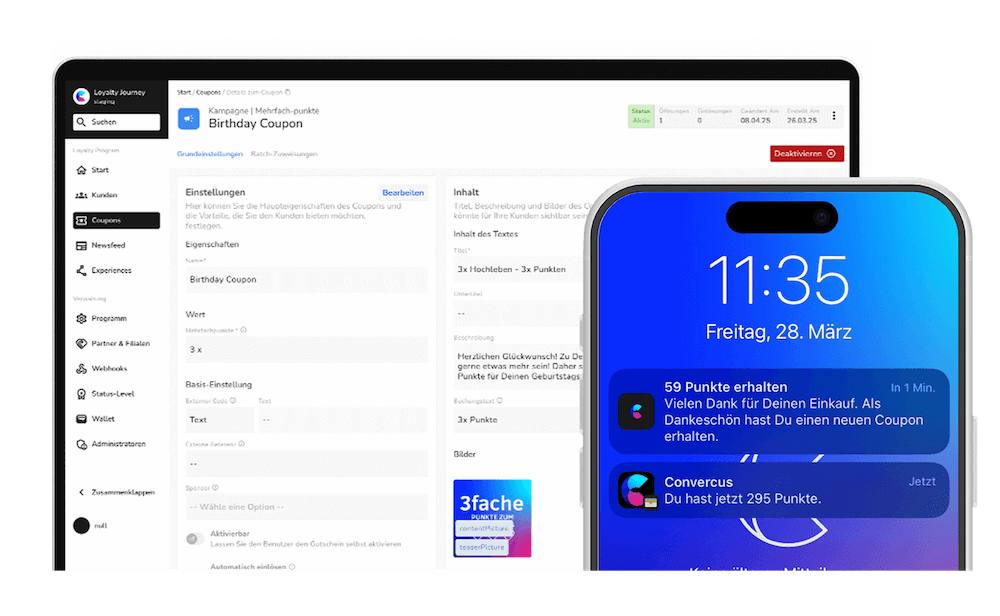
In the car wash business, simple, behavior-based automations are often the most effective: a reminder after 30 days without a visit, an upgrade coupon for repeated basic washes, bonus points during periods of bad weather, or a push notification before a long weekend. Additionally, a Wallet Pass or app can make the status visible and rewards directly redeemable. Relevance beats reach – a well-segmented campaign is better than a discount for everyone.
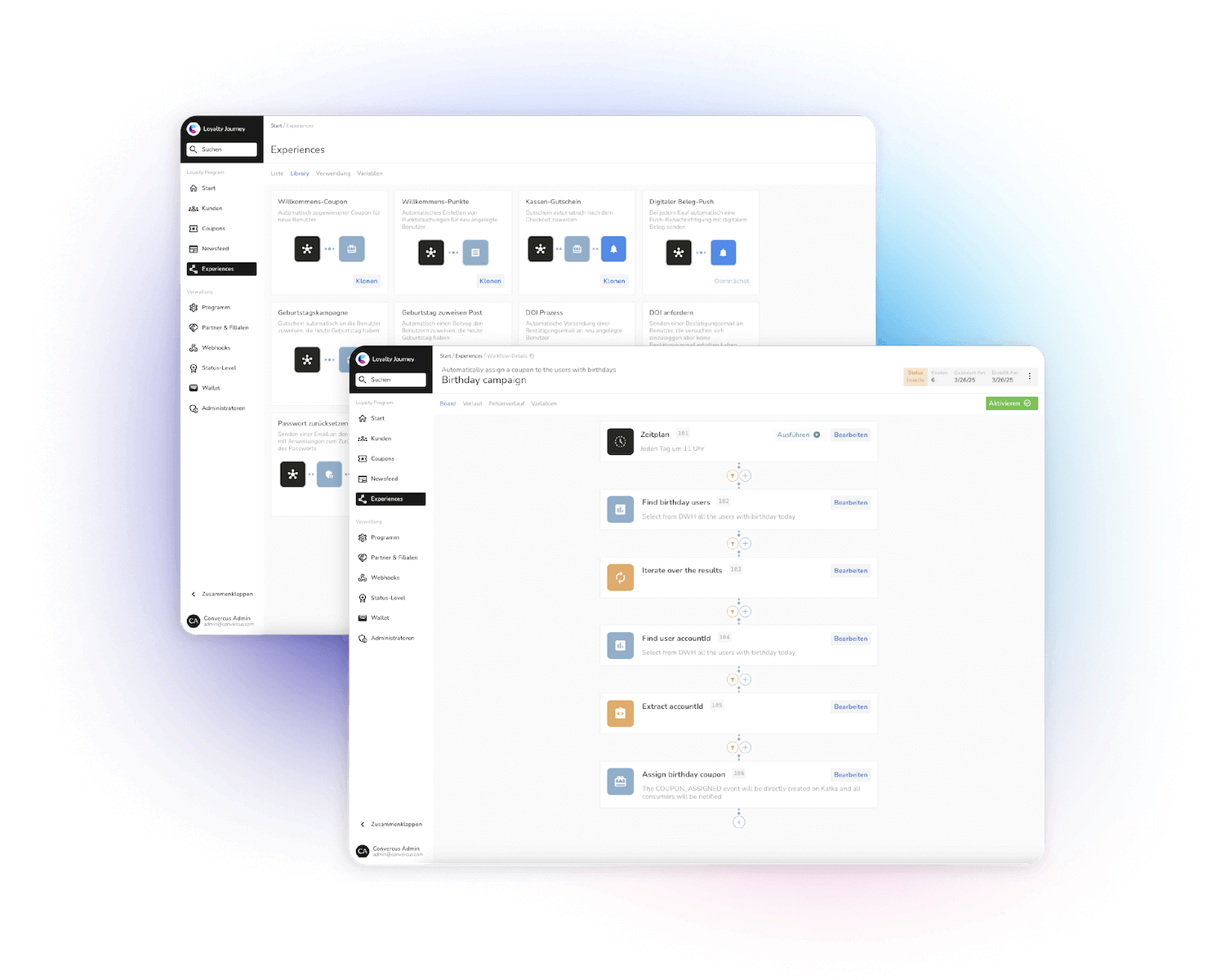
Those pursuing an app-based approach should also consider App-first Loyalty . This is particularly relevant for operators with multiple touchpoints, as the app, wallet, couponing, and automation together enable significantly higher interaction than purely terminal-based programs. Convercus is interesting for precisely such scenarios: The platform connects Engagement and Couponing with scalable loyalty logic, without having to rebuild every campaign.
Practical examples from the German market
The market already shows that digital customer loyalty works in the car wash business. What's interesting is not so much the individual action, but the underlying pattern: convenient identification, clear membership, tangible benefits, and as little operational friction as possible. The best examples combine convenience with clear economic manageability.
Mr. Wash: Flat Rate with License Plate Recognition
In 2026, Mr. Wash relaunched its Flatwash offer: three months of unlimited washes, without a traditional long-term contract, with express entry and identification via license plate. This shows the importance of simplicity in onboarding. If a membership can be completed in a few minutes and access then works automatically, the barrier to entry significantly decreases.
Waschbär: Flat Rate plus Benefits Card
Waschbär uses a two-tiered model: a flat rate for heavy users and a benefits card for customers with lower frequency. This structure is strategically sound because it doesn't force different user types into a rigid scheme. Not every customer needs a subscription; some respond better to reloadable credit and instant discounts.
WashTec and Platform Models
With WashNow, the market also shows that platform approaches can open up new customer access points. Operators gain not only a digital payment or subscription model but also reach through additional channels. This is relevant for chains and gas stations because loyalty in the car wash business is increasingly becoming part of a larger mobility and convenience journey.
Five Myths About Loyalty Software for Car Washes
Several misunderstandings about digital customer loyalty persist surprisingly stubbornly in the industry. Especially in businesses with limited resources, they often lead to necessary modernization being postponed. Most objections do not arise from bad experiences, but from a lack of transparency regarding impact and effort.
Myth 1: Our Customers Don't Want an App
The same target group today naturally uses apps for refueling, parking, navigation, and payment. What's crucial is not whether an app exists, but whether it provides clear benefits: faster entry, viewing points, activating coupons, retrieving invoices.
Myth 2: Flat-Rate Customers Will Take Advantage of Us
Yes, new members often use flat rates more intensively at first. However, in established markets, this behavior often normalizes. Sound pricing logic and good monitoring are more important than a general fear of misuse.
Myth 3: A 10-Wash Card Is Enough
A 10-wash card doesn't create digital loyalty, provides no data, and has limited functionality across multiple locations. It rewards transactions, but it doesn't drive behavior.
Myth 4: This Is Only Worthwhile for Large Chains
The greatest benefit often arises even with just a few locations, because standardization and recognition become noticeable there. Multi-location businesses naturally benefit more, but even regional chains can quickly build a robust business case.
Myth 5: Our IT Department Is Too Small for This
Not every implementation has to be a months-long transformation project. If APIs, POS integration, and rollout are well-prepared, pilot operations can be launched pragmatically and then gradually rolled out.
How Operators Successfully Implement Loyalty Software
Implementation rarely fails due to the idea itself, but rather due to unclear priorities. Those who simultaneously rethink subscriptions, apps, license plate recognition, repricing, and CRM quickly get bogged down. A phased approach with clear KPIs is more successful: registration rate, active members, wash frequency, churn, coupon redemption, and revenue per member. A good start is always better than a perfect requirements specification without implementation.
- First, define the target vision: Should the primary goal be to increase frequency, introduce a subscription, or digitize an existing stored-value card system?
- Then, examine the system landscape: POS, terminal, license plate recognition, payment processing, CRM, and potential offline scenarios.
- Start with a pilot at selected locations, so that rules, data quality, and employee training can be tested under real-world conditions.
- Clearly communicate the customer benefits at the POS, in the app, on the website, and through local campaigns, so that registration becomes not just technically possible, but attractive.
- After launch, continuously optimize based on real data instead of gut feeling, especially concerning pricing logic, segments, and reactivation.
For multi-location operators, a setup that can later support couponing, status management, and reactivation is worthwhile. This prevents a pilot from quickly becoming another isolated solution.
Future Trends: Where Loyalty in the Car Wash Business Is Heading in 2026
The car wash market is moving towards a subscription economy, data-driven management, and increasingly seamless usage. Customers expect services to work as simply as streaming subscriptions or mobile payment apps. At the same time, pressure is growing on operators to better forecast demand and manage scarce frequency windows more economically. The future belongs to programs that combine identification, personalization, and convenience.
AI-Powered Personalization
In the next development step, loyalty systems will increasingly predict which customer is likely to return with which incentive. This is less about spectacular AI terms and more about practical questions: When is a customer at risk of churn? Who responds to an upgrade instead of a discount? Which segments should be specifically activated during slow weeks?
Connected Car, In-Car Payment, and Platform Models
Connected mobility creates new touchpoints. Booking, identification, and payment could in the future occur directly from the vehicle or from larger mobility platforms. In parallel, cross-location models like WaterSeven show that customers can be tied not just to a single location, but to an overall user experience. Especially for chains and gas station brands, omnichannel in the car wash context becomes a real differentiating factor.
Conclusion: Loyalty Software for Car Washes with Convercus
Loyalty software for car washes is particularly valuable when it does more than just digital discount logic. The crucial step is from an anonymous cash customer to an identified regular customer with measurable wash frequency, predictable revenues, and targeted communication. Those who combine subscriptions, couponing, license plate recognition, segmentation, and multi-location logic build not just a program, but a scalable growth channel.
For operators with multiple locations, gas station affiliations, or a complex integration landscape, Convercus is an obvious choice, because loyalty, couponing, engagement, and API-first integration come together in one platform. If you would like to explore what a viable setup for your car wash business could look like, schedule a personal demo.
FAQ
How much effort is involved in getting started with a loyalty program for car washes?
Getting started is usually less complex than expected if a clear pilot is defined first. Typically, this involves starting with a digital customer card, basic couponing, or an initial subscription model at selected locations before a broader rollout.
Does loyalty software work with our existing POS system?
In many cases, yes, provided the solution has clean interfaces. It's important that transactions, customer recognition, and redemptions are reliably synchronized between the POS, terminal, app, and, if applicable, license plate recognition.
Is license plate recognition possible in a GDPR-compliant loyalty program?
Yes, generally, if the legal basis, information obligations, storage periods, and technical protective measures are properly implemented. Articles 5, 6, 13, 25, and 32 of the GDPR are particularly relevant.
How much does loyalty software for car washes cost?
Costs depend heavily on the number of locations, desired functional scope, integrations, and rollout depth. What's crucial is not just the license price alone, but the business case derived from increased frequency, subscription revenue, reactivation, and reduced manual effort.
How long does implementation take?
This varies depending on the system landscape and process complexity. A pilot with a clearly defined scope can be implemented significantly faster than a comprehensive multi-location rollout with subscriptions, apps, license plate recognition, and CRM integration.
Can we migrate an existing stored-value or card program?
In many projects, this is precisely the pragmatic entry point. Existing credits, customer cards, or simple regular customer models are transferred into a digital structure, so that customer data, redemptions, and communication can be centrally managed in the future.


- 5x Return on Investment
- 80% Customer Identification
- 8x Customer Interaction
- +274% Repurchase Rate