









The topic at a glance
- Workshop visits are becoming less frequent. That's why every visit must generate more loyalty, more data, and more follow-up business than before.
- DMS is not Loyalty Software. Workshop software manages operations; a loyalty platform manages points, status, couponing, personalization, and omnichannel communication.
- In a workshop setting, relevance and timing are key. Particularly successful are mechanisms based on vehicle data, service history, seasonal triggers, and digital follow-up between visits.
- Convercus is a loyalty software for mid-market and enterprise environments. If workshop chains or aftermarket companies want to combine Loyalty Engine, couponing, engagement, and API-first integration, this is a suitable solution.
Loyalty software for car workshops is becoming a strategic priority
Loyalty Software for Car Workshops is no longer just a nice-to-have. The German workshop market is undergoing a noticeable transformation: According to the DAT Report, in 2024, car owners visited a workshop an average of 1.5 times, while the number of jobs commissioned per vehicle dropped to 0.35 in 2025, down from 0.51 in 2019. As customer interactions become less frequent, each visit must generate more revenue, more data, and stronger customer loyalty.
The changing workshop market: fewer visits, increased pressure
Decreased contact frequency amidst rising costs is a clear warning sign for workshop chains and car dealership groups. While brand workshops still hold the largest market share, independent workshops are rapidly gaining ground. Simultaneously, customers, influenced by experiences in other industries, now expect digital appointment scheduling, personalized communication, and seamless after-sales support.
The loyal customer illusion: 89% retention doesn't automatically guarantee security
89% customer retention rate sounds reassuring, but it's not a free pass. Many customers see room for improvement in appointment availability, communication, and customer loyalty initiatives. Especially as workshop bills rise, loyalty becomes more fragile. Businesses that rely solely on personal relationships without establishing digital touchpoints will, in the medium term, lose customers to more affordable or convenient providers.
E-mobility redefines the value of every customer interaction
BEVs and plug-in hybrids require less traditional maintenance. Oil changes are eliminated, wear patterns change, and service cycles differ. This reduces traditional reasons for workshop visits. Digital loyalty programs become even more crucial, transforming tire service, air conditioning service, accessories, diagnostic checks, or software-related services into continuous customer engagement. For more insights on strategically boosting retention, you can also find ideas in the article Boost customer retention.
What is loyalty software – and why is workshop management software often insufficient?
Loyalty software is not the same as workshop management software, DMS, or CRM. A DMS or workshop management system organizes orders, invoices, inventory, appointments, and vehicle records. In contrast, a dedicated loyalty solution manages incentives, status levels, digital coupons, consents, segmentation, and personalized communication across all touchpoints.
Distinguishing from DMS, CRM, and workshop management
Rudimentary CRM functions do not replace a loyalty platform. Many systems can send out service reminders or mass emails, but they do not provide a consistent earn-and-burn logic, status management, or cross-channel couponing. This is precisely where professional customer loyalty begins. The article also provides a basic overview Loyalty Software.
What a loyalty solution must be able to do in a workshop context
The combination of omnichannel, automation, and integration capabilities is crucial. Especially for workshop chains or workshop concepts, the solution must accommodate both central control and local specificities.
- A loyalty software should be able to centrally manage points, status benefits, and digital coupons, instead of manually maintaining individual promotions per location.
- It should make vehicle and service data usable for personalized offers, without employees having to work with Excel lists.
- It should be able to engage customers relevantly between two workshop visits via app, Wallet Pass, email, or SMS.
- It should support multiple locations, tenants, and role-based models, so that chains and concepts can be centrally controlled and locally deployed.
The difference is strategic: Workshop software ensures smooth operations, while loyalty software ensures repeat business, higher relevance, and better utilization of first-party data.
Which loyalty mechanics really work in an automotive workshop?
In a workshop context, the same mechanics do not work as in daily retail. Because customers rarely visit, a program must focus less on spontaneous impulse purchases and more on trust, relevance, and reminder logic. Good loyalty programs reward not only the invoice amount, but also behavior such as appointment booking, consent, referrals, or seasonal services.
Points, Status, Coupons, or Benefits?
Discounts alone are rarely sufficient in a workshop. More effective are models that combine price advantages with service convenience, for example, prioritized appointments, free checks, or bonus points for recurring services.
Vehicle data is the real loyalty goldmine
Model, year of manufacture, mileage, and service history make workshops one of the most data-rich touchpoints in the entire customer lifecycle. This generates very precise triggers: a coupon for AC service before summer, a reminder for tire changes in autumn, or a benefit after a scheduled inspection. This transforms generic marketing into a relevant service dialogue.

Stay engaged between visits
The true challenge lies in the period between two workshop visits. This is where engagement features, digital couponing solutions and an app-first loyalty approach pay off. Customers receive not just invoices, but continuous added value: reminders, wallet passes, challenges, service tips, and personalized offers. This keeps the workshop in the relevant set, even if the next appointment is months away.

The Business Case: What Loyalty Software Can Actually Bring to a Workshop Chain
The economic lever isn't just about increasing visits, but about better managing customer value. With low contact frequency, return rate, order value, and additional services are more important than isolated discount promotions. Chains and car dealership groups, in particular, can manage this across the board and accurately measure local campaigns.
Sample Calculation for 100 Locations
A realistic scenario: 100 locations with 3,000 customers each result in 300,000 active customers. With an average order value of €350 and 1.5 visits per year, this generates an annual turnover of €157.5 million. If the return rate increases by 10% through loyalty mechanisms, service reminders, and personalized offers, this theoretically generates approximately €15.75 million in additional revenue. If, in addition, the average order value increases by 5% through cross-selling and upselling, another approximately €7.88 million is possible.
These are the KPIs you should measure
More important than the sheer number of members are operational metrics: return rate, average order value, coupon redemption rate, opt-in rate for digital communication, proportion of scheduled follow-up orders, and Customer Lifetime Value. In the workshop sector, it's also worth looking at seasonal reactivation, such as when switching from summer to winter tires or for services related to mandatory vehicle inspections and emissions tests.
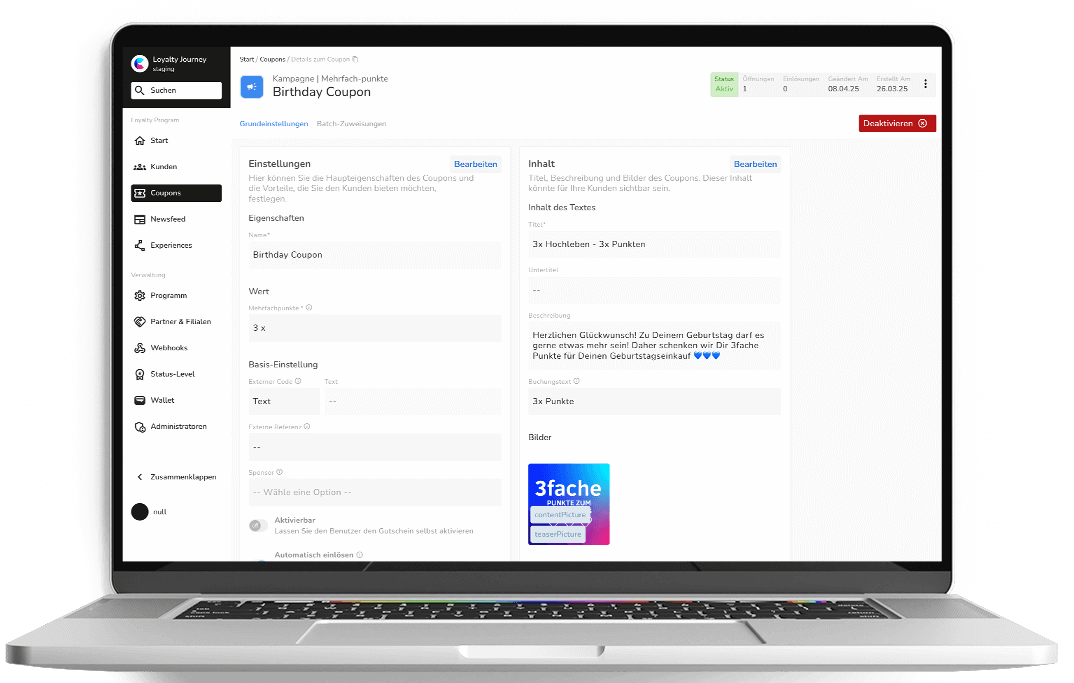
Loyalty is particularly valuable as a safeguard against customer churn after warranty periods expire. When customers become more price-sensitive in their third, fourth, or fifth year of use, it's not just the price that matters, but the combination of trust, convenience, and perceived appreciation.
Technical Requirements and Compliance: What Workshops Really Need to Pay Attention To
The best loyalty strategy fails without seamless integration. In practice, point crediting, coupon redemption, appointment triggers, and customer segments must be connected to existing systems. For workshop chains, a robust technical and regulatory foundation is therefore more crucial than the most attractive interface.
DMS, POS, and Multi-Location Integration
The loyalty solution must integrate with the workshop's operational reality. This includes data from order management, POS, appointment booking, and potentially an app or customer portal. It is also important that headquarters and branches can operate differently: central rules, but local campaigns, regional couponing promotions, and role-based approvals.
GDPR, GoBD, and e-invoicing are not minor issues
Promotional communication requires a solid legal basis. For newsletters, push notifications, and personalized marketing measures, consent according to Art. 6 para. 1 lit. a GDPR is often required. For contract-related or service-related information, depending on the specific design, Art. 6 para. 1 lit. b or lit. f GDPR may apply. Additionally, transparency obligations under Art. 13 GDPR, data minimization under Art. 5 GDPR, and data processing agreements under Art. 28 GDPR must be considered. Workshop-related processes also touch upon GoBD requirements and e-invoicing in the B2B context according to § 14 UStG.
Five Questions You Should Ask Every Provider
The selection process should always begin with an integration and compliance check. Asking these questions early avoids later project costs and data silos.
- How are order and POS data for points, status, and couponing transferred in real-time or near real-time?
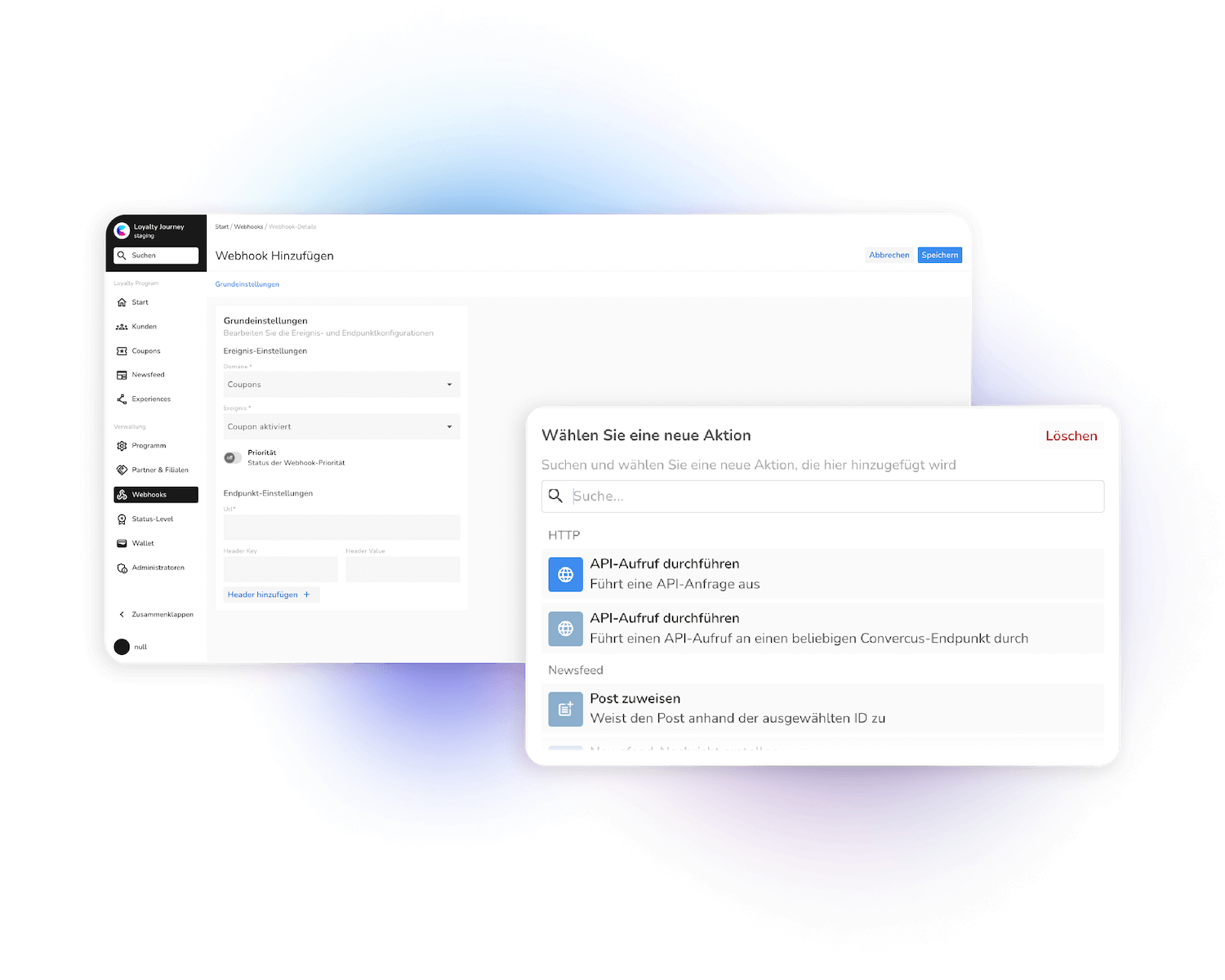
- Which APIs or standard integrations are available for DMS, POS, app, and CRM?
- How are consents, revocations, and preference centers documented and exported?
- How does role and rights management work for headquarters, regional management, and individual locations?
- How are GoBD-relevant documents, audit trails, and e-invoicing process requirements organizationally supported?
Practical Examples: What Automotive Companies Are Already Leading the Way With Today
In the automotive sector, there are already robust patterns, even if they manifest differently. OEMs, dealership groups, workshop chains, and parts dealers no longer use loyalty merely as a discount lever, but as a tool for managing service retention, data quality, and repeat purchases.
OEM programs show how service retention is digitally extended
Programs like FordPass Rewards reward services with points that can later be used for workshop services or other benefits. The key takeaway: Workshop contact doesn't end with the invoice; it's digitally continued. Subscription-like models for connected services also demonstrate how strongly customer loyalty is shifting towards a digital experience.
B2B2C Loyalty is becoming increasingly relevant in the aftermarket
The independent aftermarket is multi-tiered: Parts manufacturers, wholesalers, workshop concepts, and end customers are interconnected. Parts dealers and concept providers want to retain their partner workshops, while workshops, in turn, want to retain their vehicle owners. Therefore, multi-tenant models, central regulatory frameworks, and different participant roles are becoming increasingly important. With a view to Connected Car and the EU Data Act, access to usable vehicle data is also gaining strategic importance.
The Key Takeaway for Workshop Chains
Successful programs reward not only revenue, but also behavior. This includes on-time service appointments, digital consents, app usage, referrals, and seasonal follow-up orders. This is precisely the difference between a simple discount campaign and a scalable loyalty program.
5 Steps to a Loyalty Program for Your Workshop Chain
The best way to start is not with a big bang, but with a clearly structured program. Companies with many locations should first define a pilot set of target groups, mechanics, data sources, and KPIs. Only then is it worthwhile to roll out across regions or concepts.
- First, define your objective, for example, a higher return rate after warranty expiration, a better opt-in rate, or more seasonal additional revenue.
- Then choose mechanisms that fit everyday workshop operations, such as points for service revenue, status benefits for regular customers, and coupons for seasonal services.
- Next, examine the data foundation from DMS, POS, appointment booking, and communication channels before finalizing rules and segments.
- Start with a pilot in selected locations and consistently measure redemption, return rate, order value, and process stability.
- Only then scale to additional locations and add automation, Wallet Pass, app, and extra benefits.
The Pragmatic Implementation Plan
Which platform makes sense for mid-market and enterprise
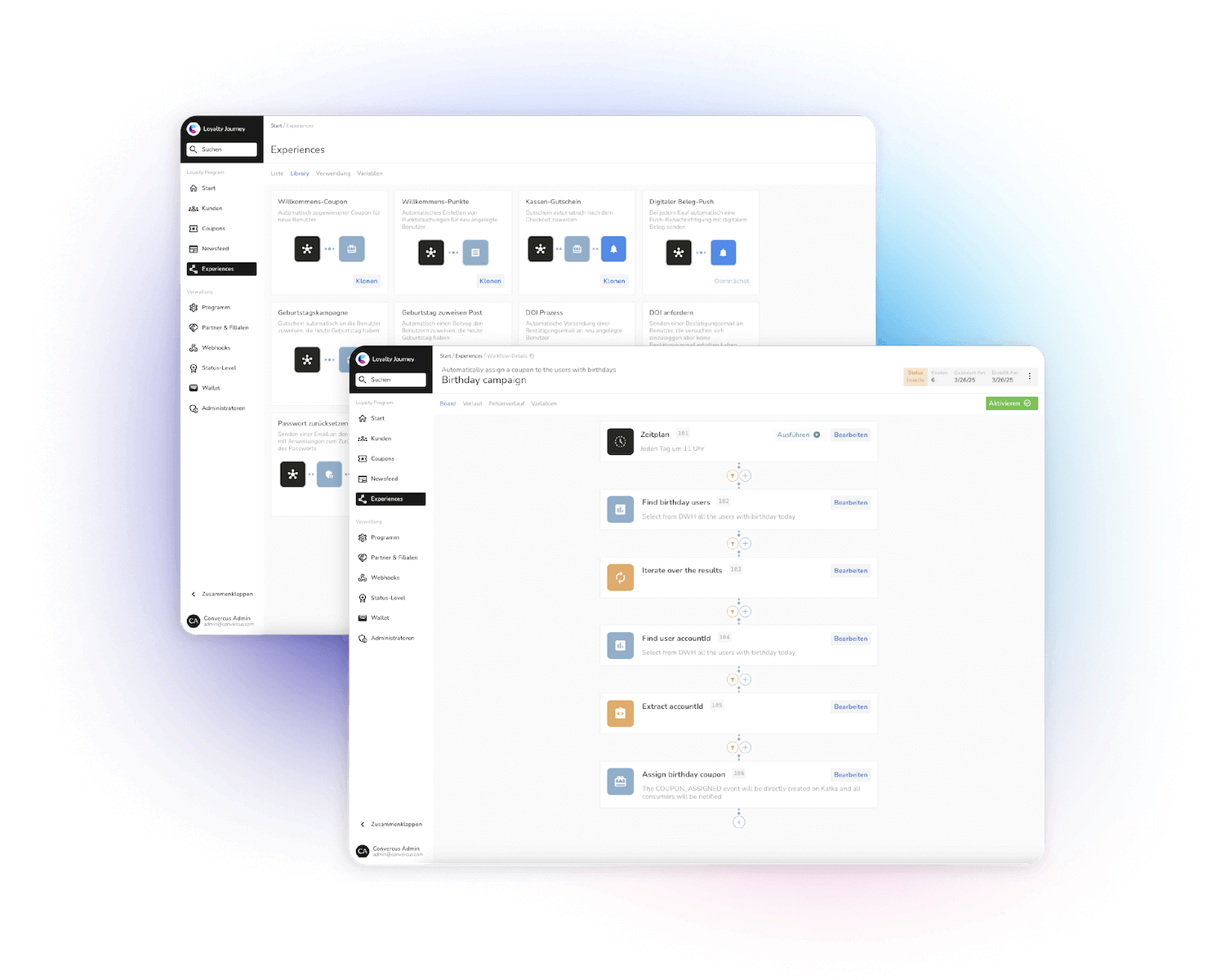
When loyalty, couponing, engagement, and integration need to work together, a platform is needed instead of isolated individual solutions. For companies in the mobility and B2B2C sector, Convercus relevant when central rule sets, personalized offers, multi-location management, and API-first connectivity need to come together. Through Couponing, Engagement and Tech and Integration exactly those building blocks can be combined that workshop chains need for POS, app, and aftercare.
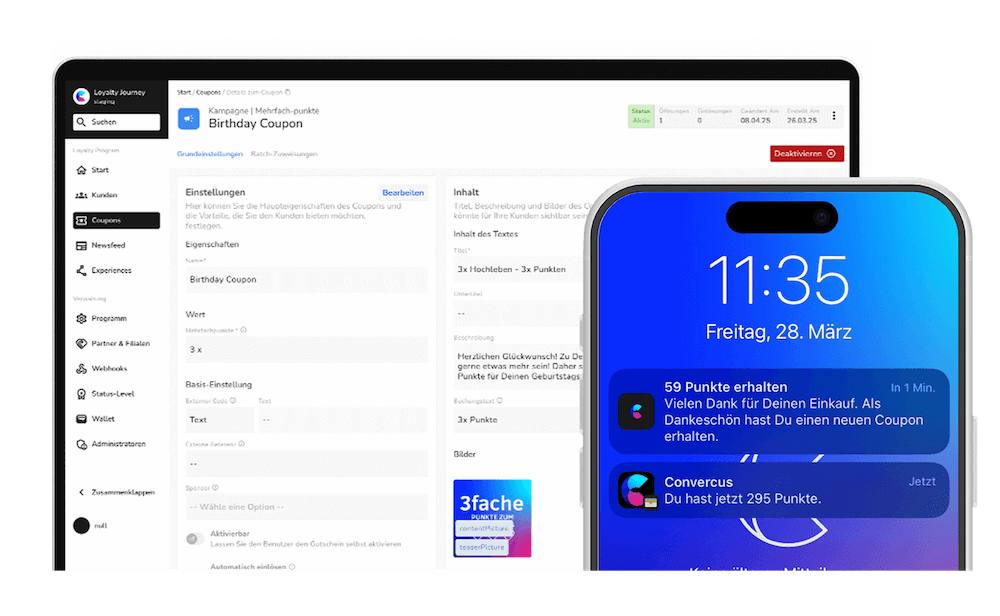
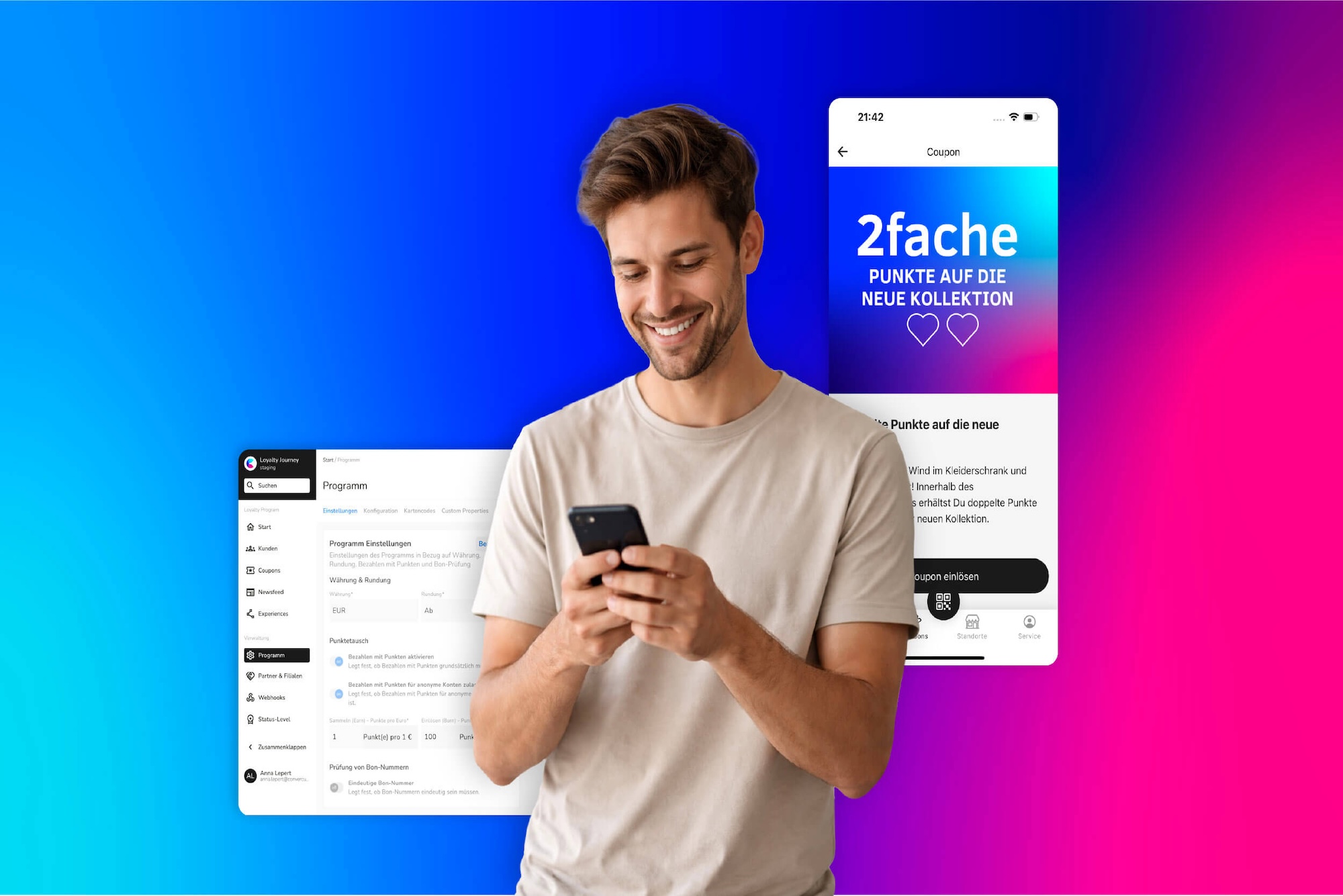
Especially in the workshop business, the mobile channel is crucial. With a white-label app and Wallet Pass, programs remain visible even between visits. Across industries, programs with an app can achieve up to 8x higher customer interaction than those without. This is relevant for workshop chains because it transforms infrequent workshop visits into a continuous communication channel.
Conclusion: Loyalty Software is a Growth Lever for Workshops, Not an Add-on
Workshop customers visit less frequently but expect more relevance, convenience, and digital support. That's precisely why simply managing appointments and invoices isn't enough. To systematically boost customer value, repeat business, and first-party data, you need a genuine loyalty strategy built on an integrated software foundation.
For workshop chains, car dealership groups, and aftermarket companies a scalable platform like Convercus makes sense when the loyalty engine, couponing, engagement, and API-first integration are considered together. If you'd like to find out how a program can be specifically tailored to your structure, you can personal live demo with a loyalty expert request.
Frequently Asked Questions about Loyalty Software for Car Workshops
How much does loyalty software cost for a workshop chain?
Costs primarily depend on the number of participants, locations, integrations, and functional scope. For chains and concepts, the pure license fee is less critical than the effort involved in data integration, rollout, and ongoing campaign management. Therefore, evaluation should always be based on a business case per location or customer segment.
How complex is the implementation of a loyalty program?
The effort is manageable if you start with a pilot. In practice, it's best to start with a clearly defined use case, such as tire service, inspections, or reactivating inactive customers. This allows you to test processes, data quality, and campaign logic before a broader rollout.
Does this work with our existing POS or DMS system?
Yes, if the loyalty solution is designed API-first or provides suitable interfaces. The key is determining which data needs to be transferred: invoice and order data, appointment events, customer data, branch structures, and consents. This integration question should be clarified before making any provider decision.
Can loyalty software be used for workshops in a GDPR-compliant manner?
Yes, but only with a clear role model, documented legal bases, and transparent processes. Particularly important are consent management, information obligations, deletion concepts, and contractual data processing in accordance with Art. 28 GDPR. Furthermore, marketing and service communications should be clearly separated organizationally.
How do I measure the success of a loyalty program in a workshop?
The most important metric isn't the number of registered members, but the change in behavior. Measure repeat visit rates, order value, redemption rates, appointment adherence, opt-ins, and the percentage of reactivated customers. Especially with low visit frequency, the evolution of Customer Lifetime Value is more indicative than short-term campaign revenues.
How do I practically start if I'm currently only using punch cards or Excel?
Start with a clear core process and first digitize the most common service occasions. Tire changes, inspections, and MOT-related services are a good starting point, as data, timing, and customer benefits align well here. Only after that should additional benefits, status levels, or more complex partner logics be added.


- 5x Return on Investment
- 80% Customer Identification
- 8x Customer Interaction
- +274% Repurchase Rate

.png)
.png)