









The topic in a nutshell
- Three provider groups, one winner for omnichannel: Specialists, suite modules, and DACH-region pure-plays address fundamentally different requirements. For retailers with branch networks and POS needs, they are not created equal.
- Time-to-value, simplicity, industry coverage: Four dimensions reveal which provider offers long-term viability and why the license fee is the least important factor.
- Up to 5x ROI: Loyalty programs generate proven returns internationally. The crucial question is which provider can actually back that up.
- Convercus as the enterprise benchmark: 20,000 connected POS, Payback partnership, +274% repurchase rate. The platform for omnichannel retailers who treat loyalty as a core strategy.
You are managing an omnichannel retail business, seeing declining repeat purchase rates, and need to select a loyalty program that works for both physical POS and e-commerce. The market is roughly divided into three camps: dedicated specialists with omnichannel depth, loyalty modules from large suites, and DACH-based pure-plays for mid-sized companies. Convercus, with around 20,000 connected POS systems and Loyalty Partner Solutions (LPS) as a strategic partner, serves as a benchmark for enterprise requirements. The following comparison categorizes five relevant providers based on clear selection criteria.
Loyalty Management Software 2026: Why retailers choose the wrong provider
The market for loyalty management software is divided into three clearly distinguishable provider groups:
- dedicated specialists with deep POS expertise
- e-commerce-native promotion engines with an API focus
- suite modules from large platform providers.
For omnichannel retailers with a dense branch network, these groups are not equivalent, even if the marketing from all three camps sounds similar.
The problem: During evaluation, all three groups are often assessed using the same criteria, even though they have fundamentally different strengths. The most common mistakes when choosing a provider:
- POS depth is checked too late: Offline capability and real-time point booking at the POS only come up during implementation, not during the pitch.
- E-commerce references are too convincing, too early: Strong online cases say little about performance in physical retail with millions of transactions per month.
- TCO is underestimated: License fees, implementation costs, and future replatforming efforts are rarely evaluated together.
- Time-to-value and simplicity are not being critically questioned: How quickly does the platform deliver initial results, and can marketers set up campaigns without IT support?
For omnichannel retailers with a branch network, this leads to an avoidable outcome: switching providers after three years, which wastes time, budget, and program momentum.
Loyalty Management Software: Selection Criteria for IT and Marketing
Before a company launches a loyalty program, IT and marketing should share the same list of criteria. After all, the choice of platform determines which customer retention measures can actually be implemented later on. Failing to do so often results in choosing a platform that is technically integrable but operationally short-sighted.
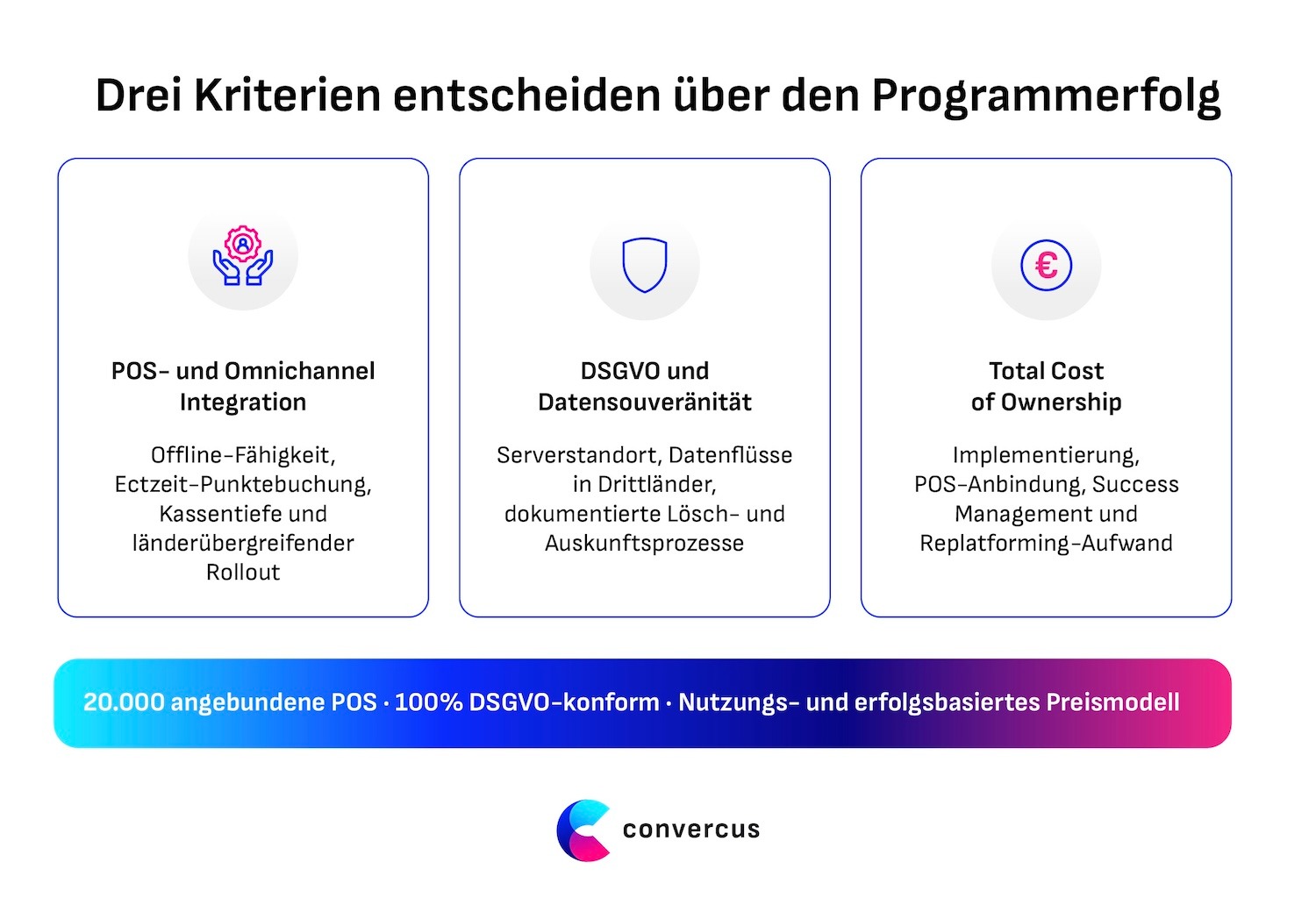
In practice, three areas determine success or the risk of needing to replatform: POS and omnichannel integration, GDPR and data sovereignty requirements, and a realistic total cost of ownership. Furthermore, time-to-value and ease of daily use reveal which provider is not just implementable, but also sustainable for ongoing program operations. The following sections explore these criteria in greater depth with a focus on the API-first loyalty stack and integration strategy.
POS and Omnichannel Integration
These questions should be part of every vendor pitch to realistically assess POS depth:
- Which POS systems are supported natively, and which via standard connectors?
- How stable is the program when offline at the POS, for example, during a network outage at the checkout?
- Is real-time point booking transaction-secure and receipt-compatible?
- How does a rollout work across multiple countries, considering multilingualism, tax logic, and country-specific rules?
- What performance is guaranteed for millions of transactions per month?
Anyone managing both brick-and-mortar retail and digital channels quickly realizes where the limitations lie: E-commerce-native engines provide powerful cart logic but hit structural limits when it comes to POS integration. Suite modules promise an all-in-one package, but their development is tied to the roadmap of the parent product.
Dedicated loyalty programs with proven POS experience like Convercus offer the most balanced approach here, because they consideromnichannel reach, POS depth, and integration speed as a single unit from the start, rather than as an afterthought.
GDPR, BDSG, and data sovereignty
Loyalty programs process large volumes of personal data and are therefore subject to clearly defined legal obligations. Particularly relevant are Art. 28 GDPR for data processing, Art. 7 GDPR for consent, and Art. 17 GDPR for the right to erasure. Additionally, Section 25 TDDDG applies for cookie and tracking consent as well as Section 31 BDSG when handling scoring and credit data.
Three points must be rigorously reviewed before signing a contract:
- Server location and hosting region of the provider
- Data flows to third countries and existing safeguards
- Documented deletion, access, and export processes
TCO and hidden costs
The license fee alone says little about the actual costs of loyalty management software. The decisive factors are the depth of implementation, POS integration costs, ongoing success management, and the effort required for future replatforming. The fact that an estimated more than half of companies are planning to switch providers, often because initially underestimated follow-up costs undermine the business case, shows that anyone comparing only license fees is overlooking the most expensive items of the next three contract years.
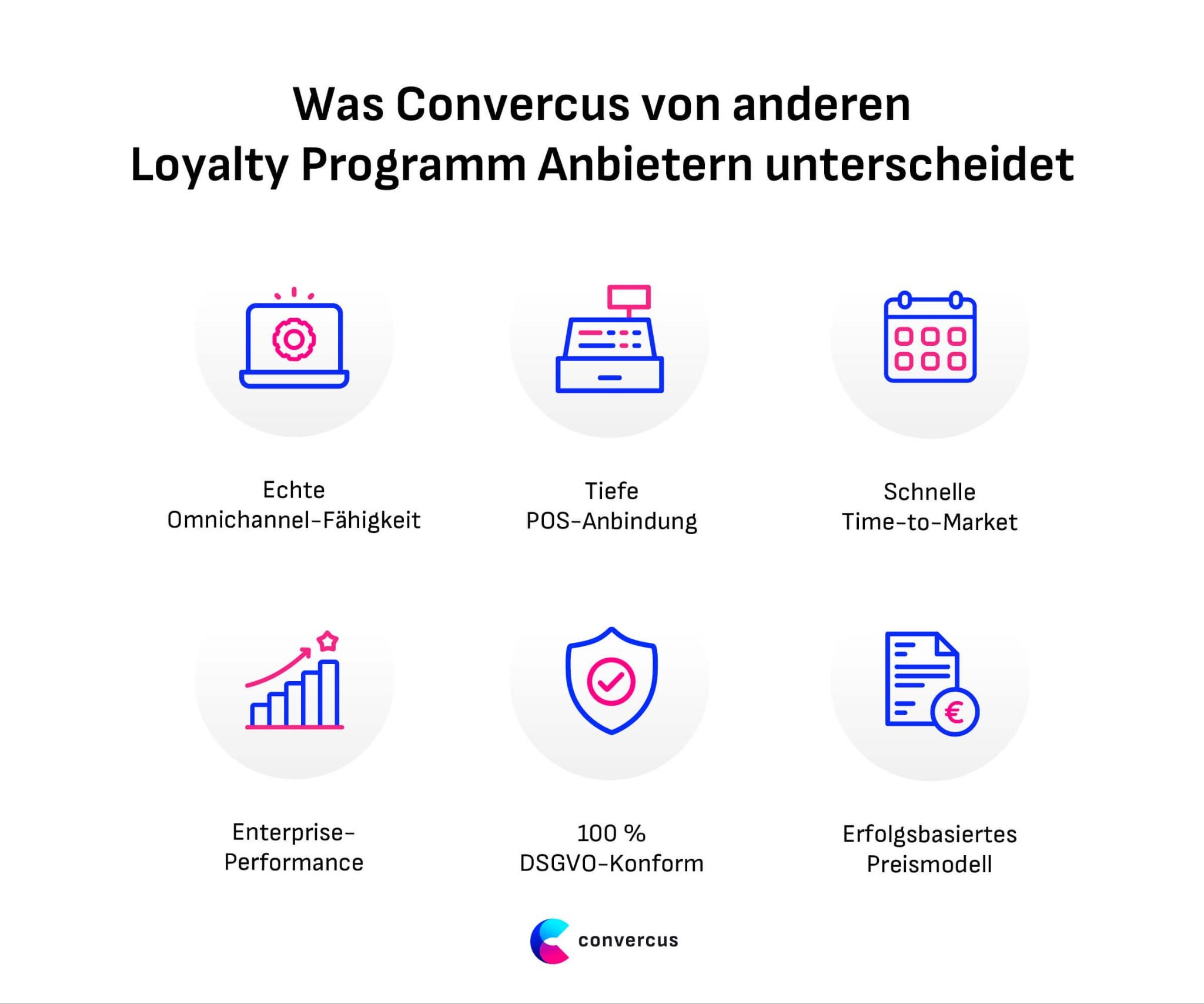
A usage- and performance-based pricing model like the one at Convercus distributes costs in parallel with actual program growth and links the provider's investment to measurable results. Pure licensing models demand high fixed costs regardless of actual usage, program success, or ROI. For retailers with uncertain rollout speeds or operations in multiple countries, the usage-based model lowers the entry risk and creates predictability over the entire program lifecycle.
Loyalty management software compared: 5 providers for enterprise use
The following overview compares five relevant providers for retailers with annual revenue of €100 million or more across the four dimensions that are most critical for program operations and provider selection: time-to-value, ease of implementation, industry coverage, and flexibility for individual use cases.
Convercus: Dedicated specialist for omnichannel retail
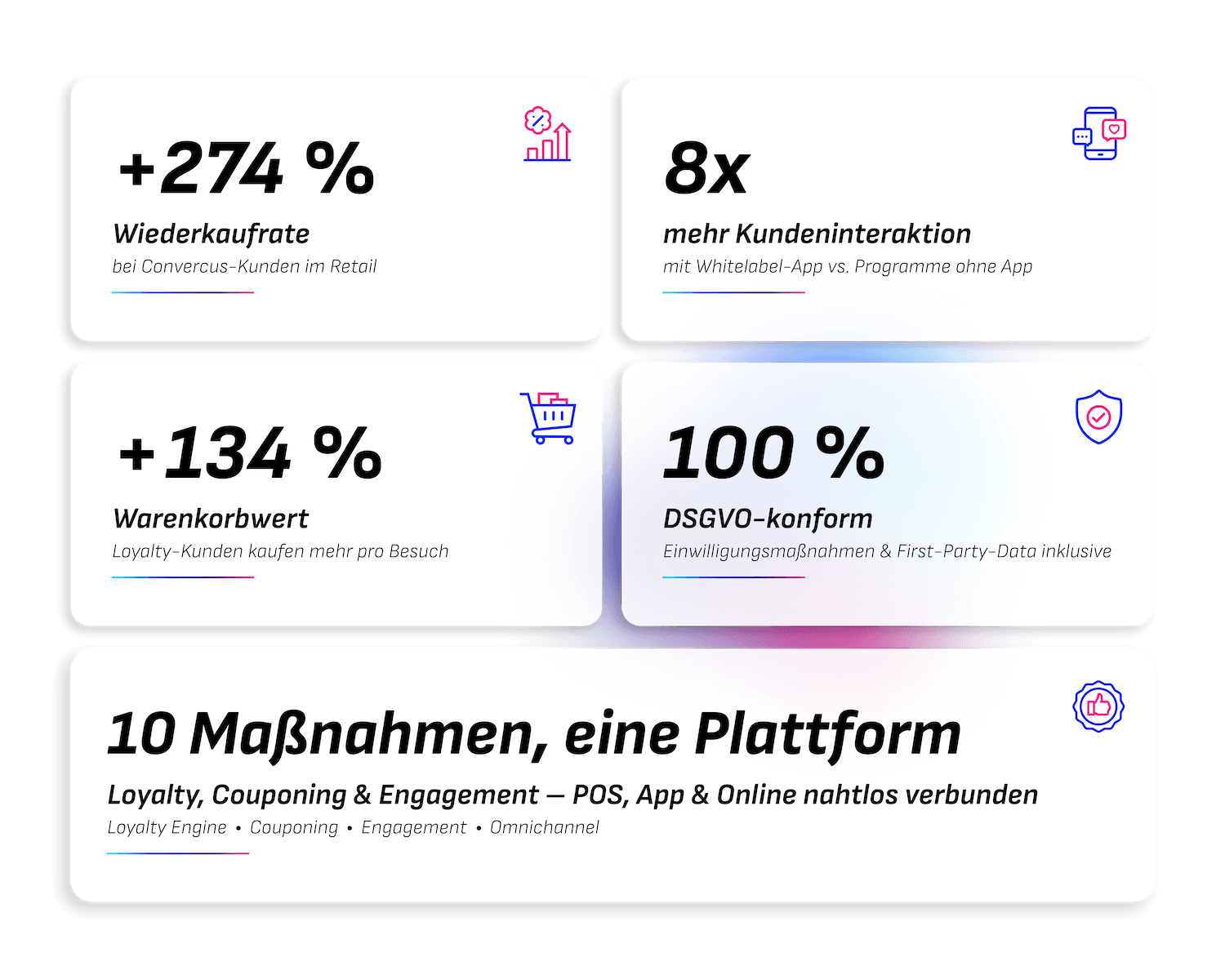
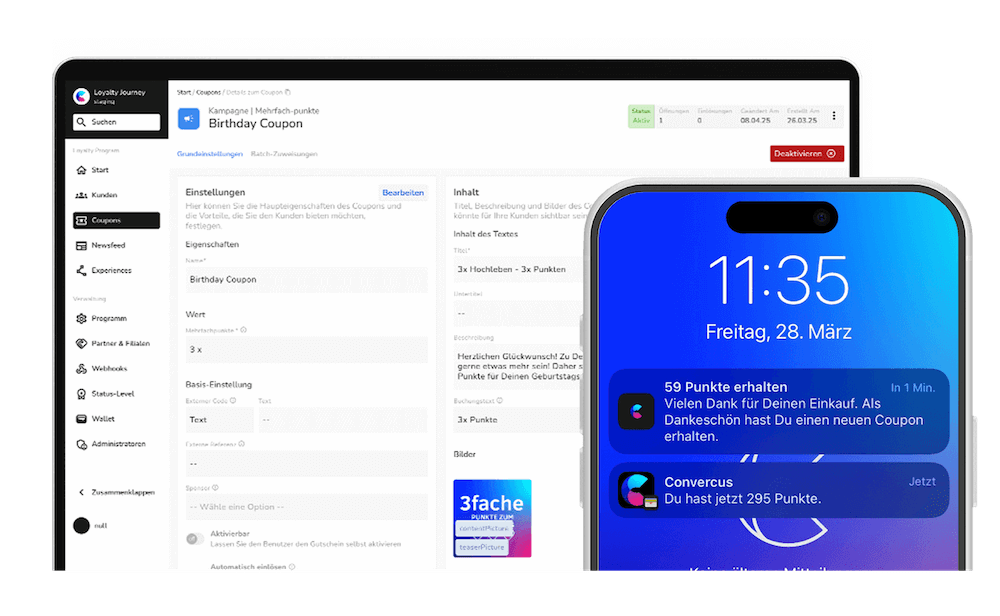
Convercus is a dedicated loyalty and couponing platform with a clear omnichannel focus. 20,000 connected POS systems, over 40 million loyalty accounts, and more than 116 million transactions demonstrate its enterprise-grade maturity. In live programs, clients achieve performance benchmarks of +134% in average basket value, +274% in repeat purchase rate, and a 5x ROI.
Core features:
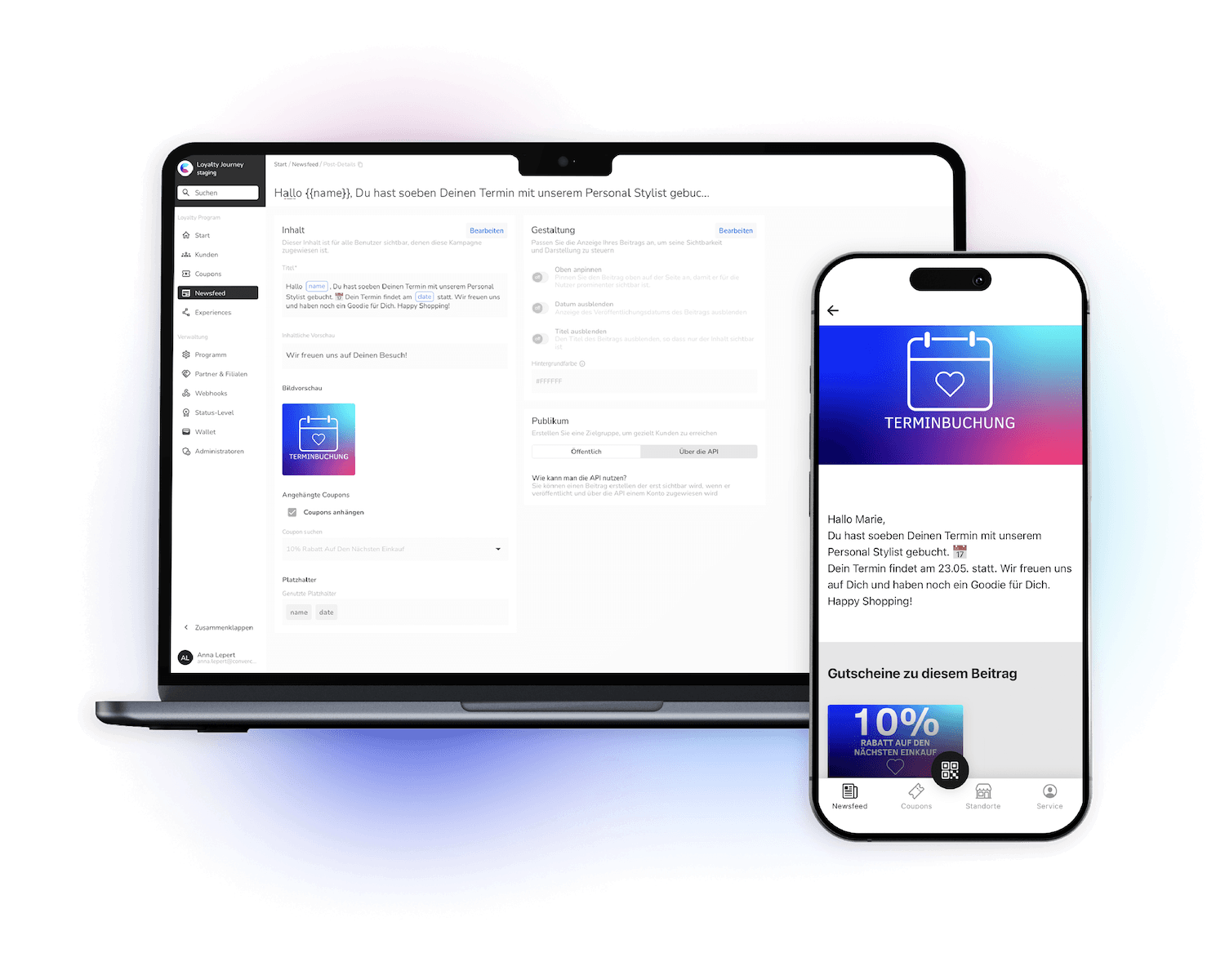
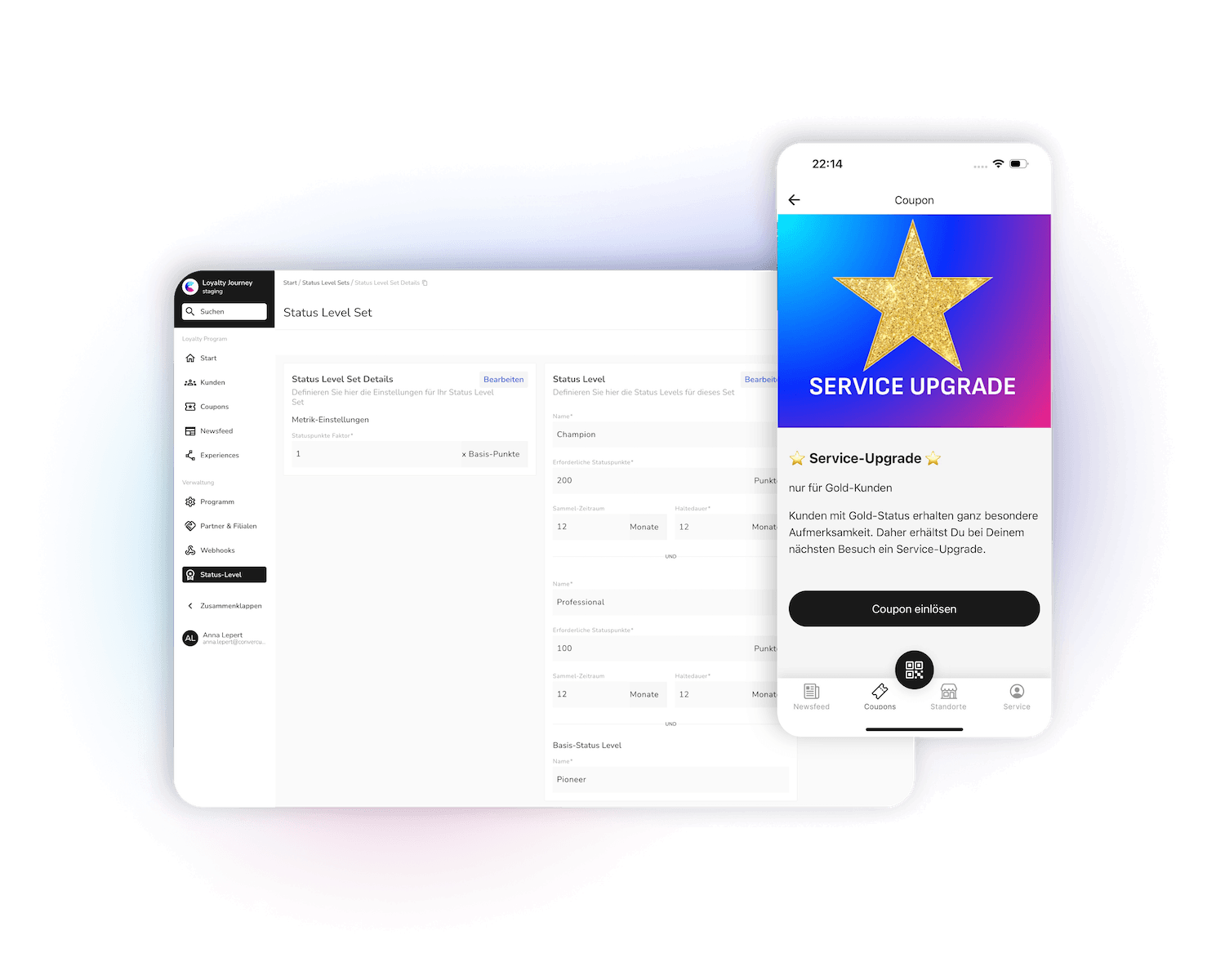
- Loyalty engine with a flexible points system and status management
- Couponing including a coupon designer and omnichannel distribution
- Engagement with AI insights and marketing automation
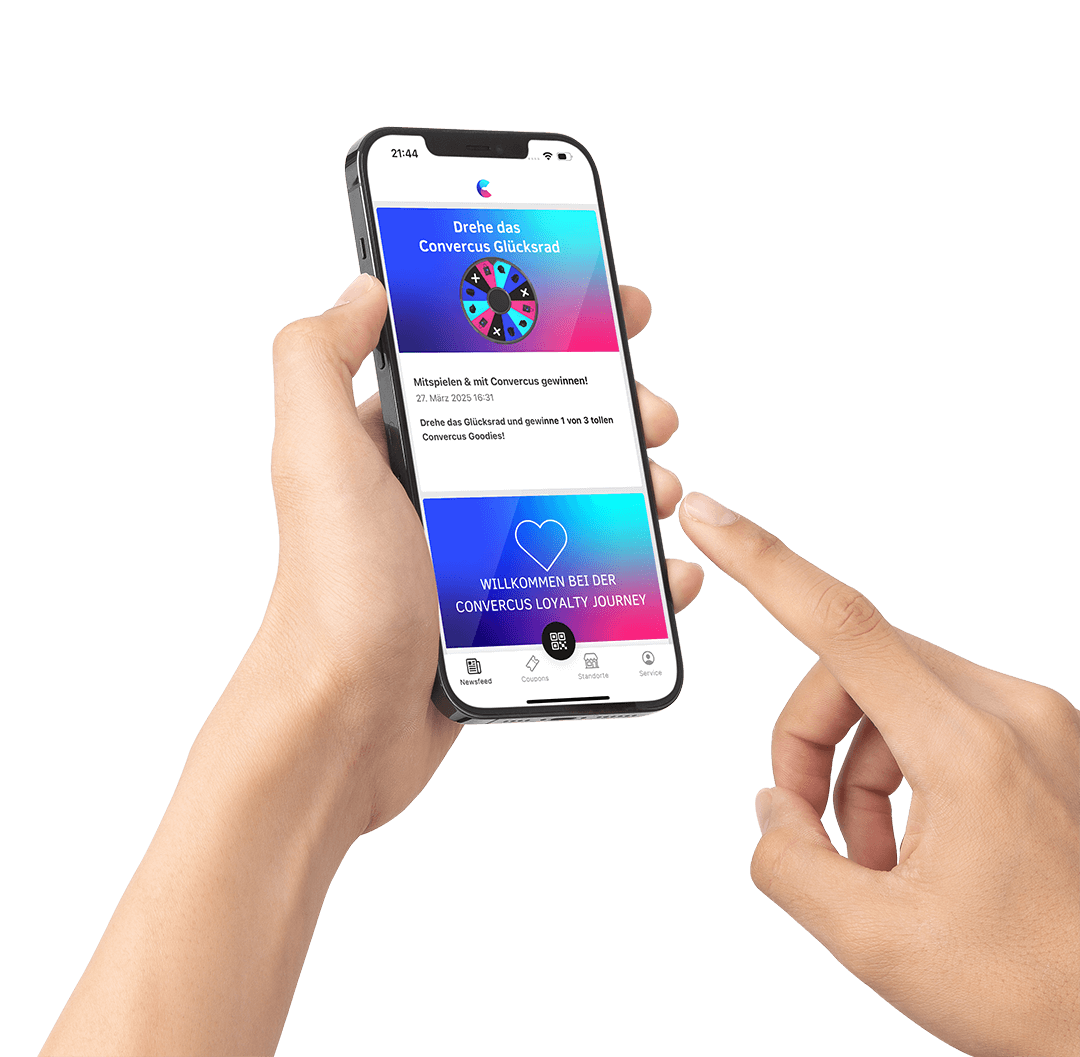
- White-label app for a brand-consistent mobile experience
- API-first integration with POS systems, CRM, and e-commerce
Strengths:
- Proven POS depth and experience in the DACH region
- Enterprise-level couponing functionality
- Payback partnership as a hallmark of quality
- Usage- and performance-based pricing model
- Broad industry coverage: fashion, DIY, food, sports, fuel, hospitality, mobility, and e-commerce
- Proven onboarding playbook for fast time-to-value
Suitable for:
Enterprise and mid-market retailers in fashion, DIY, food, sports, fuel, and hospitality that require a white-label app and deep POS integration.
Limitations:
For brands that manage their customer relationships exclusively through a single sales channel (POS, online, or mobile) or a single communication channel, leaner, specialized solutions may be sufficient.
Talon.One: API-first promotion engine with an e-commerce focus
Talon.One is an API-first promotion and loyalty engine that originated in e-commerce couponing. Its planned acquisition by Adyen for €750 million gives the platform additional reach within the payment ecosystem, but also introduces potential roadmap shifts that should be considered when selecting a provider.
Core features:
- Rule-based promotion engine with a broad integration ecosystem
- API-first architecture with a strong developer setup
- Couponing and cart logic for e-commerce
Strengths:
- Flexible promotion logic for complex e-commerce setups
- Strong developer community
Suitable for:
D2C brands and e-commerce-driven mid-market companies with a developer-led setup.
Limitations:
Limited in-store POS depth; roadmap development following the Adyen acquisition remains uncertain.
Antavo: AI-powered loyalty cloud for fashion and beauty
Antavo positions itself as an AI-driven loyalty platform with a strong content footprint thanks to its annual Global Customer Loyalty Report, which actively shapes market perception. The focus is on mobile-first experiences and gamification in the fashion and beauty sector.
Core features:
- AI-powered personalization and customer insights
- Gamification mechanics for mobile and appengagement
- Loyalty engine with fashion retail references
Strengths:
- Modern brand identity with a strong thought leadership presence
- Strong references in the international fashion and beauty sector
Suitable for:
International fashion and beauty brands with a focus on mobile and app engagement.
Limitations:
Weaker omnichannel and POS experience in brick-and-mortar retail; limited DACH enterprise references.
Comarch: Suite solution with a long enterprise history
Comarch is a long-standing enterprise player with a broad range of functions and deep industry modules for telco, travel, and fuel. The platform is available as both SaaS and on-premise and is aimed at corporations with complex, global requirements.
Core features:
- Loyalty module as part of a comprehensive ERP and CRM suite
- Deep industry modules for telco, travel, and fuel
- SaaS and on-premise deployment
Strengths:
- 30 years of market experience with global enterprise references
- Broad range of functions for complex corporate structures
Suitable for:
Corporations with an existing Comarch landscape or specific requirements for telco, travel, or fuel modules.
Limitations:
Loyalty remains a module within a larger suite; limited influence on the roadmap for individual clients; less agile than dedicated specialists.
Salesforce Loyalty Management: CRM-native module
Salesforce Loyalty Management is deeply integrated into the Salesforce ecosystem and is aimed at companies that already use Marketing Cloud and Data Cloud as their central CRMand CDP platform . Loyalty is a bolt-on module here, not a standalone product.
Core features:
- Loyalty module with native integration into Marketing Cloud and Data Cloud
- Rule-based point logic and status management
- Segmentation and personalization via the Salesforce ecosystem
Strengths:
- Seamless integration for existing Salesforce customers
- Access to the entire Salesforce ecosystem and partner network
Suitable for:
Companies that rely strategically on Salesforce as their central CDPand CRMplatform.
Limitations:
Loyalty-specific depth and POS integration lag behind dedicated specialists; high module dependency and vendor lock-in.
Which loyalty management software is right for your company?
The following matrix condenses the most important selection dimensions and maps them to typical provider types.
If you manage a branch network with a genuine omnichannel focus, you should choose a dedicated specialist with proven POS depth. Suite modules are a good fit when loyalty is part of a broader platform strategy, while DACH pure-plays are ideal for clearly regional setups. For enterprise retailers with a focus on couponing and point-of-sale , Convercus is the logical choice.
Best loyalty management software: Convercus for omnichannel retail
Convercus combines enterprise POS depth with integrated couponing, white-label app, and continuous success management. Instead of isolated modules, Loyalty Engine, coupon designer, and engagement tools interlock within an API-first architecture. This allows points, status, and personalized offers to be deployed in real-time across POS, app, and online shop, even for international rollouts with complex branch structures.
The usage- and performance-based pricing model links costs directly to program growth and measurable results, which lowers entry risk and increases predictability throughout the contract term. As a German provider with hosting exclusively in Europe, Convercus is 100% GDPR-compliant and provides all necessary documentation for legally secure data processing as standard. For enterprise retailers who treat loyalty as a strategic growth driver, Convercus is the most reliable choice in the DACH market.
FAQ
How does loyalty software differ from a CRM?
A CRM manages customer relationships, contact data, and sales activities. Loyalty software provides the operational logic behind it: point rules, status management, reward engine, and real-time rewards at the POS. Both systems complement each other rather than replacing one another, and are ideally connected via APIs.
How long does a Convercus loyalty software rollout take?
Realistically, 3 to 12 months, depending on POS complexity, multi-country setup, and the existing system landscape. Convercus accelerates rollouts using a proven onboarding playbook.
What does enterprise loyalty management software cost?
Enterprise providers primarily work with individual quotes. The decisive factor is not just the license price, but the TCO perspective: implementation, POS integration, success management, and ongoing support. A usage- and performance-based pricing model like the one at Convercus links costs to program growth and noticeably lowers entry risk.
What should be considered when switching loyalty management software?
Clean data migration, transparent member communication, planned POS reintegration, and avoiding program interruptions are crucial. A structured onboarding playbook like the one at Convercus reduces risks and significantly shortens the transition period.
How does a Convercus loyalty program integrate with existing POS systems?
API interfaces connect the loyalty platform directly to the POS system, enabling real-time point booking at the checkout. Convercus relies on an API-first approach with a response time of approx. 50 ms, offline capability in the event of network failure, and support for common POS systems in the DACH market, proven by 20,000 connected POS terminals.
20,000 connected POS systems, a Payback partnership, a 274% increase in repeat purchase rates, and a pricing model that grows with your program. Talk to a loyalty expert about your specific setup now.

"What customers tell us most often in hindsight: The criteria they used to select the platform were not the same ones that actually determined success or the need for replatforming three years later. POS stability, data sovereignty, and a pricing model that grows with the program sound unspectacular during a pitch. In practice, these are exactly the points that determine whether a program succeeds in the long run or not."
- +274% repurchase rate
- 5x ROI
- 20,000 connected POS
→ Talk to a loyalty expert about your specific setup.