











The topic in brief
- The organic market is growing, but competitive pressure is increasing. Discounters, full-service retailers, and drugstores have long been professionalizing their customer loyalty digitally, while many organic retailers still rely on cards or standalone solutions.
- In the organic segment, different loyalty mechanics work compared to traditional food retail. Successful programs combine cashback or points with recipes, donations, a sustainability focus, and personalized offers.
- The right loyalty software must be able to do more than just bonus logic. Key factors are POS integration, app or wallet usage, couponing, first-party data, multi-tenant capability for associations, and GDPR-compliant processes.
- Convercus is specialized software for loyalty in retail. The platform combines Loyalty Engine, couponing, engagement, and API-first integration, enabling organic chains and associations to build scalable digital customer loyalty.
Why organic retailers must now focus on digital customer loyalty
The German organic market is growing significantly again, but Growth alone won't protect specialist retailers. In 2025, consumer spending on organic food and beverages rose to €18.23 billion, with organic products accounting for 6.5% of the total food market. At the same time, discounters already capture 32.9% of organic sales, full-range supermarkets around 29.3%, and drugstores 15.9%. While organic specialist retailers are growing, they are losing market share relatively. This precisely creates the pressure to think about customer loyalty not just in analog or organizational terms, but digitally, measurably, and scalably .
Market Development 2025: More Revenue, More Competition
For organic chains and organized natural food retailers, this means: customers are there, but they are spread across more channels. Those who differentiate solely through assortment, location, and advice face greater challenges than just a few years ago. Large retailers have established a direct line to customers with apps, coupons, and digital identification. Anyone in the organic market who lacks comparable data depth and personalized communication will lose visibility in consumers' daily lives. More background on what modern customer loyalty software should achieve is central to this assessment.
The Digitalization Lag in the Organic Segment
For a long time, organic specialist retailers used physical loyalty cards, simple stamp systems, or manual bonus models . While this suited a value-driven industry, it quickly led to media discontinuities, high administrative effort, and a lack of evaluability. Particularly problematic is the fragmented system landscape of POS, merchandise management, marketing tools, and loyalty cards. Without integrated loyalty software, purchase data remains disconnected, personalization is haphazard, and managing individual branches or network partners becomes unnecessarily complex.
Why the Denns Launch in 2026 is a Turning Point
With the launch of the Denns app in January 2026, it has become clear that the shift from loyalty cards to apps in the organic market is no longer a future vision. Instead of tiered monthly discounts, Denns relies on a simple 0.5% cashback for everyone, combined with coupons, digital receipts, recipes, and shopping lists. This is strategically relevant because it's not just an app that has been rolled out, but a common customer loyalty system for an entire retail community. For other organic retailers, this is a clear signal: it's no longer a question of whether digital loyalty will arrive, but how quickly and with what model.

Which Loyalty Models Work in the Organic Market Today
There isn't one perfect program for organic specialist retailers. Instead, leading examples show that loyalty in the organic market must balance price advantages, value orientation, and data strategy. The crucial factor is whether a retailer primarily wants to gain reach, establish data sovereignty, strengthen their own brand, or digitally integrate a network. Practice reveals four dominant models.
Cashback, Points, Multi-Partner, or Industry Bonus
Denns currently represents the simplified cashback model with an app focus. Alnatura uses Payback as a multi-partner program to leverage reach, supplementing it with its own digital customer areas. Bio Company operates with a classic points system, complemented by a donation feature. ebl-Naturkost demonstrates with Oekobonus that an industry-specific partner program can also work if its content aligns with the organic world. The right choice depends less on ideology and more on controllability, data access, and brand fit.
What Organic Retailers Can Learn from These Models
The most important insight is: organic customers respond to monetary benefits, but not exclusively to them. A pure discount system without added value remains interchangeable. At the same time, the assumption that organic customers fundamentally don't want price advantages is incorrect. Successful programs combine financial incentives with valuable content, such as recipes, product tests, community features, donations, or sustainability-related challenges. This is precisely where loyalty software for the organic market differs from generic retail solutions.
What Loyalty Software Must Achieve Technically and Strategically in the Organic Segment
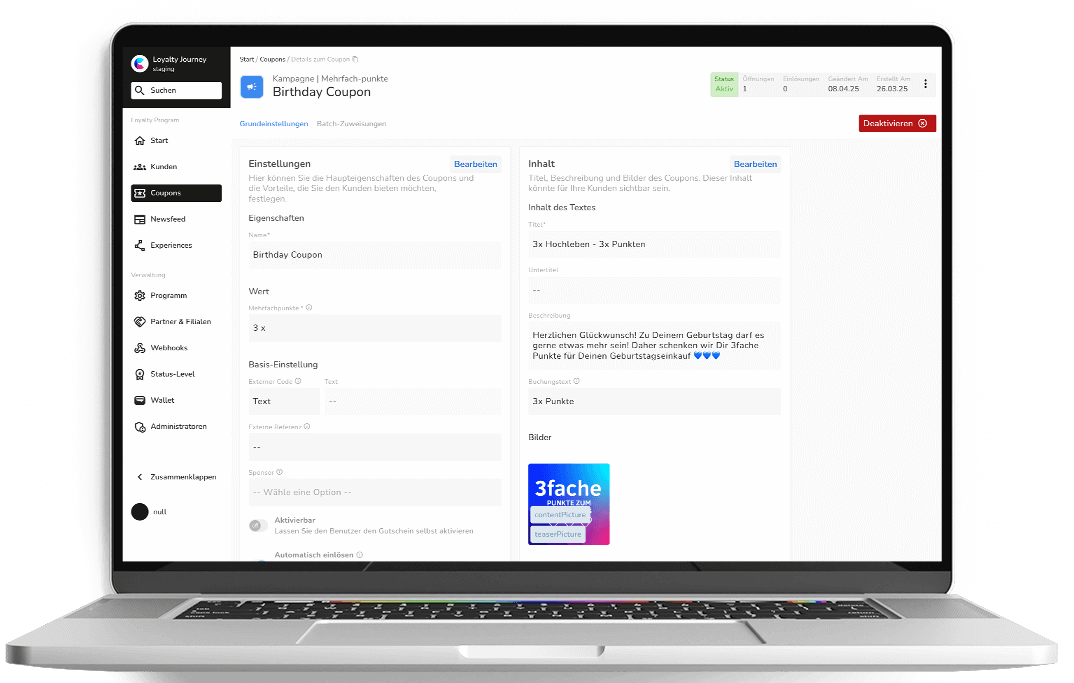
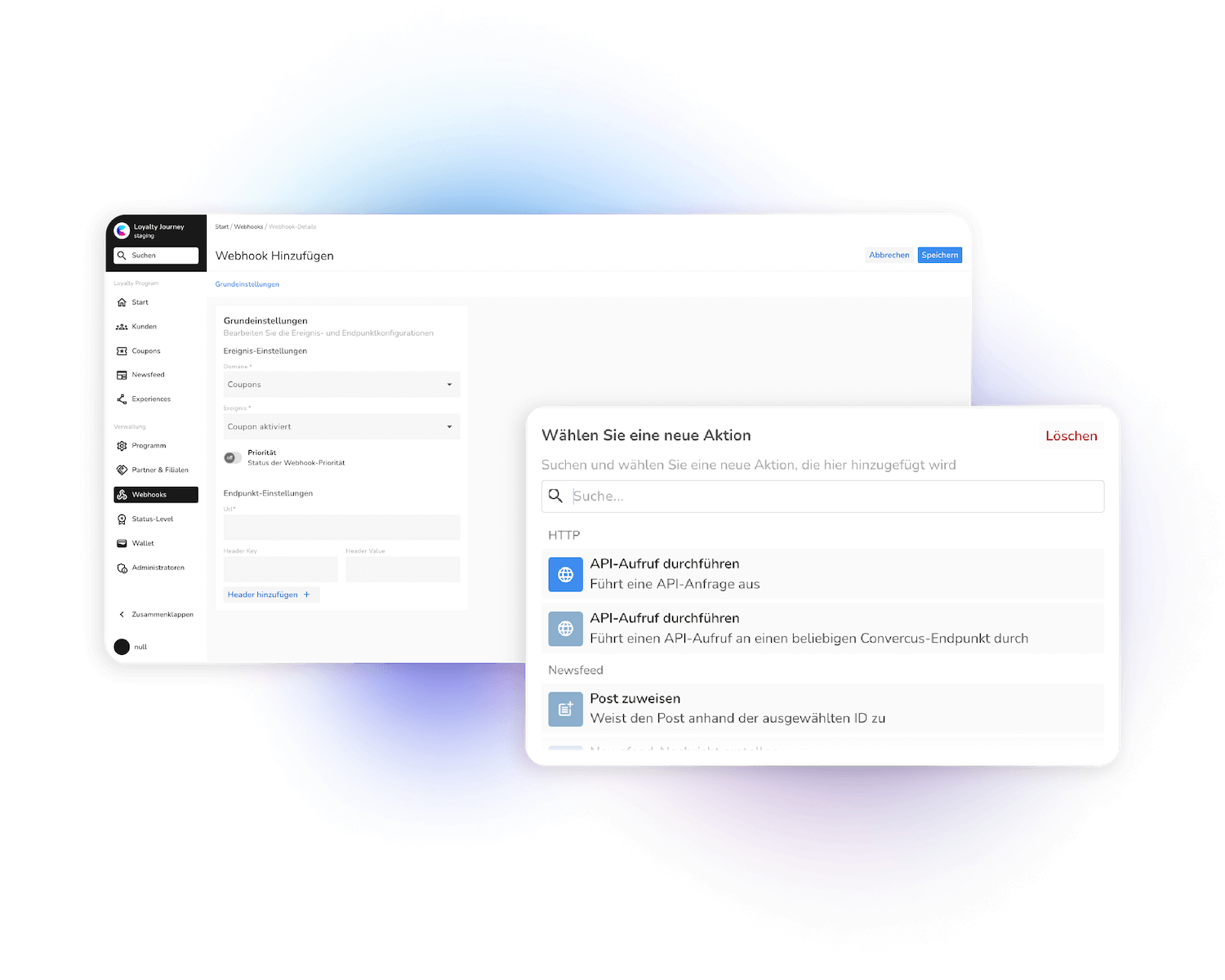
A modern solution for the organic market must encompass far more than just point balances. It connects POS, app, couponing, customer profiles, and analytics within a single platform. This is particularly important in organic specialist retail, as many retailers operate with legacy systems. Anyone managing multiple branches, network partners, or diverse POS systems requires an architecture that is flexibly integrable yet delivers a consistent customer experience. This is precisely why API-first, multi-tenant capability, and omnichannel control are not technical nice-to-haves, but core requirements.
Core Functions: Identification, Couponing, Personalization
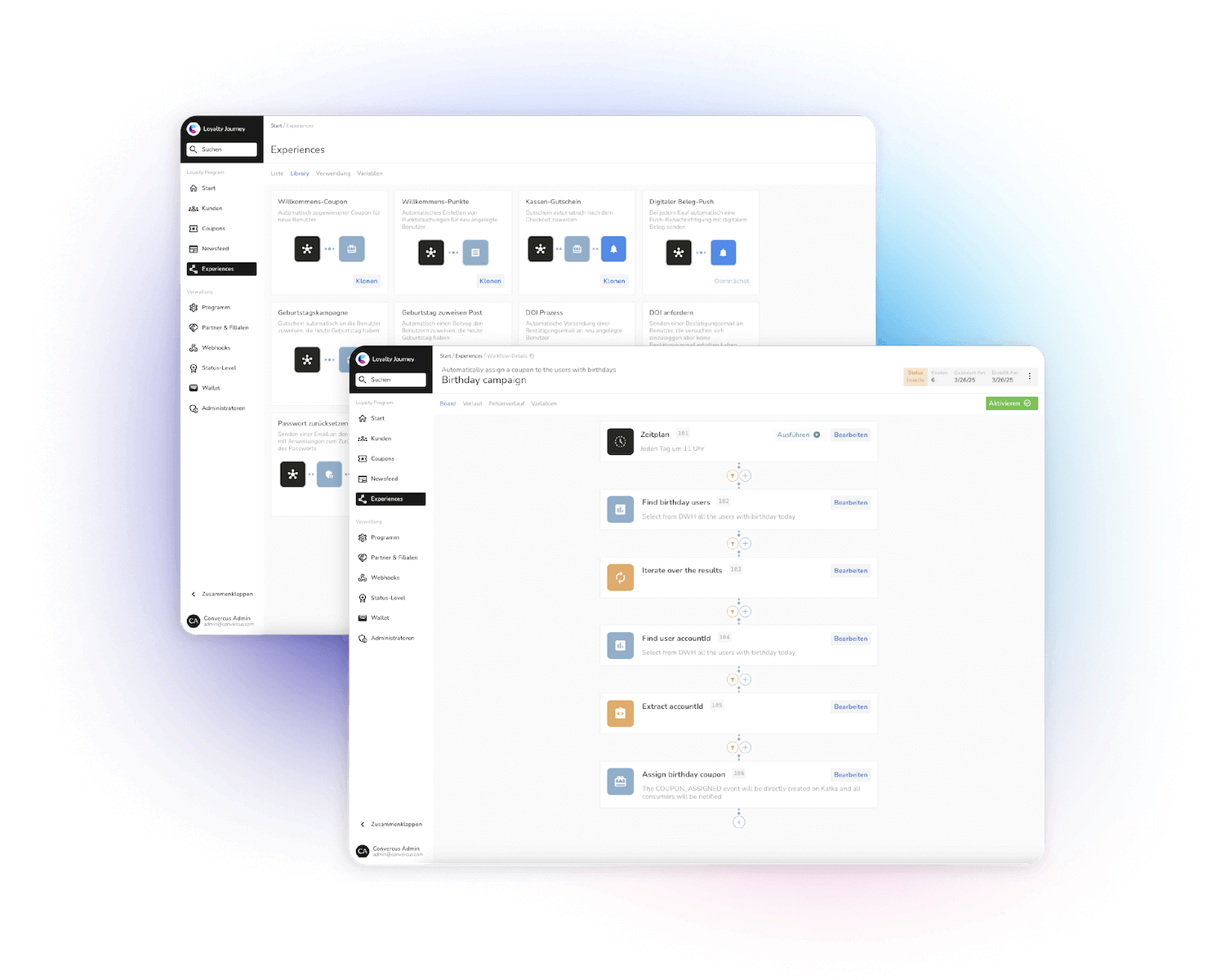
In daily operations, loyalty software must reliably perform three tasks: identify customers at the POS or in the app, process rules for cashback or points, and deliver personalized incentives. This includes digital loyalty cards, wallet passes, individual coupons, and trigger-based communication. Those who wish to delve deeper into these mechanics will find relevant background information on Loyalty, Couponing and App-First Loyalty. For organic retailers, it's particularly relevant that content-driven elements like recipes, shopping lists, or product recommendations can also be integrated.
Organic-Specific Requirements Often Underestimated
- Value-based loyalty needs more than discounts. Donation features, reusable packaging incentives, or regional promotion mechanics create relevance without diluting brand identity.
- Network structures require multi-tenant logic. Central rules and local specificities must function side-by-side within one platform.
- POS integration determines acceptance. If checkout teams have to manually rework things, the solution usually fails due to the process, not the idea.
- First-party data must become operationally usable. Purchase data is only valuable when it generates segments, triggers, and actions.
Data Protection is Not an Afterthought, but a Design Principle
Anyone processing purchase histories, coupon usage, and app interactions is working with personal data as defined by Art. 4 No. 1 GDPR. For program execution, Art. 6 Para. 1 lit. b GDPR may be applicable, while for personalized communication, consent under Art. 6 Para. 1 lit. a GDPRis usually required. Additionally, there are information obligations under Art. 13 GDPR, requirements for data processing agreements under Art. 28 GDPR, and technical and organizational measures under Art. 32 GDPR. If tracking or analytics functions are used in the app, then § 25 Para. 1 TTDSG is also relevant. A platform like Convercus supports organic retailers not only with an API-first integration architecture, but also with the operational foundation to implement loyalty, couponing, and engagement in a data protection-compliant and scalable manner.
Own Program, Multi-Partner, or Network Solution: The Fundamental Strategic Decision
Many organic retailers start with the wrong question: Which mechanic is most attractive? More important, initially, is who should control the customer relationship. An own program creates data sovereignty, flexible control, and stronger brand management. A multi-partner model brings reach and awareness but often limits differentiation. The network solution lies in between: it allows for a common platform for many partners, provided governance, rules, and technical roles are clearly defined.
The Lessons from Alnatura and Dennree
The two most prominent approaches in the market could hardly be more different. Alnatura successfully uses Payback as a reach model. Dennree, on the other hand, has publicly indicated that an external multi-partner program is not ideal for natural food specialist retailers. This doesn't lead to a universal truth, but to a clear decision-making logic: The more important brand identity, branch control, and an own data strategy are, the more attractive a proprietary system becomes. The more important rapid reach is, the more sensible an external partner can be.
Criterion Own Program Multi-Partner Network Solution Data Sovereignty High Medium to Low High with clear governance Brand Control High Limited High with central standards Implementation Effort Medium to High Rather Low Medium Scalability for Partners Limited without Multi-Tenant Dependent on Partner Very Good Suitability for Organic Network Good Only partially Very High
When Each Model Makes Sense
For many organic chains with 10 to 100+ locations, a proprietary, yet modularly structured loyalty platform is the strategically cleanest path. For network structures with independent partners, a multi-tenant solution is often ideal because it combines central standards with local flexibility. Multi-partner programs remain attractive where reach is more important than differentiation, or where the organization is not yet ready to build its own data-driven customer loyalty.
ROI in the Organic Market: What a Loyalty Solution Can Specifically Deliver
The ROI question decides almost every project. In the organic market, benefits can be calculated not only through discounts but also through higher identification rates, improved purchase frequency, and usable first-party data. A simple model illustrates this: An organic chain with 50 branches and 200,000 active members operates with an average basket size of €35 and 2 purchases per week. With 0.5% cashback, this amounts to approximately €18.20 in value per active customer per year. Even if not every customer is active year-round, it quickly becomes clear: the program is a significant investment and must be managed carefully.
The Leverage Isn't Just in the Bonus Budget
The real business case emerges when the same chain moderately increases purchase frequency or reduces churn through app usage and personalized re-engagement. Even better transaction attribution can have an enormous impact. Retailers who currently lack customer identification at the POS only have a rough idea of their regular business. A digital loyalty solution transforms anonymous receipts into actionable patterns: Who buys rarely? Who responds to coupons? Who buys regionally? Who is price-sensitive? The value of data lies in its controllability, not in data collection itself.
First-Party Data Transforms Sales Data into Real Decision-Making Data
Suppose a chain processes 1 million transactions per month. Without loyalty, most remain anonymous. If the app achieves an identification rate of 30%, 300,000 transactions can be assigned to individual profiles. This forms the basis for churn prevention, target group segments, and assortment-related triggers. In practice, this might lead to a coupon for gluten-free new products, a re-engagement after 45 days of inactivity, or a regional offer for buyers of seasonal goods. More on how companies can increase customer loyalty and work with customer re-engagement is particularly evident in data-driven programs.

From Physical Loyalty Card to App: How to Successfully Migrate
The transition is usually less of a technical project and more of an acceptance project. Especially in the organic market, there are many long-standing loyal customers who are accustomed to existing cards, credit, or established processes. A migration is therefore only successful if communication, processes, and data transfer work together seamlessly. The current Denns case illustrates this well: existing members receive a clear transition period, existing credit is transferred to the new wallet, and the new model is easier to understand than the old one. This reduces friction.
Typical pitfalls during implementation
In practice, projects rarely fail due to the app interface. More critical are cashier training, deadline logic, duplicates in existing data, inconsistent store processes, and the question of how to engage non-digital customers. Additionally, there's the legal aspect: information obligations under Art. 13 GDPR, rights of access under Art. 15 GDPR , and rights to erasure under Art. 17 GDPR must be operationally manageable. Anyone setting up push or email marketing should also properly document consent and advertising permissions.
- Value-based loyalty needs more than discounts. Donation features, reusable packaging incentives, or regional campaign mechanics create relevance without diluting brand identity.
- Federated structures require multi-tenant logic. Central rules and local specificities must function side-by-side on a single platform.
- POS integration determines acceptance. If cashier teams have to do manual rework, the solution usually fails not because of the idea, but because of the process.
- First-party data must become operationally usable. Purchase data is only valuable when it generates segments, triggers, and actions.
Why a white-label app often achieves results more quickly
Many retailers underestimate the effort of in-house development. Those who have the app, loyalty logic, couponing, consent, POS integration, and reporting built separately create new silos. A white-label approach is often more economical because it combines time-to-value, maintainability, and scalability more effectively. Convercus projects also show that programs with a white-label app can achieve up to 8x higher customer interaction than programs without an app. This is particularly relevant for the organic market, as app usage activates not only transactions but also recipe content, shopping lists, and recurring touchpoints.
Why organic customers have a different kind of loyalty and what that means for software
Loyalty in the organic segment is often already present. Customers consciously choose organic products, often out of conviction and not just because of the price. That's precisely why loyalty software in the organic market should support existing intrinsic loyalty, not artificially buy it. An overly aggressive discount program can even damage brand perception. At the same time, it would be wrong to completely disregard monetary incentives. Successful programs combine value orientation with tangible benefits.
Engagement is at least as important as incentivization in the organic market
Organic retailers have an advantage over traditional grocery retail programs: they often know their target audience more precisely. This allows for the development of features that truly fit, such as recipes from their own product range, product stories, donation mechanics, or challenges related to reusable packaging and seasonality. Such components increase the app's relevance without resorting to price promotions. Those who want to take this perspective further will find in the area of engagement meaningful points of connection for community-oriented customer loyalty.
Attracting younger target groups without losing loyal customers
The great art lies in making the app attractive to digitally savvy shoppers while not alienating long-standing loyal customers. That's why simple models like flat-rate cashback or easily understandable points often work better than complicated tiered models. Additionally, retailers should offer non-digital assistance, in-store support, and clear communication of benefits. The simpler the mechanic, the higher the market acceptance. Gamification can be useful if it fits the brand's core and doesn't seem arbitrary.
Conclusion: Loyalty software is becoming infrastructure, not just a nice-to-have, in the organic market
The organic retail sector stands at a clear turning point in 2026. Digital customer loyalty is no longer an additional measure, but part of competitiveness. Crucial is not just the choice between cashback, points, or a partner program, but the ability to combine data sovereignty, POS integration, app experience, and brand fit. Especially for chains and federated structures, a platform is needed that masters omnichannel, personalization, and governance equally well.
If you want to strategically build loyalty in the organic market or modernize an existing program, Convercus is an obvious solution: with a loyalty engine, couponing, engagement, and API-first integration for complex retail structures. Learn more about our loyalty solutions or schedule a personal live demo with a loyalty expert.
FAQ
How much effort is involved in implementing a loyalty program in the organic market?
This primarily depends on POS integration, data quality, and organizational structure. For a chain with multiple stores, implementation is usually a project involving business departments, IT, and store operations. With an existing platform instead of in-house development, the rollout can generally be significantly accelerated.
Does loyalty software work with existing POS systems?
Yes, provided the solution is built for integration. Crucial are robust interfaces, stable identification processes at the POS, and the ability to process transactions in real-time or near real-time. This is precisely why an API-first approach in retail is so important.
Can loyalty software for organic markets be implemented in compliance with GDPR?
Yes, if legal bases, consents, transparency, and technical safeguards are properly implemented. Particularly relevant are Art. 6, Art. 13, Art. 28, and Art. 32 GDPR, as well as § 25 TTDSG for certain tracking functions. Data protection should be considered in the concept from the outset, not just at go-live.
What does loyalty software for an organic chain cost?
A single figure is difficult to provide reliably because the number of stores, transaction volume, app scope, and integration effort vary greatly. Therefore, what's important is not just the software price, but the entire business case, including bonus budget, implementation, and expected added value. For many retailers, a usage- and success-oriented approach is more economically sensible than the high fixed costs of in-house development.
How long does the migration from a physical customer card to an app take?
The technical migration is often faster than the organizational one. Crucial are credit transfer, data cleansing, communication to existing customers, and training in the stores. A planned transition period with a clear deadline and simple activation significantly increases acceptance.
What's the best way for organic retailers to start a digital loyalty project?
The best way is with clear prioritization: Should identification, personalization, couponing, or migration come first? After that, target groups, POS processes, data sources, and the KPI set should be defined. Only on this basis can one meaningfully decide whether an in-house program, a federated solution, or a partner approach is the right way.


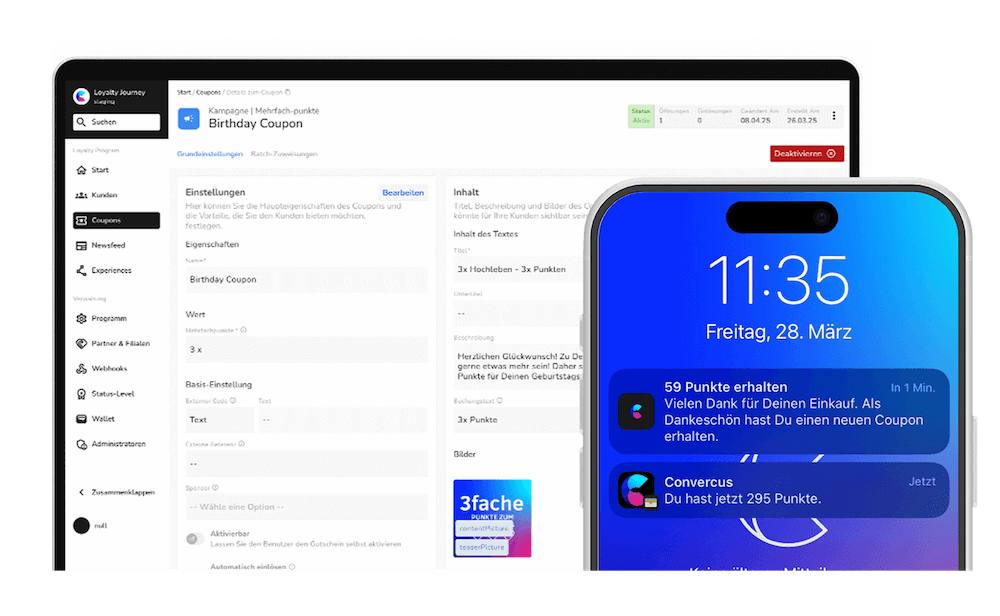
- 5x Return on Investment
- 80% Customer Identification
- 8x Customer Interaction
- +274% Repurchase Rate
.png)