







The topic, short and concise
- Fixed book prices do not prevent loyalty. It shifts the focus from discounts to services, events, non-book benefits, and personalized recommendations.
- First-party data is becoming a competitive advantage in the book trade. Identifying customers at the POS, in-store, and on mobile allows for targeted management of purchase frequency, re-engagement, and community loyalty.
- The best loyalty software for bookstores is omnichannel-ready. It connects digital loyalty cards, wallet passes, segmentation, event communication, reporting, and API integration with existing systems.
- Convercus is software for loyalty, couponing, and engagement. For booksellers with omnichannel ambitions, Convercus can be a valuable partner for implementing customer loyalty in a legally compliant, scalable, and data-driven manner.
Bookstore Loyalty Software to Become a Strategic Topic in 2026
Bookstore Loyalty Software is no longer just a nice-to-have, but a response to a market in flux. According to the industry monitor BUCH, the German book market recorded a 2.9% decline in sales in 2025 compared to 2024. At the same time, the number of bookstores decreased by 24% between 2018 and 2023, from approximately 3,930 to about 2,980 businesses. Therefore, anyone growing in the book trade today needs more than just walk-in customers: it's about recurring buyers, identifiable customer relationships, and reliable first-party data.
The Book Market Faces Dual Pressure
Brick-and-mortar bookstores remain central with 41.3% market share , but foot traffic and impulse purchases are under pressure. At the same time, 62% of surveyed readers also buy from Amazon. The core problem is not just price competition, but data sovereignty: Amazon knows search behavior, purchase history, and interests very precisely, whereas many bookstores only know their regular customers from personal conversations.
Why Traditional Customer Loyalty in Bookstores Often Falls Short
Many establishments still use stamp cards, newsletters, and individual events. This creates closeness, but not measurable customer loyalty across all channels. Without digital identification at the POS, in the online shop, and on smartphones, segmentation, trigger communication, and systematic re-engagement are missing. Those who want to delve deeper into the basics can find an overview of customer loyalty software and practical approaches here to increase customer loyalty.
Fixed Book Prices Are Not an Obstacle, But Rather the Very Reason for Loyalty
In the book trade, the Fixed Book Price Lawapplies. According to § 5 BuchPrG, price-bound books and e-books must generally be sold at the fixed retail price. This is precisely why loyalty works differently here than in other retail sectors: not through permanent discounts on the core assortment, but through services, experiences, relevant recommendations, and benefits on non-price-bound assortments.
What § 5 BuchPrG Practically Means for Loyalty Programs
Discounts on price-bound books are generally not a permissible standard mechanism. Therefore, a bookstore cannot simply allow customers to collect points for customer loyalty in retail and then redeem them as a discount on new, price-bound books. However, programs that record purchases, assign status, prioritize access, or direct redemptions to non-book items, cafe, events, or non-price-bound services are possible. This doesn't make loyalty impossible, but rather smarter.
Which Mechanisms Truly Work in the Book Trade
Successful programs rely on non-price mechanisms and on product categories outside of price fixing. Particularly relevant are digital customer cards, event benefits, and personalized communication based on purchase history and genre interests.
- A points system can track sales, as long as redemption is legally restricted to non-book assortments, services, or defined benefits.
- Status levels can unlock exclusive pre-registrations for readings, signing sessions, or book club events without violating price fixing regulations.
- Birthday benefits, recommendations, or re-engagement campaigns can be applied to stationery, games, gifts, or cafe offers.
- Engagement can be rewarded, for example, for reviews, wish lists, event attendance, or friend referrals.
Precisely because the price is the same, differentiation through experience and relevance becomes the strongest lever.
This Is What Successful Loyalty Programs in the Book Trade Look Like
The market already shows where the book trade is heading. In Germany, Thalia uses PAYBACK as a reach lever, and in Austria, it relies on its own Bonuscard model with cross-channel usage in stores, online shops, and apps. From this, we can deduce: Omnichannel and customer identification are more important today than the question of whether a program starts physically or digitally.
What Bookstores Can Learn from Thalia, PAYBACK, and Bonuscard
A multi-partner program like PAYBACK can create reach and new customer acquisition. An in-house program, however, provides more data sovereignty and deeper personalization. For medium-sized chain stores, a hybrid approach is often sensible: external reach where needed, and a dedicated loyalty layer for community, events, segmentation, and re-engagement. This is particularly relevant in the book trade because the emotional connection to recommendations, favorite genres, and in-store experiences is often stronger than the price impulse.
Example Calculation for a Medium-Sized Bookstore Chain
Suppose a chain with 15 branches and approximately 400,000 customers per year identifies, after twelve months, via a digital customer card, 25% of its buyers. That would be 100,000 known customers. If their purchase frequency increases from an average of 4 to 4.6 purchases per year with an average basket value of €25, this results in additional annual revenue of approximately €1.5 million. If non-book cross-selling effects are added, for example, €75,000 per year, it becomes clear: loyalty in the book trade is not a discount cost block, but a data and frequency project.
What Functions a Bookstore Loyalty Software Truly Needs
The right software doesn't have to do everything, but it must book trade-specific realities accurately reflect: fixed prices, omnichannel purchases, events, backlist recommendations, and lean POS processes. For chain stores and larger omnichannel retailers, a platform that combines loyalty engine, couponing, and engagement is sensible, rather than operating multiple standalone solutions.
Digital Customer Card, Wallet Pass, and Omnichannel Recognition
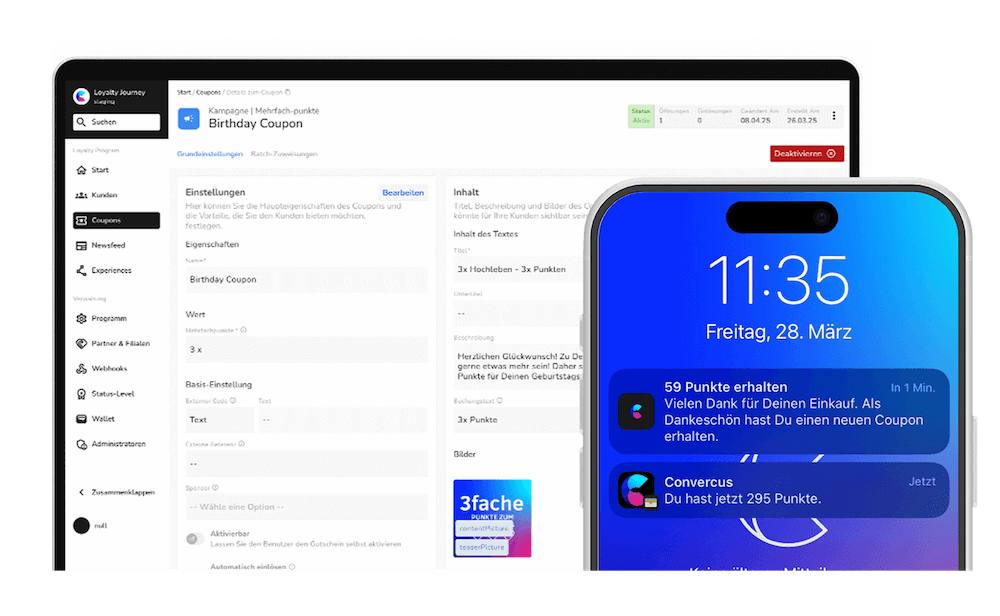
The easiest entry point is often not a dedicated app, but a digital customer card in a Wallet Pass. This allows customers to be identified at the POS, display status, and build mobile communication. For more ambitious programs, a white-label app can be useful. In some programs, customer interaction with an app is up to 8 times higher than without an app. Those who want to delve deeper into the mobile model can find further approaches to App-first Loyalty.

Personalization, Backlist, and AI-Powered Recommendations
57% of all books sold come from the backlist. This is an often underestimated lever. By connecting purchases, favorite genres, and campaign reactions, one can highly relevant recommendations build, instead of just sending out generic newsletters. A solution like Convercus for Engagement is interesting in this context if booksellers want to manage recommendations, automations, and segmentation from one platform without getting lost in purely generic retail mechanics.

Events, Community, and Gamification Instead of Pure Discount Logic
Readings, silent reading parties, book clubs, and signing sessions are perfect loyalty touchpoints. Good programs reward not only sales, but also engagement along the customer journey: event participation, reviews, friend referrals, wish lists, or genre challenges. Young target groups, especially from New Adult and Young Adult, respond strongly to community elements and gamified mechanics.
For a solution to truly be effective in everyday use, it should meet at least these requirements:
Those who want to delve deeper into the transactional part can find more about the Loyalty Engine and here about couponing for targeted non-book promotions.
Own Program, PAYBACK, or Hybrid Model?
This question is particularly relevant in the book trade. A multi-partner program can bring foot traffic, but it doesn't automatically replace your own customer relationship. The decisive factor is whether you primarily seek reach or data sovereignty . For many bookstores, therefore, a tiered model is the more sensible approach, rather than an either-or choice.
The hybrid model is often sensible when broad reach is desired, but events, community, local recommendations, and re-engagement should take place within your own brand space . This depth is often lacking in pure reach programs.
Technical Requirements: POS, Merchandise Management, API, and GDPR
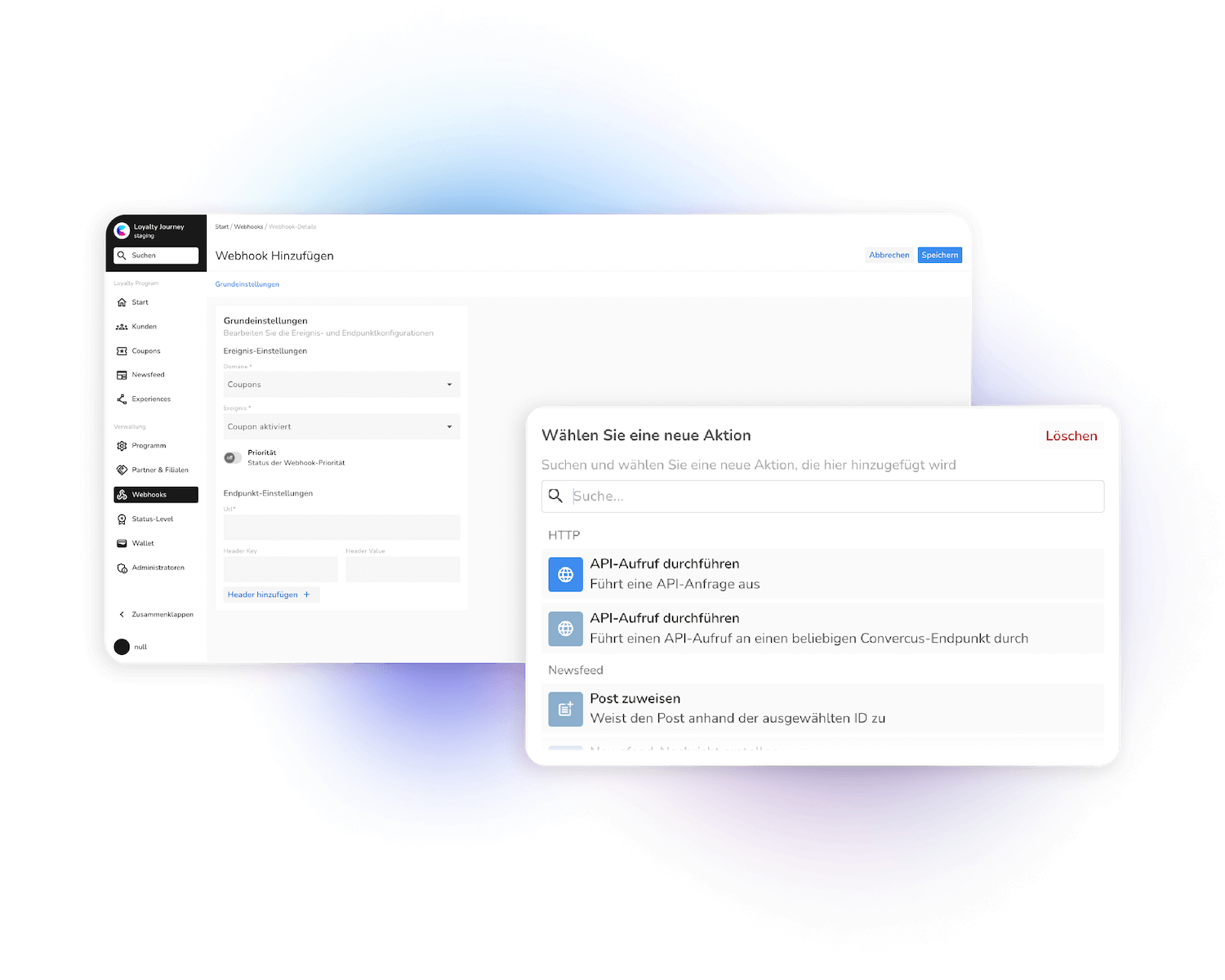
In the book trade, loyalty projects rarely fail due to the idea, but rather due to integration. POS systems, online shops, newsletter tools, and merchandise management often run in parallel. A powerful solution therefore requires API-first architecture, clean POS processes, and clear logic regarding which products are price-bound and which are not.
Which Systems Should Be Integrated
It is important to connect to POS, webshop, CRM, and book trade-specific merchandise management or data sources, such as those related to LiBri, KNV/Zeitfracht, or Umbreit. The crucial thing is not that everything is perfectly integrated immediately, but that the architecture remains gradually expandable . This is precisely where modern integration approaches are crucial. An overview can be found here: Tech and Integration.
GDPR-compliant use of customer data in bookstores
Loyalty in bookstores isn't just about master data; it often involves reading preferences and interests. This data is operationally sensitive and should be processed with particular care. Ensure clear consents, transparent purposes, role and rights concepts, and a clear separation between purchase history, communication opt-ins, and analysis purposes. For enterprise-level providers, GDPR compliance, high availability, and secure data processing are not optional extras, but mandatory.
5 Steps to a Loyalty Program for Bookstores
The best starting point isn't the most beautiful app, but a realistic vision. Clarifying which customers are to be identified, activated, or re-engaged first significantly shortens the implementation time. For bookstores, a phased rollout instead of a big bang.
- First, define the program's economic objective, such as higher visit frequency, more identified customers, or improved non-book cross-selling.
- Start with a simple mechanism, such as a digital customer card, event benefits, and personalized recommendations, rather than too many rules.
- Then, examine your POS, shop, and data landscape to ensure customer identification, consents, and reporting run smoothly from the start.
- Introduce the program in a pilot store or a clearly defined region and measure identification rate, frequency, and activation rate.
- Only then scale to additional locations and add automations for re-engagement, birthdays, events, and genre-specific campaigns.
It's particularly important not just to acquire new customers, but to actively re-engage existing buyers. This also includes strategies for customer re-engagement, which can be very effectively combined with event and assortment incentives in bookstores.
Conclusion: Loyalty in bookstores is a data, service, and community project
A modern bookstore loyalty software doesn't need to circumvent fixed book prices, but rather to intelligently incorporate them. Successful programs therefore reward not only purchases, but also brand affinity: through wallet passes, events, personalized backlist recommendations, status benefits, and legally compliant couponing for non-book assortments. Those who integrate this seamlessly create more identified customers, better return rates, and measurable omnichannel loyalty.
If you want to build a loyalty program for branches, omnichannel processes, and scalable integrations, then Convercus is a natural choice. The platform combines loyalty, couponing, engagement, and API-first integration in a setup suitable for demanding retail environments. Learn more on the Loyalty Solution page or directly via a personal live demo.
FAQ
Is a loyalty program worthwhile for bookstores despite fixed book prices?
Yes, because the added value in bookstores doesn't primarily come from discounts. Services, events, non-book benefits, and personalization also work within the rules of fixed book prices and create additional customer loyalty.
How complex is the implementation of loyalty software?
That depends on the number of branches, system landscape, and desired mechanics. Starting with a digital customer card and wallet pass is significantly leaner than a full rollout with an app, status model, and omnichannel automation.
Does this work with our existing POS system?
In many cases, yes, provided the software offers APIs or suitable interfaces for POS, shop, and CRM. It's important to check early on how customer identification at the checkout, redemption logic, and product classification will be technically implemented.
Can loyalty software be used in bookstores in a GDPR-compliant manner?
Yes, if consents are properly documented, purposes clearly defined, and data securely processed. Especially with preference and purchase data , bookstores should transparently communicate how the information will be used.
What does loyalty software for bookstores cost?
Costs vary depending on the number of users, branch structure, integration effort, and range of functions. The business case is crucial: even better identification and higher purchase frequency can have a significantly greater impact than mere discount promotions .
What's the best way to get started?
Start with a clear target group, such as regular customers or event attendees, and first collect their name, email, and interests. Afterwards, simple trigger campaigns, wallet passes, and non-book benefits can be gradually expanded.


- 5x Return on Investment
- 80% Customer identification
- 8x Customer interaction
- +274% Repurchase rate
.png)